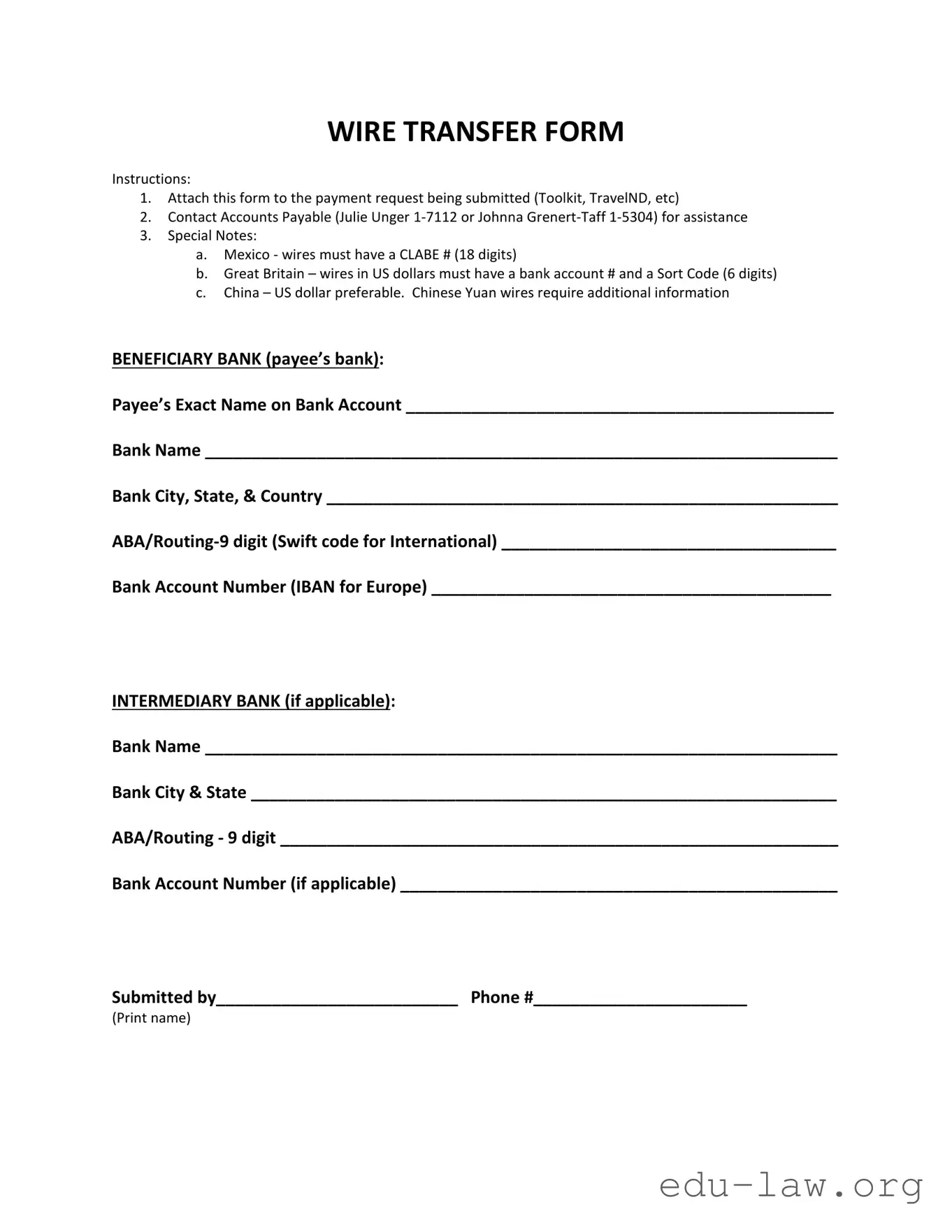
When it comes to sending money across borders, understanding the Wire Transfer form is essential for a smooth transaction. This form serves as a crucial tool for individuals and organizations alike, ensuring that funds reach their intended recipients without unnecessary delays. It requires specific information about the beneficiary bank, including the payee's exact name on the bank account, the bank's name, and its location. Additionally, you must provide the ABA or routing number, which is a nine-digit code essential for domestic transfers, and the bank account number, which may vary based on the region—such as an IBAN for European accounts. For those dealing with international transfers, there are special considerations to keep in mind. For instance, wires sent to Mexico require a CLABE number, while transactions to Great Britain must include both a bank account number and a sort code. If you're sending money to China, using US dollars is preferable, as transferring in Chinese Yuan necessitates further details. To initiate the process, simply attach this form to your payment request and reach out to Accounts Payable for assistance. Remember, providing accurate information is key to ensuring your funds arrive safely and promptly.
WIRE TRANSFER FORM
Instructions:
1.Attach this form to the payment request being submitted (Toolkit, TravelND, etc)
2.Contact Accounts Payable (Julie Unger
3.Special Notes:
a.Mexico - wires must have a CLABE # (18 digits)
b.Great Britain – wires in US dollars must have a bank account # and a Sort Code (6 digits)
c.China – US dollar preferable. Chinese Yuan wires require additional information
BENEFICIARY BANK (payee’s bank):
Payee’s Exact Name on Bank Account ______________________________________________
Bank Name ____________________________________________________________________
Bank City, State, & Country _______________________________________________________
Bank Account Number (IBAN for Europe) ___________________________________________
INTERMEDIARY BANK (if applicable):
Bank Name ____________________________________________________________________
Bank City & State _______________________________________________________________
ABA/Routing - 9 digit ____________________________________________________________
Bank Account Number (if applicable) _______________________________________________
Submitted by__________________________ Phone #_______________________
(Print name)
| Fact Name | Description |
|---|---|
| Purpose | This form is used to request a wire transfer payment. |
| Instructions | Attach the form to the payment request when submitting. |
| Contact Information | For assistance, contact Accounts Payable: Julie Unger at 1-7112 or Johnna Grenert-Taff at 1-5304. |
| Mexico Requirements | Wires to Mexico must include a CLABE number, which is 18 digits long. |
| Great Britain Requirements | Wires to Great Britain in US dollars need a bank account number and a Sort Code, which is 6 digits. |
| China Preferences | It is preferable to send wires in US dollars. Additional information is required for Chinese Yuan transfers. |
| Beneficiary Bank Information | Details about the payee’s bank must be filled out, including the bank name and location. |
| ABA/Routing Number | The form requires a 9-digit ABA/Routing number for domestic transfers and a Swift code for international transfers. |
| Intermediary Bank | If applicable, provide details for an intermediary bank, including its name and location. |
| Submission | The form must be signed and include the submitter's printed name and phone number. |
After completing the Wire Transfer form, it should be attached to the payment request you are submitting. If you need help at any point, please reach out to the Accounts Payable team. They are available to assist you with any questions or concerns.
Make sure to pay attention to special notes regarding specific countries, as they may have unique requirements for wire transfers.
What is the purpose of the Wire Transfer form?
The Wire Transfer form is designed to facilitate the process of sending money electronically from one bank account to another. This form ensures that all necessary information is collected and submitted correctly, which helps prevent delays or errors in processing your payment request. By using this form, you can provide detailed information about the beneficiary bank and any intermediary banks involved in the transfer.
What information is required on the Wire Transfer form?
To complete the Wire Transfer form, you need to provide specific details about the beneficiary bank, including the payee’s exact name on the bank account, the bank name, and the city, state, and country where the bank is located. Additionally, you must include the ABA/Routing number, which is a 9-digit code for domestic transfers, or the IBAN for European accounts. If there is an intermediary bank involved, similar details must be provided for that institution as well.
Are there any special requirements for international wire transfers?
Yes, international wire transfers often have specific requirements. For instance, when transferring funds to Mexico, you must include a CLABE number, which consists of 18 digits. For transfers to Great Britain, if you are sending US dollars, you will need both a bank account number and a 6-digit Sort Code. If you are sending money to China, it is preferable to use US dollars, but if you choose to send Chinese Yuan, additional information will be necessary.
Who should I contact if I have questions about the Wire Transfer form?
If you have questions or need assistance while filling out the Wire Transfer form, you should reach out to the Accounts Payable department. You can contact Julie Unger at extension 1-7112 or Johnna Grenert-Taff at extension 1-5304. They are available to help you navigate any issues or clarify any uncertainties you may have regarding the form or the wire transfer process.
What should I do after completing the Wire Transfer form?
Once you have completed the Wire Transfer form, you should attach it to the payment request you are submitting, whether it be through Toolkit, TravelND, or another platform. This attachment ensures that your payment request is processed efficiently and that all necessary information is readily available to the Accounts Payable team.
Can I submit the Wire Transfer form electronically?
The submission method for the Wire Transfer form may vary depending on your organization’s policies. Generally, you will need to attach the completed form to your payment request and submit it through the designated system. If electronic submission is allowed, ensure that all required fields are filled out accurately to avoid any issues with the processing of your transfer.
Incomplete Beneficiary Information: Failing to provide the full name of the payee as it appears on their bank account can lead to delays or rejections. Ensure that every detail is accurate.
Missing or Incorrect ABA/Routing Number: The ABA or routing number must be a 9-digit code. Double-check this number to avoid misdirected funds.
Omitting Intermediary Bank Details: If an intermediary bank is required, neglecting to fill out this section can complicate the transfer process. Always include this information if applicable.
Incorrect Bank Account Number: Providing the wrong bank account number can result in funds being sent to the wrong recipient. Verify this number with the payee.
Ignoring Special Notes for International Transfers: Each country may have specific requirements. For example, wires to Mexico need a CLABE number, while those to Great Britain require a Sort Code. Failing to include these can halt the transfer.
Not Including Your Contact Information: Leaving out your name or phone number can create communication barriers. Always ensure that your contact details are clear and visible.
Submitting Without Review: Rushing through the form without a thorough review can lead to simple errors. Take a moment to double-check all entries before submission.
Not Following Submission Instructions: Ensure that the wire transfer form is attached to the correct payment request. Not adhering to submission guidelines can delay processing.
When completing a wire transfer, several additional forms and documents may be required to ensure the transaction is processed smoothly. Below is a list of commonly used documents that accompany the Wire Transfer form.
Having these documents prepared and attached can facilitate a smoother wire transfer process, minimizing delays and ensuring compliance with necessary regulations.
The first document similar to the Wire Transfer form is the Direct Deposit Authorization form. This form allows employees to authorize their employer to deposit their paychecks directly into their bank accounts. Like the Wire Transfer form, it requires specific banking details, including the bank name and account number. Both documents ensure that funds are transferred accurately and securely, reducing the risk of errors in payment processing.
The Payment Request form is another related document. This form is used to request payment for services or goods provided. Similar to the Wire Transfer form, it requires details about the payee, including their bank information if payment is to be made electronically. Both forms facilitate smooth financial transactions and help maintain clear records of payments made.
The ACH Transfer Request form also shares similarities with the Wire Transfer form. ACH, or Automated Clearing House, transfers are electronic payments made directly between banks. Like the Wire Transfer form, it requires the recipient's banking information to ensure that funds are transferred correctly. Both forms streamline the payment process, making it more efficient for businesses and individuals alike.
The International Payment Request form is another document that resembles the Wire Transfer form. This form is specifically designed for payments made to foreign entities. It includes sections for the recipient's international banking details, similar to the requirements found in the Wire Transfer form. Both documents aim to ensure compliance with international banking regulations and facilitate cross-border transactions.
The Credit Card Authorization form is also comparable to the Wire Transfer form. This document allows a payer to authorize a merchant to charge their credit card for a specific amount. Both forms require accurate financial information to ensure that payments are processed without issues. They serve to protect both parties involved in the transaction by providing a clear record of authorization.
The Invoice Submission form can be considered similar as well. This form is used by vendors to submit invoices for payment. Like the Wire Transfer form, it includes essential details such as the payee's name and bank information if payment is to be made electronically. Both documents help maintain transparency and accountability in financial transactions.
The Reimbursement Request form is another document that shares similarities with the Wire Transfer form. Employees use this form to request reimbursement for expenses incurred on behalf of the company. It often requires banking information for direct deposit of the reimbursement, similar to the Wire Transfer form. Both forms aim to ensure that employees are compensated promptly and accurately for their expenses.
The Payment Authorization form is also akin to the Wire Transfer form. This document is used to authorize a payment to be made from one account to another. It requires detailed banking information, just like the Wire Transfer form. Both forms help protect against unauthorized transactions and ensure that payments are made only with proper consent.
The Loan Disbursement Request form is another document that bears resemblance to the Wire Transfer form. This form is used when funds are being disbursed from a loan. It requires the borrower’s banking details to facilitate the transfer of funds. Both forms are crucial in ensuring that financial transactions are executed smoothly and that the correct amounts are disbursed to the right accounts.
Finally, the Fund Transfer Request form is similar to the Wire Transfer form as well. This document is used to request the transfer of funds between accounts within the same institution or to another institution. Like the Wire Transfer form, it requires specific account details to ensure the transfer is completed accurately. Both forms are essential for managing funds efficiently and securely.
When filling out the Wire Transfer form, there are important guidelines to follow. Here are five things you should and shouldn't do:
By following these guidelines, you can help ensure that your wire transfer is processed smoothly and efficiently.
When it comes to wire transfers, misunderstandings can lead to delays or even failed transactions. Here are six common misconceptions about the Wire Transfer form that you should be aware of:
Understanding these misconceptions can help streamline the wire transfer process and enhance your financial transactions.
Filling out the Wire Transfer form correctly is crucial for ensuring your funds are sent without delay. Here are some key takeaways to keep in mind:
Following these guidelines will help ensure a smooth wire transfer process.