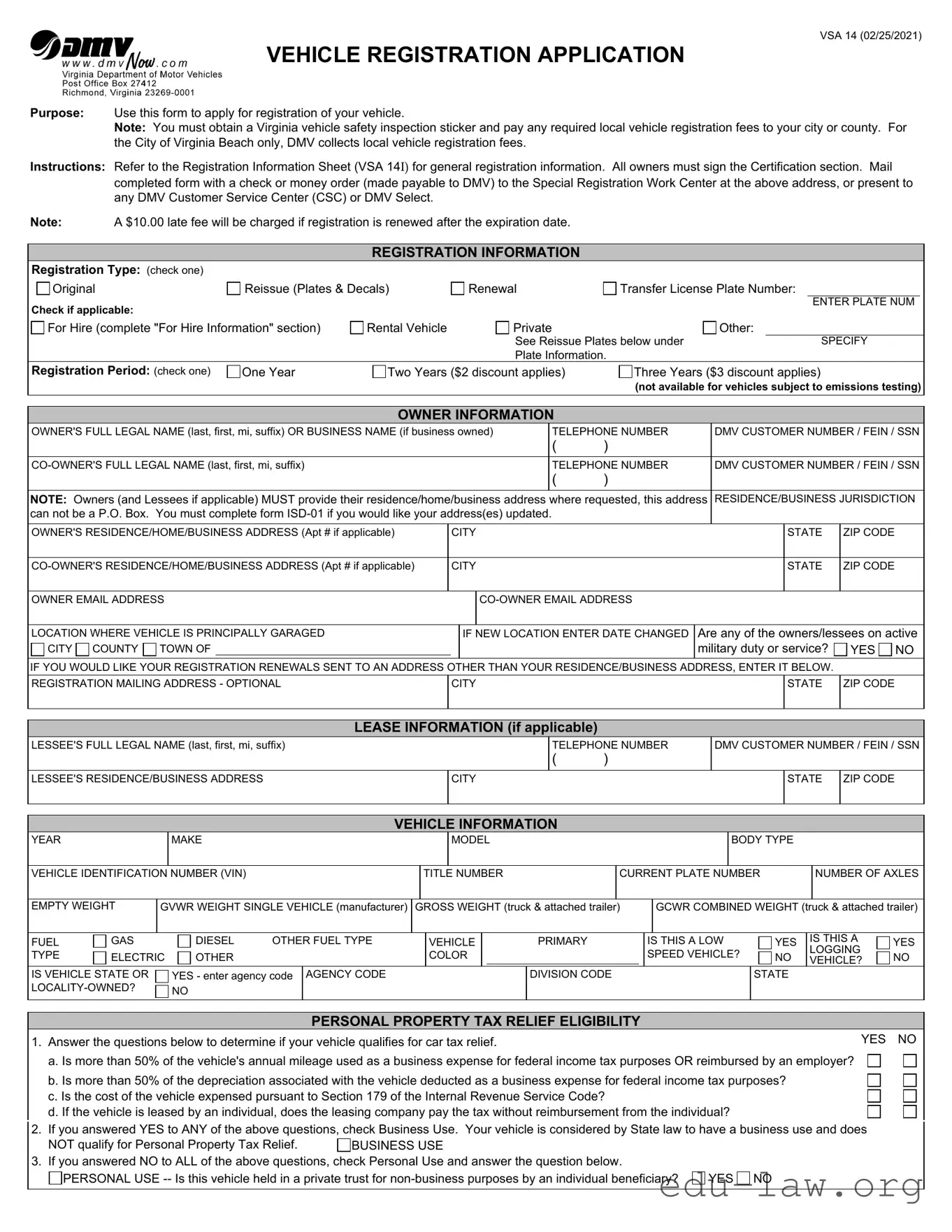
The Virginia DMV Registration form, officially known as the VSA-0, plays a crucial role in the vehicle registration process for residents of the state. This form captures essential information about the vehicle, including its title number, vehicle identification number (VIN), and plate number. It also requires details such as the make, model, year, and color of the vehicle, as well as the type of fuel it uses and its intended use. Additionally, the form prompts the vehicle owner to provide their purchase date and odometer reading at the time of titling. A significant aspect of this registration process is the verification of insurance coverage; the DMV mandates that all registered vehicles must have active insurance. Failure to notify the DMV of any changes, such as selling the vehicle or changing addresses, can lead to serious consequences, including the suspension of the driver’s license. Furthermore, the form outlines the steps to take if an address change occurs, providing multiple options for notifying the DMV, from online submissions to direct communication via phone. This comprehensive approach ensures that vehicle registration remains current and compliant with Virginia law.
VSA 14 (02/25/2021)
VEHICLE REGISTRATION APPLICATION
Purpose: Use this form to apply for registration of your vehicle.
Note: You must obtain a Virginia vehicle safety inspection sticker and pay any required local vehicle registration fees to your city or county. For the City of Virginia Beach only, DMV collects local vehicle registration fees.
Instructions: Refer to the Registration Information Sheet (VSA 14I) for general registration information. All owners must sign the Certification section. Mail
completed form with a check or money order (made payable to DMV) to the Special Registration Work Center at the above address, or present to any DMV Customer Service Center (CSC) or DMV Select.
Note: A $10.00 late fee will be charged if registration is renewed after the expiration date.
REGISTRATION INFORMATION
|
Registration Type: (check one) |
|
|
|
|
|
|
|
|
|
|
|
|
|
|
|
|
|
|
|
|||
|
|
|
|
Original |
|
Reissue (Plates & Decals) |
|
Renewal |
|
|
Transfer License Plate Number: |
|
|
||||||||||
|
|
|
|
|
|
|
|
||||||||||||||||
|
|
|
|
|
|
|
|
|
|
|
|
|
|
|
|
|
|
|
|
|
|
|
|
|
Check if applicable: |
|
|
|
|
|
|
|
|
|
|
|
|
|
|
|
|
|
ENTER PLATE NUM |
||||
|
|
|
|
|
|
|
|
|
|
|
|
|
|
|
|
|
|
|
|
||||
|
|
|
For Hire (complete "For Hire Information" section) |
|
Rental Vehicle |
|
|
|
Private |
|
|
|
|
Other: |
|
|
|||||||
|
|
|
|
|
|
|
|
||||||||||||||||
|
|
|
|
|
|
|
|
|
|
|
|
|
|
See Reissue Plates below under |
|
|
|
|
|||||
|
|
|
|
|
|
|
|
|
|
|
|
SPECIFY |
|||||||||||
|
|
|
|
|
|
|
|
|
|
|
|
|
|
Plate Information. |
|
|
|
|
|
|
|
|
|
|
Registration Period: (check one) |
|
One Year |
|
|
|
Two Years ($2 discount applies) |
|
|
Three Years ($3 discount applies) |
|||||||||||||
|
|
|
|
|
|
||||||||||||||||||
|
|
|
|
|
|
|
|
|
|
|
|
|
|
|
|
|
|
(not available for vehicles subject to emissions testing) |
|||||
OWNER INFORMATION
|
OWNER'S FULL LEGAL NAME (last, first, mi, suffix) OR BUSINESS NAME (if business owned) |
|
TELEPHONE NUMBER |
|
DMV CUSTOMER NUMBER / FEIN / SSN |
|||||||||||||||||||||||||||||||||||||||||||
|
|
|
|
|
|
|
|
|
|
|
|
|
|
|
|
|
|
|
|
|
|
|
|
( |
) |
|
|
|
|
|
|
|
|
|
|
|
|
|
|
|
|
|
|
|
|
|
|
|
|
|
|
|
|
|
|
|
|
|
|
TELEPHONE NUMBER |
|
DMV CUSTOMER NUMBER / FEIN / SSN |
|||||||||||||||||||||||||||||||||||
|
|
|
|
|
|
|
|
|
|
|
|
|
|
|
|
|
|
|
|
|
|
|
|
( |
) |
|
|
|
|
|
|
|
|
|
|
|
|
|
|
|
|
|
|
|
|
|
|
|
NOTE: Owners (and Lessees if applicable) MUST provide their residence/home/business address where requested, this address |
RESIDENCE/BUSINESS JURISDICTION |
|||||||||||||||||||||||||||||||||||||||||||||||
can not be a P.O. Box. You must complete form |
|
|
|
|
|
|
|
|
|
|
|
|
|
|
|
|
|
|
|
|
|
|
|
|
||||||||||||||||||||||||
|
OWNER'S RESIDENCE/HOME/BUSINESS ADDRESS (Apt # if applicable) |
|
|
|
|
CITY |
|
|
|
|
|
|
|
|
|
|
|
|
|
|
|
STATE |
ZIP CODE |
|||||||||||||||||||||||||
|
|
|
|
|
|
|
|
|
|
|
|
|
|
|
|
|
|
|
|
|
|
|
|
|
|
|
|
|
|
|
|
|
|
|
|
|
|
|||||||||||
|
|
|
|
|
CITY |
|
|
|
|
|
|
|
|
|
|
|
|
|
|
|
STATE |
ZIP CODE |
||||||||||||||||||||||||||
|
|
|
|
|
|
|
|
|
|
|
|
|
|
|
|
|
|
|
|
|
|
|
|
|
|
|
|
|
|
|
|
|
|
|
|
|
|
|
|
|
|
|
||||||
|
OWNER EMAIL ADDRESS |
|
|
|
|
|
|
|
|
|
|
|
|
|
|
|
|
|
|
|
|
|
|
|
|
|
|
|
|
|
|
|
|
|||||||||||||||
|
|
|
|
|
|
|
|
|
|
|
|
|
|
|
|
|
|
|
|
|
|
|
|
|
|
|
|
|
|
|
|
|
|
|
|
|
|
|
|
|
||||||||
|
LOCATION WHERE VEHICLE IS PRINCIPALLY GARAGED |
|
|
|
|
|
IF NEW LOCATION ENTER DATE CHANGED |
Are any of the owners/lessees on active |
||||||||||||||||||||||||||||||||||||||||
|
|
CITY |
|
COUNTY |
|
|
|
TOWN OF |
|
|
|
|
|
|
|
|
|
|
|
|
|
|
|
|
|
|
|
military duty or service? |
|
|
YES |
|
|
NO |
||||||||||||||
|
|
|
|
|
|
|
|
|
|
|
|
|
|
|
|
|
|
|
|
|
|
|
|
|
|
|
|
|||||||||||||||||||||
|
|
|
|
|
|
|
|
|
|
|
|
|
|
|
|
|
|
|
|
|
|
|
|
|
|
|
|
|
|
|
|
|
|
|
|
|
|
|
|
|
|
|
|
|
|
|
|
|
IF YOU WOULD LIKE YOUR REGISTRATION RENEWALS SENT TO AN ADDRESS OTHER THAN YOUR RESIDENCE/BUSINESS ADDRESS, ENTER IT BELOW. |
|
|
|
|
|
|
|
|||||||||||||||||||||||||||||||||||||||||
|
REGISTRATION MAILING ADDRESS - OPTIONAL |
|
|
|
|
CITY |
|
|
|
|
|
|
|
|
|
|
|
|
|
|
|
STATE |
ZIP CODE |
|||||||||||||||||||||||||
|
|
|
|
|
|
|
|
|
|
|
|
|
|
|
|
|
|
|
|
|
|
|
|
|
|
|
|
|
|
|
|
|
|
|
|
|
|
|
|
|
|
|
|
|
|
|
||
|
|
|
|
|
|
|
|
|
|
|
|
|
|
|
|
|
|
|
|
|
|
|
|
|
|
|
|
|
|
|
|
|
|
|
|
|
|
|
|
|
|
|
|
|
|
|
|
|
|
|
|
|
|
|
|
|
|
|
|
|
LEASE INFORMATION (if applicable) |
|
|
|
|
|
|
|
|
|
|
|
|
|
|
|
|
|
|
|
|
|
|
|
|
||||||||||||
|
LESSEE'S FULL LEGAL NAME (last, first, mi, suffix) |
|
|
|
|
|
|
|
|
|
|
TELEPHONE NUMBER |
|
DMV CUSTOMER NUMBER / FEIN / SSN |
||||||||||||||||||||||||||||||||||
|
|
|
|
|
|
|
|
|
|
|
|
|
|
|
|
|
|
|
|
|
|
|
|
( |
) |
|
|
|
|
|
|
|
|
|
|
|
|
|
|
|
|
|
|
|
|
|
|
|
|
LESSEE'S RESIDENCE/BUSINESS ADDRESS |
|
|
|
|
|
|
|
CITY |
|
|
|
|
|
|
|
|
|
|
|
|
|
|
|
STATE |
ZIP CODE |
||||||||||||||||||||||
|
|
|
|
|
|
|
|
|
|
|
|
|
|
|
|
|
|
|
|
|
|
|
|
|
|
|
|
|
|
|
|
|
|
|
|
|
|
|
|
|
|
|
|
|
|
|
|
|
|
|
|
|
|
|
|
|
|
|
|
|
|
|
|
|
|
|
|
|
|
|
|
|
|
|
|
|
|
|
|
|
|
|
|
|
|
|
|
|
|
|
|
|
|
||||
|
|
|
|
|
|
|
|
|
|
|
|
VEHICLE INFORMATION |
|
|
|
|
|
|
|
|
|
|
|
|
|
|
|
|
|
|
|
|
|
|
|
|
||||||||||||
|
YEAR |
|
|
|
|
|
|
MAKE |
|
|
|
|
|
|
|
MODEL |
|
|
|
|
|
|
|
|
|
BODY TYPE |
|
|
|
|
|
|
|
|
|
|
||||||||||||
|
|
|
|
|
|
|
|
|
|
|
|
|
|
|
|
|
|
|||||||||||||||||||||||||||||||
|
VEHICLE IDENTIFICATION NUMBER (VIN) |
|
|
|
|
TITLE NUMBER |
|
|
|
CURRENT PLATE NUMBER |
|
|
|
NUMBER OF AXLES |
||||||||||||||||||||||||||||||||||
|
|
|
|
|
|
|
|
|
|
|
|
|
|
|
|
|
|
|
|
|
|
|
|
|
|
|
|
|||||||||||||||||||||
|
EMPTY WEIGHT |
GVWR WEIGHT SINGLE VEHICLE (manufacturer) |
|
GROSS WEIGHT (truck & attached trailer) |
|
GCWR COMBINED WEIGHT (truck & attached trailer) |
||||||||||||||||||||||||||||||||||||||||||
|
|
|
|
|
|
|
|
|
|
|
|
|
|
|
|
|
|
|
|
|
|
|
|
|
|
|
|
|
|
|
|
|
|
|
||||||||||||||
|
FUEL |
|
GAS |
|
DIESEL |
OTHER FUEL TYPE |
|
|
VEHICLE |
|
|
PRIMARY |
|
|
|
IS THIS A LOW |
|
|
YES |
IS THIS A |
|
|
YES |
|||||||||||||||||||||||||
|
|
|
|
|
|
|
|
|
|
|
|
|
|
|
|
|
|
|
|
|
|
|
|
|
|
|
|
|
|
|
|
|
|
|
|
|
|
|
LOGGING |
|
|
|
|
|||||
|
TYPE |
|
ELECTRIC |
OTHER |
|
|
|
|
|
COLOR |
|
|
|
|
|
|
|
SPEED VEHICLE? |
|
|
NO |
|
|
NO |
||||||||||||||||||||||||
|
|
|
|
|
|
|
|
|
|
|
|
|
|
|
|
VEHICLE? |
|
|
||||||||||||||||||||||||||||||
|
|
|
|
|
|
|
|
|
|
|
|
|
|
|
|
|
|
|
|
|
|
|
|
|
|
|
|
|
|
|
|
|
|
|
|
|
|
|
|
|
|
|
|
|
|
|
|
|
|
IS VEHICLE STATE OR |
|
|
YES - enter agency code |
AGENCY CODE |
|
|
|
|
|
|
|
|
|
DIVISION CODE |
|
|
|
|
|
STATE |
|
|
|
|
|
|
|
|
|
|
|||||||||||||||||
|
|
|
|
NO |
|
|
|
|
|
|
|
|
|
|
|
|
|
|
|
|
|
|
|
|
|
|
|
|
|
|
|
|
|
|
|
|
|
|
|
|
|
|
||||||
|
|
|
|
|
|
|
|
|
|
|
|
|
|
|
|
|
|
|
|
|
|
|
|
|
|
|
|
|
|
|
|
|
|
|
|
|
|
|
|
|
|
|||||||
|
|
|
|
|
|
|
|
|
|
|
|
|
|
|
|
|
|
|
|
|
|
|
|
|
|
|
|
|
|
|
|
|
|
|
|
|
|
|
|
|
||||||||
|
|
|
|
|
|
|
|
|
|
|
|
|
|
|
|
|
|
|
|
|
|
|
|
|
|
|
|
|
|
|
|
|
|
|
|
|
|
|
|
|
|
|
|
|
|
|
|
|
|
|
|
|
|
|
|
|
|
|
|
|
|
|
|
|
|
|
|
|
|
|
|
|
|
|
|
|
|
|
|
|
|
|
|
|
|
|
|
|
|
|
|
|
|
|
|
|
|
|
|
|
|
|
|
|
|
|
|
|
|
PERSONAL PROPERTY TAX RELIEF ELIGIBILITY |
|
|
|
|
|
|
|
|
|
|
|
|
|
|
|
|
|
|
|
|
|
|||||||||||||||
|
1. Answer the questions below to determine if your vehicle qualifies for car tax relief. |
|
|
|
|
|
|
|
|
|
|
|
|
|
|
|
|
|
|
|
|
YES |
NO |
|||||||||||||||||||||||||
a. Is more than 50% of the vehicle's annual mileage used as a business expense for federal income tax purposes OR reimbursed by an employer?
b. Is more than 50% of the depreciation associated with the vehicle deducted as a business expense for federal income tax purposes? c. Is the cost of the vehicle expensed pursuant to Section 179 of the Internal Revenue Service Code?
d. If the vehicle is leased by an individual, does the leasing company pay the tax without reimbursement from the individual?
2. |
If you answered YES to ANY of the above questions, check Business Use. Your vehicle is considered by State law to have a business use and does |
||
|
NOT qualify for Personal Property Tax Relief. |
BUSINESS USE |
|
3. |
If you answered NO to ALL of the above questions, check Personal Use and answer the question below. |
|
|
|
PERSONAL USE |
YES NO |
|
|
|
|
|
| Fact Name | Details |
|---|---|
| Form Title | Virginia Motor Vehicle Registration Form VSA-0 (REV 08/06) (S) |
| Governing Law | Virginia Code § 46.2-600 et seq. governs vehicle registration. |
| Insurance Verification | The DMV verifies insurance coverage for all registered vehicles. |
| Notification Requirement | Notify the DMV if you sell, trade, or dispose of your vehicle. |
| Address Change Notification | Address changes can be submitted online, via form, or by phone. |
| License Plate Return | If insurance is canceled, return license plates to avoid penalties. |
| Odometer Reporting | Report the odometer reading at the time of titling the vehicle. |
Filling out the Virginia DMV Registration form is an essential step in registering your vehicle. After completing the form, you will need to submit it to the DMV for processing. Make sure to provide accurate information to avoid delays.
What is the Virginia DMV Registration Form?
The Virginia DMV Registration Form, known as VSA-0, is a document required for registering a motor vehicle in the state of Virginia. It collects essential information about the vehicle, such as the title number, vehicle identification number (VIN), make, model, and owner details. This form must be completed and submitted to the DMV to obtain official registration and license plates for the vehicle.
How do I complete the Virginia DMV Registration Form?
To complete the Virginia DMV Registration Form, gather all necessary information about your vehicle, including its make, model, year, and VIN. Fill out the form with accurate details, including your name and address. Ensure you provide information about the vehicle's purchase date and odometer reading. After completing the form, submit it to the DMV along with any required fees and documents.
What should I do if I sell or trade my vehicle?
If you sell, trade, or dispose of your vehicle, you must notify the DMV. On the registration form, indicate the date of the transaction and whether the vehicle was sold to a Virginia resident or business. This notification is crucial to prevent any issues with your driver's license or insurance coverage.
How can I change my address with the DMV?
To change your address with the DMV, you can choose one of three methods: visit the DMV website and complete the Address Change online transaction, submit the DMV form ISD-01 (Address Change Request Form), or call the DMV customer service at 1-804-497-7100 for assistance. Ensure that your address change is processed to receive all future DMV correspondence at your new address.
What happens if I cancel my vehicle insurance?
If you cancel your vehicle insurance, it is your responsibility to notify the DMV and return your license plates. Failing to do so may result in the suspension of your driver's license and the cancellation of all your vehicle license plates. Keeping your insurance active is essential to maintain compliance with Virginia law.
Is there a fee for registering my vehicle?
Yes, there is typically a fee associated with registering your vehicle in Virginia. The amount may vary based on factors such as the type of vehicle and the duration of the registration. It is advisable to check the DMV website or contact the DMV for the most current fee schedule before submitting your registration form.
What should I do if I lose my registration form?
If you lose your registration form, you can request a replacement from the DMV. You may need to provide your vehicle's VIN and other identifying information. It is important to keep a copy of your registration for your records, as it serves as proof of your vehicle's registration status.
Can I register my vehicle online?
Yes, Virginia residents have the option to register their vehicles online through the DMV website. However, this may depend on specific eligibility criteria, such as having a valid Virginia driver's license and active insurance. Review the online registration process on the DMV website for detailed instructions.
What if my vehicle is registered in another state?
If your vehicle is registered in another state and you have moved to Virginia, you will need to register your vehicle in Virginia. Complete the Virginia DMV Registration Form and provide any required documents, such as proof of residency and insurance. You may also need to surrender your out-of-state registration and plates.
What is the purpose of the vehicle identification number (VIN)?
The vehicle identification number (VIN) is a unique code assigned to each vehicle. It serves multiple purposes, including identifying the vehicle's manufacturer, model, and year. The VIN is essential for registration, insurance, and tracking the vehicle's history, such as accidents or recalls. Always ensure that the VIN on your registration form matches the VIN on your vehicle.
Failing to provide the Vehicle Identification Number (VIN). This number is crucial for identifying your vehicle and must be accurate.
Omitting the purchase date. This date helps establish ownership and is necessary for proper registration.
Not specifying the vehicle use. Indicating whether the vehicle is for private or commercial use is essential for classification purposes.
Incorrectly filling out the odometer reading. Providing an inaccurate reading can lead to complications in the registration process.
Neglecting to indicate if there is a lien on the vehicle. This information is important for DMV records and must be disclosed.
Not notifying DMV about a change of address. Failing to do so can result in important documents being sent to the wrong location.
Forgetting to include the signature on the registration form. A signature is required to validate the information provided.
Submitting the form without ensuring that all fields are completed. Incomplete forms can delay the registration process.
When registering a vehicle in Virginia, several additional forms and documents may be required alongside the Virginia DMV Registration form. These documents help ensure compliance with state regulations and facilitate the registration process. Below is a list of commonly used forms.
Understanding these additional documents can help streamline the vehicle registration process in Virginia. Ensuring that all necessary paperwork is completed and submitted can prevent delays and complications down the line.
The Virginia DMV Registration form shares similarities with the Vehicle Title Application. Both documents serve essential roles in vehicle ownership and registration. The Vehicle Title Application is used to establish legal ownership of a vehicle, while the DMV Registration form ensures that the vehicle is properly registered with the state. Each document requires specific vehicle information, such as the Vehicle Identification Number (VIN), make, model, and owner details. This ensures that the state maintains accurate records of vehicle ownership and registration status.
Another document that resembles the Virginia DMV Registration form is the Insurance Verification Form. This form is crucial for confirming that a vehicle owner has the required insurance coverage. Similar to the registration form, it requires the owner’s details and information about the vehicle. Both documents emphasize the importance of maintaining valid insurance to avoid penalties, including the suspension of driving privileges. In essence, they work together to promote responsible vehicle ownership and compliance with state laws.
The Bill of Sale is also comparable to the Virginia DMV Registration form. This document is typically created during the sale of a vehicle and outlines the transaction details, including the buyer and seller information, vehicle description, and purchase price. Like the registration form, the Bill of Sale is vital for legal transactions involving vehicles. It serves as proof of ownership transfer, which is essential when registering the vehicle with the DMV. Both documents help establish a clear record of ownership and protect the rights of both parties involved in the transaction.
Lastly, the Address Change Request Form shares similarities with the Virginia DMV Registration form. When a vehicle owner changes their address, they must notify the DMV to ensure that all correspondence is sent to the correct location. Both forms require personal information and must be submitted to the DMV for processing. The Address Change Request Form ensures that the DMV's records are up to date, just as the registration form does for vehicle details. This helps maintain accurate communication between the DMV and vehicle owners, facilitating a smoother registration process.
When filling out the Virginia DMV Registration form, there are several important dos and don’ts to keep in mind. Following these guidelines will help ensure a smooth registration process.
By adhering to these guidelines, you can help ensure that your vehicle registration process in Virginia goes as smoothly as possible.
Understanding the Virginia DMV Registration form can be challenging, especially with the various misconceptions that often arise. Here are ten common misunderstandings regarding this important document:
By clarifying these misconceptions, individuals can navigate the registration process more effectively and ensure compliance with Virginia laws.
When filling out and using the Virginia DMV Registration form, there are several important points to keep in mind. Here are key takeaways to ensure a smooth process:
By following these guidelines, you can ensure that your vehicle registration process in Virginia is efficient and compliant with state laws.