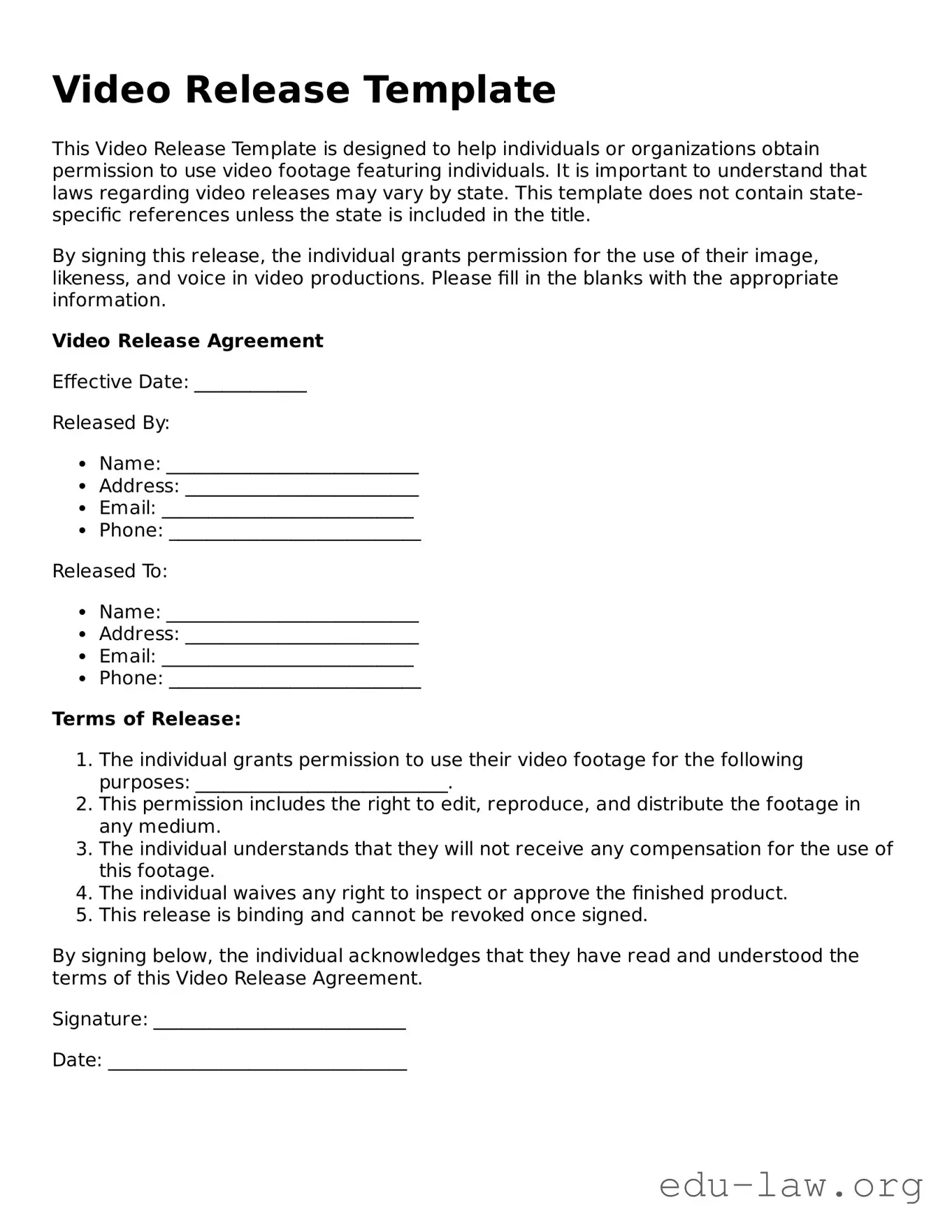
In today’s digital age, where video content is widely shared and consumed, understanding the Video Release form is essential for anyone involved in the creation or distribution of video materials. This form serves as a legal agreement that grants permission to use an individual’s likeness, voice, and image in a video project. It protects both the creator and the participant by clarifying the rights and responsibilities associated with the use of the recorded material. Key aspects of the Video Release form include the scope of usage, the duration of the agreement, and any compensation details, if applicable. By signing this document, individuals affirm their consent and acknowledge that they will not hold the creator liable for any claims related to the use of their image. Whether you are a filmmaker, content creator, or simply someone looking to capture special moments on video, understanding this form is crucial for ensuring that everyone’s rights are respected and protected.
Video Release Template
This Video Release Template is designed to help individuals or organizations obtain permission to use video footage featuring individuals. It is important to understand that laws regarding video releases may vary by state. This template does not contain state-specific references unless the state is included in the title.
By signing this release, the individual grants permission for the use of their image, likeness, and voice in video productions. Please fill in the blanks with the appropriate information.
Video Release Agreement
Effective Date: ____________
Released By:
Released To:
Terms of Release:
By signing below, the individual acknowledges that they have read and understood the terms of this Video Release Agreement.
Signature: ___________________________
Date: ________________________________
| Fact Name | Description |
|---|---|
| Purpose | The Video Release form is used to obtain permission from individuals to use their likeness in video recordings. |
| Consent Requirement | Individuals must provide informed consent before their image or voice can be used in any video content. |
| Governing Law | In California, the form is governed by Civil Code Section 3344, which protects the right of publicity. |
| Revocation | Participants can revoke their consent, but this may depend on the terms outlined in the release. |
| Commercial Use | Separate consent may be required if the video is intended for commercial purposes. |
| Record Keeping | It is essential to keep signed Video Release forms on file for legal protection and verification. |
Completing the Video Release form is an important step in ensuring that all parties are clear about the use of video footage. Once the form is filled out, it can be submitted to the relevant parties for review and approval. Following these steps will help you navigate the process smoothly.
What is a Video Release form?
A Video Release form is a legal document that grants permission for the use of a person's image, voice, or likeness in video recordings. By signing this form, individuals allow their appearances to be captured and used in various media, including promotional materials, social media, or educational content. It is essential for protecting the rights of both the individual and the entity producing the video.
Why do I need to sign a Video Release form?
Signing a Video Release form is crucial for ensuring that you have control over how your image and likeness are used. It protects you from any unauthorized use of your appearance and provides clarity for the producer about the scope of usage. Without this form, there may be legal complications regarding consent and usage rights, which could lead to disputes.
Can I revoke my consent after signing the Video Release form?
Once you sign the Video Release form, it generally cannot be revoked. This means that you cannot later change your mind about the use of your image or likeness in the video. However, if there are specific concerns or conditions, it is advisable to discuss them before signing. Open communication can help address any potential issues.
What should I consider before signing a Video Release form?
Before signing, review the form carefully. Pay attention to how your image will be used and for what duration. Consider whether the usage aligns with your personal values and comfort level. If you have any questions or concerns, ask for clarification. Understanding the implications of your consent is vital for making an informed decision.
Not reading the form carefully: Many individuals rush through the Video Release form without fully understanding its content. This can lead to unintentional agreements to terms they might not agree with.
Missing signatures: Some people forget to sign the form or may overlook the need for a witness signature. A missing signature can render the release invalid.
Incorrect date: Filling in the wrong date can create confusion about when the release was signed. Always double-check the date before submitting the form.
Failing to provide contact information: It’s important to include current contact details. This ensures that the production team can reach the individual if needed.
Not specifying usage rights: Sometimes, people overlook the section that details how the video will be used. Clarifying this can prevent misunderstandings later on.
When working with a Video Release form, several other documents may be necessary to ensure a smooth process. These forms help clarify rights, permissions, and responsibilities related to video content. Below is a list of commonly used documents that often accompany a Video Release form.
Using these documents alongside the Video Release form helps protect all parties involved and ensures that the production runs smoothly. Proper documentation is key to avoiding misunderstandings and legal issues down the line.
The Video Release form shares similarities with the Photo Release form. Both documents serve to obtain permission from individuals to use their likeness in various media formats. A Photo Release form specifically addresses the use of still images, while the Video Release form pertains to moving images. In both cases, the individual granting permission typically relinquishes certain rights to control how their image is used, which can include promotional materials, social media posts, or other public displays.
Another document akin to the Video Release form is the Audio Release form. This form is designed to secure permission for the use of a person's voice or other audio recordings. Similar to the Video Release, the Audio Release outlines the scope of use, ensuring that the individual understands how their audio contributions may be utilized. Both forms aim to protect the rights of the individual while allowing creators to use their contributions in a legally compliant manner.
The Talent Release form is closely related to the Video Release form, particularly in the context of film and television production. This document is used to obtain consent from actors or performers for the use of their performances. Like the Video Release form, it typically includes terms regarding the distribution and duration of use, ensuring that the performer has a clear understanding of how their work will be represented and shared.
The Model Release form is another document that aligns with the Video Release form. This form is often used in commercial photography and videography to secure rights from models or individuals who are featured prominently in visual content. Both forms emphasize the importance of consent and detail how the images or videos may be used, protecting the interests of both the creator and the individual featured.
The Music Release form also bears similarities to the Video Release form. This document is used to secure rights for the use of a specific piece of music in a video or film. Both forms require the individual or entity granting permission to understand the scope of use and any associated compensation. They both ensure that the rights of the creators, whether they are visual or audio, are respected and legally protected.
The Location Release form is relevant as well, especially in the context of filming. This document is used to obtain permission from property owners to film on their premises. While the Video Release form pertains to individuals, the Location Release focuses on the rights of property owners. Both documents are essential for ensuring that all necessary permissions are obtained before filming begins, thus avoiding potential legal disputes.
The Script Release form is another document that can be compared to the Video Release form. This form is used when a writer grants permission for their script to be adapted into a video or film. Both forms involve the transfer of rights, where the creator of the original work allows others to use their intellectual property. This ensures that the writer's contributions are recognized and that the adaptation process is conducted legally.
Finally, the Distribution Agreement can be seen as related to the Video Release form. While it focuses on the terms of distributing a completed video or film, it often references the permissions obtained through the Video Release. Both documents are crucial for ensuring that all parties involved understand their rights and responsibilities regarding the use and distribution of visual content.
When filling out a Video Release form, it is essential to ensure that the process is smooth and clear. Here are some important guidelines to follow:
By following these guidelines, you can help ensure that your experience with the Video Release form is positive and straightforward.
The Video Release form is an important document used in various media and entertainment contexts. However, several misconceptions surround its purpose and implications. Below are six common misconceptions about the Video Release form:
Many believe that only professional filmmakers need a Video Release form. In reality, anyone who records video footage that includes identifiable individuals should consider using this form, regardless of their level of expertise.
Some individuals think that by signing the form, they relinquish all rights to the footage. However, the form typically grants permission for specific uses while retaining other rights for the individual.
There is a misconception that the Video Release form is merely a formality and not legally binding. In fact, when properly executed, it can serve as a legal agreement that protects the interests of all parties involved.
Some believe that only minors require parental consent to be filmed. In truth, consent is necessary for anyone who may be identifiable in the footage, regardless of age.
A common misunderstanding is that the form is only applicable to commercial projects. However, it can also be important for personal projects, social media content, and educational videos.
Many people think that once a Video Release form is signed, it cannot be revoked. While it can be challenging to withdraw consent after the fact, individuals may still have the right to revoke their permission under certain circumstances.
Understanding these misconceptions can help individuals make informed decisions when it comes to using a Video Release form.
When dealing with a Video Release form, it is essential to understand its purpose and how to fill it out correctly. Here are some key takeaways to consider:
By keeping these points in mind, you can navigate the Video Release form process more effectively and ensure that all parties are protected.