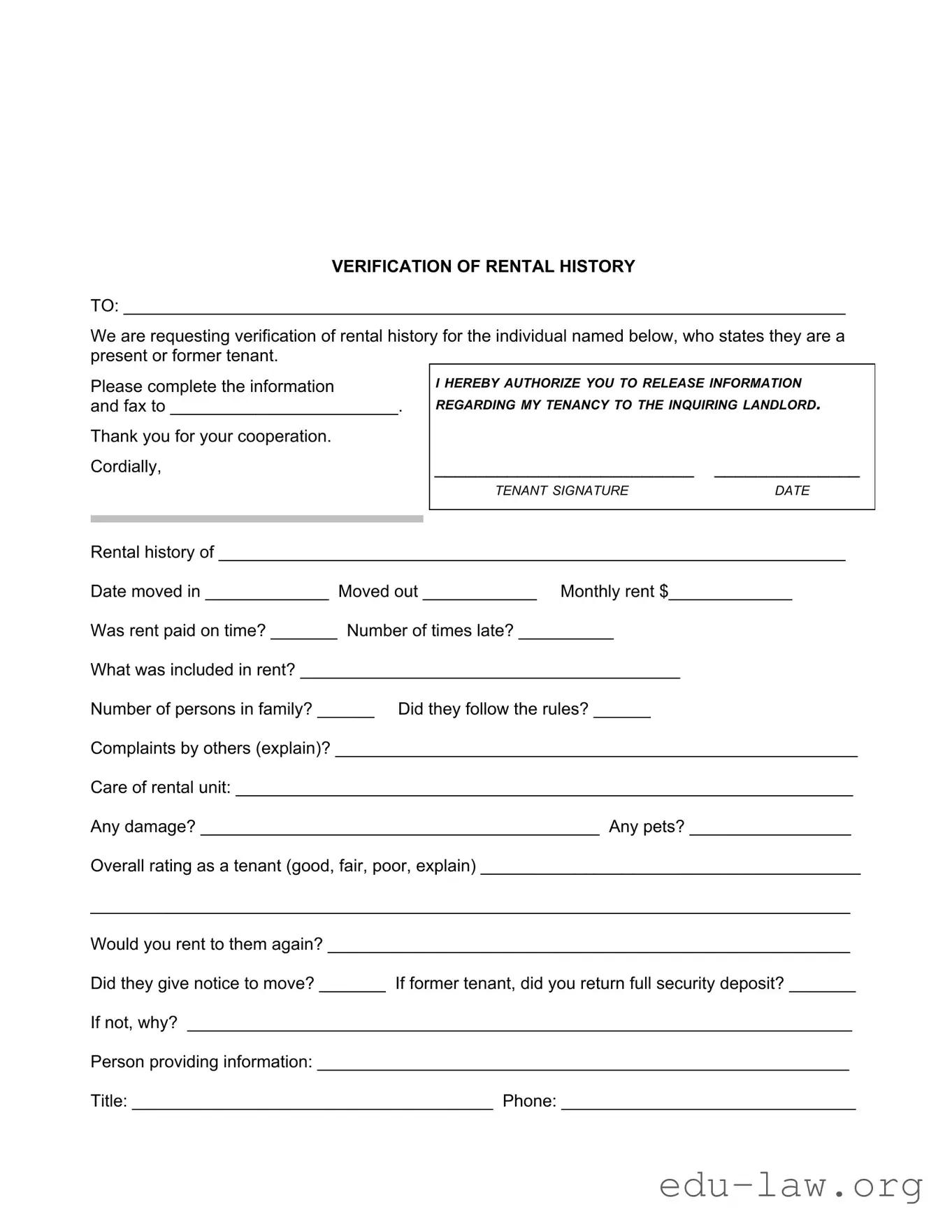
The Verification Rental form serves as a crucial tool for landlords and property managers seeking to assess a potential tenant's rental history. This document requests specific information about an individual's past tenancy, whether they are a current or former tenant. It includes essential details such as the tenant's move-in and move-out dates, monthly rent amount, and payment history. Additionally, the form inquires about the tenant's adherence to rental rules, any complaints from neighbors, and the overall condition of the rental unit. Landlords are asked to provide insights into the tenant's behavior, including whether they would consider renting to them again and the status of the security deposit upon moving out. By gathering this information, the Verification Rental form helps to create a comprehensive picture of the tenant's reliability and responsibility, ultimately aiding landlords in making informed decisions about prospective renters.
VERIFICATION OF RENTAL HISTORY
TO: ____________________________________________________________________________
We are requesting verification of rental history for the individual named below, who states they are a present or former tenant.
Please complete the information |
|
I HEREBY AUTHORIZE YOU TO RELEASE INFORMATION |
|
|
|
|
|
and fax to ________________________. |
|
REGARDING MY TENANCY TO THE INQUIRING LANDLORD. |
|
Thank you for your cooperation. |
|
|
|
Cordially, |
|
_________________________ |
______________ |
|
|
TENANT SIGNATURE |
DATE |
|
|
|
|
|
|
|
|
|
|
|
|
Rental history of __________________________________________________________________
Date moved in _____________ Moved out ____________ Monthly rent $_____________
Was rent paid on time? _______ Number of times late? __________
What was included in rent? ________________________________________
Number of persons in family? ______ Did they follow the rules? ______
Complaints by others (explain)? _______________________________________________________
Care of rental unit: _________________________________________________________________
Any damage? __________________________________________ Any pets? _________________
Overall rating as a tenant (good, fair, poor, explain) ________________________________________
________________________________________________________________________________
Would you rent to them again? _______________________________________________________
Did they give notice to move? _______ If former tenant, did you return full security deposit? _______
If not, why? ______________________________________________________________________
Person providing information: ________________________________________________________
Title: ______________________________________ Phone: _______________________________
| Fact Name | Description |
|---|---|
| Purpose | The Verification of Rental History form is used to confirm the rental history of an individual, either a current or former tenant. |
| Authorization | The tenant must provide authorization to release their rental information, ensuring compliance with privacy regulations. |
| Information Required | The form requests detailed information, including move-in and move-out dates, monthly rent, and payment history. |
| Tenant Evaluation | Landlords are asked to provide an overall rating of the tenant, which can influence future rental decisions. |
| State-Specific Forms | Some states may have specific requirements or additional forms related to rental history verification. Check local laws for compliance. |
| Confidentiality | The information provided must be handled confidentially, respecting the tenant's privacy and adhering to applicable laws. |
| Contact Information | The form requires the contact information of the person providing the rental history, facilitating follow-up if necessary. |
Completing the Verification Rental form is essential for confirming a tenant's rental history. Follow these steps carefully to ensure all necessary information is accurately provided.
Once the form is completed, it should be faxed to the number specified at the top. This will ensure that the inquiring landlord receives the necessary information to make an informed decision.
What is the purpose of the Verification Rental form?
The Verification Rental form is designed to collect information about a tenant's rental history. Landlords use this form to verify details about a current or former tenant's behavior, payment history, and overall suitability as a renter. This helps them make informed decisions when considering new tenants.
Who should fill out the Verification Rental form?
The form should be filled out by the landlord or property manager of the tenant in question. They will provide the necessary information about the tenant’s rental history, including payment habits, compliance with rules, and overall conduct during their tenancy.
What information is requested on the form?
The form requests various details such as the tenant's rental period, monthly rent amount, payment punctuality, and any complaints received. It also asks for information about the care of the rental unit, any damages, pets, and an overall rating of the tenant's behavior. This comprehensive approach ensures that potential landlords receive a complete picture of the tenant's history.
How is the information on the form used?
The information collected through the Verification Rental form is used by prospective landlords to assess whether to approve a rental application. By understanding a tenant's past behavior, landlords can gauge the likelihood of timely rent payments and adherence to property rules, ultimately reducing the risk of future issues.
What should I do if I receive a Verification Rental form?
If you receive a Verification Rental form, it is important to complete it accurately and honestly. Provide all requested information and return it to the requesting party as soon as possible. Your timely response helps facilitate the rental process for the tenant and the prospective landlord.
Is there a deadline for submitting the Verification Rental form?
While there may not be a strict deadline, it is best to complete and return the form promptly. Delays in providing this information can hinder the tenant's application process and may affect their chances of securing a rental. Aim to submit the form within a few business days to ensure a smooth transition for everyone involved.
Incomplete Tenant Information: Failing to provide complete details about the tenant, such as their full name or contact information, can delay the verification process.
Missing Authorization Signature: Not signing the authorization section can prevent the release of necessary information from previous landlords.
Incorrect Dates: Entering inaccurate move-in or move-out dates may lead to confusion regarding the tenant's rental history.
Ambiguous Payment History: Providing vague responses about rent payment history, such as saying "sometimes" instead of specifying the number of late payments, can create uncertainty.
Omitting Rental Unit Condition: Failing to describe the care of the rental unit or any damages can misrepresent the tenant's responsibility.
Neglecting to Mention Pets: Not indicating whether the tenant had pets, especially if it was a requirement, may lead to misunderstandings about compliance with rental agreements.
Overall Rating Ambiguity: Providing a vague overall rating, such as "fair" without explanation, does not give a clear picture of the tenant's behavior.
Failure to Provide Contact Information: Not including the contact details of the person providing the information can hinder follow-up questions or clarifications.
Not Following Up: After submitting the form, neglecting to follow up with the requesting landlord can result in delays or misunderstandings.
When applying for a rental property, various documents help landlords assess a tenant's suitability. The Verification Rental form is just one part of this process. Below are additional forms and documents commonly used alongside it.
These documents, when used together, provide a comprehensive view of a potential tenant's reliability and suitability for renting a property. They help landlords make informed decisions while ensuring a smooth rental process for everyone involved.
The Rental Reference Form serves a similar purpose to the Verification Rental form. It is used by landlords to gather information about a potential tenant’s rental history. This form typically asks for details about the tenant's previous residences, including dates of tenancy, payment history, and any issues that arose during their stay. Both documents aim to ensure that the new landlord can make an informed decision based on the tenant's past behavior.
The Tenant Verification Form is another document that shares similarities with the Verification Rental form. This form is often used to confirm a tenant's rental history and payment behavior. It requires previous landlords to provide specific information regarding the tenant's reliability, including timely payments and adherence to lease agreements. Like the Verification Rental form, it helps landlords assess the risk of renting to a new tenant.
The Lease Verification Form is also comparable. It is designed to verify the terms of a lease agreement and the tenant's compliance with those terms. This form typically requests details about the rental unit, payment history, and any complaints from neighbors. Both forms are crucial for landlords who want to ensure that they are renting to responsible individuals.
The Rental History Report is a document that provides a comprehensive overview of a tenant's rental history. It includes information about previous addresses, payment records, and any legal issues related to the tenancy. Similar to the Verification Rental form, it helps landlords make informed decisions by presenting a clear picture of the tenant's past behavior.
The Landlord Reference Form is another document that serves a similar function. This form is completed by previous landlords and provides insights into the tenant's behavior and reliability. It often includes questions about payment history, property maintenance, and overall conduct. Like the Verification Rental form, it aims to provide a reliable reference for prospective landlords.
The Tenant Background Check Authorization Form is also relevant. This document allows landlords to conduct a background check on potential tenants, including their rental history. It typically requires the tenant's consent and may ask for similar information regarding previous rental experiences. Both forms are essential tools for landlords to ensure they are making safe rental decisions.
Finally, the Rental Application Form is similar in that it collects information from prospective tenants. This form usually includes sections for personal information, rental history, and references. Like the Verification Rental form, it is used to evaluate a tenant’s suitability for a rental property. Both documents work together to help landlords assess potential risks before entering into a lease agreement.
When filling out the Verification Rental form, it is important to follow certain guidelines to ensure clarity and accuracy. Here are six things to do and not to do:
Following these guidelines can help create a comprehensive rental history that serves both the tenant and the landlord effectively.
Misconceptions about the Verification Rental form can lead to confusion for both landlords and tenants. Here are nine common misunderstandings:
Filling out the Verification Rental form is a crucial step in confirming a tenant's rental history. Here are some key takeaways to keep in mind:
By following these guidelines, you can ensure a smooth verification process that benefits both the tenant and the prospective landlord.