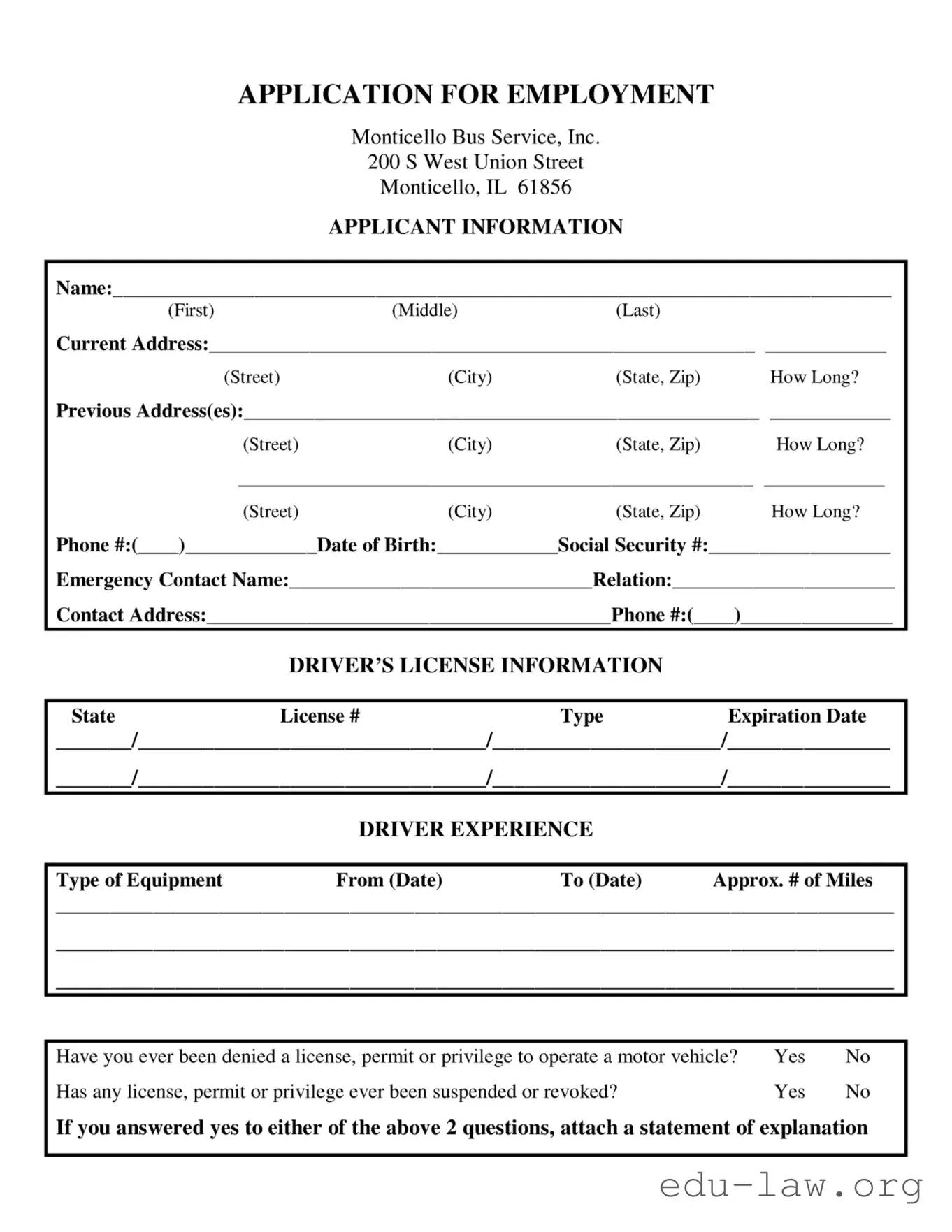
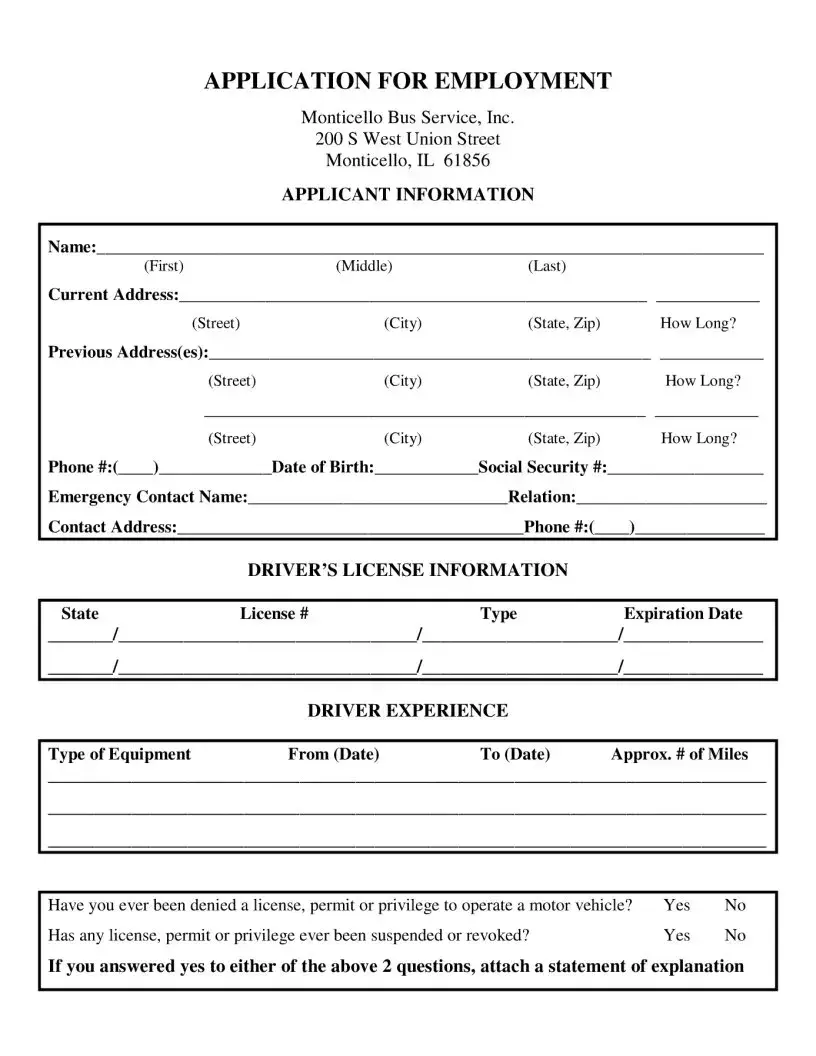
The Truck Driver Job form is an essential document for individuals seeking employment as truck drivers, specifically with Monticello Bus Service in Illinois. This application captures vital applicant information, including personal details such as name, address, phone number, and date of birth. It also requires the applicant's Social Security number and emergency contact information. A critical section of the form focuses on the driver's license details, including the state of issuance, license number, type, and expiration date. Additionally, the form delves into the applicant's driving experience, asking for a detailed employment record that spans at least three years and highlights any commercial driving experience from the past decade. Applicants must disclose any past issues with licenses, such as suspensions or revocations, and provide explanations if applicable. Furthermore, the form requires information about previous employers, including addresses, phone numbers, and reasons for leaving, while also assessing whether the applicant was subject to specific federal regulations during their employment. This comprehensive approach ensures that potential employers can evaluate the qualifications and background of applicants effectively.
| Fact Name | Description |
|---|---|
| Applicant Information | This section collects personal details such as name, address, phone number, and date of birth. |
| Driver's License Information | Applicants must provide their state license number, type, and expiration date. |
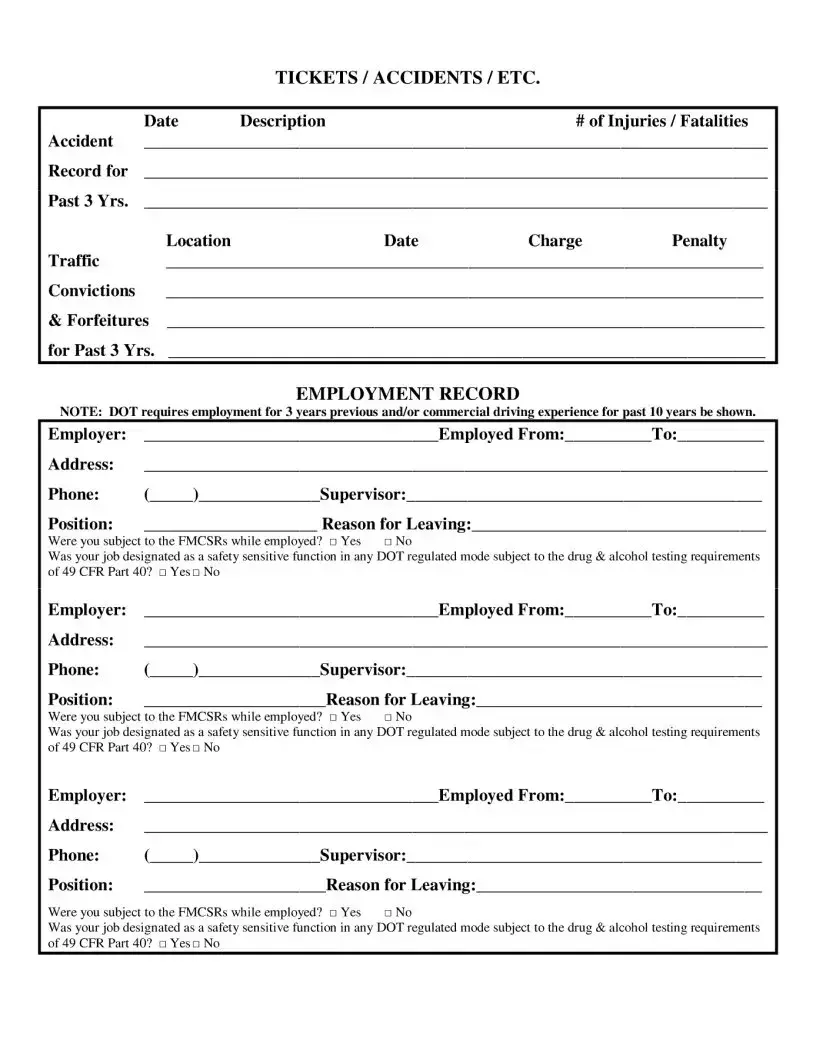
| Employment Record | Applicants need to list employment for the past three years and any commercial driving experience for the last ten years. |
| FMCSRs Compliance | Questions regarding compliance with the Federal Motor Carrier Safety Regulations (FMCSRs) are included. |
| Governing Laws | This form is subject to the regulations outlined in 49 CFR Part 40 and state-specific laws. |
Completing the Truck Driver Job form is an important step in your application process. This form collects essential information regarding your personal details, driving experience, and employment history. Follow these steps carefully to ensure all necessary information is provided accurately.
After filling out the form, review it thoroughly to ensure accuracy. This will help present your qualifications clearly and effectively to potential employers.
What information do I need to provide on the Truck Driver Job form?
You will need to provide personal details such as your name, current and previous addresses, phone number, and date of birth. Additionally, your Social Security number and emergency contact information are required. This information helps the employer verify your identity and contact you if necessary.
What details are required regarding my driver’s license?
The form asks for your state of issuance, license number, type of license, and expiration date. You will also need to specify the type of equipment you are qualified to operate. This information is crucial for ensuring you meet the legal requirements to drive a commercial vehicle.
How do I report my driving experience?
What if I have had my license denied or suspended?
If you have ever been denied a license, permit, or had any license suspended or revoked, you must answer "yes" to the question on the form. You will also need to attach a statement explaining the circumstances. Transparency is key, as this information is critical for the hiring process.
What are FMCSRs and why do they matter?
FMCSRs refer to the Federal Motor Carrier Safety Regulations. These regulations govern the operation of commercial motor vehicles. If you were subject to these regulations during your previous employment, you should indicate that on the form. This helps the employer understand your compliance history with safety regulations.
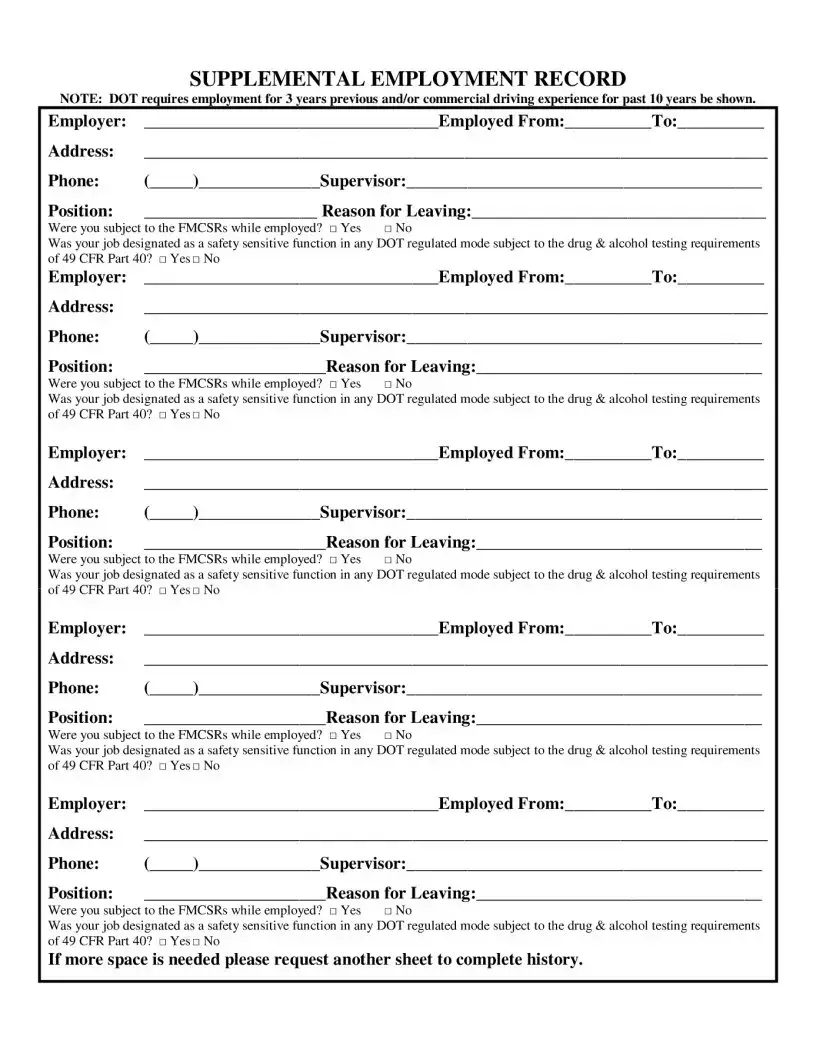
What if I have more than three previous employers?
The form allows for additional space if you need to list more than three previous employers. If you require more space, simply request another sheet to complete your employment history. Providing a complete history is essential for a thorough evaluation of your qualifications.
Do I need to provide information about accidents or tickets?
Yes, if you have any accidents or tickets, you should be prepared to disclose this information. The form may not specifically ask for this, but being upfront about your driving record can help establish trust with your potential employer.
How long does the application process take?
The application process duration can vary depending on the employer's review procedures. Typically, you can expect to hear back within a week or two after submitting your application. However, it may take longer during peak hiring seasons.
What happens after I submit my application?
Once your application is submitted, it will be reviewed by the hiring team. If your qualifications match the job requirements, you may be contacted for an interview. Be prepared to discuss your experience and any relevant details during the interview process.
Is there a way to check the status of my application?
Most companies will provide a way to check the status of your application, either through an online portal or by contacting the human resources department directly. If you haven’t heard back within a reasonable timeframe, it’s perfectly acceptable to follow up to inquire about your application status.
Inaccurate Personal Information: Many applicants fail to provide accurate or complete personal information, such as their current address or phone number. This can lead to communication issues during the hiring process.
Incomplete Employment History: Applicants often do not include all relevant employment history, especially when it comes to previous driving experience. The Department of Transportation (DOT) requires a detailed record for the past three years and any commercial driving experience for the past ten years.
Neglecting to Disclose License Issues: Some individuals forget to mention if they have had any licenses suspended or revoked. This information is crucial for the employer to assess eligibility and compliance with regulations.
Ignoring Drug and Alcohol Testing Questions: Applicants sometimes overlook questions about whether their previous jobs were subject to drug and alcohol testing. This can be a significant factor in the hiring decision, especially in safety-sensitive positions.
The Truck Driver Job form is a critical document for those seeking employment in the trucking industry. However, several other forms and documents are often required to complete the application process. Each of these documents serves a specific purpose and provides essential information to the employer regarding the applicant's qualifications and background.
In summary, while the Truck Driver Job form is vital for initiating the application process, these additional documents help employers assess the qualifications and suitability of candidates for driving positions. Each form contributes to a comprehensive understanding of the applicant's background and capabilities.
The Commercial Driver's License (CDL) application is similar to the Truck Driver Job form in that both require detailed personal information and driving history. Applicants must provide their name, address, and contact information. Additionally, the CDL application requires information about driving experience and any previous violations or suspensions, much like the Truck Driver Job form. Both documents aim to ensure that the applicant meets the necessary qualifications and has a safe driving record, which is essential for operating commercial vehicles.
The Employment History form also shares similarities with the Truck Driver Job form. It typically requires applicants to list their previous employers, positions held, and reasons for leaving. Both forms emphasize the importance of a complete employment record, particularly in relation to driving experience. The Employment History form may also inquire about specific job responsibilities, which can be crucial for assessing an applicant’s suitability for a driving position.
The Background Check Authorization form aligns with the Truck Driver Job form in that both documents seek to verify the applicant's history. While the Truck Driver Job form collects information about past driving records and employment, the Background Check Authorization form allows employers to conduct a more thorough investigation into an applicant’s criminal history and driving record. This ensures that the employer can make informed decisions about hiring based on safety and reliability.
The Drug and Alcohol Testing Consent form is another document that shares a connection with the Truck Driver Job form. Given that driving positions often require compliance with federal regulations regarding substance use, both forms address the need for testing. The Truck Driver Job form includes questions about whether the applicant has been subject to drug and alcohol testing requirements, while the consent form explicitly allows employers to conduct such tests, ensuring a safe work environment for all employees.
Finally, the Motor Vehicle Record (MVR) request form is similar to the Truck Driver Job form as it is focused on obtaining a driver’s history. The Truck Driver Job form requires applicants to disclose their driving record and any incidents, while the MVR request form is used by employers to request official driving records from the state. This process helps employers verify the information provided by applicants and assess their driving qualifications, which is crucial for roles that involve operating heavy machinery or commercial vehicles.
When filling out the Truck Driver Job form, there are several important considerations to keep in mind. Below are four things you should do, as well as four things you should avoid.
Things You Should Do:
Things You Shouldn't Do:
Misconceptions about the truck driver job application process can lead to confusion and missed opportunities. Here are seven common misconceptions explained:
When filling out the Truck Driver Job form, it is essential to provide accurate and complete information to ensure a smooth application process. Here are some key takeaways to consider:
By following these guidelines, applicants can enhance their chances of a successful application and demonstrate their commitment to safety and compliance in the trucking industry.