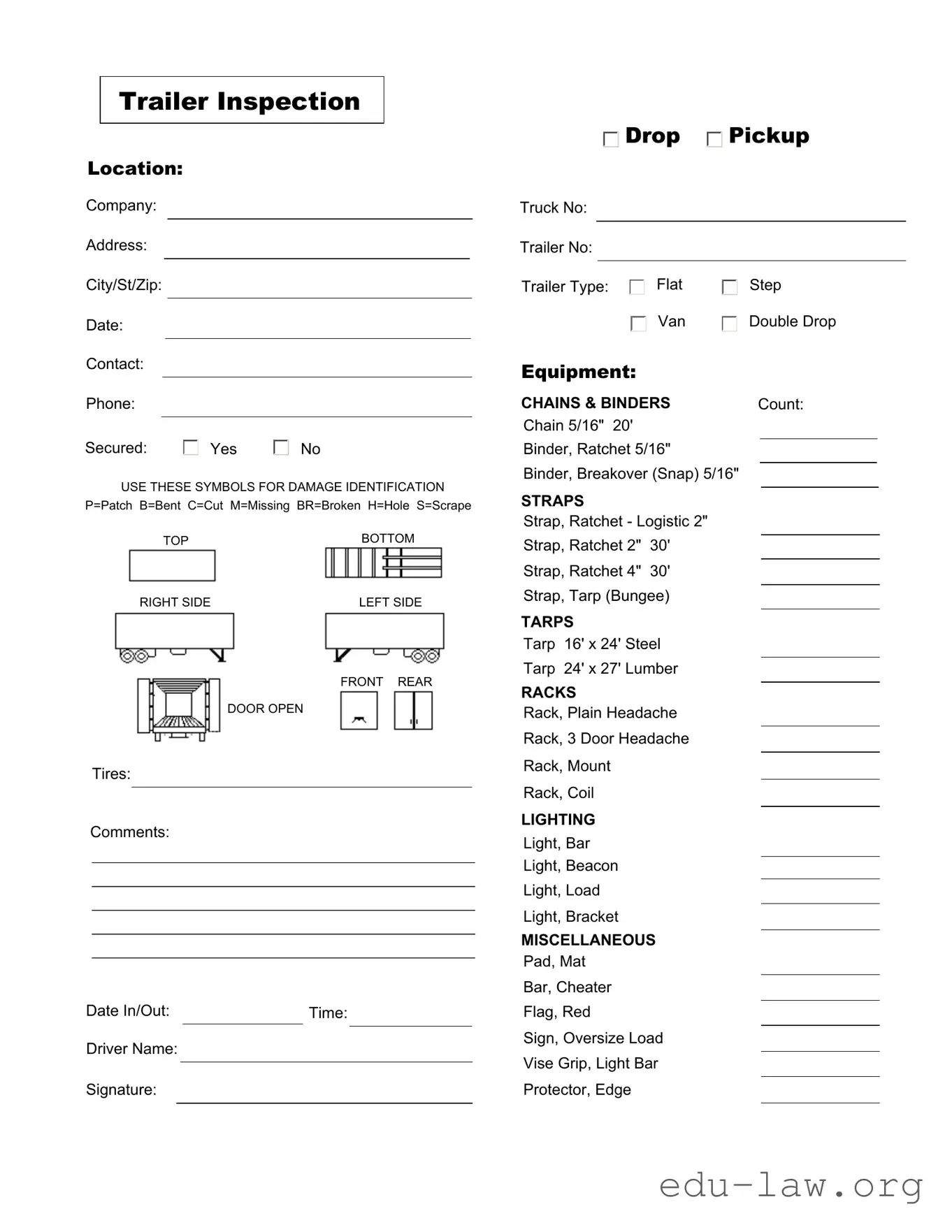
The Trailer Inspection form serves as a crucial tool for ensuring the safety and functionality of trailers used in transportation. It includes essential details such as the inspection location, date, and contact information for the pickup company. Each trailer is assigned a unique number, and its type is specified, allowing for easy identification. The form also requires information about the equipment being inspected, including various types of chains, binders, straps, tarps, and lighting components. A section is dedicated to damage identification, using symbols to indicate specific issues like patches, bends, cuts, and missing parts. Additionally, the form captures tire conditions and provides space for comments, making it easier to document any concerns. The date and time of the inspection, along with the driver's name and signature, are also recorded to ensure accountability. By systematically addressing these aspects, the Trailer Inspection form plays a vital role in maintaining safety standards in the transportation industry.
Trailer Inspection
Location:
Drop |
Pickup |
Company:
Address:
City/St/Zip:
Date:
Contact:
Truck No:
Trailer No:
Trailer Type:
Equipment:
Flat
Van
Step
Double Drop
Phone:
Secured: |
Yes |
No |
USE THESE SYMBOLS FOR DAMAGE IDENTIFICATION P=Patch B=Bent C=Cut M=Missing BR=Broken H=Hole S=Scrape
TOPBOTTOM
RIGHT SIDE |
LEFT SIDE |
FRONT REAR
DOOR OPEN
Tires:
Comments:
Date In/Out: |
|
Time: |
|
|
|
Driver Name:
Signature:
CHAINS & BINDERS |
Count: |
|
||
Chain 5/16" 20' |
|
|
|
|
Binder, Ratchet 5/16" |
|
|
|
|
|
|
|
||
Binder, Breakover (Snap) 5/16" |
|
|
|
|
|
|
|
||
STRAPS |
|
|
|
|
|
|
|
|
|
Strap, Ratchet - Logistic 2" |
|
|
|
|
Strap, Ratchet 2" |
30' |
|
|
|
|
|
|
||
Strap, Ratchet 4" |
30' |
|
|
|
|
|
|
||
Strap, Tarp (Bungee)
TARPS
Tarp 16' x 24' Steel
Tarp 24' x 27' Lumber
RACKS
Rack, Plain Headache
Rack, 3 Door Headache
Rack, Mount
Rack, Coil
LIGHTING
Light, Bar
Light, Beacon
Light, Load
Light, Bracket
MISCELLANEOUS
Pad, Mat
Bar, Cheater
Flag, Red
Sign, Oversize Load
Vise Grip, Light Bar
Protector, Edge
| Fact Name | Description |
|---|---|
| Inspection Purpose | The Trailer Inspection form is used to ensure that trailers meet safety and operational standards before they are put into service. |
| Required Information | This form requires details such as the inspection location, company information, trailer type, and equipment specifics. |
| DAMAGE IDENTIFICATION | Specific symbols are used to identify different types of damage, such as P for Patch, B for Bent, and BR for Broken. |
| State Regulations | Each state may have its own regulations governing trailer inspections. For example, California Vehicle Code Section 34500 mandates regular inspections for commercial vehicles. |
| Sign-off Requirement | The form must be signed by the driver, confirming that the inspection has been completed and all information is accurate. |
Completing the Trailer Inspection form is a straightforward process. Make sure to gather all necessary information before you start. This will help you fill it out accurately and efficiently.
What is the purpose of the Trailer Inspection form?
The Trailer Inspection form serves as a comprehensive checklist to ensure that trailers are in safe and operational condition before they are used for transportation. It helps in identifying any existing damages or maintenance needs. By documenting the condition of the trailer, the form also aids in compliance with safety regulations and reduces the risk of accidents on the road.
What information is required on the Trailer Inspection form?
The form requires several key details, including the inspection location, date, contact information, truck and trailer numbers, and trailer type. Additionally, it includes a section for identifying any damages using specific symbols, such as P for Patch and BR for Broken. The form also captures information about tires, chains, binders, straps, tarps, lighting, and other miscellaneous items. This thorough documentation ensures that all aspects of the trailer are assessed.
How should damages be reported on the form?
Damages should be reported using the designated symbols provided in the form. For example, if a trailer has a hole, the inspector would mark "H" in the appropriate section. This standardized method allows for clear communication about the trailer's condition. In addition to marking damages, inspectors should also provide comments to elaborate on any specific issues or concerns that may not be captured by the symbols alone.
Who is responsible for completing the Trailer Inspection form?
Neglecting to fill in all required fields: Each section of the form is important. Leaving out details like the Trailer No or Contact can lead to confusion and delays.
Using incorrect symbols for damage identification: Familiarize yourself with the symbols provided for damage. Misidentifying damage can result in inadequate repairs or misunderstandings.
Failing to specify the trailer type: Indicating the correct Trailer Type is essential. This helps in assessing the specific requirements for inspection and maintenance.
Omitting comments: Providing comments about the trailer's condition can be invaluable. If there are issues that need addressing, note them down clearly.
Not signing the form: A signature validates the inspection. Ensure that the Driver Name and Signature fields are completed to confirm accountability.
Incorrectly counting chains and binders: Double-check the count of Chains and Binders. Inaccurate counts can lead to safety issues during transport.
Ignoring tire condition: The condition of the tires is crucial for safety. Always take the time to assess and comment on their state before submitting the form.
When conducting a trailer inspection, several other forms and documents can complement the Trailer Inspection form. These documents help ensure comprehensive record-keeping and compliance with safety regulations. Below are four commonly used forms in conjunction with the Trailer Inspection form.
Utilizing these forms alongside the Trailer Inspection form enhances safety and accountability in transportation operations. Proper documentation not only protects the driver and cargo but also supports compliance with industry standards.
The Vehicle Inspection Report serves a similar purpose to the Trailer Inspection form by documenting the condition and safety of a vehicle before it is used. This report typically includes sections for the vehicle's identification, inspection date, and the inspector's name. It highlights any issues found, such as mechanical problems or safety hazards, ensuring that the vehicle is roadworthy. Like the Trailer Inspection form, it uses symbols or codes to indicate the nature of any damage, making it easy for anyone reviewing the report to understand the vehicle's condition at a glance.
The Equipment Maintenance Log is another document that shares similarities with the Trailer Inspection form. This log tracks the maintenance history of equipment over time, including inspections, repairs, and any parts replaced. It often includes details such as the date of service, the technician's name, and a description of the work performed. Both documents emphasize the importance of regular checks to ensure safety and functionality, thus promoting proactive maintenance practices.
The Pre-Trip Inspection Checklist is crucial for drivers and is closely aligned with the Trailer Inspection form. This checklist outlines the essential components that need to be inspected before a trip, such as brakes, lights, and tires. It serves as a guide to ensure that all necessary checks are completed, helping to prevent accidents caused by mechanical failures. Both documents aim to enhance safety and compliance with regulations, underscoring the importance of thorough inspections.
The Load Securement Checklist is another document that parallels the Trailer Inspection form in its focus on safety. This checklist ensures that cargo is properly secured before transport, detailing the types of equipment used, such as chains and straps. It may include specific instructions on how to secure various types of loads, promoting safe transportation practices. Like the Trailer Inspection form, it emphasizes the need for careful inspection to prevent accidents during transit.
The Maintenance Request Form is similar to the Trailer Inspection form as it documents any issues that require attention. This form is typically filled out by operators or drivers when they notice a problem with the equipment. It includes details about the nature of the issue and often requires a signature for accountability. Both documents serve to facilitate communication about equipment condition, ensuring that necessary repairs are addressed promptly.
The Incident Report Form is another relevant document that shares characteristics with the Trailer Inspection form. This form is used to document any accidents or incidents involving equipment. It includes details such as the date, time, location, and description of the incident, as well as any damages observed. Both forms aim to capture critical information regarding equipment safety and condition, helping organizations to analyze incidents and improve safety measures.
The Safety Inspection Report is closely related to the Trailer Inspection form in that it assesses compliance with safety regulations. This report typically covers various aspects of safety, including equipment condition, operational procedures, and employee practices. It aims to identify potential hazards and ensure that safety standards are met. Both documents play a vital role in promoting a culture of safety within organizations, highlighting the importance of regular inspections.
Finally, the Cargo Inspection Form is similar to the Trailer Inspection form as it focuses on the condition of the cargo being transported. This form documents the state of the cargo before and after transport, noting any damages or discrepancies. It helps ensure that the cargo is intact and secure, just as the Trailer Inspection form ensures that the trailer itself is in good condition. Both documents are essential for maintaining accountability and ensuring that safety standards are upheld throughout the transportation process.
When filling out the Trailer Inspection form, attention to detail is crucial. Here are five key things to remember:
Conversely, there are several pitfalls to avoid:
Following these guidelines can streamline the inspection process and enhance safety for everyone involved.
Misconceptions about the Trailer Inspection form can lead to confusion and potential issues during inspections. Here are ten common misunderstandings:
Different types of trailers may have unique requirements. It's important to refer to the specific guidelines for each trailer type.
This form serves as a record for both the inspector and the owner. Keeping a copy can help in addressing any future concerns.
It’s essential to document all types of damage, even if it’s not immediately visible. Hidden issues can lead to significant problems later.
Indicating whether the trailer is secured is crucial. It affects safety during transport and compliance with regulations.
Tires are a critical component. Their condition must be assessed and documented as part of the inspection process.
Providing comments can clarify specific issues or observations. This information can be valuable for future inspections.
The date of the inspection is vital for record-keeping and ensuring compliance with inspection intervals.
The driver’s signature confirms that they acknowledge the inspection findings. This can be important for accountability.
While safety is paramount, minor wear and tear may not disqualify a trailer. Understanding what constitutes acceptable condition is key.
While the form is important, it’s part of a broader set of regulations and standards that must also be followed.
When filling out and using the Trailer Inspection form, keep these key takeaways in mind: