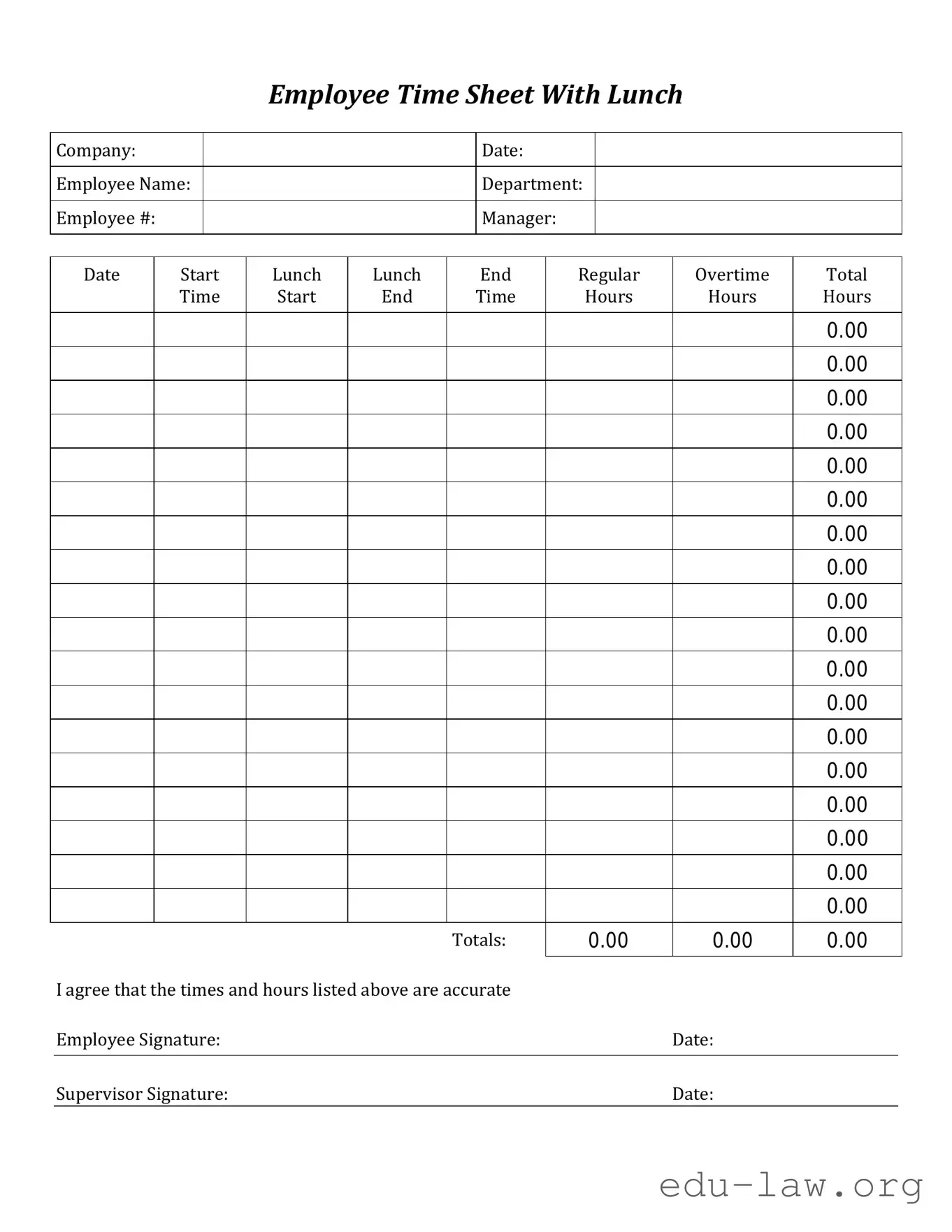
The Time Card form plays a crucial role in the workplace, serving as a vital tool for tracking employee hours and ensuring accurate payroll processing. This form typically includes sections for recording the date, hours worked, and any breaks taken, allowing employees to log their time efficiently. It may also feature spaces for overtime hours, project codes, and signatures, which help verify the accuracy of the reported hours. By maintaining a clear record of attendance and work hours, the Time Card form not only assists in payroll calculations but also helps employers comply with labor laws and regulations. Whether used in a corporate office, a retail environment, or a construction site, this form streamlines the process of timekeeping, making it easier for both employees and employers to stay organized and accountable. Understanding the components and proper usage of the Time Card form is essential for anyone looking to navigate the complexities of time tracking and payroll management effectively.

Employee Time Sheet With Lunch
Company:
Employee Name:
Employee #:
Date:
Department:
Manager:
Date |
Start |
Lunch |
Lunch |
End |
Regular |
Overtime |
Total |
|
Time |
Start |
End |
Time |
Hours |
Hours |
Hours |
|
|
|
|
|
|
|
|
|
|
|
|
|
|
|
0.00 |
|
|
|
|
|
|
|
|
|
|
|
|
|
|
|
0.00 |
|
|
|
|
|
|
|
|
|
|
|
|
|
|
|
0.00 |
|
|
|
|
|
|
|
|
|
|
|
|
|
|
|
0.00 |
|
|
|
|
|
|
|
|
|
|
|
|
|
|
|
0.00 |
|
|
|
|
|
|
|
|
|
|
|
|
|
|
|
0.00 |
|
|
|
|
|
|
|
|
|
|
|
|
|
|
|
0.00 |
|
|
|
|
|
|
|
|
|
|
|
|
|
|
|
0.00 |
|
|
|
|
|
|
|
|
|
|
|
|
|
|
|
0.00 |
|
|
|
|
|
|
|
|
|
|
|
|
|
|
|
0.00 |
|
|
|
|
|
|
|
|
|
|
|
|
|
|
|
0.00 |
|
|
|
|
|
|
|
|
|
|
|
|
|
|
|
0.00 |
|
|
|
|
|
|
|
|
|
|
|
|
|
|
|
0.00 |
|
|
|
|
|
|
|
|
|
|
|
|
|
|
|
0.00 |
|
|
|
|
|
|
|
|
|
|
|
|
|
|
|
0.00 |
|
|
|
|
|
|
|
|
|
|
|
|
|
|
|
0.00 |
|
|
|
|
|
|
|
|
|
|
|
|
|
|
|
0.00 |
|
|
|
|
|
|
|
|
|
|
|
|
|
|
|
0.00 |
|
|
|
|
|
|
|
|
|
|
|
|
Totals: |
0.00 |
0.00 |
0.00 |
|
|
|
|
|
|
|
|
I agree that the times and hours listed above are accurate |
|
Employee Signature: |
Date: |
|
|
Supervisor Signature: |
Date: |
|
|
| Fact Name | Description |
|---|---|
| Purpose | The Time Card form is used to track employee hours worked for payroll purposes. |
| Submission Frequency | Employees typically submit Time Cards on a weekly or bi-weekly basis, depending on company policy. |
| State-Specific Forms | Some states require specific formats for Time Cards, which can vary by jurisdiction. |
| Governing Laws | In California, for example, employers must comply with the California Labor Code regarding timekeeping. |
| Accuracy Requirement | Employees are responsible for ensuring that their reported hours are accurate and truthful. |
| Consequences of Inaccuracy | Submitting false information on a Time Card can lead to disciplinary action, including termination. |
Filling out the Time Card form is an important task that helps ensure accurate tracking of work hours. Once completed, this form will be submitted for processing, allowing for timely payroll and record-keeping.
What is a Time Card form?
A Time Card form is a document used by employees to record the hours they have worked during a specific pay period. It serves as an official record of attendance and hours worked, ensuring accurate payroll processing. Employees typically fill out this form weekly or bi-weekly, depending on the employer's payroll schedule.
How do I fill out a Time Card form?
Filling out a Time Card form is straightforward. Start by entering your name, employee ID, and the pay period dates. Next, record your daily hours worked, including start and end times. If applicable, note any breaks taken. Finally, sign and date the form to confirm its accuracy. Always double-check your entries to avoid errors that could affect your paycheck.
Why is it important to submit my Time Card on time?
Submitting your Time Card on time is crucial for several reasons. Timely submission ensures that your hours are accurately processed for payroll. Late submissions can lead to delays in payment or even payment inaccuracies. Additionally, consistent and punctual submissions help maintain a good record with your employer, reflecting professionalism and responsibility.
What should I do if I made a mistake on my Time Card?
If you notice a mistake on your Time Card after submission, inform your supervisor or HR department as soon as possible. Depending on the company's policy, you may need to fill out a correction form or submit a revised Time Card. Prompt action can help prevent any issues with payroll and ensure that you receive the correct compensation.
Can I use a digital Time Card instead of a paper one?
Many companies now offer digital Time Card options, which can be more efficient and easier to manage. If your employer provides a digital platform, you can typically log your hours online or via an app. Check with your HR department to see if this option is available and to understand any specific guidelines for using digital Time Cards.
What happens if I forget to submit my Time Card?
Forgetting to submit your Time Card can lead to complications with your paycheck. If you realize you missed the deadline, contact your supervisor or HR immediately. They may allow a late submission or provide guidance on how to rectify the situation. However, it's important to develop a routine to avoid forgetting in the future, such as setting reminders or keeping your Time Card in a visible location.
Are there any consequences for submitting inaccurate Time Cards?
Submitting inaccurate Time Cards can have serious consequences, including disciplinary action. Employers rely on these forms for payroll accuracy, and discrepancies can lead to overpayment or underpayment. In some cases, repeated inaccuracies may result in further scrutiny or action from management. Always strive for accuracy and honesty when filling out your Time Card to maintain trust and integrity in the workplace.
Not recording hours accurately: It's essential to log the exact hours worked. Rounding up or down can lead to discrepancies in pay.
Forgetting to include breaks: Many people overlook breaks. If your company policy requires tracking break times, make sure to include them.
Neglecting to sign the form: A signature often serves as verification of the hours submitted. Without it, the form may be considered incomplete.
Using incorrect codes: Each task or project may have specific codes. Ensure you use the right ones to avoid confusion and delays in processing.
Submitting late: Timeliness matters. Submitting the time card after the deadline can result in delayed payments.
Failing to double-check entries: Mistakes can happen. Review your entries before submission to catch any errors.
Not keeping a copy: Always retain a copy of your submitted time card. This can serve as a reference if any issues arise later.
The Time Card form is an essential document for tracking employee hours worked. However, it often accompanies other forms and documents that help streamline payroll and ensure compliance with labor laws. Here are some common documents that are frequently used alongside the Time Card form:
Understanding these forms can help employees and employers work together more efficiently. Each document plays a vital role in the payroll process and contributes to a well-organized workplace.
The Time Sheet is closely related to the Time Card form. Both documents serve the purpose of tracking hours worked by employees. A Time Sheet typically provides a more detailed breakdown of hours spent on various tasks or projects. This allows for better project management and accountability, ensuring that every minute is accounted for. Employees fill out both forms regularly, making them essential for accurate payroll processing.
Another similar document is the Attendance Record. While the Time Card focuses on hours worked, the Attendance Record tracks employee presence at work. It includes information on days worked, absences, and tardiness. By maintaining an Attendance Record, employers can monitor overall employee engagement and ensure compliance with attendance policies.
The Payroll Register also shares similarities with the Time Card. This document compiles all employee earnings for a specific pay period, including regular hours, overtime, and deductions. The Time Card feeds into the Payroll Register, as it provides the necessary data to calculate an employee's total pay accurately. Both documents are crucial for ensuring timely and correct compensation.
The Work Schedule is another document that aligns with the Time Card. It outlines the expected hours and shifts for each employee, serving as a guideline for when they should be working. The Time Card then captures the actual hours worked, allowing for comparisons between scheduled and actual time. This helps identify any discrepancies and improve scheduling practices.
Invoicing documents, particularly for contractors, can also be compared to the Time Card. Invoices detail the hours worked and the corresponding charges for services rendered. Like the Time Card, these documents require accurate tracking of time to ensure fair billing. Both documents emphasize the importance of transparency and accountability in financial transactions.
Leave Request forms are similar in that they require employees to document their time away from work. While the Time Card records hours worked, the Leave Request form specifies the dates and reasons for absences. Both forms play a role in managing employee time effectively, ensuring that the organization remains informed about employee availability.
Project Time Logs are also akin to Time Cards. These logs track the time spent on specific projects, providing insights into productivity and resource allocation. Employees fill out both forms to report their working hours. However, Project Time Logs often include additional details about the tasks performed, making them valuable for project management and analysis.
Lastly, the Expense Report can be seen as a related document. While it primarily focuses on tracking expenses incurred by employees, it often requires the inclusion of time spent on specific tasks or projects. This correlation highlights the connection between time management and financial accountability, reinforcing the importance of thorough documentation in both areas.
When filling out a Time Card form, accuracy and attention to detail are crucial. Here’s a list of essential dos and don’ts to ensure your submission is correct and efficient.
Understanding the Time Card form is crucial for both employees and employers. However, several misconceptions can lead to confusion. Here’s a list of ten common misunderstandings about this important document.
By addressing these misconceptions, employees and employers can better navigate the time card process, ensuring accuracy and compliance in their timekeeping practices.
When it comes to filling out and using the Time Card form, there are several important points to keep in mind. Here are some key takeaways to ensure you complete it correctly and efficiently:
By keeping these tips in mind, you can streamline the process and ensure that your Time Card is filled out correctly and submitted on time.