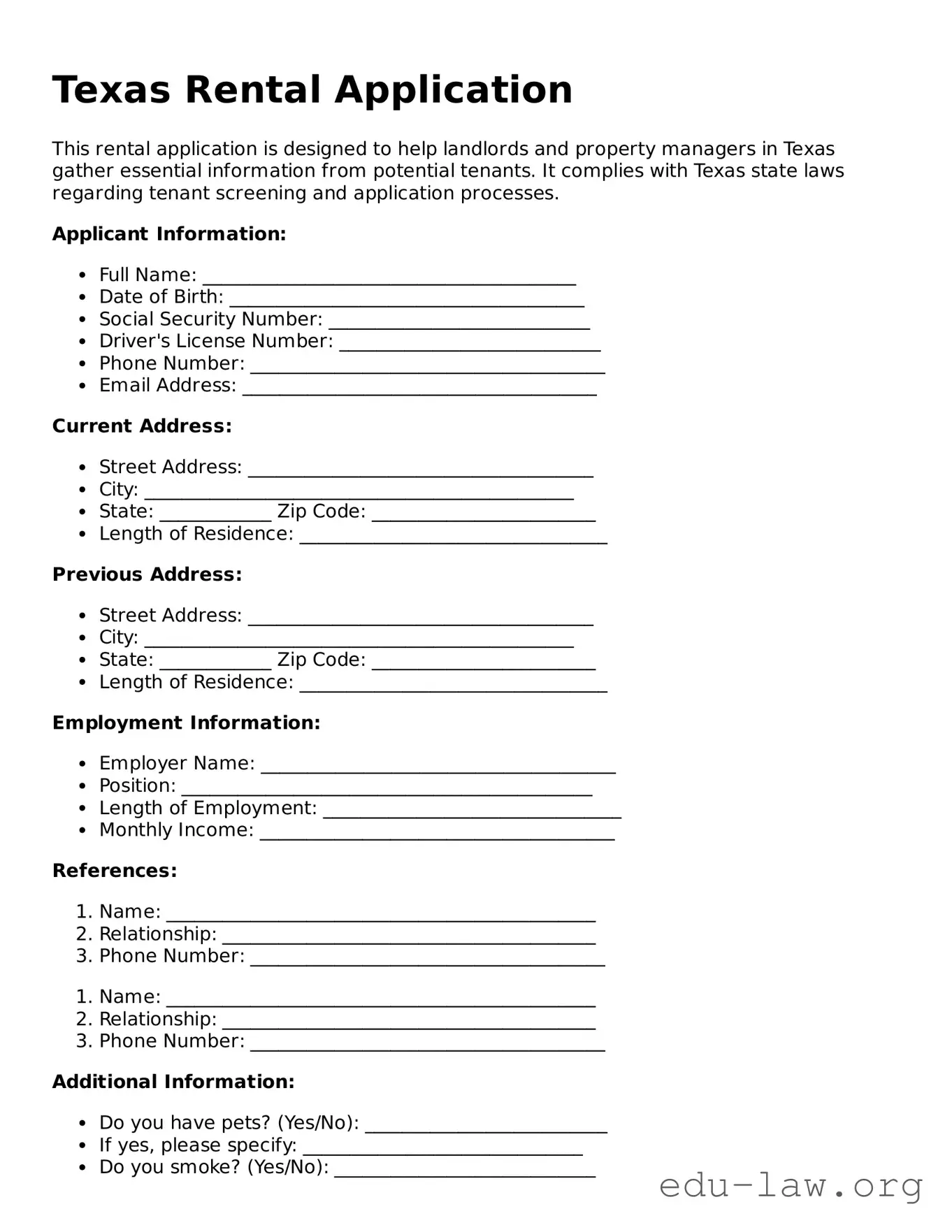
When seeking a rental property in Texas, prospective tenants encounter the Texas Rental Application form, a crucial document that serves multiple purposes. This form collects essential information about applicants, including their personal details, employment history, and rental history. Landlords use this information to assess the suitability of potential tenants, ensuring they can meet financial obligations and maintain the property. Key components of the application often include consent for background checks, references, and sometimes a security deposit requirement. Additionally, the form may outline the terms of the lease agreement and any specific criteria the landlord considers important. Understanding the nuances of this application is vital for both renters and landlords, as it lays the foundation for a successful rental relationship.
Texas Rental Application
This rental application is designed to help landlords and property managers in Texas gather essential information from potential tenants. It complies with Texas state laws regarding tenant screening and application processes.
Applicant Information:
Current Address:
Previous Address:
Employment Information:
References:
Additional Information:
Consent:
By signing this application, you authorize the landlord to conduct a background check, verify employment, and contact references. You confirm that the information provided is accurate to the best of your knowledge.
Signature: ______________________________________________ Date: ________________
| Fact Name | Description |
|---|---|
| Purpose | The Texas Rental Application form is used by landlords to screen potential tenants. |
| Governing Law | The form is governed by the Texas Property Code, particularly Chapter 92. |
| Information Required | Applicants must provide personal information, rental history, and employment details. |
| Application Fee | Landlords may charge a non-refundable application fee, but it must be reasonable. |
| Fair Housing Compliance | The application process must comply with federal and state fair housing laws. |
| Background Checks | Landlords often conduct background checks, including credit and criminal history. |
| Approval Process | Once submitted, landlords review applications and make decisions based on their criteria. |
| Disclosure Requirements | Landlords must disclose any rental criteria and the basis for denial if applicable. |
| Timeframe for Processing | Landlords are encouraged to process applications promptly, typically within a few days. |
| Tenant Rights | Applicants have the right to request a copy of the background check used in the decision. |
Completing a Texas Rental Application is a straightforward process that helps landlords gather essential information about potential tenants. After filling out the form, you will typically submit it to the landlord or property management company for review. Be prepared to provide additional documentation if requested, such as proof of income or references.
Once you have completed the form, review it for any errors or omissions. Submitting a thorough and accurate application can improve your chances of securing the rental you desire.
What is a Texas Rental Application form?
The Texas Rental Application form is a document used by landlords to gather important information from potential tenants. It typically includes sections for personal information, rental history, employment details, and references. This form helps landlords assess whether a prospective tenant is a good fit for their rental property. Completing the application accurately is crucial, as it can impact the decision-making process for rental approval.
What information do I need to provide on the application?
You will need to provide various details when filling out the Texas Rental Application form. Commonly required information includes your full name, contact information, social security number, and date of birth. Additionally, you may need to list your current and previous addresses, employment history, and monthly income. References, both personal and professional, may also be requested. Ensure that all information is truthful and up-to-date to avoid any complications during the application process.
How is the application used by landlords?
Landlords use the Texas Rental Application form to evaluate potential tenants. They review the information provided to determine the applicant's suitability for the rental property. This assessment often includes checking credit history, rental history, and employment verification. By using the application, landlords aim to find responsible tenants who will pay rent on time and take care of the property. A thorough review helps minimize risks associated with renting.
Can I be denied rental based on my application?
Yes, you can be denied rental based on the information provided in your application. Landlords have the right to refuse an application if they find negative information, such as poor credit history, previous evictions, or insufficient income. It’s important to be aware that landlords must follow fair housing laws and cannot discriminate based on race, color, religion, sex, national origin, familial status, or disability. If you are denied, landlords are typically required to inform you of the reasons for the denial.
Inaccurate Personal Information: Many applicants fail to provide correct names, addresses, or social security numbers. This can lead to delays or outright denials.
Incomplete Employment History: Omitting current or past employment details is common. Ensure all relevant jobs are listed, including dates and contact information for employers.
Neglecting References: Some applicants forget to include personal or professional references. These contacts can bolster your application, so it’s wise to provide them.
Not Disclosing Rental History: Failing to mention previous rental addresses can raise red flags. Always include complete rental history to avoid suspicion.
Ignoring Application Fees: Some applicants overlook the requirement to pay application fees. Be sure to check the amount and payment method to avoid processing delays.
Forgetting to Sign: A simple mistake like not signing the application can lead to rejection. Always review the form for completeness before submission.
When applying for a rental property in Texas, several additional forms and documents may be required alongside the Texas Rental Application. These documents help landlords assess the suitability of potential tenants and streamline the leasing process.
Having these documents prepared can facilitate a smoother application process and help ensure all necessary information is readily available for review.
The Texas Rental Application form is similar to the standard Lease Agreement. Both documents serve to establish the terms of a rental relationship between a landlord and a tenant. While the Rental Application focuses on the tenant’s qualifications, the Lease Agreement outlines the specific conditions of the rental arrangement, including rent amount, duration, and responsibilities. Both documents are essential in ensuring that both parties understand their rights and obligations in the rental process.
Another document that shares similarities is the Tenant Screening Report. This report typically accompanies a rental application and provides a detailed background check on the prospective tenant. It includes credit history, rental history, and criminal background information. Like the Rental Application, it aims to give landlords insight into the reliability and suitability of a potential tenant, helping them make informed decisions.
The Rental History Verification form also aligns closely with the Texas Rental Application. This document is used by landlords to confirm a tenant's previous rental experiences. It includes information about past landlords, payment history, and any lease violations. Both documents are critical in assessing whether a tenant is likely to fulfill their obligations under a new lease.
Similarly, the Employment Verification form is another document that complements the Rental Application. This form verifies a tenant's employment status and income, providing landlords with assurance of the tenant's ability to pay rent. Both the Employment Verification and Rental Application focus on the financial stability of the applicant, which is a key factor in the rental decision-making process.
Lastly, the Guarantor Agreement is akin to the Texas Rental Application in that it involves assessing risk. This document is used when a tenant does not have sufficient income or credit history to qualify on their own. A guarantor agrees to take responsibility for the lease if the tenant fails to meet their obligations. Both the Guarantor Agreement and the Rental Application are tools that landlords use to mitigate financial risk when renting their properties.
When filling out a Texas Rental Application form, there are several important practices to keep in mind. Here’s a list of things you should and shouldn’t do to ensure a smooth application process.
By adhering to these guidelines, you can present yourself as a responsible tenant and improve your chances of securing your desired rental property.
When it comes to the Texas Rental Application form, several misconceptions can lead to confusion for both tenants and landlords. Understanding these misconceptions can help clarify the rental process.
When filling out and using the Texas Rental Application form, several key points can help ensure a smooth process for both tenants and landlords. Here are some important takeaways:
By keeping these points in mind, individuals can navigate the Texas Rental Application process more effectively and increase their chances of securing a rental property.