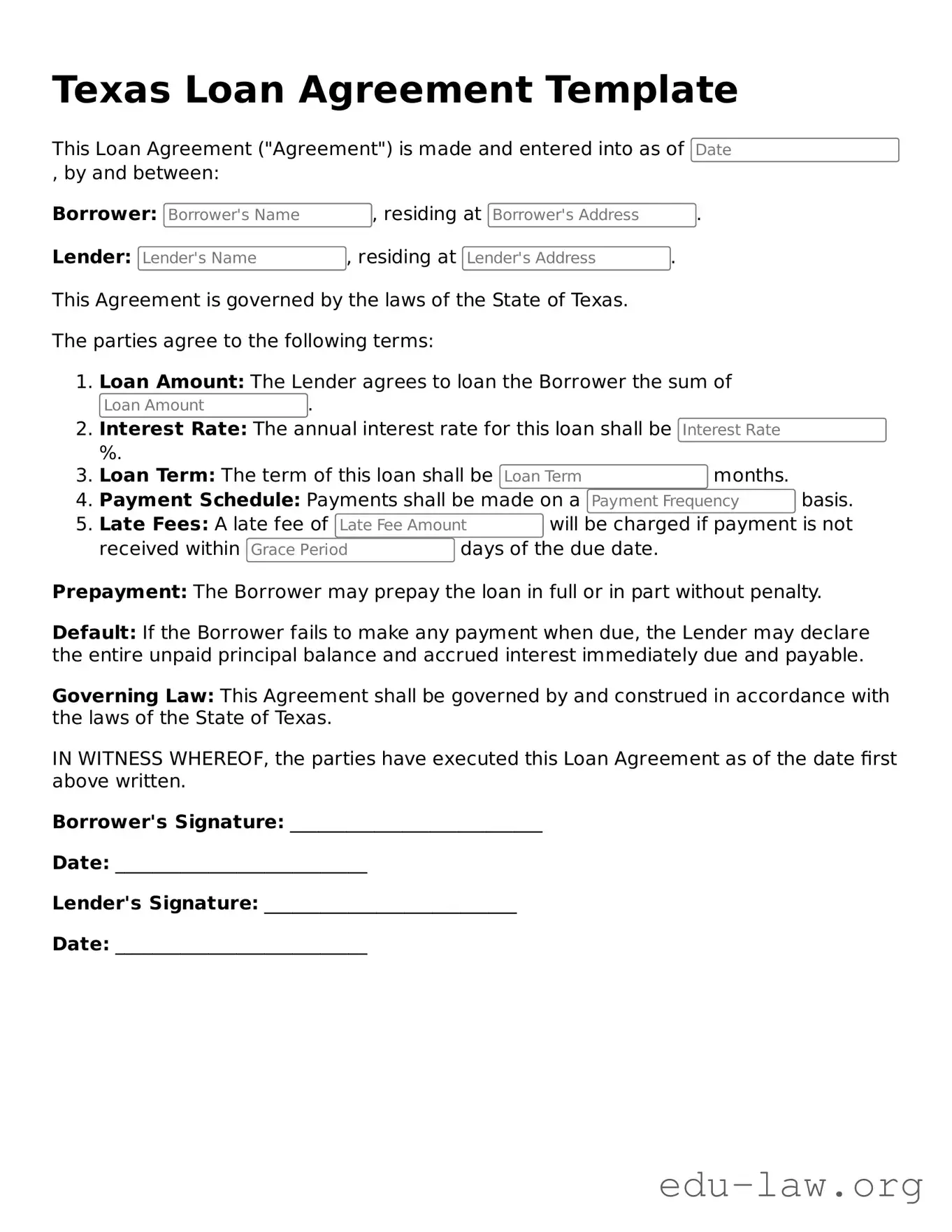
The Texas Loan Agreement form is a crucial document that outlines the terms and conditions of a loan between a lender and a borrower within the state of Texas. This form serves as a legally binding contract, detailing essential elements such as the loan amount, interest rate, repayment schedule, and any collateral involved. It is designed to protect the rights of both parties and ensure clarity in the lending process. Additionally, the agreement often includes provisions regarding late fees, default consequences, and the process for resolving disputes. Understanding the nuances of this form is vital for anyone engaging in a loan transaction, as it not only helps in establishing trust but also provides a framework for addressing potential issues that may arise during the loan period. By clearly delineating responsibilities and expectations, the Texas Loan Agreement form fosters transparency and accountability, making it an indispensable tool in financial dealings.
Texas Loan Agreement Template
This Loan Agreement ("Agreement") is made and entered into as of , by and between:
Borrower: , residing at .
Lender: , residing at .
This Agreement is governed by the laws of the State of Texas.
The parties agree to the following terms:
Prepayment: The Borrower may prepay the loan in full or in part without penalty.
Default: If the Borrower fails to make any payment when due, the Lender may declare the entire unpaid principal balance and accrued interest immediately due and payable.
Governing Law: This Agreement shall be governed by and construed in accordance with the laws of the State of Texas.
IN WITNESS WHEREOF, the parties have executed this Loan Agreement as of the date first above written.
Borrower's Signature: ___________________________
Date: ___________________________
Lender's Signature: ___________________________
Date: ___________________________
| Fact Name | Description |
|---|---|
| Purpose | The Texas Loan Agreement form outlines the terms and conditions of a loan between a lender and a borrower. |
| Governing Law | This agreement is governed by the laws of the State of Texas. |
| Parties Involved | The form includes spaces for the names and addresses of both the lender and the borrower. |
| Loan Amount | The total amount being loaned must be clearly stated in the agreement. |
| Interest Rate | The form requires the interest rate to be specified, whether it is fixed or variable. |
| Repayment Terms | Details about the repayment schedule, including due dates and payment amounts, must be included. |
Filling out the Texas Loan Agreement form is a straightforward process that requires careful attention to detail. Once completed, this form will serve as a binding contract between the lender and the borrower, outlining the terms of the loan. Ensure that all information is accurate and clear to avoid any potential misunderstandings.
What is a Texas Loan Agreement form?
A Texas Loan Agreement form is a legal document that outlines the terms and conditions of a loan between a lender and a borrower. This agreement specifies the amount borrowed, the interest rate, repayment schedule, and any collateral involved. It serves as a written record to protect both parties and ensure clarity in the lending process.
Who can use a Texas Loan Agreement form?
Anyone involved in a lending situation in Texas can use this form. This includes individuals lending money to friends or family, businesses extending credit to customers, or even financial institutions providing loans. It's essential for both parties to understand the terms before signing to avoid potential disputes in the future.
What are the key components of a Texas Loan Agreement?
A comprehensive Texas Loan Agreement typically includes the loan amount, interest rate, repayment terms, and any fees associated with the loan. Additionally, it may outline the consequences of late payments or defaults, and specify whether the loan is secured by collateral. Clear definitions of all terms help ensure that both parties are on the same page.
Is a Texas Loan Agreement form legally binding?
Yes, once signed by both parties, a Texas Loan Agreement is legally binding. This means that both the lender and borrower are obligated to adhere to the terms outlined in the document. If either party fails to meet their obligations, the other party may have legal recourse to enforce the agreement or seek damages.
Can I modify a Texas Loan Agreement after it has been signed?
Modifying a Texas Loan Agreement is possible, but it requires mutual consent from both parties. Any changes should be documented in writing and signed by both the lender and borrower to ensure that the modifications are enforceable. It’s always best to keep a record of any amendments to maintain clarity and avoid misunderstandings.
Failing to provide accurate personal information. It is essential to enter your full name, address, and contact details correctly. Any discrepancies can lead to delays in processing your loan.
Not specifying the loan amount clearly. Make sure to indicate the exact amount you wish to borrow. Ambiguity can cause misunderstandings with the lender.
Overlooking the interest rate section. Review the terms and ensure that the interest rate is stated clearly. This will affect your repayment amount significantly.
Ignoring the repayment schedule. It is crucial to understand when payments are due and how much each payment will be. Failing to acknowledge this can lead to missed payments.
Not reading the fine print. Important terms and conditions may be hidden in the details. Take the time to read everything thoroughly to avoid unexpected obligations.
Neglecting to sign and date the form. A missing signature or date can render the agreement invalid. Always double-check that you have completed this step.
Forgetting to keep a copy for personal records. After submitting the form, retain a copy for your own reference. This is important for tracking your loan and understanding your obligations.
When entering into a loan agreement in Texas, several accompanying documents may be necessary to ensure clarity and legal protection for all parties involved. Each of these documents serves a unique purpose and helps to establish the terms of the loan, the responsibilities of the borrower, and the rights of the lender.
Understanding these documents is crucial for anyone involved in a loan agreement. They not only provide a framework for the transaction but also protect the interests of both the borrower and the lender. Familiarity with these forms can lead to more informed decisions and smoother financial dealings.
The Texas Loan Agreement form shares similarities with a Promissory Note. Both documents outline the terms under which a borrower agrees to repay a loan. The Promissory Note serves as a written promise from the borrower to repay the lender, detailing the amount borrowed, interest rates, and repayment schedule. While the Loan Agreement may encompass broader terms, including collateral and conditions for default, the Promissory Note focuses specifically on the borrower's commitment to repay the borrowed funds.
Another document that aligns closely with the Texas Loan Agreement is the Mortgage Agreement. This document secures a loan with real property as collateral. Like the Loan Agreement, it outlines the obligations of both the borrower and the lender. The Mortgage Agreement includes details about the property being mortgaged, the loan amount, and the consequences of default. Both documents work together to protect the lender's interest while providing a clear framework for the borrower's repayment obligations.
A Credit Agreement is also comparable to the Texas Loan Agreement. This document establishes the terms of a line of credit, including the maximum amount available to the borrower, interest rates, and repayment conditions. Similar to the Loan Agreement, a Credit Agreement specifies the responsibilities of both parties and may include provisions for default. The primary difference lies in the nature of the borrowing; a Credit Agreement allows for ongoing borrowing up to a specified limit, while a Loan Agreement typically involves a one-time loan amount.
The Texas Loan Agreement is akin to a Secured Loan Agreement. Both documents involve a loan that is backed by collateral, which can be seized if the borrower defaults. The Secured Loan Agreement details the specific collateral used to secure the loan, much like the Texas Loan Agreement may specify collateral terms. This similarity ensures that lenders have a means of recourse should the borrower fail to meet their repayment obligations.
A Personal Loan Agreement is another document similar to the Texas Loan Agreement. This type of agreement outlines the terms of a loan made to an individual, including the amount borrowed, interest rates, and repayment schedule. While the Texas Loan Agreement may involve larger sums and business contexts, the Personal Loan Agreement serves to formalize the borrowing process for individuals. Both documents emphasize the importance of clear terms to protect the interests of both parties.
Finally, a Business Loan Agreement shares characteristics with the Texas Loan Agreement. Both documents are designed for loans taken out by businesses rather than individuals. They outline repayment terms, interest rates, and any collateral involved. The Business Loan Agreement may include additional clauses specific to business operations, such as covenants or financial reporting requirements, but both documents fundamentally serve the same purpose: to establish a legal framework for borrowing and repayment.
When filling out the Texas Loan Agreement form, it's important to approach the task with care and attention to detail. Here are some helpful tips on what to do and what to avoid.
By following these guidelines, you can help ensure a smoother experience when completing your Texas Loan Agreement form.
Understanding the Texas Loan Agreement form is crucial for anyone involved in lending or borrowing money in the state. However, several misconceptions can lead to confusion and potential issues. Here are ten common misconceptions about the Texas Loan Agreement form, along with clarifications to help dispel them.
While it is highly recommended to have a written agreement for clarity and legal protection, not all loans require a written document to be enforceable. However, having a written form is the best practice.
This is not true. Individuals, private lenders, and credit unions can also provide loans. The Texas Loan Agreement form is applicable to any lender.
While both documents relate to loans, they serve different purposes. A promissory note is a promise to repay, whereas the loan agreement outlines the terms and conditions of the loan.
This is a misconception. Borrowers and lenders can negotiate the interest rates before finalizing the agreement, as long as they comply with state laws.
Loan agreements can be modified if both parties agree to the changes. It's important to document any amendments in writing to maintain clarity.
This is not necessarily true. A well-structured agreement can protect both parties. Borrowers can negotiate terms that suit their needs.
Regardless of the amount, having a loan agreement is beneficial. It provides clarity and protects both the lender and the borrower.
Notarization is not a requirement for all loan agreements in Texas, but it can add an extra layer of authenticity and protection.
This form can be used for various types of loans, including business loans, making it versatile for different lending situations.
On the contrary, understanding the terms of the loan agreement is vital for borrowers. It helps them know their rights and responsibilities, ensuring informed decision-making.
By addressing these misconceptions, individuals can approach the Texas Loan Agreement form with greater confidence and understanding, fostering healthier lending relationships.
When dealing with the Texas Loan Agreement form, understanding the essential components can significantly streamline the process. Here are key takeaways to keep in mind:
By following these key points, you can effectively navigate the Texas Loan Agreement process and ensure that all necessary details are covered.