The Texas General Power of Attorney form is a crucial legal document that empowers an individual, known as the principal, to designate another person, referred to as the agent or attorney-in-fact, to act on their behalf in a variety of financial and legal matters. This form allows the agent to manage the principal's affairs, including handling bank transactions, signing contracts, and making decisions regarding property. One of the key features of this document is its flexibility; it can be tailored to grant broad or limited powers, depending on the principal's needs. The form must be signed by the principal and, in some cases, witnessed or notarized to ensure its validity. Importantly, the authority granted can be revoked at any time, provided the principal is mentally competent. Understanding the implications of this form is essential, as it can significantly impact personal and financial decisions, especially in situations where the principal may become incapacitated.
Texas General Power of Attorney
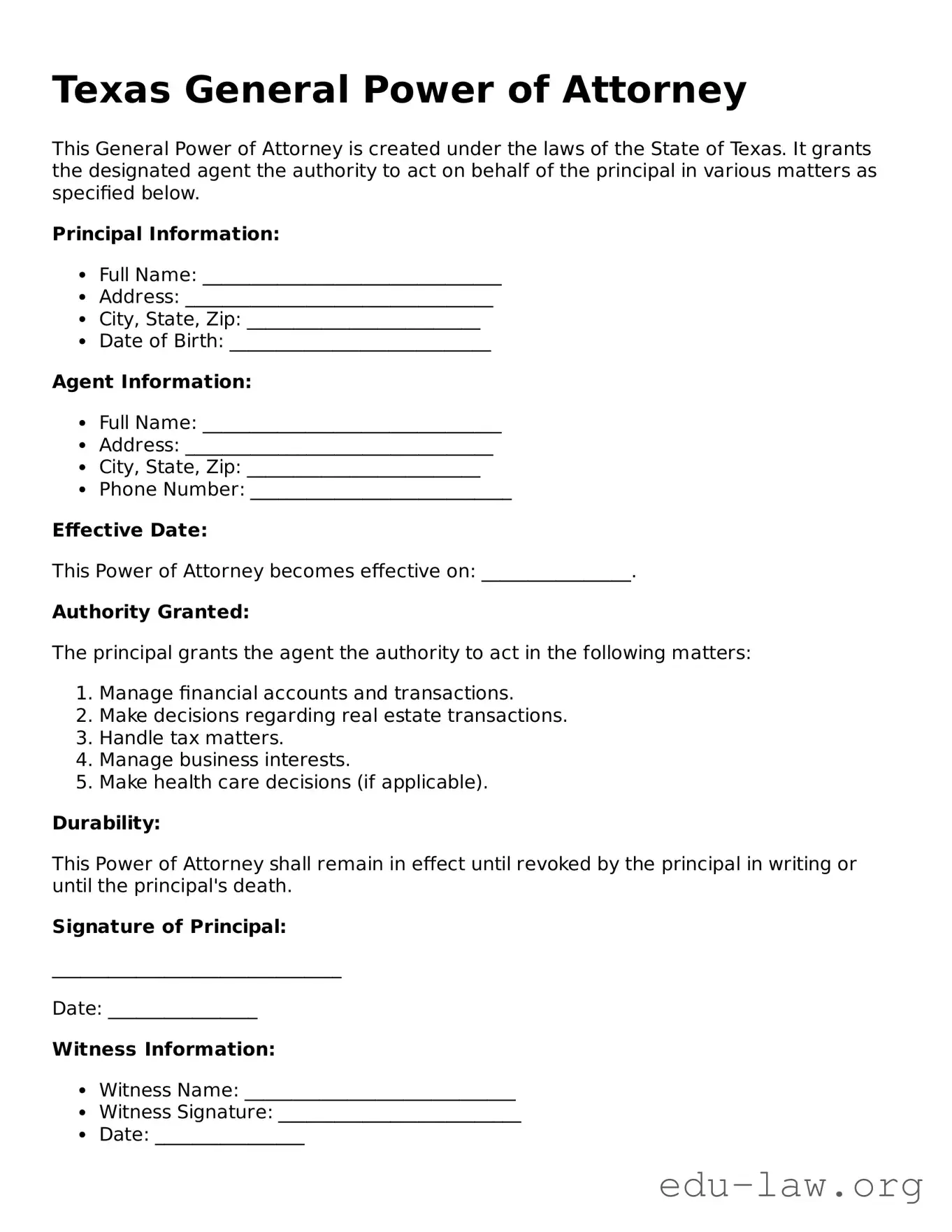
This General Power of Attorney is created under the laws of the State of Texas. It grants the designated agent the authority to act on behalf of the principal in various matters as specified below.
Principal Information:
Agent Information:
Effective Date:
This Power of Attorney becomes effective on: ________________.
Authority Granted:
The principal grants the agent the authority to act in the following matters:
Durability:
This Power of Attorney shall remain in effect until revoked by the principal in writing or until the principal's death.
Signature of Principal:
_______________________________
Date: ________________
Witness Information:
This document must be signed in the presence of a notary public to be legally valid in the State of Texas.
| Fact Name | Description |
|---|---|
| Definition | A Texas General Power of Attorney allows one person to grant another the authority to make decisions on their behalf. |
| Governing Law | This form is governed by the Texas Estates Code, specifically Title 2, Chapter 751. |
| Durability | A General Power of Attorney can be durable or non-durable, depending on the principal's intentions. |
| Agent Authority | The agent can manage financial matters, sign documents, and handle transactions as specified in the form. |
| Revocation | The principal can revoke the power of attorney at any time, as long as they are mentally competent. |
| Notarization | The form must be signed in the presence of a notary public to be legally valid in Texas. |
| Limitations | Some actions, like making a will or certain healthcare decisions, cannot be delegated through this form. |
Once you have the Texas General Power of Attorney form in hand, it's time to fill it out carefully. This form allows you to designate someone to act on your behalf in financial or legal matters. Follow these steps to ensure you complete it correctly.
After completing the form, keep a copy for your records and provide copies to your agent and any relevant institutions. This ensures everyone is informed about the powers granted.
What is a Texas General Power of Attorney?
A Texas General Power of Attorney is a legal document that allows one person, known as the principal, to grant another person, called the agent or attorney-in-fact, the authority to make decisions on their behalf. This can include managing financial matters, handling real estate transactions, and making legal decisions. The powers granted can be broad or limited, depending on the principal's wishes.
When does a Texas General Power of Attorney take effect?
This document typically takes effect immediately upon signing, unless the principal specifies a different start date or condition. If the principal wishes for the powers to activate only under certain circumstances, such as incapacitation, they may need to consider a Durable Power of Attorney instead, which remains effective even if the principal becomes unable to make decisions.
Can I revoke a Texas General Power of Attorney?
Yes, a principal can revoke a Texas General Power of Attorney at any time, as long as they are mentally competent. To revoke the document, the principal should create a written revocation and notify the agent and any institutions or individuals who may have relied on the original power of attorney. It's important to keep copies of the revocation for personal records.
What powers can I grant my agent in a Texas General Power of Attorney?
The powers granted can vary widely. Common powers include managing bank accounts, paying bills, filing taxes, buying or selling property, and making investment decisions. However, the principal can specify limitations or conditions on these powers. It is crucial to clearly outline the scope of authority to avoid any misunderstandings.
Is it necessary to have a lawyer to create a Texas General Power of Attorney?
While it is not legally required to have a lawyer to create a Texas General Power of Attorney, consulting with one can be beneficial. A lawyer can help ensure that the document meets all legal requirements and accurately reflects the principal's intentions. For those who prefer to handle it independently, there are templates available, but careful attention to detail is essential to avoid potential issues.
Not Specifying Powers Clearly: Many individuals fail to clearly outline the specific powers they wish to grant to their agent. This can lead to confusion and potential misuse of authority.
Neglecting to Sign and Date: A common oversight is not signing or dating the form. Without a signature, the document may not be considered valid, rendering it ineffective.
Choosing the Wrong Agent: Selecting an agent who is not trustworthy or lacks the ability to handle financial matters can lead to complications. It's crucial to choose someone reliable and competent.
Ignoring Witness Requirements: In Texas, certain powers of attorney must be witnessed or notarized. Failing to meet these requirements can invalidate the document.
Not Reviewing State-Specific Laws: Each state has its own regulations regarding powers of attorney. Not being aware of Texas-specific laws can result in a document that does not hold up in court.
Forgetting to Update the Document: Life circumstances change, and so should your power of attorney. Forgetting to update the document after significant life events can lead to unintended consequences.
A Texas General Power of Attorney form is often accompanied by various other documents that enhance its effectiveness or address specific needs. Below is a list of common forms and documents that may be used alongside the General Power of Attorney.
These documents work together to create a comprehensive plan for managing both financial and medical decisions. Having the appropriate forms in place can provide peace of mind and ensure that a person’s wishes are respected.
The Texas Medical Power of Attorney is similar to the General Power of Attorney in that it grants authority to another person to make decisions on behalf of an individual. However, while the General Power of Attorney can cover a wide range of financial and legal matters, the Medical Power of Attorney specifically focuses on healthcare decisions. This document is particularly important when a person is unable to communicate their medical preferences due to illness or incapacity. By designating a trusted individual, known as an agent, the document ensures that medical decisions align with the individual's wishes and values.
The Durable Power of Attorney also shares similarities with the General Power of Attorney, but it has a key distinction regarding its duration. A Durable Power of Attorney remains effective even if the principal becomes incapacitated, whereas a standard General Power of Attorney may become void under such circumstances. This feature makes the Durable Power of Attorney a crucial tool for long-term planning, as it allows the appointed agent to manage financial and legal affairs without interruption, ensuring that the principal's interests are consistently represented.
The Springing Power of Attorney is another document that parallels the General Power of Attorney, particularly in its function of granting authority to another person. However, the Springing Power of Attorney is unique in that it only becomes effective upon the occurrence of a specific event, typically the incapacitation of the principal. This conditional aspect allows individuals to maintain control over their affairs until they are unable to manage them, at which point the designated agent steps in. This document is often used by those who want to ensure that their financial and legal matters are handled by a trusted person only when necessary.
Lastly, the Financial Power of Attorney is closely related to the General Power of Attorney, as it specifically addresses financial matters. This document allows an appointed agent to handle various financial transactions, such as managing bank accounts, paying bills, and making investment decisions. While the General Power of Attorney can encompass both financial and legal matters, the Financial Power of Attorney narrows the focus solely to financial affairs. This can provide clarity and specificity in managing an individual's financial responsibilities, making it a valuable tool for those seeking to delegate financial authority.
When filling out the Texas General Power of Attorney form, it is crucial to follow specific guidelines to ensure the document is valid and effective. Here are some important dos and don'ts:
When it comes to the Texas General Power of Attorney form, several misconceptions can lead to confusion. Understanding the facts can help individuals make informed decisions about their legal needs. Here are four common misconceptions:
While both types of power of attorney grant authority to an agent to act on behalf of the principal, a General Power of Attorney becomes invalid if the principal becomes incapacitated. In contrast, a Durable Power of Attorney remains effective even if the principal is unable to make decisions.
This is not entirely true. The agent is required to act in the best interests of the principal and must follow the guidelines outlined in the power of attorney document. Misuse of authority can lead to legal consequences.
Many people think that only those facing health issues need a power of attorney. However, anyone can benefit from having a General Power of Attorney, especially for situations where they may be unavailable to make decisions, such as traveling or being away for work.
Some believe that once a General Power of Attorney is created, it cannot be changed or revoked. In reality, the principal has the right to revoke or modify the document at any time, as long as they are mentally competent to do so.
When filling out and using the Texas General Power of Attorney form, keep these key takeaways in mind: