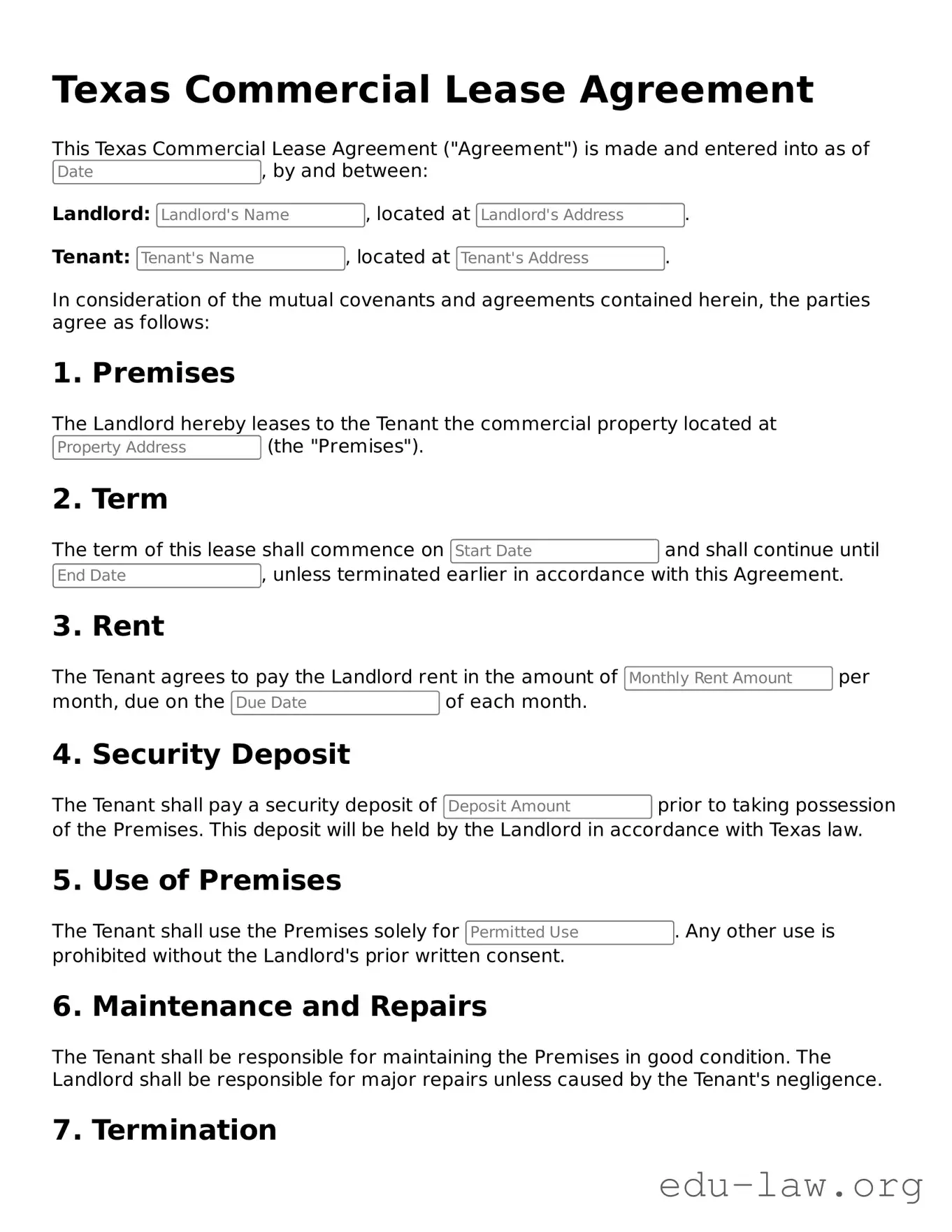
The Texas Commercial Lease Agreement form serves as a vital document for landlords and tenants engaging in a commercial property rental arrangement. This form outlines key elements such as the lease term, rental payments, security deposits, and maintenance responsibilities. It specifies the rights and obligations of both parties, ensuring clarity and reducing the potential for disputes. Additionally, the agreement addresses important issues like property use, insurance requirements, and termination conditions. By detailing these aspects, the form helps create a solid foundation for a successful business relationship. Understanding the intricacies of this agreement is essential for anyone involved in commercial leasing in Texas.
Texas Commercial Lease Agreement
This Texas Commercial Lease Agreement ("Agreement") is made and entered into as of , by and between:
Landlord: , located at .
Tenant: , located at .
In consideration of the mutual covenants and agreements contained herein, the parties agree as follows:
1. Premises
The Landlord hereby leases to the Tenant the commercial property located at (the "Premises").
2. Term
The term of this lease shall commence on and shall continue until , unless terminated earlier in accordance with this Agreement.
3. Rent
The Tenant agrees to pay the Landlord rent in the amount of per month, due on the of each month.
4. Security Deposit
The Tenant shall pay a security deposit of prior to taking possession of the Premises. This deposit will be held by the Landlord in accordance with Texas law.
5. Use of Premises
The Tenant shall use the Premises solely for . Any other use is prohibited without the Landlord's prior written consent.
6. Maintenance and Repairs
The Tenant shall be responsible for maintaining the Premises in good condition. The Landlord shall be responsible for major repairs unless caused by the Tenant's negligence.
7. Termination
Either party may terminate this Agreement by providing days written notice to the other party.
8. Governing Law
This Agreement shall be governed by and construed in accordance with the laws of the State of Texas.
9. Signatures
IN WITNESS WHEREOF, the parties hereto have executed this Agreement as of the date first above written.
Landlord Signature: ___________________________ Date: _______________
Tenant Signature: ___________________________ Date: _______________
| Fact Name | Description |
|---|---|
| Governing Law | The Texas Commercial Lease Agreement is governed by the laws of the State of Texas. |
| Purpose | This form is used to outline the terms and conditions under which a commercial property is leased. |
| Parties Involved | The agreement typically involves a landlord (lessor) and a tenant (lessee). |
| Lease Duration | The lease can specify a fixed term, such as one year, or be structured as a month-to-month agreement. |
| Security Deposit | Landlords often require a security deposit, which protects against potential damages or unpaid rent. |
Filling out a Texas Commercial Lease Agreement form is an important step in establishing a rental relationship between a landlord and a tenant. This process involves providing specific information about the property, the parties involved, and the terms of the lease. Here’s how to complete the form effectively.
Once you have completed the form, ensure that both parties receive a signed copy for their records. This will help avoid misunderstandings in the future and provide clarity on the terms agreed upon.
What is a Texas Commercial Lease Agreement?
A Texas Commercial Lease Agreement is a legal document that outlines the terms under which a landlord rents commercial property to a tenant. This agreement specifies the rights and responsibilities of both parties, including rent amount, lease duration, and property usage. It is essential for protecting the interests of both the landlord and the tenant.
What key elements should be included in the lease agreement?
Important elements of a Texas Commercial Lease Agreement include the names of the parties involved, the property address, lease term, rental payment details, security deposit requirements, maintenance responsibilities, and any specific rules regarding property use. It’s also wise to include provisions for termination and renewal of the lease.
How long does a typical commercial lease last?
The duration of a commercial lease can vary significantly. Typically, leases range from one to five years, but some can be longer or shorter based on the agreement between the landlord and tenant. It’s important to negotiate the lease term that best fits your business needs.
Can the lease be modified after it is signed?
Yes, a Texas Commercial Lease Agreement can be modified after it is signed, but both parties must agree to any changes. Modifications should be documented in writing and signed by both the landlord and tenant to ensure clarity and avoid disputes in the future.
What happens if the tenant wants to terminate the lease early?
If a tenant wishes to terminate the lease early, they should first review the lease terms. Many agreements include a termination clause that outlines the process for ending the lease early, which may involve giving notice or paying a penalty. It’s crucial to communicate with the landlord to understand the options available.
Failing to provide accurate property details. It's crucial to include the correct address and description of the commercial space. Inaccuracies can lead to disputes later.
Not specifying the lease term. Clearly stating the start and end dates of the lease helps prevent misunderstandings regarding the duration of the agreement.
Overlooking the rent payment details. Include the amount of rent, payment due dates, and acceptable payment methods. Missing this information can create confusion about financial obligations.
Neglecting to outline maintenance responsibilities. Clearly define who is responsible for repairs and maintenance. This can help avoid conflicts between landlords and tenants.
Ignoring the inclusion of renewal terms. If you wish to extend the lease, specify the conditions under which renewal is possible. This ensures both parties are aware of their options.
Failing to review local laws and regulations. Understanding local commercial leasing laws is essential. Non-compliance can lead to legal issues down the road.
When entering into a commercial lease agreement in Texas, several additional forms and documents often accompany the main lease to ensure clarity and protect the interests of both parties. Understanding these documents can help you navigate the leasing process more smoothly and effectively.
Understanding these additional forms can empower you to make informed decisions as you navigate your commercial leasing journey in Texas. By having these documents in place, both landlords and tenants can foster a more transparent and cooperative leasing relationship.
The Texas Residential Lease Agreement shares similarities with the Texas Commercial Lease Agreement in that both documents outline the terms under which a property is rented. They specify the duration of the lease, the rental amount, and the responsibilities of both the landlord and the tenant. While the commercial lease focuses on business use, the residential lease caters to individuals or families. Both agreements also address issues like security deposits and maintenance responsibilities, ensuring that both parties understand their obligations during the lease term.
The Texas Sublease Agreement is another document that resembles the Commercial Lease Agreement. This agreement allows a tenant to rent out the leased space to another party, known as the subtenant. Like the commercial lease, it includes details about rent, duration, and responsibilities. However, the sublease must align with the original lease terms, meaning that the landlord’s approval may be necessary. This document helps maintain clarity and legality in rental arrangements, ensuring that all parties are aware of their rights and responsibilities.
The Texas Rental Agreement for Commercial Use offers a more specific framework for businesses compared to the general Commercial Lease Agreement. This document outlines the terms for renting a space specifically for commercial purposes, such as retail or office use. Similar to the Commercial Lease Agreement, it includes details about rent, duration, and maintenance responsibilities. However, it may also address zoning laws and compliance with local regulations, which are particularly important for businesses operating in specific industries.
Finally, the Texas Business Lease Agreement is akin to the Commercial Lease Agreement, focusing on the leasing of commercial properties for business operations. It details the rights and obligations of both landlords and tenants, including payment terms, lease duration, and property maintenance. The key distinction lies in the specific use of the property, as the Business Lease Agreement may cater to a particular industry or type of business, ensuring that the lease terms are tailored to the unique needs of the tenant’s operations.
When filling out the Texas Commercial Lease Agreement form, it is crucial to follow certain guidelines to ensure accuracy and compliance. Below are important dos and don'ts to consider:
Understanding the Texas Commercial Lease Agreement form can be challenging. Several misconceptions may arise, leading to confusion among landlords and tenants. Below is a list of common misconceptions and clarifications regarding the form.
Being aware of these misconceptions can help both landlords and tenants navigate the complexities of commercial leasing in Texas more effectively.
When navigating the Texas Commercial Lease Agreement form, several key points can guide you through the process. Understanding these takeaways will help you fill out the form accurately and use it effectively.
By keeping these takeaways in mind, you can approach the Texas Commercial Lease Agreement with confidence and ensure a smoother leasing experience.