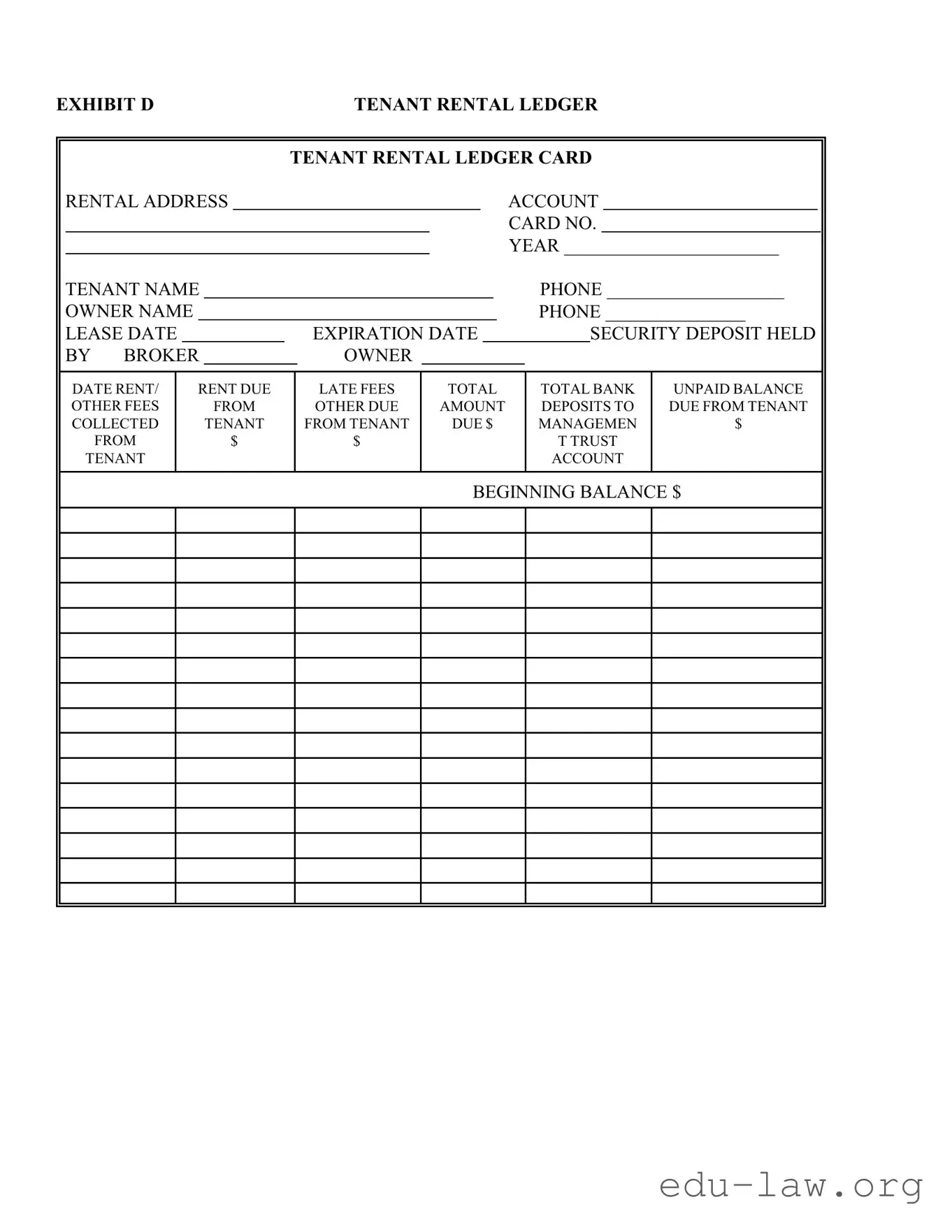
The Tenant Ledger Card form serves as a crucial tool for both landlords and tenants in managing rental agreements and financial transactions. This form captures essential information, including the rental address, tenant and owner details, and key dates such as the lease start and expiration. It also outlines the security deposit held by the broker or owner, ensuring clarity on financial responsibilities. One of the primary functions of the form is to track rent and other fees collected from the tenant, providing a comprehensive overview of what is due and what has been paid. The card breaks down various financial components, such as late fees and total amounts due, making it easier for both parties to understand their financial obligations. Additionally, it includes a section for recording the unpaid balance and any deposits made, which aids in maintaining accurate records. Overall, the Tenant Ledger Card form is an invaluable resource for fostering transparency and accountability in the landlord-tenant relationship.
EXHIBIT D |
|
|
TENANT RENTAL LEDGER |
|
|||||||||||||||||
|
|
|
|
|
|
|
|
|
|
|
|
|
|
|
|
|
|
|
|
|
|
|
|
|
|
|
|
|
|
|
|
|
|
|
|
|
|
|
|
|
|
|
|
|
|
|
|
|
|
|
TENANT RENTAL LEDGER CARD |
|
|||||||||||||
|
|
RENTAL ADDRESS |
|
|
|
|
|
|
|
|
ACCOUNT |
|
|
|
|||||||
|
|
|
|
|
|
|
|
|
|
|
|
|
|
CARD NO. |
|
|
|
||||
|
|
|
|
|
|
|
|
|
|
|
|
|
|
YEAR _______________________ |
|
||||||
|
|
TENANT NAME |
|
|
|
|
|
|
|
|
|
|
PHONE ___________________ |
|
|||||||
|
|
OWNER NAME |
|
|
|
|
|
|
|
|
|
|
PHONE _______________ |
|
|||||||
|
|
LEASE DATE |
|
|
|
EXPIRATION DATE |
|
|
|
|
|
SECURITY DEPOSIT HELD |
|
||||||||
|
|
BY BROKER |
|
|
|
OWNER |
|
|
|
|
|
|
|
|
|
|
|
|
|||
DATE RENT/ OTHER FEES COLLECTED FROM TENANT
RENT DUE
FROM
TENANT
$
LATE FEES
OTHER DUE
FROM TENANT
$
TOTAL
AMOUNT
DUE $
TOTAL BANK |
UNPAID BALANCE |
DEPOSITS TO |
DUE FROM TENANT |
MANAGEMEN |
$ |
T TRUST |
|
ACCOUNT |
|
|
|
BEGINNING BALANCE $
| Fact Name | Description |
|---|---|
| Form Title | The form is officially called the Tenant Rental Ledger Card. |
| Purpose | This card tracks rental payments and any other fees collected from tenants. |
| Tenant Information | It includes essential details such as the tenant's name, phone number, and rental address. |
| Owner Information | The form requires the owner's name and phone number for accountability. |
| Financial Tracking | It records amounts due from the tenant, including rent, late fees, and other charges. |
| Security Deposit | The form indicates the security deposit amount held by the broker or owner. |
| State-Specific Laws | In many states, this form is governed by landlord-tenant laws, which vary by state. |
Filling out the Tenant Ledger Card form is a straightforward process that helps track rental payments and related financial details. Ensuring accuracy in this document is essential for both landlords and tenants, as it serves as a record of transactions and obligations. Follow the steps below to complete the form correctly.
What is the purpose of the Tenant Ledger Card form?
The Tenant Ledger Card form is used to track rental payments and other financial transactions between a tenant and the property owner or management. It provides a clear record of what has been paid, what is owed, and any additional fees that may apply.
What information is included on the Tenant Ledger Card?
The form includes essential details such as the tenant's name, contact information, the rental address, and the lease dates. It also records the security deposit, rent due, late fees, and any other charges, giving a comprehensive view of the tenant's financial obligations.
How do I fill out the Tenant Ledger Card?
To complete the Tenant Ledger Card, fill in the tenant's and owner's names, phone numbers, and the rental address. Enter the lease dates and the amount of the security deposit. Record each payment received, any fees charged, and calculate the total amount due. Make sure to keep it updated regularly.
Who is responsible for maintaining the Tenant Ledger Card?
The property owner or the management company is typically responsible for maintaining the Tenant Ledger Card. It is crucial for them to keep this document accurate and up-to-date to ensure transparency and to manage finances effectively.
What should I do if a tenant disputes the information on the Ledger Card?
If a tenant disputes any information, review the records together. Check payment receipts and any correspondence regarding fees. Clear communication can often resolve misunderstandings. If needed, consider consulting with a legal professional for further guidance.
How often should the Tenant Ledger Card be updated?
The Tenant Ledger Card should be updated regularly, ideally after each payment or charge. This ensures that both the tenant and the owner have an accurate understanding of the account status at all times.
What happens if there is an unpaid balance on the Tenant Ledger Card?
If there is an unpaid balance, it is essential to address it promptly. Notify the tenant of the outstanding amount and any late fees that may apply. Keeping open lines of communication can help resolve the issue before it escalates.
Is the Tenant Ledger Card a legal document?
Yes, the Tenant Ledger Card can serve as a legal document in case of disputes. It provides a record of all transactions between the tenant and the owner. Therefore, it is important to ensure that it is accurate and properly maintained.
Failing to provide the correct rental address can lead to confusion and miscommunication. Ensure the address matches the lease agreement.
Omitting the tenant's name or entering it incorrectly may result in problems with record-keeping. Double-check spelling and accuracy.
Not including the owner's name can cause issues in identifying who is responsible for the property. This information is crucial for legal and financial records.
Forgetting to list the lease dates can create confusion about the terms of the rental agreement. Always include both the start and expiration dates.
Misreporting the security deposit amount can lead to disputes. Ensure this figure matches the lease agreement and is recorded accurately.
Leaving out the rent and other fees collected from the tenant can result in incomplete financial records. Document all amounts paid.
Not specifying the total amount due can lead to misunderstandings. Always calculate and clearly state this figure.
Failing to update the unpaid balance can create discrepancies in financial records. Regularly review and adjust this amount as needed.
Neglecting to include deposits made to the management trust account can cause inaccuracies in tracking funds. Keep detailed records of all transactions.
Not reviewing the beginning balance for accuracy can lead to errors in accounting. Always verify this figure before finalizing the ledger.
The Tenant Ledger Card is an essential document in property management, helping landlords and tenants keep track of rental payments and outstanding balances. Alongside this form, several other documents play a crucial role in managing tenant relationships and ensuring compliance with rental agreements. Below is a list of commonly used forms that complement the Tenant Ledger Card.
Understanding these documents can empower both landlords and tenants to navigate their rental agreements more effectively. Proper documentation fosters clear communication and helps prevent disputes, contributing to a positive rental experience for everyone involved.
The Tenant Rental Agreement is a document that outlines the terms and conditions of the rental arrangement between the landlord and the tenant. It typically includes details such as the rental amount, payment due dates, and the duration of the lease. Like the Tenant Ledger Card, this document serves as a record of the financial obligations of the tenant and the responsibilities of the landlord, ensuring both parties are clear on their commitments.
The Rent Receipt is another document that shares similarities with the Tenant Ledger Card. It is issued by the landlord or property manager to the tenant upon receipt of rent payment. This receipt provides proof of payment, including the amount paid, the date of payment, and the rental period it covers. Both documents help maintain accurate financial records for both the tenant and the landlord.
The Security Deposit Agreement is also comparable to the Tenant Ledger Card. This document specifies the amount of the security deposit, the conditions under which it may be withheld, and the process for its return after the lease ends. Like the Tenant Ledger Card, it keeps track of financial transactions related to the rental property and protects both parties' interests.
The Move-In Inspection Report is similar in that it documents the condition of the rental unit at the beginning of the lease. This report includes details about any existing damages or issues. While it focuses on the property’s condition, it complements the Tenant Ledger Card by providing a comprehensive view of the rental agreement, ensuring that both parties are aware of the property’s state upon occupancy.
The Lease Renewal Agreement is another related document. It outlines the terms for extending the lease after the initial period ends. This agreement is important for maintaining continuity in the rental relationship and may include adjustments to rent or other terms. Like the Tenant Ledger Card, it is essential for keeping track of the ongoing financial and contractual obligations of both parties.
The Notice of Rent Increase is a document that informs the tenant of any changes in the rental amount. This notice must comply with local laws regarding how much notice must be given before the increase takes effect. Similar to the Tenant Ledger Card, it serves as an official record of financial expectations and obligations between the landlord and tenant.
Finally, the Payment Plan Agreement is akin to the Tenant Ledger Card. This document outlines a structured plan for the tenant to pay overdue rent or other fees over time. It details the payment amounts, due dates, and any penalties for missed payments. Both documents are crucial for managing financial transactions and ensuring transparency in the landlord-tenant relationship.
When filling out the Tenant Ledger Card form, it is crucial to follow specific guidelines to ensure accuracy and compliance. Here are six things to do and not do:
Understanding the Tenant Ledger Card form is crucial for both landlords and tenants. However, several misconceptions can lead to confusion. Here are six common misunderstandings:
By clarifying these misconceptions, both tenants and landlords can better utilize the Tenant Ledger Card to foster a transparent and effective rental relationship.
The Tenant Ledger Card form is an essential tool for both landlords and tenants. It helps track rental payments, fees, and other financial transactions related to the rental agreement. Here are some key takeaways regarding its use:
In summary, the Tenant Ledger Card form serves as a vital record for both landlords and tenants, facilitating better management of rental agreements and financial obligations.