A Stock Purchase Agreement (SPA) is a crucial document in the world of business transactions, particularly when it comes to buying or selling shares in a company. This form outlines the terms and conditions under which the sale of stock will occur, ensuring that both the buyer and the seller are on the same page. Key aspects of the SPA include the purchase price, the number of shares being sold, and any representations and warranties made by the seller regarding the company’s financial health. Additionally, the agreement often specifies any conditions that must be met before the transaction can be finalized, such as regulatory approvals or the completion of due diligence. By clearly defining these elements, the Stock Purchase Agreement helps to mitigate risks for both parties and provides a framework for a smooth transfer of ownership. Understanding the components of this form is essential for anyone involved in corporate transactions, as it lays the groundwork for a successful business deal.
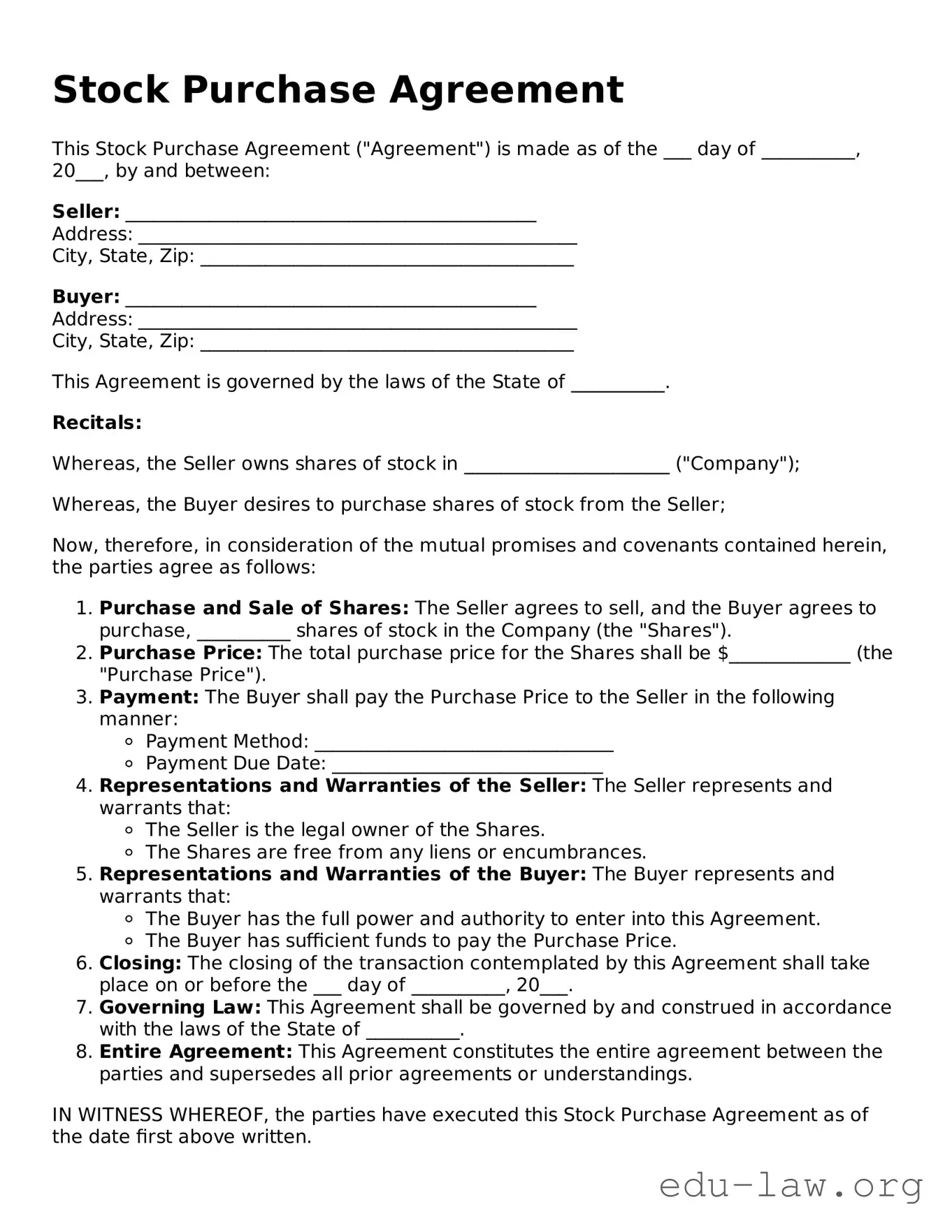
Stock Purchase Agreement
This Stock Purchase Agreement ("Agreement") is made as of the ___ day of __________, 20___, by and between:
Seller: ____________________________________________
Address: _______________________________________________
City, State, Zip: ________________________________________
Buyer: ____________________________________________
Address: _______________________________________________
City, State, Zip: ________________________________________
This Agreement is governed by the laws of the State of __________.
Recitals:
Whereas, the Seller owns shares of stock in ______________________ ("Company");
Whereas, the Buyer desires to purchase shares of stock from the Seller;
Now, therefore, in consideration of the mutual promises and covenants contained herein, the parties agree as follows:
IN WITNESS WHEREOF, the parties have executed this Stock Purchase Agreement as of the date first above written.
Seller's Signature: _____________________________
Date: ________________
Buyer's Signature: _____________________________
Date: ________________
| Fact Name | Description |
|---|---|
| Definition | A Stock Purchase Agreement is a legal document outlining the terms of the sale of stock from a seller to a buyer. |
| Parties Involved | The agreement typically involves at least two parties: the seller of the stock and the buyer. |
| Purchase Price | The document specifies the purchase price for the shares being sold, which can be a fixed amount or based on valuation metrics. |
| Governing Law | The agreement is subject to the laws of the state specified within the document. Common choices include Delaware and California. |
| Representations and Warranties | Both parties make certain representations and warranties regarding their authority to enter into the agreement and the condition of the stock. |
| Conditions Precedent | The agreement may outline conditions that must be met before the transaction can close, such as regulatory approvals. |
| Indemnification | Provisions for indemnification protect one party from losses caused by the other's breach of the agreement. |
| Closing Date | The agreement specifies a closing date when the stock transfer will occur and payment will be made. |
| Confidentiality | Many agreements include confidentiality clauses to protect sensitive information exchanged during the transaction. |
| Amendments | Any changes to the agreement must be made in writing and signed by both parties to be enforceable. |
After you have gathered all necessary information and documents, you are ready to fill out the Stock Purchase Agreement form. This process involves providing specific details about the transaction and the parties involved. Follow the steps below to ensure accuracy and completeness.
Once completed, review the form for any errors or missing information. Make copies for your records and provide a copy to the other party involved in the transaction.
What is a Stock Purchase Agreement?
A Stock Purchase Agreement is a legal document that outlines the terms and conditions under which an individual or entity agrees to buy or sell shares of stock in a corporation. This agreement serves as a binding contract between the buyer and the seller, detailing important aspects such as the number of shares being sold, the purchase price, and any representations or warranties made by either party. It helps ensure that both parties understand their rights and obligations, providing clarity and reducing the risk of disputes down the line.
Why is a Stock Purchase Agreement important?
This agreement is crucial for several reasons. First, it protects the interests of both the buyer and the seller by clearly defining the terms of the transaction. This clarity can prevent misunderstandings that might lead to legal issues later. Additionally, it can help establish the value of the shares being sold, which is especially important in cases where the stock's value may fluctuate. Furthermore, having a written agreement can provide legal recourse if either party fails to meet their obligations.
What key components should be included in a Stock Purchase Agreement?
A well-drafted Stock Purchase Agreement typically includes several key components. These include the names and addresses of the buyer and seller, a description of the shares being sold, the purchase price, payment terms, and any conditions that must be met before the sale can be completed. It may also contain representations and warranties from both parties, indemnification clauses, and details about how disputes will be resolved. Each of these components plays a vital role in ensuring a smooth transaction.
Can a Stock Purchase Agreement be modified after it is signed?
Failing to include the correct names of the buyer and seller. Make sure both parties' legal names are accurately written.
Not specifying the number of shares being purchased. Clearly state the quantity to avoid confusion.
Overlooking the purchase price. Ensure that the price per share and total amount are clearly indicated.
Neglecting to check the date of the agreement. Always include the date when the agreement is signed.
Forgetting to include any necessary conditions or contingencies. List any conditions that must be met for the sale to proceed.
Not having the agreement signed by both parties. Signatures are essential for the agreement to be valid.
A Stock Purchase Agreement (SPA) is a critical document in the acquisition of stock in a company. However, several other forms and documents often accompany the SPA to ensure a smooth transaction. These documents help clarify terms, outline responsibilities, and protect the interests of all parties involved.
Each of these documents plays a vital role in the stock purchase process. Together, they create a comprehensive framework that helps facilitate a successful transaction while safeguarding the interests of both the buyer and the seller.
A Shareholder Agreement is similar to a Stock Purchase Agreement in that it outlines the rights and obligations of the shareholders in a corporation. This document often includes provisions on how shares can be bought or sold, ensuring that existing shareholders have the first opportunity to purchase shares before they are offered to outsiders. Both agreements aim to protect the interests of the parties involved and provide clarity on ownership stakes.
A Purchase Agreement is another related document. This agreement generally covers the sale of goods or services but can also apply to the sale of a business. Like a Stock Purchase Agreement, it details the terms of the transaction, including price, payment methods, and delivery timelines. Both documents serve to formalize an agreement between parties, reducing the chances of misunderstandings.
An Asset Purchase Agreement differs slightly but is closely related. This document focuses on the sale of specific assets rather than shares. It outlines which assets are being sold, the purchase price, and any liabilities that may be assumed by the buyer. Like a Stock Purchase Agreement, it aims to protect both parties by clearly defining what is included in the sale.
A Confidentiality Agreement, or Non-Disclosure Agreement (NDA), is often used alongside a Stock Purchase Agreement. It protects sensitive information exchanged during negotiations. Both documents emphasize the importance of confidentiality in business transactions, ensuring that proprietary information remains secure and is not disclosed to third parties.
A Letter of Intent is another document that can precede a Stock Purchase Agreement. This letter outlines the preliminary terms of a proposed transaction, signaling the intent to negotiate a formal agreement. While it is not legally binding, it sets the stage for the Stock Purchase Agreement by clarifying the main points of agreement between the parties.
An Escrow Agreement may also be involved in transactions similar to a Stock Purchase Agreement. This document outlines the terms under which a third party holds funds or assets until specific conditions are met. Both agreements help ensure that parties fulfill their obligations before any transfer of ownership takes place.
A Buy-Sell Agreement is particularly relevant for closely-held businesses. This agreement governs what happens to an owner's shares if they leave the business, pass away, or become disabled. Similar to a Stock Purchase Agreement, it provides a clear process for buying and selling shares, ensuring that ownership remains within the desired group.
A Subscription Agreement is another document that shares similarities with a Stock Purchase Agreement. This agreement is used when an investor agrees to purchase shares directly from a company. It outlines the terms of the investment, including the number of shares and the price. Both agreements serve to formalize the relationship between the investor and the company.
A Joint Venture Agreement is relevant when two or more parties collaborate on a specific business project. This document outlines each party's contributions and responsibilities. Like a Stock Purchase Agreement, it aims to protect the interests of all parties involved and clarifies how profits and losses will be shared.
Finally, a Partnership Agreement is similar in that it establishes the terms under which two or more individuals or entities will operate a business together. It details each partner's contributions, profit-sharing, and decision-making processes. Both agreements seek to provide a clear framework for the relationship, minimizing potential disputes.
When filling out a Stock Purchase Agreement form, it’s important to approach the task with care. Here are some essential dos and don’ts to keep in mind:
Below are seven common misconceptions about the Stock Purchase Agreement form, along with explanations for each.
This is not true. Stock Purchase Agreements can vary significantly based on the specific terms negotiated by the parties involved, the type of stock being purchased, and the jurisdiction in which the agreement is executed.
Many people believe that these agreements are only relevant for high-value transactions. However, even smaller transactions benefit from the clarity and protection that a formal agreement provides.
Some individuals think that a verbal agreement is enough for a stock purchase. In reality, having a written agreement helps to avoid misunderstandings and provides legal protection for both parties.
This misconception overlooks the fact that parties can negotiate amendments to the agreement, provided all parties consent to the changes in writing.
While it is advisable to have legal counsel involved, individuals can draft their own agreements. However, they should ensure that all essential terms are included and comply with applicable laws.
This is misleading. While the agreement outlines the terms and conditions, external factors can still affect the transaction's success, such as financing issues or regulatory approvals.
Many assume that these agreements are limited to private companies. In fact, public companies also use Stock Purchase Agreements for various transactions, including private placements and secondary offerings.
When filling out and using the Stock Purchase Agreement form, it's important to keep the following key takeaways in mind:
These takeaways can help ensure that the Stock Purchase Agreement is completed correctly and serves its intended purpose effectively.