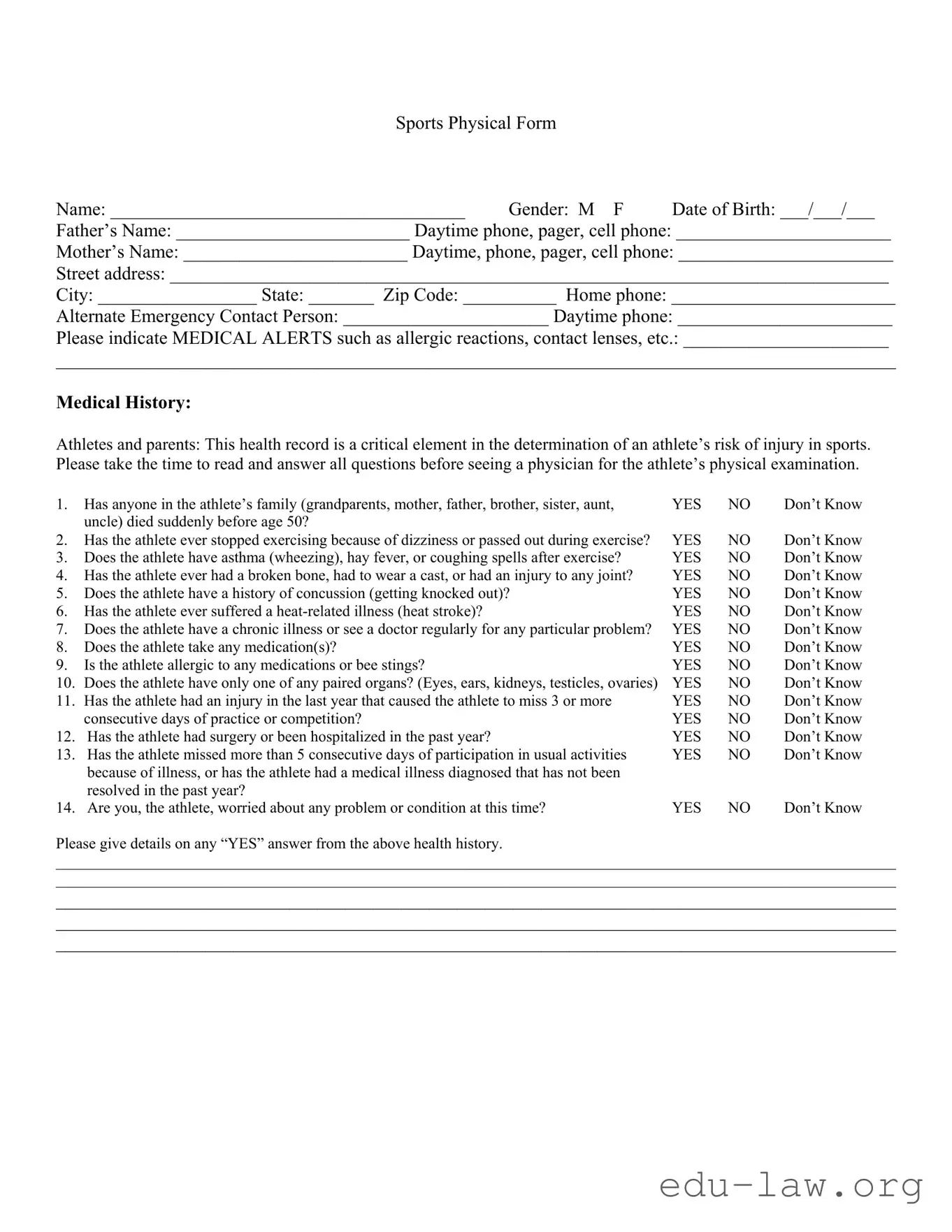
The Sports Physical form plays a crucial role in ensuring that young athletes are fit to participate in sports activities. This comprehensive document collects essential information about the athlete, including personal details such as name, gender, and date of birth, as well as contact information for parents or guardians. It highlights the importance of medical history, prompting parents and athletes to disclose any relevant health concerns. Questions about family medical history, previous injuries, and existing medical conditions are included to assess potential risks. The form also requires a physical examination by a licensed medical professional, who evaluates various aspects of the athlete's health, such as height, weight, and cardiovascular fitness. Vision tests and assessments of the musculoskeletal system are integral to the examination. Ultimately, the physician certifies the athlete's readiness to engage in sports, providing any necessary participation restrictions. By gathering this information, the Sports Physical form aims to safeguard the health and well-being of young athletes, allowing them to enjoy their sporting endeavors safely.
Sports Physical Form
Name: ______________________________________ Gender: M F Date of Birth: ___/___/___
Father’s Name: _________________________ Daytime phone, pager, cell phone: _______________________
Mother’s Name: ________________________ Daytime, phone, pager, cell phone: _______________________
Street address: _____________________________________________________________________________
City: _________________ State: _______ Zip Code: __________ Home phone: ________________________
Alternate Emergency Contact Person: ______________________ Daytime phone: _______________________
Please indicate MEDICAL ALERTS such as allergic reactions, contact lenses, etc.: ______________________
__________________________________________________________________________________________
Medical History:
Athletes and parents: This health record is a critical element in the determination of an athlete’s risk of injury in sports. Please take the time to read and answer all questions before seeing a physician for the athlete’s physical examination.
1. |
Has anyone in the athlete’s family (grandparents, mother, father, brother, sister, aunt, |
YES |
NO |
Don’t Know |
|
uncle) died suddenly before age 50? |
|
|
|
2. |
Has the athlete ever stopped exercising because of dizziness or passed out during exercise? |
YES |
NO |
Don’t Know |
3. |
Does the athlete have asthma (wheezing), hay fever, or coughing spells after exercise? |
YES |
NO |
Don’t Know |
4. |
Has the athlete ever had a broken bone, had to wear a cast, or had an injury to any joint? |
YES |
NO |
Don’t Know |
5. |
Does the athlete have a history of concussion (getting knocked out)? |
YES |
NO |
Don’t Know |
6. |
Has the athlete ever suffered a |
YES |
NO |
Don’t Know |
7. |
Does the athlete have a chronic illness or see a doctor regularly for any particular problem? |
YES |
NO |
Don’t Know |
8. |
Does the athlete take any medication(s)? |
YES |
NO |
Don’t Know |
9. |
Is the athlete allergic to any medications or bee stings? |
YES |
NO |
Don’t Know |
10. |
Does the athlete have only one of any paired organs? (Eyes, ears, kidneys, testicles, ovaries) |
YES |
NO |
Don’t Know |
11. |
Has the athlete had an injury in the last year that caused the athlete to miss 3 or more |
YES |
NO |
Don’t Know |
|
consecutive days of practice or competition? |
YES |
NO |
Don’t Know |
12. Has the athlete had surgery or been hospitalized in the past year? |
YES |
NO |
Don’t Know |
|
13. Has the athlete missed more than 5 consecutive days of participation in usual activities |
YES |
NO |
Don’t Know |
|
|
because of illness, or has the athlete had a medical illness diagnosed that has not been |
|
|
|
|
resolved in the past year? |
|
|
|
14. |
Are you, the athlete, worried about any problem or condition at this time? |
YES |
NO |
Don’t Know |
Please give details on any “YES” answer from the above health history.
____________________________________________________________________________________________________________
____________________________________________________________________________________________________________
__________________________________________________________________________________________
__________________________________________________________________________________________
__________________________________________________________________________________________

PHYSICAL EXAM – TO BE COMPLETED BY PHYSICIAN
Height __________ |
Weight __________ |
Pulse __________ |
Blood Pressure __________ |
Vision: R _____ / _____ uncorrected R _____ / _____ corrected |
L _____ / _____ uncorrected L _____ / _____ corrected |
||
Normal |
Abnormal Findings |
1.Eyes
2.Ears, Nose, Throat
3.Mouth & Teeth
4.Neck
5.Cardiovascular
6.Chest & Lungs
7.Abdomen
8.Skin
9.
10.Muskuloskeletal: ROM, strength, etc.
a.neck
b.spine
c.shoulders
d.arms/ hands
e.hips
f.thighs
g.knees
h.ankles
i.feet
11.Neuromuscular
Initials
Please Print/ Stamp
Physician’s Name ___________________________________________________________________________________
Street Address _____________________________________________________________________________________
City, State, Zip Code ________________________________________________________________________________
Telephone _________________________________________________________________________________________
I certify that I have examined this athlete and found him/her medically qualified to participate in sports. I also certify that I am a licensed medical physician, physician’s assistant, or family nurse practitioner. (Doctor of Chiropractic Medicine is not satisfactory.)
Physician Signature __________________________________________________________ Date __________________
PARTICIPATION RESTRICTIONS: _________________________________________________________________
__________________________________________________________________________________________________
__________________________________________________________________________________________________
| Fact Name | Description |
|---|---|
| Purpose | The Sports Physical Form is used to assess an athlete's health and readiness to participate in sports activities. |
| Medical History | It includes questions about the athlete's medical history, which helps identify any potential risks. |
| Emergency Contact | Parents or guardians must provide emergency contact information in case of an incident during sports activities. |
| Physical Examination | A licensed medical professional must complete the physical examination section of the form. |
| State-Specific Forms | Each state may have specific requirements for the Sports Physical Form, governed by local laws. |
| Medical Alerts | Parents should indicate any medical alerts, such as allergies or chronic conditions, on the form. |
| Validity | The form is valid for one year from the date of the physical examination, after which a new form is required. |
Completing the Sports Physical form is an important step in ensuring the athlete's health and safety while participating in sports. After filling out the form, it will need to be reviewed by a physician for a physical examination. This examination helps assess the athlete's fitness for sports and identifies any potential health concerns.
What is a Sports Physical Form?
The Sports Physical Form is a document that assesses an athlete's health and fitness before participating in sports. It gathers essential information about the athlete's medical history, physical condition, and any potential health risks. This form is often required by schools and sports organizations to ensure the safety of young athletes.
Why is a Sports Physical necessary?
A Sports Physical is crucial for identifying any medical conditions that could affect an athlete's ability to participate safely in sports. It helps prevent injuries and ensures that athletes are physically fit to engage in physical activities. This examination can also detect underlying health issues that may not be immediately apparent.
Who needs to complete the Sports Physical Form?
Typically, all student-athletes participating in school sports are required to complete the Sports Physical Form. This includes students from elementary through high school. Parents or guardians should assist younger athletes in filling out the form to ensure all information is accurate.
What information is required on the Sports Physical Form?
The form requires basic information such as the athlete's name, date of birth, and contact details for parents or guardians. It also asks about the athlete's medical history, including any past injuries, illnesses, or allergies. This information is vital for the physician to assess the athlete's health status.
What should I do if my child has a medical condition?
If your child has a medical condition, it is essential to disclose this on the Sports Physical Form. Be honest and thorough when answering the questions regarding medical history. This information will help the physician make informed decisions about your child's fitness for sports participation.
How often does my child need a Sports Physical?
Generally, a Sports Physical is required annually, before the start of each sports season. Some schools or organizations may have specific requirements, so it is important to check with them. Keeping up with these evaluations ensures that any changes in health are monitored regularly.
Can a family doctor complete the Sports Physical?
Yes, a family doctor, physician's assistant, or family nurse practitioner can complete the Sports Physical. However, it is important to ensure that the provider is licensed and qualified to perform the examination. Chiropractors are not authorized to conduct these evaluations.
What happens if the Sports Physical indicates a problem?
If the Sports Physical reveals any health concerns, the physician may recommend further evaluation or treatment before the athlete can participate in sports. Participation restrictions may be noted on the form, and parents should follow up with healthcare providers as necessary to address any issues.
Where can I obtain a Sports Physical Form?
Sports Physical Forms can typically be obtained from your child's school, sports organization, or healthcare provider. Many schools also provide downloadable versions on their websites. Ensure you have the most current version, as requirements may change from year to year.
What should I do if I have questions about the Sports Physical Form?
If you have questions about the Sports Physical Form or the process, reach out to your child's school athletic department or the sports organization. They can provide guidance and clarify any concerns you may have regarding the form or the physical examination process.
Incomplete Information: Many people forget to fill out all required fields. Missing details like the athlete’s name, date of birth, or contact numbers can delay the process.
Ignoring Medical History: Some individuals overlook the importance of providing a complete medical history. Not mentioning past injuries or conditions can lead to serious consequences during sports activities.
Misunderstanding Medical Alerts: Failing to indicate medical alerts, such as allergies or chronic conditions, can put the athlete at risk. It's essential to communicate any potential health issues clearly.
Skipping the Physician’s Section: Sometimes, the athlete or parent forgets to have the physician complete their section. This step is crucial for validating the athlete’s health status.
Inaccurate Contact Information: Providing incorrect phone numbers or addresses can create problems in emergencies. Always double-check that the contact details are accurate and up-to-date.
Not Reviewing the Form: Rushing through the form without reviewing it can lead to mistakes. Take a moment to read through the completed form to ensure everything is correct.
Neglecting to Ask Questions: If unsure about any part of the form, many people hesitate to ask questions. Clarifying doubts can prevent misunderstandings and ensure the form is filled out correctly.
The Sports Physical form is essential for ensuring that young athletes are fit to participate in sports activities. However, several other documents often accompany this form to provide a comprehensive overview of an athlete's health and eligibility. Below is a list of these documents, each serving a specific purpose.
These documents work together to ensure the safety and well-being of athletes. Each form plays a vital role in the overall process of sports participation, helping to mitigate risks and promote a healthy environment for young athletes.
The Sports Physical form shares similarities with the School Health Form, which is often required for students to participate in school activities. Both documents collect essential personal information, such as the student's name, date of birth, and emergency contact details. Additionally, they include sections that assess the student's medical history, focusing on conditions that may affect their ability to participate in physical activities. This ensures that schools are aware of any health concerns that could pose risks during sports or other school-related physical engagements.
Another document akin to the Sports Physical form is the Camp Health Form, utilized by summer camps to evaluate the health status of attendees. Like the Sports Physical, it requires personal information and emergency contacts. The Camp Health Form also gathers details about allergies, medications, and medical history, which helps camp staff manage health issues effectively. Both forms aim to safeguard participants by ensuring that any medical conditions are known and addressed promptly.
The Athlete Registration Form is another similar document. This form is often required by sports leagues and organizations before athletes can participate in competitions. It typically includes personal information, emergency contacts, and may also request medical history. The primary purpose is to ensure that the organization has all necessary details to respond appropriately in case of emergencies, mirroring the intent of the Sports Physical form.
The Medical Release Form is closely related to the Sports Physical form as well. This document is often required by schools or sports organizations to obtain permission from a parent or guardian for a minor to participate in sports activities. It usually includes a section for medical history and emergency contact information. This ensures that the organization has the necessary consent and medical information to act in the best interest of the athlete in case of an emergency.
Similar to the Sports Physical form, the Immunization Record is vital for ensuring the health and safety of participants in sports and school activities. This document lists the vaccinations a child has received, which is crucial for preventing outbreaks of contagious diseases. Both forms require accurate health information to protect not only the individual but also the wider community, particularly in settings where many children gather.
The Health History Questionnaire is another document that parallels the Sports Physical form. It is often used by healthcare providers to gather comprehensive information about a patient’s medical background. This questionnaire typically includes questions about previous illnesses, surgeries, and family medical history, similar to the inquiries made in the Sports Physical form. Both documents aim to assess the individual’s health risks and inform appropriate care or recommendations.
Lastly, the Emergency Contact Form bears similarities to the Sports Physical form. This document is often filled out by parents or guardians and provides critical information about whom to contact in case of an emergency. While it may not delve deeply into medical history, it serves to ensure that emergency responders have immediate access to essential contact information, paralleling the safety objectives of the Sports Physical form.
When filling out the Sports Physical form, attention to detail is crucial. Here are ten important dos and don’ts to keep in mind:
This form is important for athletes of all ages, not just those in high school. Younger athletes participating in youth sports also need to complete it to ensure their health and safety.
While parents can provide valuable information, the athlete should also contribute to the medical history. Their personal experiences and symptoms are crucial for an accurate assessment.
Even if an athlete feels healthy, a physical can uncover hidden health issues. Regular check-ups help ensure that athletes are fit to participate safely in sports.
The physical exam is a critical evaluation. It can identify potential risks and determine if an athlete is medically cleared to participate in sports.
All athletes, regardless of their health status, must disclose their medical history. This includes any past injuries, surgeries, or other relevant health information.
The Sports Physical form is specifically designed to evaluate an athlete's readiness for sports. It focuses on aspects of health that are particularly relevant to athletic performance and safety.
Completing the form is a collaborative effort. Athletes should work with their parents and healthcare providers to ensure all information is accurate and comprehensive.
A physician's signature indicates that the athlete is cleared to participate based on the examination at that time. It does not guarantee future health or immunity from injuries.
Depending on the sport and school policies, some organizations may require updated forms more frequently. It's essential to check specific requirements to ensure compliance.
Filling out the Sports Physical form is an essential step for any athlete. Here are key takeaways to keep in mind: