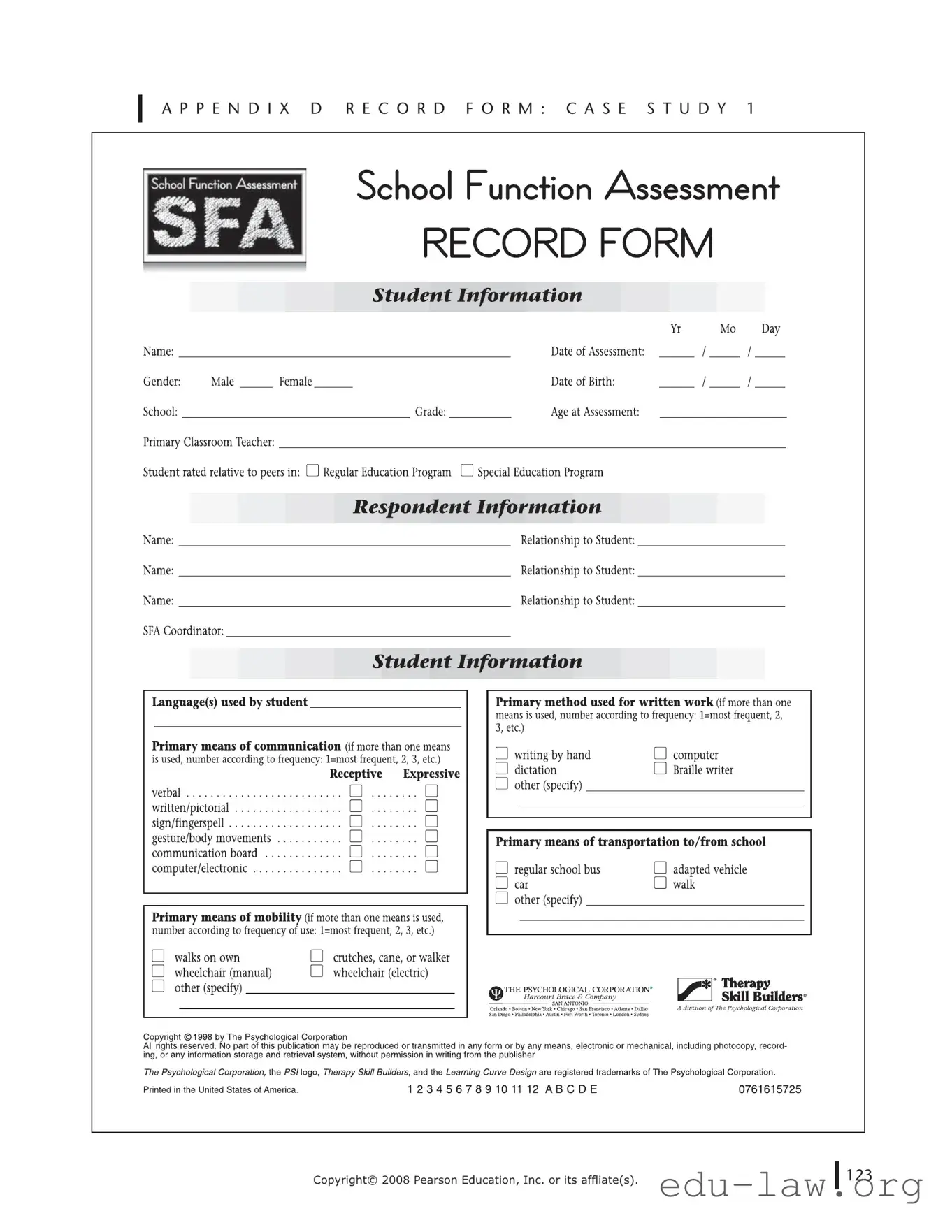
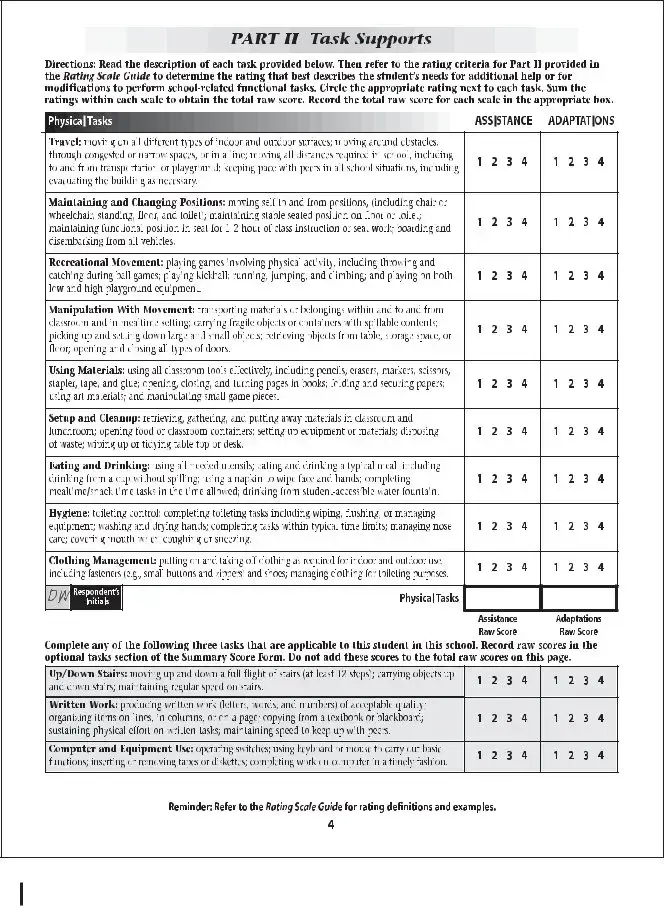
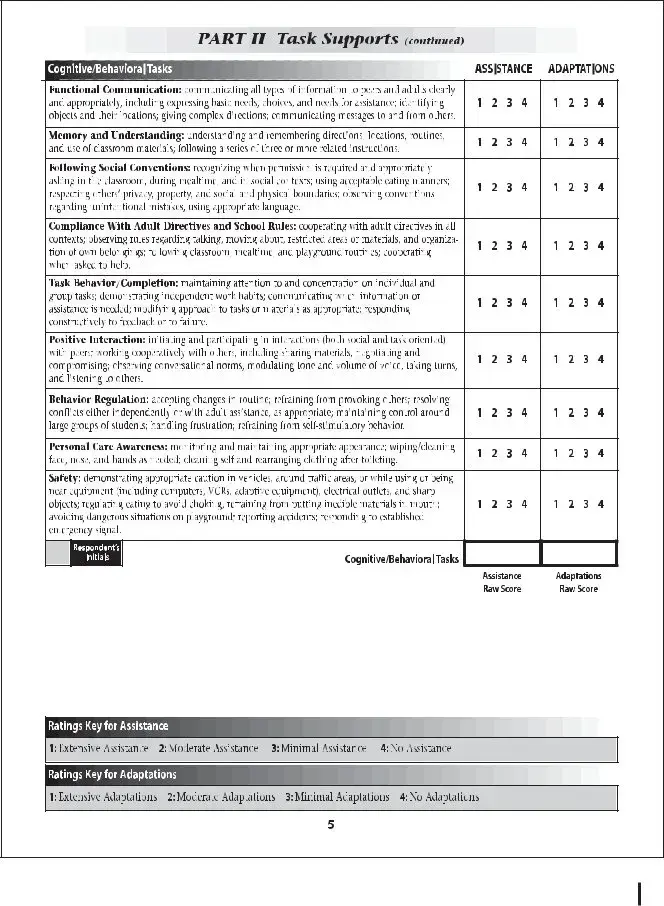
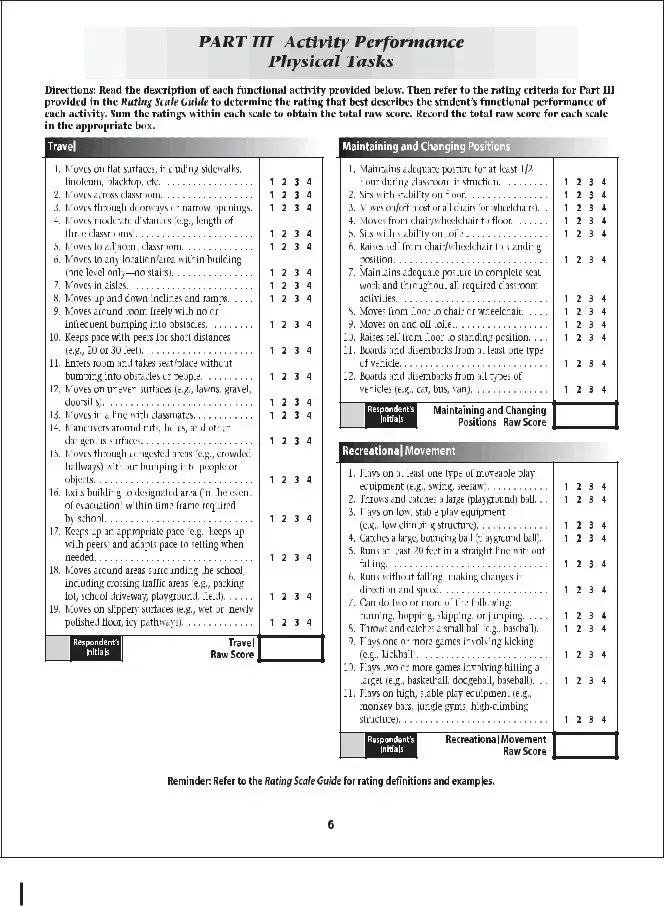
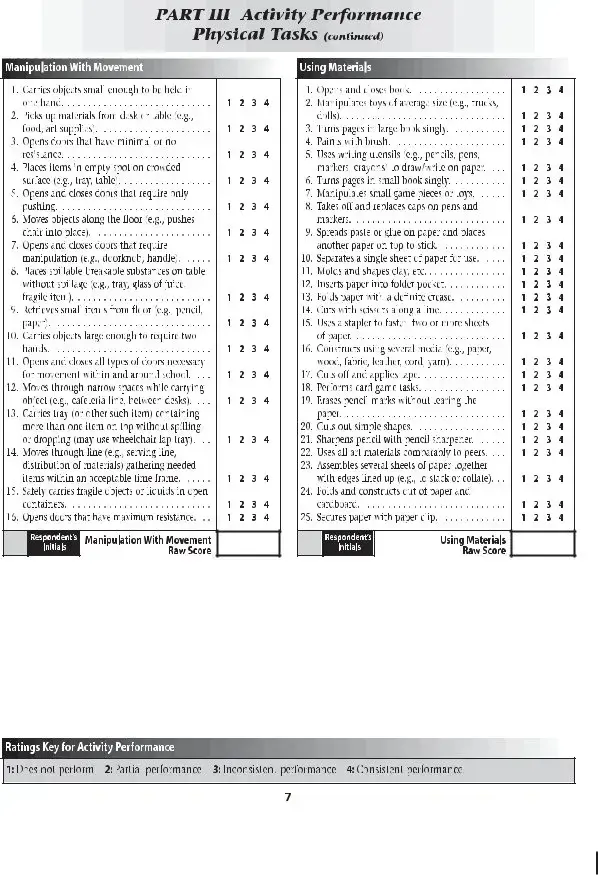
The School Function Assessment (SFA) form is a crucial tool used to evaluate a student's functional performance in a school setting. It focuses on how well students with disabilities participate in school activities and interact with their peers. The SFA encompasses various domains, including participation in academic and non-academic tasks, as well as the support needed for successful engagement. By assessing students’ abilities in areas such as self-care, mobility, and social interactions, educators can identify specific strengths and challenges. This information is vital for developing individualized education plans (IEPs) that cater to each student's unique needs. Moreover, the SFA serves as a means to track progress over time, ensuring that interventions are effective and appropriately adjusted as necessary. Overall, this assessment form plays an essential role in promoting an inclusive educational environment where all students can thrive.
A P P E N D I X D R E C O R D F O R M : C A S E S T U D Y 1 |
Copyright© 2008 Pearson Education, Inc. or its affliate(s).
123
R E C O R D F O R M : C A S E S T U D Y 1 |
124
Copyright© 2008 Pearson Education, Inc. or its affliate(s).
R E C O R D F O R M : C A S E S T U D Y 1 |
Copyright© 2008 Pearson Education, Inc. or its affliate(s).
125
R E C O R D F O R M : C A S E S T U D Y 1 |
126
Copyright© 2008 Pearson Education, Inc. or its affliate(s).
R E C O R D F O R M : C A S E S T U D Y 1 |
Copyright© 2008 Pearson Education, Inc. or its affliate(s).
127
R E C O R D F O R M : C A S E S T U D Y 1 |
128
Copyright© 2008 Pearson Education, Inc. or its affliate(s).
R E C O R D F O R M : C A S E S T U D Y 1
Copyright© 2008 Pearson Education, Inc. or its affliate(s).
129
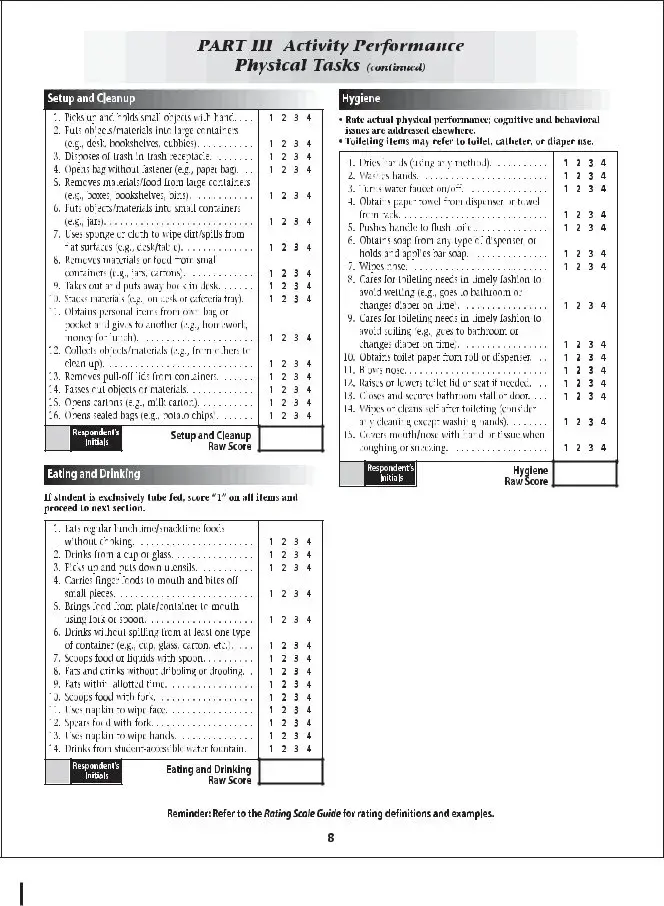
R E C O R D F O R M : C A S E S T U D Y 1 |
130
Copyright© 2008 Pearson Education, Inc. or its affliate(s).
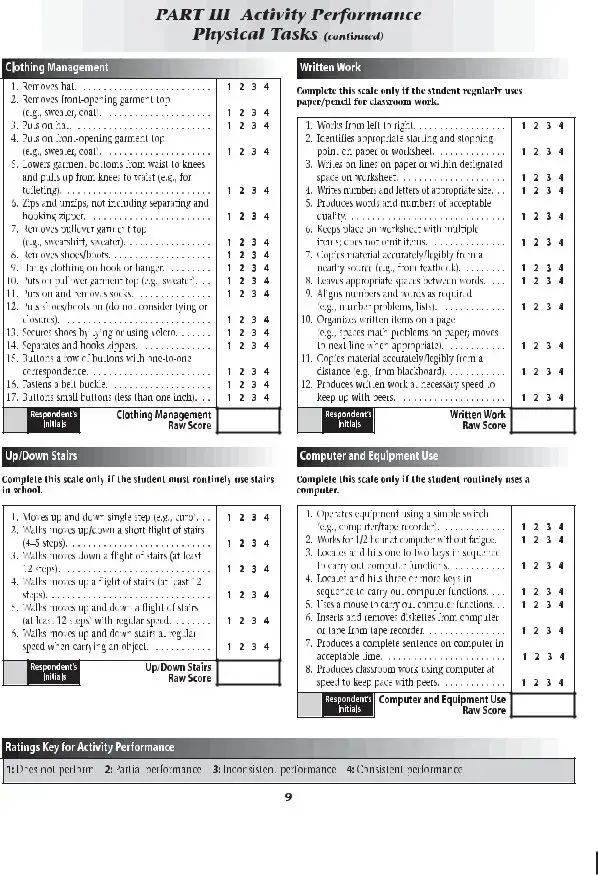
R E C O R D F O R M : C A S E S T U D Y 1
Copyright© 2008 Pearson Education, Inc. or its affliate(s).
131
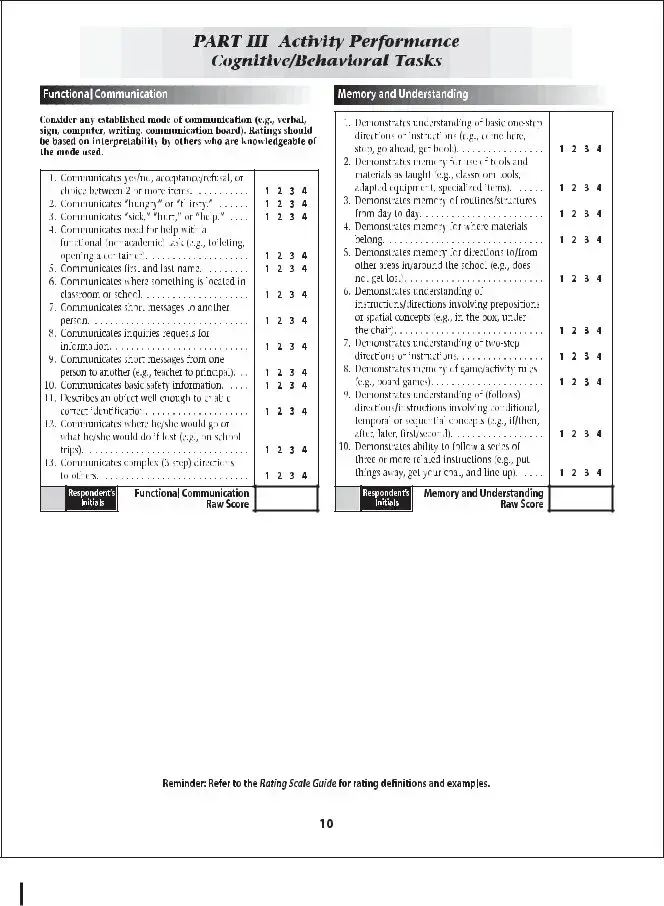
R E C O R D F O R M : C A S E S T U D Y 1 |
132
Copyright© 2008 Pearson Education, Inc. or its affliate(s).
| Fact Name | Description |
|---|---|
| Purpose | The School Function Assessment (SFA) is designed to evaluate a student's participation in school-related activities. |
| Age Range | This assessment is typically used for students from kindergarten through sixth grade. |
| Focus Areas | The SFA focuses on various domains, including physical, cognitive, and social aspects of school functioning. |
| Administering the Assessment | Teachers and support staff usually administer the SFA, ensuring that it reflects the student's daily school experiences. |
| Scoring System | The assessment uses a scoring system that ranges from 1 to 4, with higher scores indicating better performance. |
| Legal Framework | In many states, the SFA is governed by laws such as the Individuals with Disabilities Education Act (IDEA). |
| Outcome Utilization | The results from the SFA help in developing tailored interventions and support plans for students. |
Completing the School Function Assessment form is an important step in gathering relevant information about a student's needs and capabilities. Following the steps below will help ensure that you fill out the form accurately and thoroughly.
What is the School Function Assessment form?
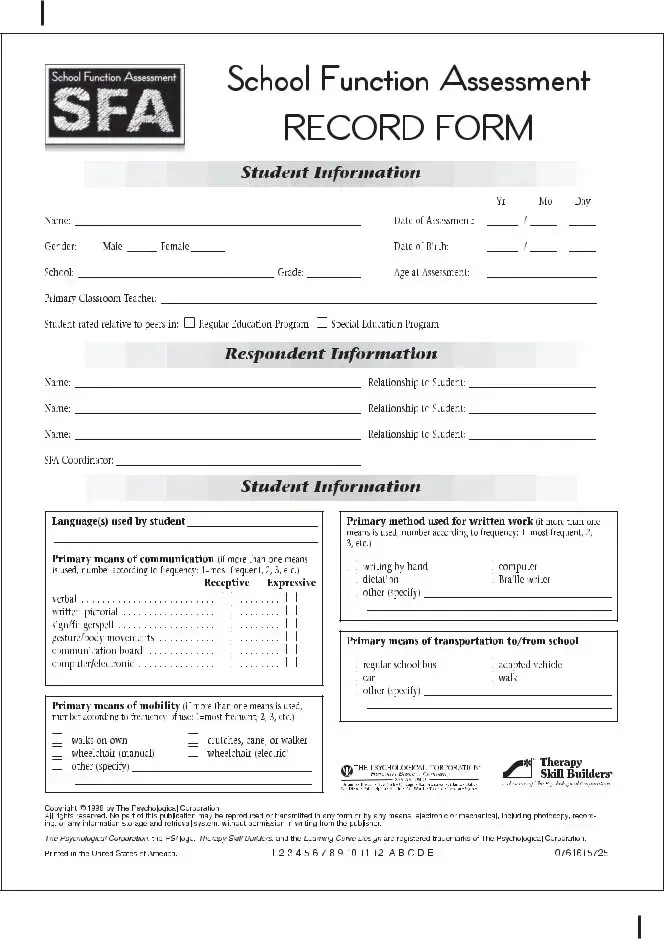
The School Function Assessment (SFA) form is a tool designed to evaluate a student's performance in school settings. It focuses on how well students participate in various school-related activities and routines. The assessment helps educators and support staff understand the functional abilities of students, especially those with disabilities, and guides the development of appropriate interventions and support plans.
Who should complete the School Function Assessment form?
The SFA is typically completed by educators, such as teachers or special education staff, who are familiar with the student’s daily activities and performance in school. It may also involve input from parents or guardians to provide a comprehensive view of the student’s functioning in different environments.
What areas does the School Function Assessment cover?
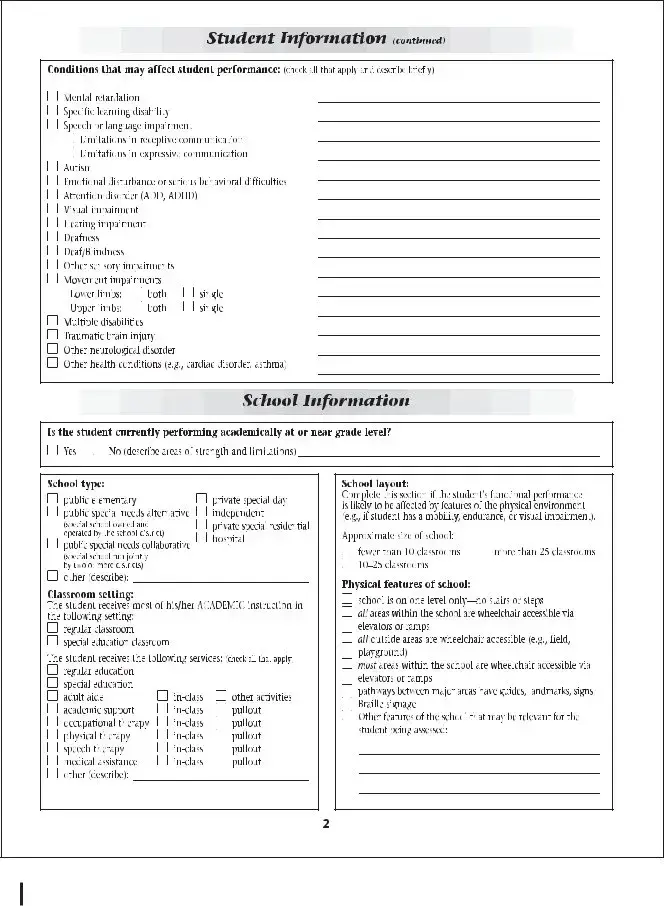
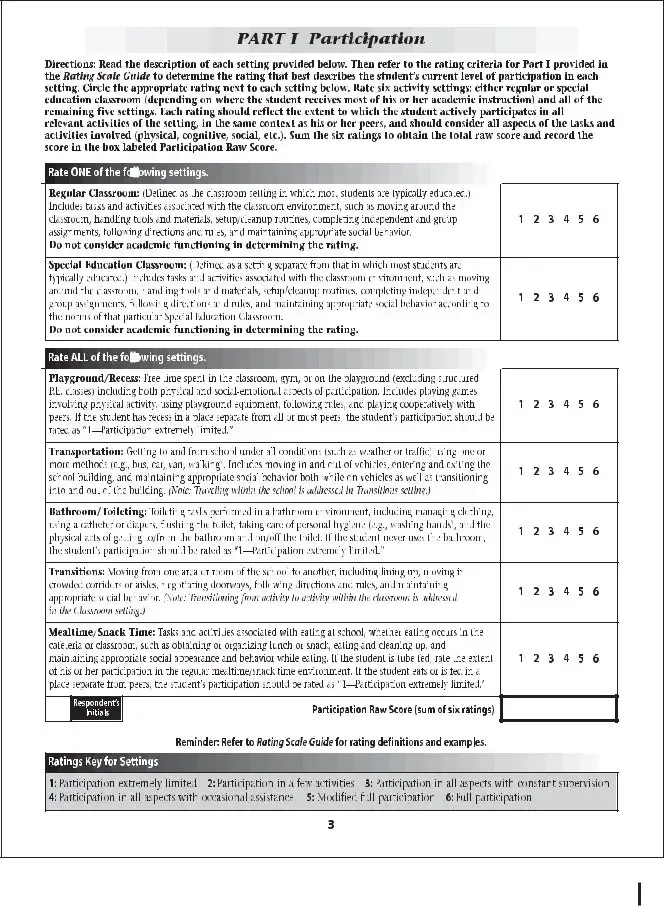
The assessment covers three main areas: participation, task supports, and activity performance. Participation looks at how well a student engages in school activities. Task supports evaluate the assistance a student may need to complete tasks. Activity performance assesses how effectively a student can perform specific school-related tasks.
How is the information from the School Function Assessment used?
Information gathered from the SFA is used to inform educational planning and support services. It helps identify strengths and challenges a student may face in school. This information can lead to tailored interventions, modifications to the curriculum, or additional resources to enhance the student’s learning experience.
Is the School Function Assessment form standardized?
Yes, the School Function Assessment is a standardized tool, meaning it follows a specific format and scoring system. This standardization allows for consistent data collection and comparison across different students and settings. However, it is essential to interpret the results within the context of each student's unique circumstances and needs.
When filling out the School Function Assessment form, individuals often make several common mistakes. Here is a list of ten frequent errors:
By avoiding these mistakes, individuals can ensure that the School Function Assessment form is completed accurately and efficiently.
The School Function Assessment form is a valuable tool for evaluating a student's performance in a school setting. It is often used alongside several other documents to provide a comprehensive view of a student's needs and abilities. Below is a list of related forms and documents that are commonly utilized in conjunction with the School Function Assessment.
These documents work together to create a holistic view of a student's educational experience, ensuring that their individual needs are met effectively. Utilizing these forms can lead to better support and outcomes for students in the school environment.
The School Function Assessment (SFA) form is similar to the Individualized Education Program (IEP) document. Both are designed to assess a student’s needs in an educational setting. The IEP outlines specific educational goals and the services required to achieve them, while the SFA focuses on a student's functional abilities in school environments. Both documents involve input from educators, parents, and specialists, ensuring a comprehensive understanding of the student's unique challenges and strengths.
Another document that shares similarities with the SFA is the Functional Behavioral Assessment (FBA). The FBA aims to identify the reasons behind a student’s challenging behaviors in school. Like the SFA, it utilizes observations and data collection to inform interventions. While the SFA assesses overall school functioning, the FBA hones in on specific behaviors, making both essential for creating supportive educational strategies tailored to individual needs.
The Assessment of Basic Language and Learning Skills (ABLLS) also parallels the SFA in its purpose of evaluating a student's skills. The ABLLS focuses on language and learning abilities, providing a detailed breakdown of specific skills necessary for academic success. Similar to the SFA, it serves as a tool for educators to understand a student’s current level and to develop targeted instruction plans that cater to their individual capabilities.
The Child Behavior Checklist (CBCL) is another document that shares a functional assessment approach. The CBCL gathers information from parents and teachers about a child’s behavioral and emotional functioning. Like the SFA, it aims to provide a comprehensive view of the child’s needs. Both documents rely on input from multiple sources to create a holistic understanding of the child's functioning in different environments.
Lastly, the Transition Assessment is comparable to the SFA in its goal of preparing students for life beyond school. This document evaluates a student’s readiness for post-secondary education, employment, and independent living. While the SFA assesses current functioning within the school, the Transition Assessment looks ahead, ensuring that students are equipped with the skills necessary for their future. Both documents are crucial for developing tailored plans that support students' growth and success.
When filling out the School Function Assessment form, it is important to follow specific guidelines to ensure accuracy and clarity. Here are nine things to do and not do:
By following these guidelines, you can help ensure that the School Function Assessment form is completed effectively and efficiently.
Misconceptions about the School Function Assessment (SFA) can lead to misunderstandings regarding its purpose and application. Here are four common misconceptions:
Filling out the School Function Assessment (SFA) form is an important process for understanding a child's performance in a school setting. Here are some key takeaways to keep in mind:
Understanding these points can enhance the effectiveness of the School Function Assessment and ultimately support the child's educational journey.