Applying for scholarships can be a pivotal moment in a student's educational journey, and one of the essential components of this process is the Scholarship Recommendation Letter form. This form serves as a crucial tool for students to request endorsements from teachers, mentors, or community leaders who can speak to their qualifications and character. Typically, the form includes sections for the recommender to provide their contact information, relationship to the student, and insights into the student's achievements, strengths, and potential. Additionally, it may prompt the recommender to address specific qualities that align with the scholarship's criteria, ensuring that the letter is tailored to the particular opportunity. By thoughtfully completing this form, both the student and the recommender can effectively communicate the student’s capabilities and aspirations, thereby enhancing the student’s chances of securing financial support for their educational goals.
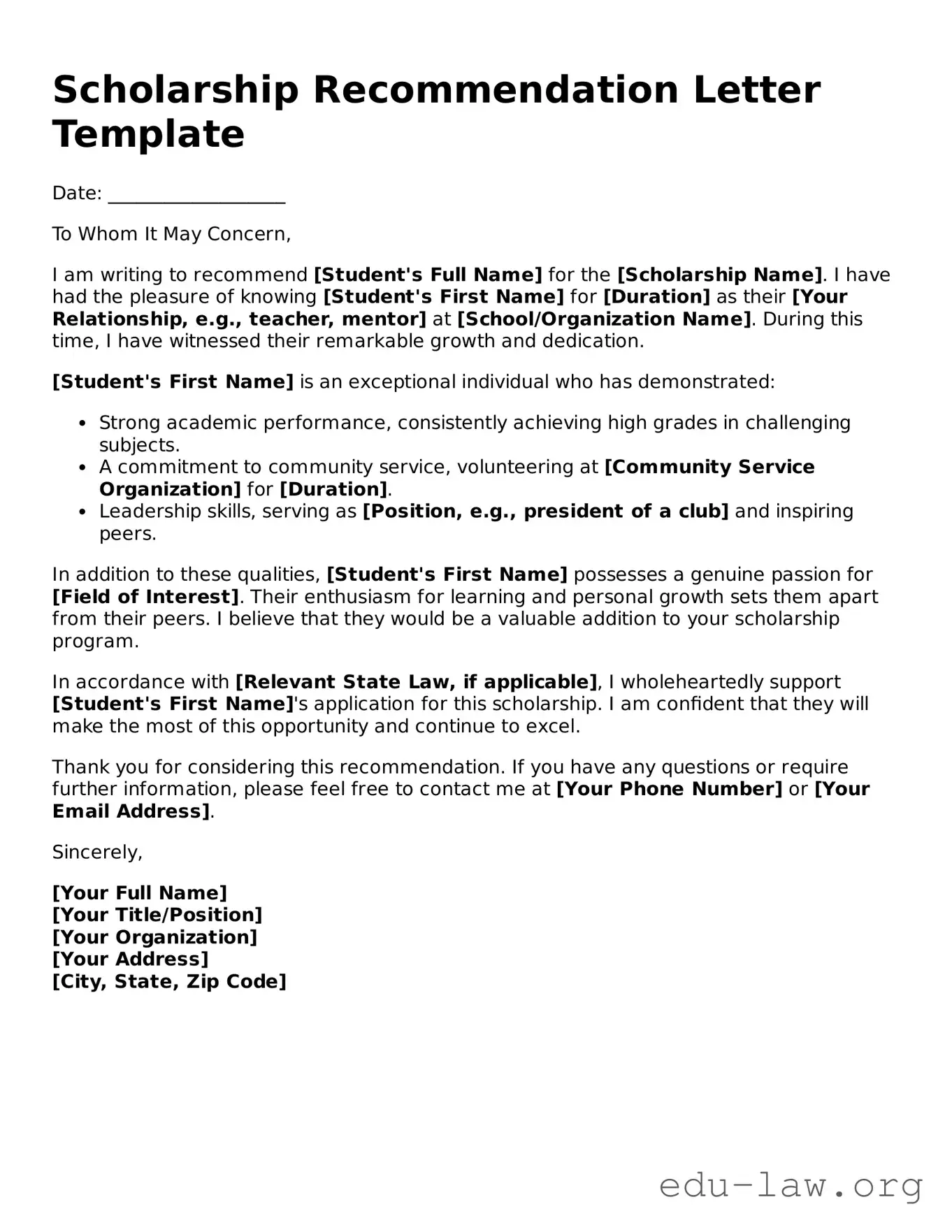
Scholarship Recommendation Letter Template
Date: ___________________
To Whom It May Concern,
I am writing to recommend [Student's Full Name] for the [Scholarship Name]. I have had the pleasure of knowing [Student's First Name] for [Duration] as their [Your Relationship, e.g., teacher, mentor] at [School/Organization Name]. During this time, I have witnessed their remarkable growth and dedication.
[Student's First Name] is an exceptional individual who has demonstrated:
In addition to these qualities, [Student's First Name] possesses a genuine passion for [Field of Interest]. Their enthusiasm for learning and personal growth sets them apart from their peers. I believe that they would be a valuable addition to your scholarship program.
In accordance with [Relevant State Law, if applicable], I wholeheartedly support [Student's First Name]'s application for this scholarship. I am confident that they will make the most of this opportunity and continue to excel.
Thank you for considering this recommendation. If you have any questions or require further information, please feel free to contact me at [Your Phone Number] or [Your Email Address].
Sincerely,
[Your Full Name]
[Your Title/Position]
[Your Organization]
[Your Address]
[City, State, Zip Code]
| Fact Name | Description |
|---|---|
| Purpose | The Scholarship Recommendation Letter form is used to provide insights and evaluations of a student's qualifications for scholarship consideration. |
| Format | This form is typically formatted as a letter, allowing the recommender to present a personalized account of the student's abilities. |
| Confidentiality | Many scholarship programs require that the recommendation letter be submitted confidentially, ensuring the integrity of the evaluation process. |
| Eligibility | Only individuals who know the student well, such as teachers, employers, or mentors, should complete the recommendation letter. |
| State-Specific Forms | Some states may have specific requirements for scholarship recommendation letters, influenced by local education laws. |
| Governing Laws | In states like California, the Education Code governs scholarship applications and related recommendation processes. |
| Submission Guidelines | Each scholarship program may have unique submission guidelines, including deadlines and preferred methods of delivery. |
| Impact | A well-crafted recommendation letter can significantly influence a student's chances of receiving a scholarship. |
After gathering all the necessary information, you are ready to fill out the Scholarship Recommendation Letter form. This process will help ensure that the recommendation is both thorough and supportive of the applicant's qualifications. Follow the steps carefully to complete the form accurately.
What is a Scholarship Recommendation Letter?
A Scholarship Recommendation Letter is a document written by someone who knows you well, such as a teacher, employer, or mentor. This letter highlights your strengths, achievements, and character traits. It plays a crucial role in supporting your scholarship application by providing insight into your qualifications and potential.
Who should I ask to write my recommendation letter?
Choose someone who can speak positively about your skills and experiences. Ideally, this should be a person who knows you in an academic or professional context. Consider asking a teacher, a coach, or a supervisor who can provide specific examples of your abilities and accomplishments. Make sure they are comfortable writing a strong recommendation on your behalf.
What information should I provide to the person writing my letter?
Provide your recommender with details about the scholarship, including its purpose and criteria. Share your resume, personal statement, and any specific points you would like them to address. This information helps them tailor the letter to fit the scholarship’s requirements and present you in the best light.
How long should the recommendation letter be?
The ideal length for a recommendation letter is typically one page. This allows the writer to provide enough detail about your qualifications without overwhelming the reader. Encourage your recommender to be concise yet thorough, focusing on your most relevant strengths and experiences.
When should I request the recommendation letter?
It is best to ask for the recommendation letter well in advance of the scholarship deadline. Aim for at least 4-6 weeks before the due date. This gives the writer ample time to craft a thoughtful letter without feeling rushed. Be sure to follow up politely as the deadline approaches.
Can I see the recommendation letter before it is submitted?
It is generally considered respectful to allow the writer to keep the content of the letter private. However, you can discuss your goals and achievements with them beforehand. If you feel it is necessary, you may politely ask if they would be willing to share a draft with you. Respect their decision if they prefer not to do so.
Not knowing the student well enough: A common mistake is agreeing to write a recommendation without truly understanding the student's strengths, achievements, and character. This can lead to generic letters that do not effectively represent the student.
Ignoring the specific requirements: Each scholarship may have different criteria and questions to address. Failing to read and follow the instructions can result in missing important information that the selection committee is looking for.
Using vague language: Recommendations that lack specific examples or anecdotes do not stand out. It’s essential to provide concrete instances of the student’s accomplishments or character traits to make the letter impactful.
Delaying the submission: Procrastination can lead to rushed letters that lack depth. It’s crucial to allocate enough time to reflect on the student’s qualifications and craft a thoughtful recommendation.
Neglecting to proofread: Spelling and grammatical errors can undermine the credibility of the recommendation. Taking the time to review the letter ensures it is polished and professional.
Failing to personalize the letter: A one-size-fits-all approach does not resonate with scholarship committees. Tailoring the letter to reflect the specific scholarship and the student’s fit for it can make a significant difference.
When applying for scholarships, a variety of documents may be required alongside the Scholarship Recommendation Letter. Each of these documents plays a crucial role in presenting a comprehensive picture of the applicant’s qualifications and character. Here’s a list of common forms and documents that often accompany the recommendation letter:
Gathering these documents can seem daunting, but each one contributes to a stronger application. By providing a complete and well-rounded view of the applicant, these forms help scholarship committees make informed decisions. Take the time to prepare them thoughtfully, and you'll enhance your chances of success.
The Scholarship Recommendation Letter is similar to a Job Recommendation Letter. Both documents serve the purpose of endorsing an individual's qualifications and character. In a job recommendation, the focus is on the candidate's professional skills and work ethic, while the scholarship letter emphasizes academic achievements and personal qualities. Each letter aims to provide insight into the applicant's abilities and potential, encouraging the recipient to consider them favorably.
Another document that resembles the Scholarship Recommendation Letter is the College Application Recommendation Letter. This type of letter is typically submitted as part of a college application process. Like the scholarship letter, it highlights the applicant's strengths, achievements, and suitability for the educational environment. Both letters require the recommender to provide specific examples that illustrate the applicant's capabilities and contributions, making them essential for the evaluation process.
The Personal Reference Letter shares similarities with the Scholarship Recommendation Letter as well. This document is often used in various contexts, such as job applications or volunteer opportunities. It focuses on the individual's character and personal qualities rather than academic or professional achievements. Both letters aim to provide a well-rounded view of the applicant, offering insights that may not be captured in grades or resumes.
Lastly, the Graduate School Recommendation Letter is comparable to the Scholarship Recommendation Letter. This letter is usually required for admission to graduate programs and evaluates the candidate's readiness for advanced study. Both letters assess the applicant's academic performance and personal attributes, providing a comprehensive view of their potential. The recommender's insights can significantly influence the decision-making process for both scholarships and graduate school admissions.
When filling out a Scholarship Recommendation Letter form, there are important guidelines to follow. Here’s a list of things you should and shouldn’t do:
Following these guidelines will help create a strong recommendation that reflects the candidate's true potential.
When it comes to scholarship recommendation letters, there are several misconceptions that can lead to confusion. Understanding the truth behind these myths can help applicants and recommenders navigate the process more effectively. Here are six common misconceptions:
By dispelling these misconceptions, both applicants and recommenders can approach the scholarship recommendation letter process with greater clarity and confidence.
When it comes to filling out and utilizing the Scholarship Recommendation Letter form, several important points should be considered to ensure the process is smooth and effective. Here are some key takeaways:
By keeping these key points in mind, the process of completing and using the Scholarship Recommendation Letter form can be both effective and impactful.