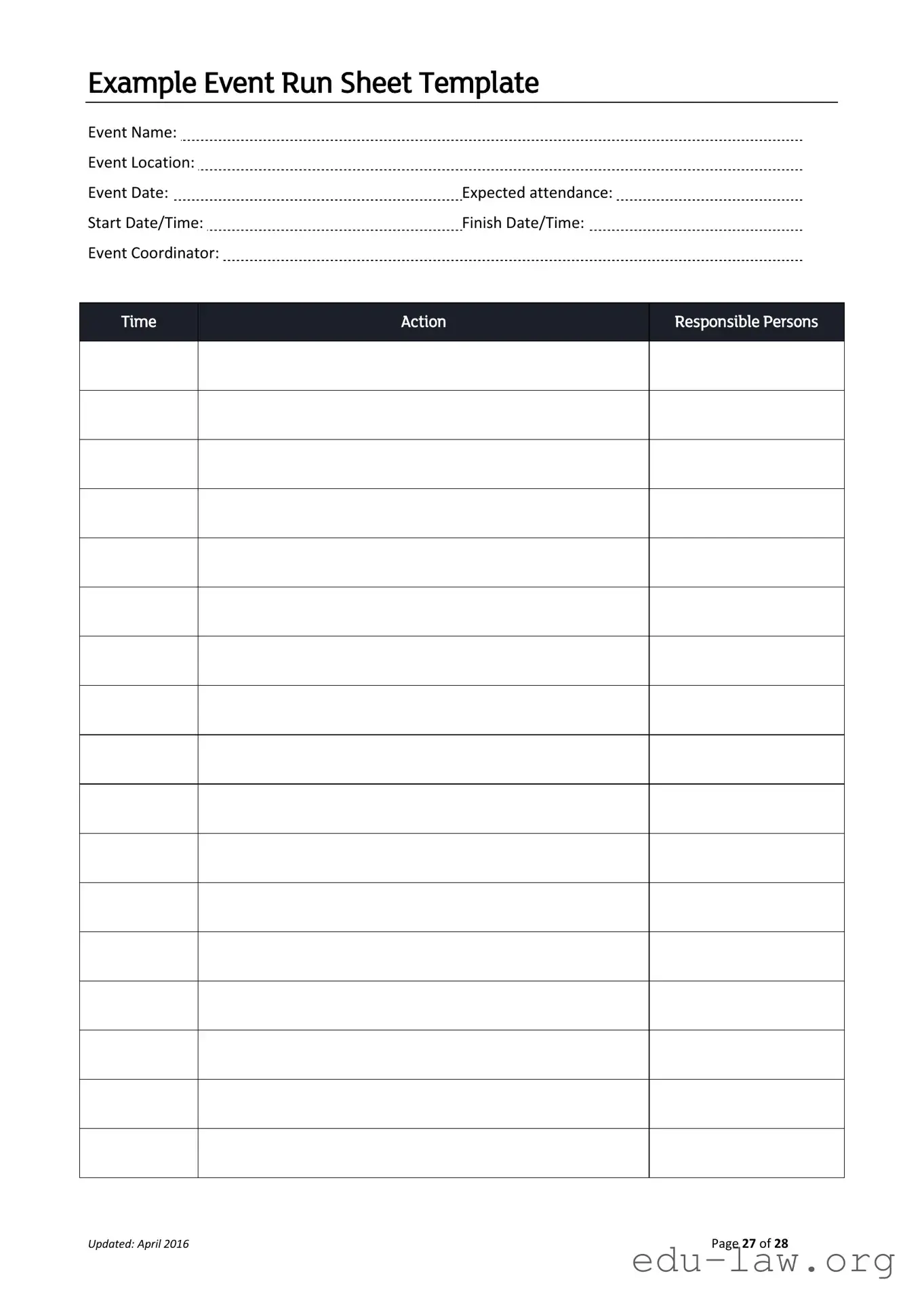
The Running Sheet form serves as an essential tool for event planners, providing a structured framework to ensure that every detail of an event is meticulously organized and executed. This comprehensive document typically includes crucial information such as the event name, location, and date, which set the stage for the entire planning process. Additionally, it captures the expected attendance, giving organizers a clear understanding of the audience size they should prepare for. The form also outlines specific start and finish times, allowing for precise scheduling and coordination. An event coordinator is designated to oversee the proceedings, ensuring that responsibilities are clearly assigned. Within the sheet, a detailed timeline of actions is presented, listing who is responsible for each task, thereby promoting accountability and efficiency. By maintaining an updated version of this document, planners can adapt to any changes that arise, ultimately contributing to the smooth execution of the event.
Example Event Run Sheet Template
Event Name: |
|
Event Location: |
|
Event Date: |
Expected attendance: |
Start Date/Time: |
Finish Date/Time: |
Event Coordinator: |
|
Time
Action
Responsible Persons
Updated: April 2016 |
Page 27 of 28 |
| Fact Name | Details |
|---|---|
| Event Name | This is the title of the event being organized. |
| Event Location | The venue where the event will take place. |
| Event Date | The specific date when the event is scheduled. |
| Expected Attendance | Estimated number of participants expected at the event. |
| Start Date/Time | The time when the event is set to begin. |
| Finish Date/Time | The time when the event is expected to conclude. |
| Event Coordinator | The individual responsible for overseeing the event. |
Filling out the Running Sheet form is an important step in organizing your event. This form helps ensure that all necessary details are captured for a smooth execution. Follow the steps below to complete the form accurately.
Once you have filled out all the required fields, review the information for accuracy. This will help ensure that everything is in place for a successful event.
What is the purpose of the Running Sheet form?
The Running Sheet form serves as a detailed plan for an event, outlining key information such as the event name, location, date, expected attendance, and timing. It helps event coordinators and staff stay organized by clearly defining actions and responsibilities. This ensures that everyone involved understands their roles and the timeline, ultimately contributing to a smoother execution of the event.
What information is required to complete the Running Sheet form?
To complete the Running Sheet form, you will need to provide several key details. This includes the event name, location, and date, as well as the expected attendance. Additionally, you must specify the start and finish times of the event. It is also important to identify the event coordinator, who will oversee the event's operations. These elements are crucial for effective planning and communication among all participants.
How can the Running Sheet form improve event management?
The Running Sheet form enhances event management by offering a clear framework for planning and execution. By detailing each action and assigning responsibilities to specific individuals, it minimizes confusion and ensures accountability. This structured approach allows for better time management and resource allocation, which can lead to a more successful event. Moreover, having a documented plan can facilitate communication among team members, making it easier to address any issues that may arise.
When should the Running Sheet form be updated?
The Running Sheet form should be updated regularly throughout the planning process. As details change—such as the event location, timing, or the individuals responsible for certain tasks—these updates should be reflected in the form. It is advisable to review the Running Sheet periodically, especially as the event date approaches, to ensure that all information is current and accurate. This practice helps to avoid last-minute surprises and ensures that everyone is on the same page.
Incomplete Event Details: One common mistake is failing to provide all necessary event details. Ensure that the Event Name, Event Location, Event Date, and Expected Attendance fields are filled out completely. Missing information can lead to confusion and disorganization.
Incorrect Timing Entries: Another frequent error involves the start and finish times. Double-check that the Start Date/Time and Finish Date/Time are accurate. Mistakes in timing can disrupt the entire event schedule.
Neglecting to Assign Responsibilities: It's essential to specify who is responsible for each action listed in the Time Action Responsible Persons section. Failing to assign tasks can lead to uncertainty about who should perform each duty.
Not Updating the Form: Many individuals forget to update the Running Sheet as changes occur. Keeping the document current is crucial. Regular updates ensure that everyone involved is informed about the latest information and responsibilities.
The Running Sheet form is a crucial document for organizing and managing events. It outlines the schedule, responsibilities, and key details necessary for a successful event. Along with the Running Sheet, several other forms and documents can enhance event planning and execution. Below is a list of commonly used documents that complement the Running Sheet.
Utilizing these documents alongside the Running Sheet can streamline the planning process and contribute to a more organized and successful event. Each form serves a specific purpose, enhancing communication and clarity among all involved parties.
The Running Sheet form is similar to a Schedule of Events document. Both documents outline the timeline of an event, detailing specific activities and their corresponding times. A Schedule of Events typically includes a list of activities, speakers, or performances, and is often used to keep participants informed. Like the Running Sheet, it helps ensure that everything runs smoothly by providing a clear framework for what is expected to occur at each moment during the event.
Another document that resembles the Running Sheet is the Event Agenda. The Event Agenda serves a similar purpose by providing a structured outline of the event’s flow. It includes key details such as session titles, speakers, and time slots. While the Running Sheet focuses on actions and responsibilities, the Event Agenda emphasizes the topics and discussions that will take place, making it essential for attendees to understand the overall structure of the event.
The Program Outline is another document that shares similarities with the Running Sheet. A Program Outline details the content of the event, including the topics to be covered and the order in which they will be presented. It serves as a roadmap for both presenters and attendees, highlighting key points of interest. While the Running Sheet focuses on timing and responsibilities, the Program Outline emphasizes the content and structure of the presentations.
The Event Production Schedule is closely related to the Running Sheet as well. This document is often used in larger events to coordinate technical aspects such as sound, lighting, and staging. It outlines when and how these elements will be set up and tested. The Running Sheet complements this by detailing the timing of specific actions and who is responsible for them, ensuring that all aspects of the event are synchronized.
Lastly, the Contact List is a document that, while different in purpose, aligns with the Running Sheet in terms of facilitating communication. The Contact List includes the names, roles, and contact information of all key individuals involved in the event. This document is crucial for quick communication and coordination, especially during the event. While the Running Sheet focuses on timing and responsibilities, the Contact List ensures that everyone knows who to reach out to for any issues that may arise.
When filling out the Running Sheet form, attention to detail is crucial. Here is a list of things to do and avoid:
When it comes to the Running Sheet form, several misconceptions can lead to confusion among event planners and coordinators. Understanding these misconceptions can help ensure that events run smoothly and efficiently. Here’s a list of common misunderstandings:
By addressing these misconceptions, event planners can utilize the Running Sheet form more effectively, ensuring that every event is a success.
When filling out and using the Running Sheet form, keep these key takeaways in mind: