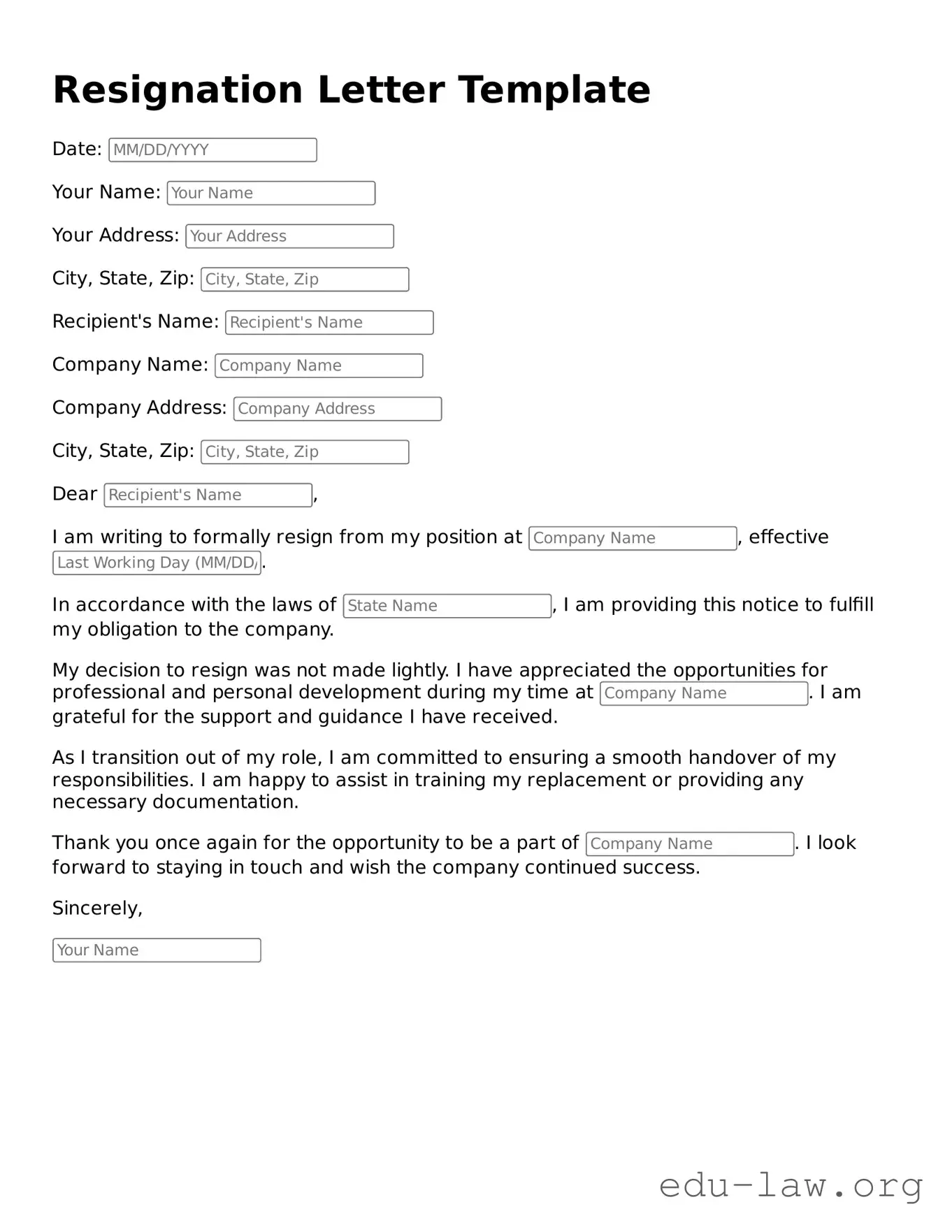
When it comes to leaving a job, a resignation letter is an essential tool that communicates your intention to resign in a professional manner. This document serves multiple purposes: it provides formal notice to your employer, outlines your last working day, and expresses gratitude for the experiences gained during your tenure. A well-crafted resignation letter not only reflects your professionalism but also helps maintain positive relationships with your colleagues and supervisors. Key elements of the form typically include your name and address, the date of submission, the employer's name and address, a clear statement of resignation, and a brief explanation for your departure, if appropriate. Additionally, it often concludes with a note of appreciation and an offer to assist during the transition period. By following these guidelines, individuals can ensure that their resignation is received with respect and understanding, paving the way for future opportunities and networking.
Resignation Letter Template
Date:
Your Name:
Your Address:
City, State, Zip:
Recipient's Name:
Company Name:
Company Address:
City, State, Zip:
Dear ,
I am writing to formally resign from my position at , effective .
In accordance with the laws of , I am providing this notice to fulfill my obligation to the company.
My decision to resign was not made lightly. I have appreciated the opportunities for professional and personal development during my time at . I am grateful for the support and guidance I have received.
As I transition out of my role, I am committed to ensuring a smooth handover of my responsibilities. I am happy to assist in training my replacement or providing any necessary documentation.
Thank you once again for the opportunity to be a part of . I look forward to staying in touch and wish the company continued success.
Sincerely,
| Fact Name | Description |
|---|---|
| Purpose | A resignation letter formally communicates an employee's decision to leave their job. |
| Format | The letter should be clear and concise, typically including the date, a greeting, and a closing. |
| Notice Period | Employees are often expected to provide a notice period, commonly two weeks, but this can vary by company policy. |
| State-Specific Forms | Some states may have specific guidelines for resignation letters, but generally, no official form is required. |
| Governing Law (California) | California law does not require a resignation letter, but it is recommended for documentation purposes. |
| Governing Law (New York) | New York also does not mandate a resignation letter, yet it serves as a professional courtesy. |
| Emotional Tone | It's advisable to maintain a positive tone, expressing gratitude for the opportunities received. |
| Delivery Method | Resignation letters can be delivered in person, via email, or through traditional mail, depending on company culture. |
| Follow-Up | After submitting the letter, it’s good practice to discuss the resignation with a supervisor or HR representative. |
After obtaining the Resignation Letter form, you are ready to initiate the process of formally resigning from your position. Completing this form accurately is essential for ensuring a smooth transition. Follow these steps to fill out the form correctly.
Once you have completed the form, review it for accuracy before submitting it to your supervisor or human resources department. This step is crucial to ensure that your resignation is processed without any issues.
What is a resignation letter?
A resignation letter is a formal document that an employee submits to their employer to announce their intention to leave their job. It serves as a written record of the employee's decision and typically includes the last working day, a brief explanation for leaving, and expressions of gratitude for the opportunities provided during employment.
Why is it important to submit a resignation letter?
Submitting a resignation letter is important for several reasons. It provides official notice to the employer, which allows them to plan for the transition. It also helps maintain a professional relationship between the employee and employer, which can be beneficial for future references or networking opportunities.
How should I format a resignation letter?
A resignation letter should be formatted as a formal business letter. This includes your contact information at the top, followed by the date, and then the employer's contact information. The letter should have a clear subject line, a polite greeting, and a concise body that includes your resignation statement, your last working day, and any other relevant information. Finally, a courteous closing and your signature should be included.
What should I include in my resignation letter?
Your resignation letter should include your intention to resign, your last working day, and a brief explanation for your decision, if comfortable sharing. Additionally, expressing gratitude for the experiences gained and offering to assist with the transition can be beneficial. Keep the tone professional and positive throughout the letter.
How much notice should I give in my resignation letter?
The standard notice period is typically two weeks, but this can vary based on company policy or your employment contract. Some positions may require more notice, especially in management or specialized roles. It is advisable to check your employee handbook or speak with HR for specific requirements.
Can I resign verbally instead of writing a letter?
While a verbal resignation can be communicated to your supervisor, it is generally recommended to follow up with a written resignation letter. This provides a formal record of your resignation and can help avoid any misunderstandings regarding your last working day and other details.
What if I change my mind after submitting my resignation letter?
If you change your mind after submitting your resignation letter, it is essential to communicate this to your employer as soon as possible. However, the acceptance of your retraction will depend on the employer's policies and the circumstances surrounding your resignation. It is advisable to approach the situation professionally and discuss your reasons for wanting to stay.
Failing to include a clear statement of resignation. It’s essential to state that you are resigning and include your last working day.
Not providing adequate notice period. Check your employment contract for the required notice period and adhere to it.
Using an unprofessional tone. Keep the letter respectful and professional, regardless of your reasons for leaving.
Omitting contact information. Include your personal email or phone number for future correspondence.
Not expressing gratitude. A simple thank you for the opportunities provided can leave a positive impression.
Being vague about reasons for leaving. While details are not necessary, a brief explanation can be helpful.
Neglecting to proofread. Spelling and grammar mistakes can undermine the professionalism of your letter.
Failing to keep a copy of the resignation letter for your records. Always retain a copy for future reference.
When an individual decides to resign from their job, they often need to complete several forms and documents to ensure a smooth transition. Each of these documents serves a unique purpose and can help both the employee and employer navigate the resignation process effectively.
Understanding these additional forms and documents can help employees navigate their resignation with confidence. Each document plays a role in ensuring that both the employee and employer can part ways amicably and with clarity regarding their respective responsibilities.
A termination letter serves a similar purpose to a resignation letter, but from the employer's perspective. When an employer needs to end an employee's contract, they use a termination letter to formally communicate the decision. Both documents outline the conclusion of employment and provide essential details such as the last working day. Clarity is crucial in both cases, ensuring that all parties understand the reasons and implications of the employment ending.
A letter of intent can also resemble a resignation letter in terms of its formal nature. Typically used in business transactions or agreements, a letter of intent expresses a party's intention to move forward with a specific action, such as leaving a job. Both documents require clear communication of intentions and timelines, allowing for a mutual understanding of the next steps involved.
An exit interview form is another document that shares similarities with a resignation letter. While the resignation letter signifies the end of employment, the exit interview form is often completed afterward to gather feedback from the departing employee. Both documents facilitate communication about the reasons for leaving, which can help the organization improve its work environment and retain future talent.
A job offer letter, while fundamentally different in purpose, can be compared to a resignation letter in terms of formality and structure. A job offer letter outlines the terms of employment for a new hire, while a resignation letter communicates the end of that employment. Both documents serve as official records, and they typically include important details such as start or end dates, job titles, and any relevant conditions.
A reference letter can also be likened to a resignation letter in that it marks a significant transition in a person's career. When an employee resigns, they may request a reference letter from their employer to support future job applications. Both documents reflect the professional relationship between the employee and employer, encapsulating the experiences and contributions made during the tenure.
Finally, a notice of leave form shares some characteristics with a resignation letter. When an employee needs to take a temporary leave from work, they often submit a notice of leave to inform their employer. While a resignation letter indicates a permanent departure, both documents require clear communication about timelines and expectations. They serve to keep all parties informed and help manage the transition smoothly.
When filling out a resignation letter form, it's important to approach the task with care and professionalism. Here’s a list of things to keep in mind:
Following these guidelines will help ensure that your resignation is handled smoothly and professionally.
Misconceptions about the Resignation Letter form can lead to confusion for employees planning to leave their jobs. Here are five common misunderstandings:
Some believe they can simply inform their supervisor verbally. However, a written resignation letter serves as a formal record and ensures clarity regarding the employee's intent to leave.
Many think that a resignation letter needs to be lengthy. In reality, a brief and straightforward letter is often sufficient. Key elements include the intention to resign, the last working day, and a note of gratitude.
This misconception suggests that only full-time employees need to submit a resignation letter. However, all employees, including part-time and temporary workers, should provide written notice to maintain professionalism.
Some individuals fear that once they submit a resignation letter, they cannot reconsider. While it's best to be sure of your decision, it is possible to withdraw a resignation if discussed promptly with management.
There is a belief that resignation letters are only necessary when leaving immediately. In fact, they are recommended even for planned departures, as they help establish professionalism and maintain good relations.
When preparing to fill out and utilize a Resignation Letter form, several key considerations should be kept in mind to ensure a smooth transition from your current position. Below are important takeaways regarding this process:
Following these guidelines can facilitate a respectful and organized resignation process, benefiting both you and your employer.