Deciding to leave a job can be a significant and emotional step, especially when dissatisfaction drives the choice. A resignation letter due to job dissatisfaction serves as a formal notification to your employer that you are resigning. This letter not only communicates your intention to leave but also provides an opportunity to express your feelings about your work experience. It typically includes your last working day, a brief explanation of your reasons for leaving, and a note of gratitude for any positive experiences. Crafting this letter thoughtfully can help maintain professional relationships and ensure a smooth transition. While it's important to be honest about your reasons for leaving, striking the right tone is crucial. A well-written resignation letter can leave the door open for future opportunities and references. Understanding how to structure this letter and what to include can make the process easier and more respectful for all parties involved.
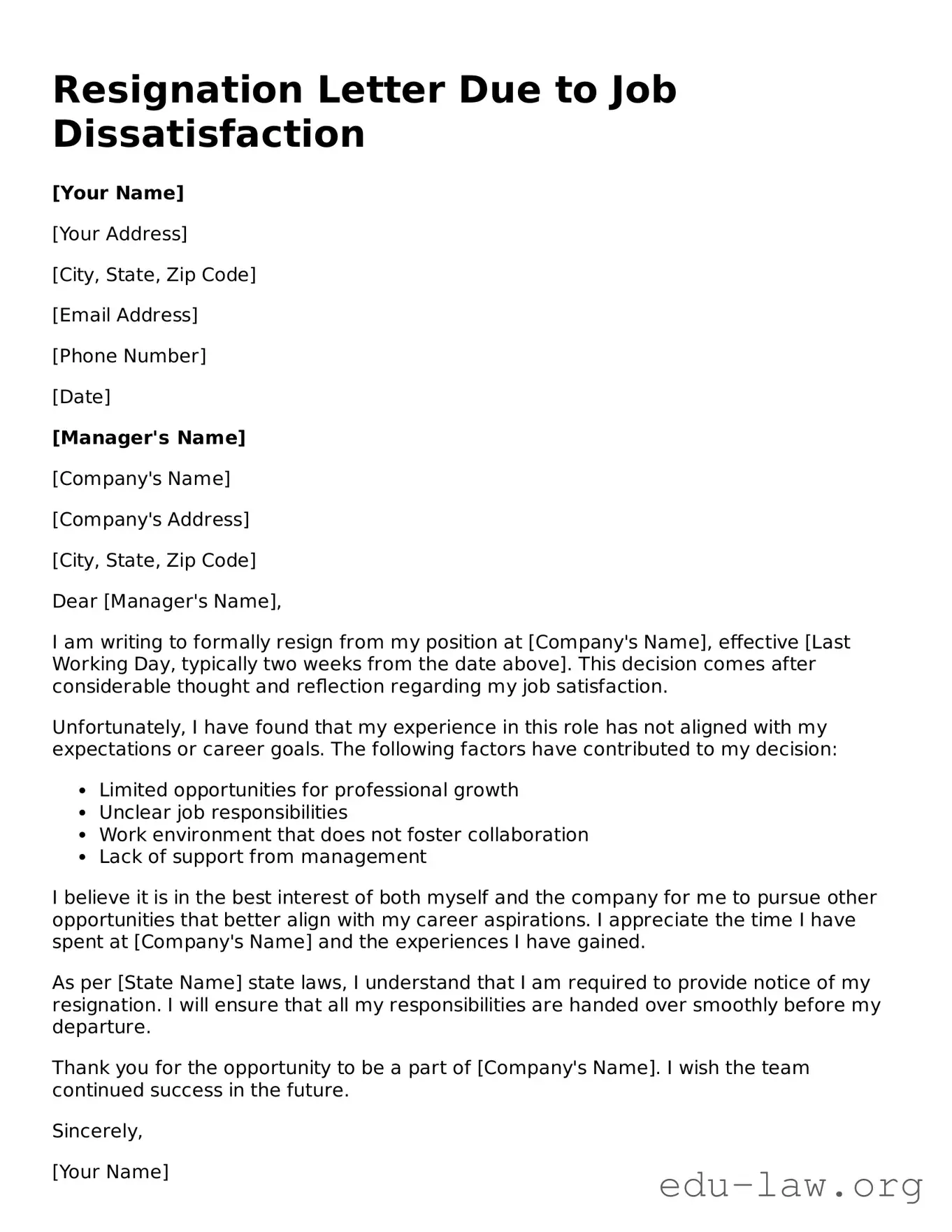
Resignation Letter Due to Job Dissatisfaction
[Your Name]
[Your Address]
[City, State, Zip Code]
[Email Address]
[Phone Number]
[Date]
[Manager's Name]
[Company's Name]
[Company's Address]
[City, State, Zip Code]
Dear [Manager's Name],
I am writing to formally resign from my position at [Company's Name], effective [Last Working Day, typically two weeks from the date above]. This decision comes after considerable thought and reflection regarding my job satisfaction.
Unfortunately, I have found that my experience in this role has not aligned with my expectations or career goals. The following factors have contributed to my decision:
I believe it is in the best interest of both myself and the company for me to pursue other opportunities that better align with my career aspirations. I appreciate the time I have spent at [Company's Name] and the experiences I have gained.
As per [State Name] state laws, I understand that I am required to provide notice of my resignation. I will ensure that all my responsibilities are handed over smoothly before my departure.
Thank you for the opportunity to be a part of [Company's Name]. I wish the team continued success in the future.
Sincerely,
[Your Name]
| Fact Name | Description |
|---|---|
| Purpose | A resignation letter due to job dissatisfaction formally notifies an employer of an employee's decision to leave the job due to unhappiness or dissatisfaction with the work environment or conditions. |
| Professionalism | Even when leaving due to dissatisfaction, it is important to maintain a professional tone in the letter to preserve relationships and future references. |
| State-Specific Forms | Some states may have specific requirements or guidelines for resignation letters, although generally, a standard letter suffices. |
| Governing Laws | In most states, employment is “at-will,” meaning employees can resign for any reason, including dissatisfaction. However, local laws may influence notice periods or final pay. |
| Delivery Method | It is advisable to deliver the resignation letter in person when possible, followed by an email copy for documentation purposes. |
After completing the Resignation Letter Due to Job Dissatisfaction form, you will need to submit it to your employer or HR department. This step is crucial for ensuring that your resignation is processed correctly. Make sure to keep a copy for your records.
Once you have completed these steps, review the form for any errors before submitting it. This ensures that all information is accurate and clear.
What is a Resignation Letter Due to Job Dissatisfaction?
A resignation letter due to job dissatisfaction is a formal document that an employee submits to their employer when they decide to leave their job because they are unhappy with their work environment, role, or other related issues. This letter communicates the decision to resign and provides a brief explanation of the reasons behind it.
Why should I use a resignation letter?
Using a resignation letter is important for several reasons. It provides a clear record of your decision to resign, helps maintain professionalism, and allows you to express your feelings about your experience. This can be beneficial for future references and ensures that you leave on good terms, even if you are dissatisfied.
What should I include in my resignation letter?
Your resignation letter should include your name, the date, and the recipient's name and title. Clearly state your intention to resign and the last day you plan to work. You may also want to include a brief explanation of your dissatisfaction, though it’s not necessary to go into detail.
How do I address my resignation letter?
Address your resignation letter to your direct supervisor or manager. If you feel more comfortable, you can also send a copy to the human resources department. Use a professional greeting, such as “Dear [Manager's Name],” to start your letter.
Is it necessary to explain my reasons for leaving?
While it is not mandatory to explain your reasons for leaving, doing so can provide closure and context for your employer. However, keep your explanation concise and professional. Focus on your feelings rather than placing blame.
How much notice should I give?
Typically, a two-week notice period is standard in many workplaces. However, check your employment contract or company policy, as some organizations may have specific requirements regarding notice periods.
Can I leave immediately without notice?
While you can choose to leave immediately, doing so may impact your professional reputation and relationships. It’s generally advisable to provide notice unless there are extenuating circumstances that require immediate departure.
Should I mention my dissatisfaction in the letter?
You may choose to mention your dissatisfaction, but it’s best to keep it brief and professional. Focus on the positive aspects of your experience and express gratitude for the opportunities you had, even if you were unhappy overall.
What if I change my mind after submitting the letter?
If you change your mind after submitting your resignation letter, it’s important to communicate this as soon as possible. Speak with your manager and express your desire to stay, but be prepared for the possibility that they may have already begun the process of finding your replacement.
How can I ensure a smooth transition after resigning?
To ensure a smooth transition, offer to help train your replacement or wrap up ongoing projects. Maintain professionalism during your remaining time at the company and be open to discussing your responsibilities with your manager to facilitate the handover process.
Not clearly stating the intention to resign. It's important to mention that you are resigning from your position.
Failing to provide a specific last working day. This information helps your employer plan for your departure.
Using a negative tone. Focus on the reasons for leaving without being overly critical of the company or coworkers.
Neglecting to express gratitude. Even if you are dissatisfied, acknowledging any positive experiences can leave a better impression.
Overlooking the need for a signature. A signed letter adds a personal touch and confirms your decision.
Not including contact information. Providing your email or phone number can help maintain professional connections.
Writing an excessively long letter. Keep it brief and to the point to ensure clarity.
Forgetting to proofread. Spelling and grammar mistakes can make the letter appear unprofessional.
Submitting the letter without notifying a supervisor first. It's courteous to discuss your resignation with your manager before handing in the letter.
Not considering the timing of the resignation. Ensure that you are leaving at a time that minimizes disruption for your team.
When an individual decides to resign due to job dissatisfaction, several other forms and documents may accompany the resignation letter. These documents help ensure a smooth transition and provide clarity on various aspects of the resignation process.
In conclusion, alongside the resignation letter due to job dissatisfaction, these forms and documents play a vital role in ensuring that both the employee and employer can navigate the resignation process smoothly. Proper documentation helps clarify expectations and responsibilities, fostering a respectful and professional separation.
The Resignation Letter Due to Job Dissatisfaction form is similar to a Formal Resignation Letter. Both documents serve the primary purpose of notifying an employer about an employee's intention to leave their position. While the formal resignation letter may not specify the reasons for leaving, it typically includes the last working day and expresses gratitude for the opportunities provided. This makes it a more general document, whereas the resignation letter due to job dissatisfaction directly addresses the employee's reasons for leaving, providing context for the decision.
Another document that shares similarities is the Exit Interview Questionnaire. This form is used by employers to gather feedback from employees who are leaving the company. Like the resignation letter due to job dissatisfaction, it focuses on the reasons behind the employee's departure. However, the exit interview questionnaire is more interactive and aims to collect detailed insights, whereas the resignation letter is a one-way communication informing the employer of the resignation.
The Notice of Termination is also akin to the resignation letter due to job dissatisfaction. This document is often used when an employer terminates an employee's contract. Both documents outline the end of employment, but the notice of termination is initiated by the employer and typically includes the reasons for termination. In contrast, the resignation letter is initiated by the employee, allowing them to express their personal reasons for leaving.
A Job Change Notification can be considered similar as well. This document informs relevant parties about an employee's transition from one position to another within the same organization. While it does not indicate dissatisfaction, it shares the theme of employment change. The resignation letter due to job dissatisfaction, however, highlights the reasons for leaving, emphasizing the emotional aspect of the decision, which a job change notification does not address.
Lastly, a Professional Reference Request can be compared to the resignation letter due to job dissatisfaction. When leaving a job, employees often seek references for future employment. Both documents indicate a transition in employment status. However, the professional reference request focuses on building connections for future opportunities, while the resignation letter due to job dissatisfaction focuses on the reasons for departure and the feelings surrounding that decision.
When deciding to submit a resignation letter due to job dissatisfaction, it’s important to approach the process thoughtfully. Here are some guidelines to consider.
Following these dos and don’ts can help ensure that your resignation is handled professionally and respectfully. This approach can maintain positive relationships and leave the door open for future opportunities.
This is not true. While some may choose to resign with immediate effect, the form can also be used for employees who want to provide notice before leaving. It allows for a professional transition.
In reality, expressing dissatisfaction through a formal resignation letter can be handled professionally. This approach can actually enhance your reputation by showing that you are taking a thoughtful and respectful step in your career.
Many people believe they must include extensive details about their reasons for leaving. However, the form allows for a brief statement. It is not necessary to go into depth about personal grievances.
This is a common concern, but it is not typically the case. Submitting a resignation letter is a standard procedure and does not automatically result in termination. Employers usually respect the notice period provided.
When considering the Resignation Letter Due to Job Dissatisfaction form, several key points should be kept in mind to ensure a smooth transition. The following takeaways can guide individuals through the process: