When an employee faces health challenges that impede their ability to perform their job effectively, submitting a resignation letter due to health reasons becomes a necessary step. This form serves as a formal notification to an employer, indicating the employee's intent to leave the position due to medical issues. It typically includes essential information such as the employee's name, the date of resignation, and a brief explanation of the health circumstances prompting the decision. While the letter should maintain a professional tone, it also allows for a personal touch, conveying gratitude for the opportunities provided during the employee's tenure. Additionally, the form may address the need for confidentiality regarding health matters, ensuring that sensitive information is handled appropriately. Understanding the components of this resignation letter is crucial for both employees and employers, as it helps facilitate a smoother transition and preserves professional relationships, even in challenging times.
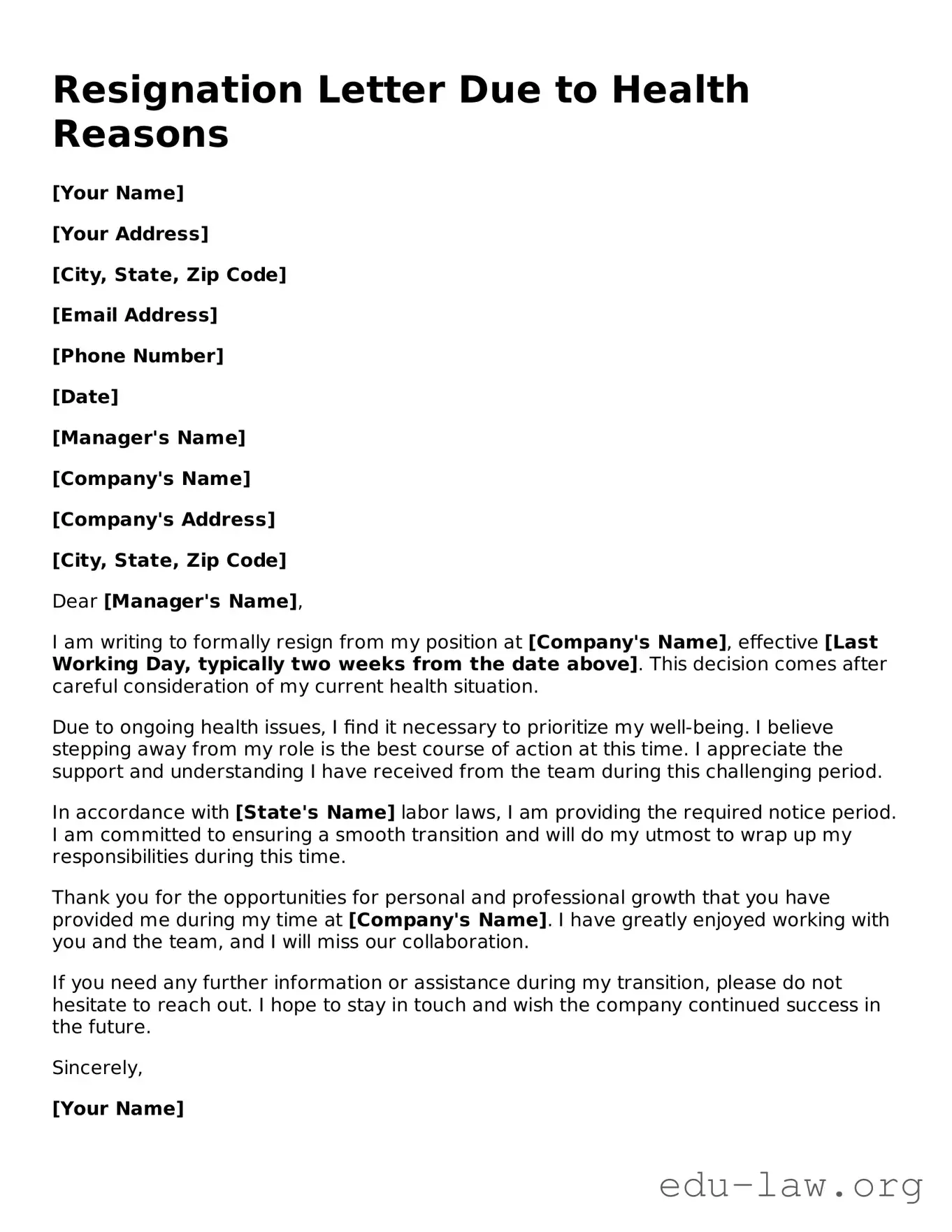
Resignation Letter Due to Health Reasons
[Your Name]
[Your Address]
[City, State, Zip Code]
[Email Address]
[Phone Number]
[Date]
[Manager's Name]
[Company's Name]
[Company's Address]
[City, State, Zip Code]
Dear [Manager's Name],
I am writing to formally resign from my position at [Company's Name], effective [Last Working Day, typically two weeks from the date above]. This decision comes after careful consideration of my current health situation.
Due to ongoing health issues, I find it necessary to prioritize my well-being. I believe stepping away from my role is the best course of action at this time. I appreciate the support and understanding I have received from the team during this challenging period.
In accordance with [State's Name] labor laws, I am providing the required notice period. I am committed to ensuring a smooth transition and will do my utmost to wrap up my responsibilities during this time.
Thank you for the opportunities for personal and professional growth that you have provided me during my time at [Company's Name]. I have greatly enjoyed working with you and the team, and I will miss our collaboration.
If you need any further information or assistance during my transition, please do not hesitate to reach out. I hope to stay in touch and wish the company continued success in the future.
Sincerely,
[Your Name]
| Fact Name | Details |
|---|---|
| Purpose | A resignation letter due to health reasons formally notifies an employer of an employee's decision to leave their position due to health-related issues. |
| Format | The letter should be concise and professional, typically including the employee's intent to resign, the reason (health), and a last working day. |
| State-Specific Forms | Some states may have specific requirements or forms for resignation letters; however, a standard letter format is generally accepted across the U.S. |
| Governing Laws | Employment laws vary by state, but generally, there is no specific law governing resignation letters. However, the Family and Medical Leave Act (FMLA) may provide protections for employees with serious health conditions. |
| Notice Period | While not legally required, providing a notice period is often seen as a professional courtesy. The typical notice period ranges from two weeks to one month. |
When you're ready to submit your resignation due to health reasons, filling out the appropriate form is an important step. Completing this form ensures that your employer is informed of your situation and can take necessary actions. Follow the steps below to fill out the form accurately and efficiently.
After you have completed the form, submit it to your supervisor or HR department as soon as possible. They will guide you through any further steps needed for your transition. Wishing you a smooth process ahead!
What is a Resignation Letter Due to Health Reasons?
A Resignation Letter Due to Health Reasons is a formal document that an employee submits to their employer when they need to leave their job due to medical issues. This letter communicates the decision to resign while providing a brief explanation related to health concerns, ensuring that the employer understands the situation without delving into personal details.
Why should I use a resignation letter for health reasons?
Using a resignation letter is important because it provides a clear and professional way to communicate your decision. It helps maintain a positive relationship with your employer, which can be beneficial for future references or networking. Additionally, it serves as a record of your resignation, documenting the reason and your last working day.
Do I need to provide specific details about my health condition?
No, you are not required to disclose specific details about your health condition in the resignation letter. It’s perfectly acceptable to keep the explanation brief and general. You might simply state that you are resigning due to health reasons without going into further explanation. Your privacy should be respected, and employers are typically understanding of this sensitive matter.
How much notice should I give in my resignation letter?
The amount of notice you should provide can depend on your company's policies and your specific situation. Generally, a two-week notice is considered standard. However, if your health condition requires you to leave sooner, it’s important to communicate that clearly in your letter. Employers usually appreciate honesty and will often accommodate urgent situations.
What should I include in my resignation letter?
Your resignation letter should include several key elements: a clear statement of your intention to resign, the reason (in this case, health reasons), your last working day, and a note of gratitude for the opportunities you’ve had. Keeping the tone positive and professional is essential, even if your experience was not entirely favorable.
Can I change my mind after submitting a resignation letter?
Once you submit your resignation letter, it is generally considered a formal decision. However, if you find that your health improves or your circumstances change, you can always discuss the possibility of retracting your resignation with your employer. Keep in mind that this may not always be feasible, depending on company policies and staffing needs.
Is it necessary to have a doctor’s note when resigning for health reasons?
While it's not typically required to provide a doctor’s note when submitting a resignation letter due to health reasons, it can be helpful in certain situations. If your employer requests documentation or if you are resigning suddenly, having a note may support your decision. Ultimately, the choice to include this information is yours, and it depends on your comfort level and the relationship you have with your employer.
Not Being Clear About the Reason: Some individuals do not clearly state that they are resigning due to health reasons. This can lead to confusion for the employer.
Failing to Include a Resignation Date: It's important to specify the last working day. Omitting this detail can create uncertainty about the timeline.
Using an Inappropriate Tone: A resignation letter should maintain a professional tone. Some people may use informal language, which can come across as disrespectful.
Not Expressing Gratitude: Many forget to thank their employer for the opportunities provided. A simple thank you can leave a positive impression.
Neglecting to Proofread: Typos and grammatical errors can undermine the professionalism of the letter. It’s essential to review the letter before submission.
Not Following Company Policy: Some fail to check if there is a specific procedure for resigning. It’s important to adhere to company guidelines to avoid complications.
When resigning from a position due to health reasons, it’s important to consider additional documents that may support your transition. These documents can help ensure a smooth process and provide necessary information to your employer. Here’s a list of forms and documents that are often used alongside a resignation letter due to health reasons.
Each of these documents plays a significant role in ensuring that your resignation process is clear and well-documented. Taking the time to prepare and submit these forms can ease the transition for both you and your employer, allowing you to focus on your health and well-being.
The Resignation Letter Due to Health Reasons form shares similarities with a Medical Leave of Absence Request form. Both documents are used when an individual is unable to continue their work due to health-related issues. The Medical Leave of Absence Request specifically seeks permission to take time off from work, while the resignation letter formally indicates a decision to leave the job entirely. Each document typically requires the employee to provide a brief explanation of their situation, ensuring that the employer understands the necessity of the request or resignation.
Another document that parallels the Resignation Letter Due to Health Reasons is the Disability Accommodation Request form. This form is utilized by employees who need adjustments in their work environment or duties due to a medical condition. Like the resignation letter, it requires the employee to disclose information regarding their health. However, while the resignation letter indicates a permanent departure from the job, the accommodation request seeks to retain employment by modifying the work conditions to better suit the employee's health needs.
The Family and Medical Leave Act (FMLA) Request form is also similar in nature. This document allows employees to take unpaid, job-protected leave for specified family and medical reasons, including personal health issues. Both the FMLA Request and the resignation letter address health concerns, but they serve different purposes. The FMLA Request allows for a temporary leave, whereas the resignation letter signifies a decision to end the employment relationship due to health complications.
Finally, the Termination of Employment Letter due to Medical Reasons can be compared to the Resignation Letter Due to Health Reasons. While the former is typically initiated by the employer, it may also be used by an employee who is unable to continue working due to health issues. Both documents communicate a need to end the employment relationship due to health-related concerns. However, the termination letter often involves the employer's perspective and may include additional details about the employee's rights and benefits, whereas the resignation letter focuses solely on the employee's decision to leave.
When it comes to resigning from a job due to health reasons, clarity and professionalism are essential. Here are some important dos and don'ts to consider while filling out your resignation letter:
Following these guidelines can help ensure that your resignation process is as smooth as possible. Remember, the way you leave a job can impact your future opportunities.
Misconception 1: A resignation letter due to health reasons is not necessary.
Some people believe that they can simply inform their employer verbally and that a formal letter isn’t needed. However, a written resignation letter serves as a clear record of your decision and helps maintain professionalism.
Misconception 2: You must provide detailed medical information in your letter.
Many think they need to disclose specific health issues when resigning. In reality, it’s sufficient to state that health reasons are prompting your resignation without going into personal details.
Misconception 3: Submitting a resignation letter means you cannot return to the company.
Some employees fear that resigning for health reasons closes the door on future employment. In many cases, companies understand that health issues can arise, and leaving on good terms may allow for reemployment later.
Misconception 4: A resignation letter can only be submitted in person.
While delivering a resignation letter in person can be respectful, it’s not the only option. Sending the letter via email or postal mail is perfectly acceptable, especially if you’re unable to meet in person due to health concerns.
When filling out and using the Resignation Letter Due to Health Reasons form, it is essential to consider several key points to ensure clarity and professionalism.
By following these guidelines, individuals can navigate the resignation process with respect and dignity, while prioritizing their health needs.