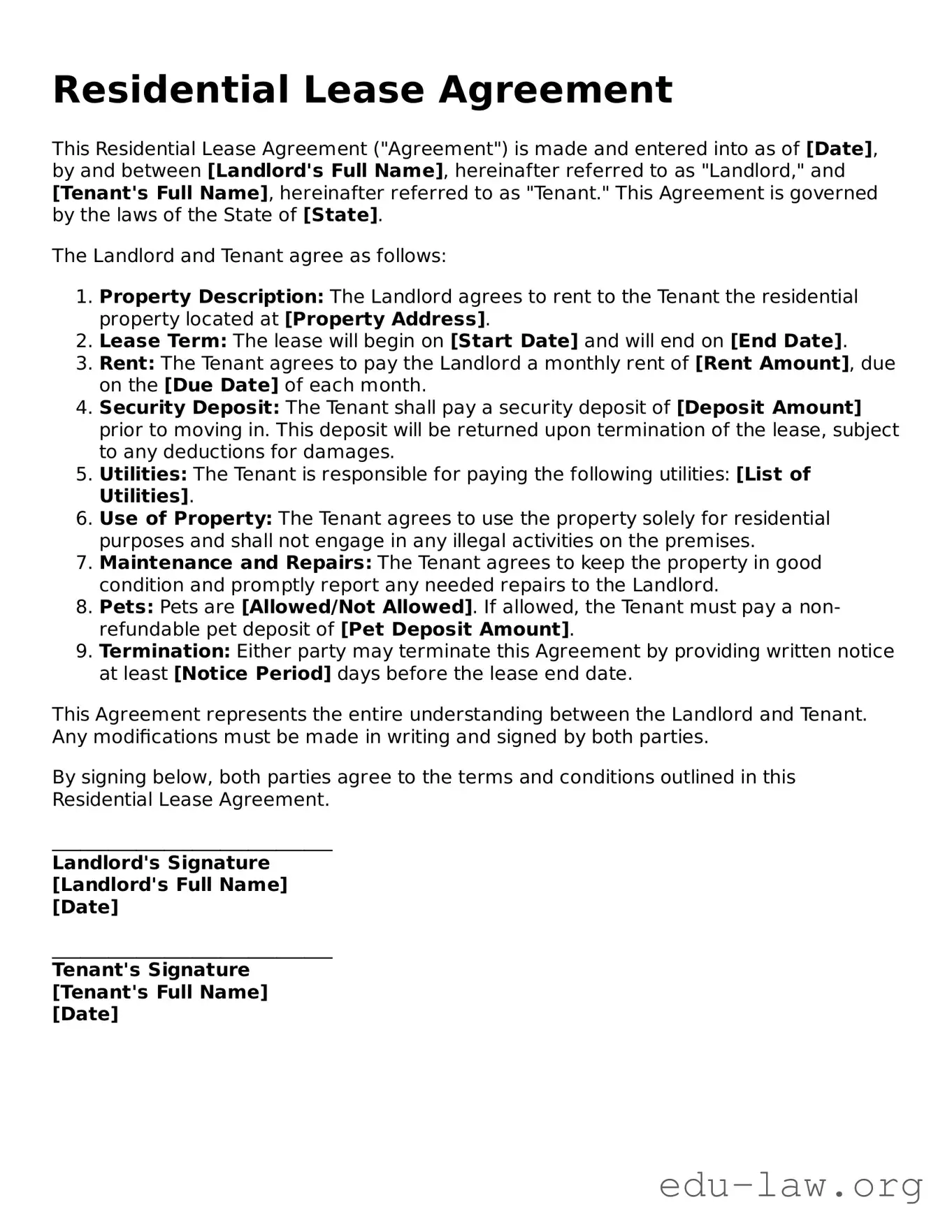
A Residential Lease Agreement is a crucial document that outlines the terms and conditions between a landlord and a tenant regarding the rental of a residential property. This form typically includes essential details such as the names of the parties involved, the address of the rental property, and the duration of the lease. It specifies the amount of rent due, payment methods, and any late fees that may apply. Additionally, the agreement often details the security deposit requirements, maintenance responsibilities, and rules concerning pets or alterations to the property. Provisions for termination of the lease, renewal options, and dispute resolution processes are also commonly included. By clearly defining the rights and obligations of both parties, the Residential Lease Agreement serves as a foundational document that helps to prevent misunderstandings and disputes during the tenancy. Understanding the components of this agreement is vital for both landlords and tenants to ensure a smooth rental experience.
Residential Lease Agreement
This Residential Lease Agreement ("Agreement") is made and entered into as of [Date], by and between [Landlord's Full Name], hereinafter referred to as "Landlord," and [Tenant's Full Name], hereinafter referred to as "Tenant." This Agreement is governed by the laws of the State of [State].
The Landlord and Tenant agree as follows:
This Agreement represents the entire understanding between the Landlord and Tenant. Any modifications must be made in writing and signed by both parties.
By signing below, both parties agree to the terms and conditions outlined in this Residential Lease Agreement.
______________________________
Landlord's Signature
[Landlord's Full Name]
[Date]
______________________________
Tenant's Signature
[Tenant's Full Name]
[Date]
| Fact Name | Details |
|---|---|
| Definition | A Residential Lease Agreement is a contract between a landlord and tenant outlining the terms of renting a residential property. |
| Duration | The lease typically specifies a duration, commonly ranging from one year to month-to-month agreements. |
| Rent Payment | The agreement details the amount of rent, due date, and accepted payment methods. |
| Security Deposit | Most leases require a security deposit, which is refundable at the end of the lease, subject to conditions. |
| Maintenance Responsibilities | The lease outlines the responsibilities of both the landlord and tenant regarding property maintenance and repairs. |
| Governing Law | Each state has its own laws governing lease agreements. For example, in California, the governing law is the California Civil Code. |
| Termination Clause | The lease should include terms for termination, including notice periods required by both parties. |
| Pet Policy | Many leases specify whether pets are allowed and any associated fees or deposits. |
Once you have the Residential Lease Agreement form ready, you can begin filling it out. Make sure to have all necessary information on hand, including personal details and property specifics. Follow these steps to ensure you complete the form accurately.
What is a Residential Lease Agreement?
A Residential Lease Agreement is a legal document between a landlord and a tenant. It outlines the terms and conditions under which a tenant can rent a property. This agreement typically includes details such as the rental amount, duration of the lease, security deposit, and responsibilities of both parties.
What are the key components of a Residential Lease Agreement?
Key components include the names of the landlord and tenant, the property address, the lease term (start and end dates), rental payment details, security deposit amount, maintenance responsibilities, and any rules regarding pets or alterations to the property. Each section is important for clarifying expectations and obligations.
How long does a Residential Lease Agreement typically last?
Residential Lease Agreements can vary in length. They may be short-term, lasting a few months, or long-term, often spanning one year or more. The duration is specified in the agreement and can affect both rental rates and tenant rights.
Can a tenant make changes to the property?
Generally, tenants need permission from the landlord before making any changes to the property, such as painting walls or installing fixtures. The lease agreement may include specific clauses about alterations, so it's essential to review this section carefully.
What happens if a tenant wants to break the lease early?
If a tenant needs to break the lease early, they should refer to the lease agreement for the terms regarding early termination. Often, tenants are required to provide notice and may be responsible for paying rent until a new tenant is found. It’s best to communicate with the landlord to discuss options.
Is a Residential Lease Agreement legally binding?
Yes, a Residential Lease Agreement is legally binding once both parties have signed it. This means that both the landlord and tenant are obligated to follow the terms outlined in the agreement. If either party fails to comply, they may face legal consequences.
Failing to include all tenant names. Every adult who will live in the rental unit must be listed. Omitting someone can lead to issues later.
Not specifying the lease term. Clearly state the start and end dates of the lease. Ambiguity can create confusion and disputes.
Ignoring the rental amount. Ensure the monthly rent is clearly stated. This avoids misunderstandings regarding payment expectations.
Neglecting to outline security deposit details. Include the amount, conditions for its return, and any deductions that may apply.
Overlooking maintenance responsibilities. Clearly define who is responsible for repairs and maintenance to prevent future disagreements.
Not including pet policies. If pets are allowed or prohibited, state this explicitly. This protects both parties and clarifies expectations.
Failing to understand local laws. Each state has different regulations regarding leases. Ensure compliance to avoid legal complications.
Not reviewing the lease before signing. Take the time to read through the entire document. This helps identify any potential issues or misunderstandings.
When entering into a rental agreement, it's essential to have a clear understanding of the various documents that may accompany a Residential Lease Agreement. Each document serves a specific purpose and helps protect the interests of both landlords and tenants.
Understanding these documents can make the rental process smoother and help prevent misunderstandings. Always ensure that you read and comprehend each form before signing to safeguard your rights and responsibilities as a tenant or landlord.
A rental application is a document that prospective tenants fill out to provide information to landlords or property managers. This document typically includes personal details, employment history, rental history, and references. Similar to a Residential Lease Agreement, the rental application serves to establish the qualifications of a tenant before entering into a lease. It helps landlords assess the suitability of applicants based on their financial stability and reliability as tenants.
A lease extension agreement is another document that shares similarities with the Residential Lease Agreement. This document is used when both the landlord and tenant agree to extend the original lease term. Like the Residential Lease Agreement, it outlines the rights and responsibilities of both parties, ensuring that the terms of the lease continue to be enforceable. It is crucial for maintaining a clear understanding of the ongoing rental arrangement.
A sublease agreement allows a tenant to rent out their leased property to another individual, with the landlord’s permission. This document is similar to the Residential Lease Agreement in that it outlines the terms of the rental arrangement, including the duration, rent amount, and responsibilities of both the original tenant and the subtenant. It ensures that all parties are aware of their obligations and protects the landlord's interests in the property.
A move-in checklist is a document that tenants and landlords use to record the condition of a rental property at the start of a lease. This checklist is similar to the Residential Lease Agreement in that it establishes a mutual understanding of the property's condition, which can prevent disputes over damages when the lease ends. Both documents serve to protect the rights of the landlord and tenant by providing a clear record of expectations.
A termination notice is a document that either the landlord or tenant can use to formally end a lease agreement. This document parallels the Residential Lease Agreement in that it outlines the terms and conditions under which the lease can be terminated. It ensures that both parties understand their rights and obligations regarding the conclusion of the rental relationship, helping to facilitate a smooth transition.
A rental receipt is a document that landlords provide to tenants as proof of payment for rent. This document is similar to the Residential Lease Agreement in that it confirms the transaction between the landlord and tenant. It serves as a record of payment and can be important for both parties in case of disputes regarding rent payments. Like the lease agreement, it reinforces the financial aspects of the rental relationship.
When filling out a Residential Lease Agreement form, attention to detail is crucial. This document serves as a binding contract between a landlord and tenant, outlining the terms of the rental arrangement. Here are some important dos and don’ts to keep in mind:
By following these guidelines, both landlords and tenants can help ensure a smooth rental experience and avoid potential disputes in the future.
Understanding the Residential Lease Agreement can be challenging. Here are ten common misconceptions about this important document:
Being aware of these misconceptions can help tenants and landlords navigate their lease agreements more effectively.
Filling out and using a Residential Lease Agreement form is an important step for both landlords and tenants. Here are some key takeaways to keep in mind:
By paying attention to these key points, both landlords and tenants can create a clear and effective Residential Lease Agreement that serves their needs.