When buying or selling a property, unexpected repairs can create significant challenges. A Repair Escrow Agreement form provides a structured way to address these issues, ensuring both parties have a clear understanding of their responsibilities. This form outlines the specific repairs that need to be completed, the timeline for completion, and the amount of money to be held in escrow to cover these repairs. It also details the conditions under which funds will be released, protecting the interests of both the buyer and the seller. By establishing a clear framework, the Repair Escrow Agreement helps facilitate a smoother transaction process, minimizing disputes and ensuring that necessary repairs are addressed in a timely manner. Understanding this form is crucial for anyone involved in real estate transactions, as it can significantly impact the outcome of the sale and the satisfaction of both parties.
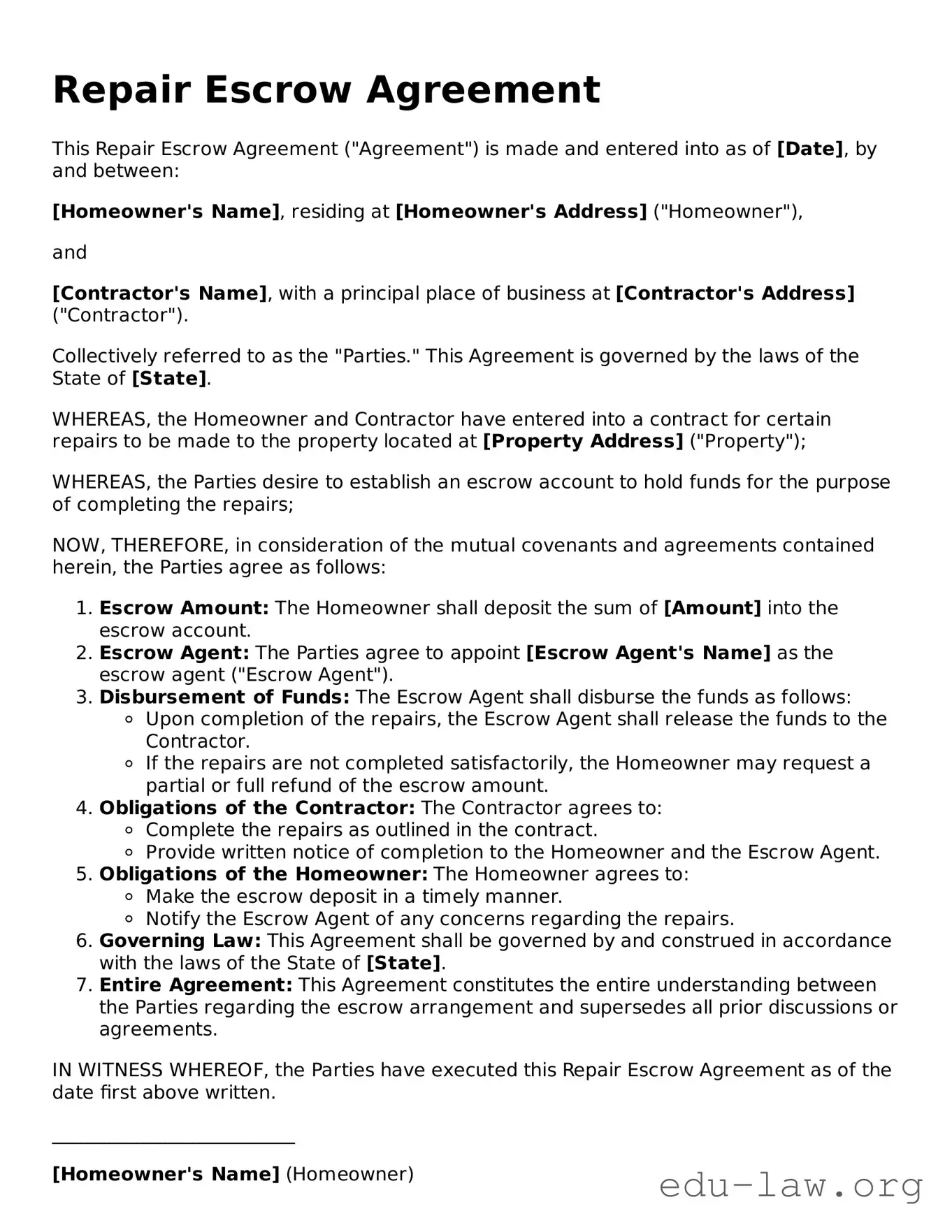
Repair Escrow Agreement
This Repair Escrow Agreement ("Agreement") is made and entered into as of [Date], by and between:
[Homeowner's Name], residing at [Homeowner's Address] ("Homeowner"),
and
[Contractor's Name], with a principal place of business at [Contractor's Address] ("Contractor").
Collectively referred to as the "Parties." This Agreement is governed by the laws of the State of [State].
WHEREAS, the Homeowner and Contractor have entered into a contract for certain repairs to be made to the property located at [Property Address] ("Property");
WHEREAS, the Parties desire to establish an escrow account to hold funds for the purpose of completing the repairs;
NOW, THEREFORE, in consideration of the mutual covenants and agreements contained herein, the Parties agree as follows:
IN WITNESS WHEREOF, the Parties have executed this Repair Escrow Agreement as of the date first above written.
__________________________
[Homeowner's Name] (Homeowner)
__________________________
[Contractor's Name] (Contractor)
__________________________
[Escrow Agent's Name] (Escrow Agent)
| Fact Name | Description |
|---|---|
| Purpose | A Repair Escrow Agreement is used to set aside funds for repairs that need to be completed after a property sale. |
| Governing Law | The governing laws for Repair Escrow Agreements vary by state. For example, in California, the agreement is governed by California Civil Code. |
| Parties Involved | The agreement typically involves the buyer, seller, and an escrow agent who manages the funds. |
| Release of Funds | Funds are released from escrow once the agreed-upon repairs are completed and verified. |
Once you have the Repair Escrow Agreement form in front of you, it’s time to fill it out carefully. This form requires specific information to ensure that all parties understand their obligations and the terms of the agreement. Follow these steps to complete the form accurately.
What is a Repair Escrow Agreement?
A Repair Escrow Agreement is a legal document used in real estate transactions. It outlines the terms under which funds are set aside to cover repair costs for a property. Typically, this agreement is established when a buyer and seller agree that certain repairs must be completed before the sale can close. The funds are held in escrow until the repairs are completed to the satisfaction of both parties.
Why would I need a Repair Escrow Agreement?
This agreement is particularly useful when a property requires repairs that could affect its value or livability. It provides assurance to the buyer that the necessary repairs will be made, while also protecting the seller from having to complete the repairs upfront. By using an escrow account, both parties can feel secure knowing that the funds are available for the repairs once they are completed.
How does the Repair Escrow process work?
The process begins when both the buyer and seller agree on the repairs needed. They will then specify the amount of money to be placed in escrow for these repairs. Once the agreement is signed, the funds are deposited into an escrow account. After the repairs are completed, the buyer inspects the work. If satisfied, the escrow agent releases the funds to the contractor. If not, the buyer can request that the repairs be completed or negotiate further actions.
What happens if the repairs are not completed?
If the repairs are not completed as agreed, the Repair Escrow Agreement typically includes provisions for what happens next. This might involve returning the funds to the buyer or requiring the seller to complete the repairs within a specified time frame. The exact terms will depend on the language of the agreement and the negotiations between the parties involved.
Are there any costs associated with a Repair Escrow Agreement?
Yes, there can be costs associated with setting up a Repair Escrow Agreement. These may include escrow fees charged by the escrow company, as well as potential costs for inspections or additional services required to verify that the repairs have been completed satisfactorily. It is important to review these costs ahead of time to avoid any surprises during the transaction.
Can I modify the Repair Escrow Agreement after it has been signed?
Modifications to a Repair Escrow Agreement can be made, but both parties must agree to the changes. Any amendments should be documented in writing and signed by both the buyer and seller. This ensures that all parties are on the same page and helps prevent misunderstandings down the line. Always consult with a legal professional if you are considering changes to ensure that they are properly executed.
Incomplete Information: One of the most common mistakes is not filling out all the required fields. Missing information can delay the process and lead to confusion.
Incorrect Dates: Failing to provide accurate dates can create issues later on. It's crucial to ensure that all dates reflect the correct timeline for repairs and escrow release.
Not Specifying Repair Details: Vague descriptions of the repairs can lead to misunderstandings. Clearly outlining what needs to be done helps everyone stay on the same page.
Ignoring Local Regulations: Some individuals overlook local laws that may affect the escrow agreement. It's important to be aware of any specific requirements in your area.
Failure to Review Terms: Not thoroughly reviewing the terms of the agreement can result in unexpected obligations. Taking the time to read everything carefully is essential.
Missing Signatures: Forgetting to sign the document can render it invalid. Ensure that all parties involved have signed before submission to avoid any issues.
The Repair Escrow Agreement form is a crucial document in real estate transactions, particularly when repairs are needed before closing. Several other forms and documents often accompany it to ensure a smooth process. Below are some of the key documents that work in conjunction with the Repair Escrow Agreement.
Each of these documents plays a vital role in facilitating a successful real estate transaction. Together, they help protect the interests of both buyers and sellers, ensuring that all parties are informed and accountable throughout the process.
The Repair Escrow Agreement is similar to a Purchase Agreement, as both documents outline the terms and conditions surrounding a real estate transaction. A Purchase Agreement specifies the sale of a property, including the purchase price and any contingencies. The Repair Escrow Agreement, on the other hand, addresses specific repairs that need to be made after the purchase is agreed upon. Both documents serve to protect the interests of the buyer and seller, ensuring that all parties are clear on their responsibilities and expectations.
Another document that shares similarities with the Repair Escrow Agreement is the Escrow Agreement itself. An Escrow Agreement establishes a neutral third party to hold funds or documents until specific conditions are met. In the case of the Repair Escrow Agreement, the escrow account is used specifically for funds allocated for repairs. Both agreements ensure that the buyer's and seller's interests are safeguarded during the transaction process, providing a structured way to handle financial obligations.
The Home Inspection Contingency is also akin to the Repair Escrow Agreement. This document allows a buyer to have a property inspected before finalizing the purchase. If significant issues are discovered, the buyer can negotiate repairs or request credits. While the Home Inspection Contingency focuses on identifying problems, the Repair Escrow Agreement deals with the financial aspects of addressing those problems. Both documents emphasize the importance of transparency and negotiation in real estate transactions.
A similar document is the Seller Disclosure Statement. This statement requires sellers to disclose known issues with the property, such as structural problems or pest infestations. It aims to inform buyers about the condition of the home before the sale. While the Seller Disclosure Statement provides upfront information, the Repair Escrow Agreement focuses on how to manage and fund repairs that may arise from those disclosures. Both documents work together to promote informed decision-making in real estate deals.
Lastly, the Addendum to Purchase Agreement can be compared to the Repair Escrow Agreement. An Addendum modifies the original Purchase Agreement to include additional terms or conditions. For instance, if repairs are needed after an inspection, an addendum may specify that funds will be held in escrow for those repairs. Like the Repair Escrow Agreement, the Addendum ensures that all parties agree on how to handle specific situations that arise during the buying process, maintaining clarity and accountability.
When filling out the Repair Escrow Agreement form, it is essential to approach the task with care. Here are ten important things to consider:
Taking these steps can help ensure a smoother process and protect your interests throughout the agreement.
Understanding the Repair Escrow Agreement form is essential for anyone involved in real estate transactions. However, several misconceptions can lead to confusion. Here’s a breakdown of eight common myths:
This is not true. While buyers often use repair escrow agreements, sellers can also benefit from them to ensure repairs are completed before closing.
Not necessarily. The agreement allows for funds to be held in escrow until repairs are completed, which can happen after closing.
Minor repairs can also be included in the agreement. It’s about ensuring that all necessary fixes are addressed.
This is a misconception. If repairs are not completed as agreed, the funds may be released to the seller or used to cover repair costs.
This is not the case. They are used selectively, depending on the specific needs and agreements between the parties involved.
While there are details to manage, the process can be straightforward with clear communication between all parties.
Terms can be amended if both parties agree to the changes. Flexibility is often built into the agreements.
This is incorrect. They can be utilized in both residential and commercial real estate transactions.
By addressing these misconceptions, individuals can navigate the Repair Escrow Agreement form more effectively and make informed decisions in their real estate dealings.
When filling out and using the Repair Escrow Agreement form, it is essential to understand several key aspects to ensure a smooth process. Here are some important takeaways:
By keeping these key points in mind, you can navigate the Repair Escrow Agreement process more effectively and protect the interests of all parties involved.