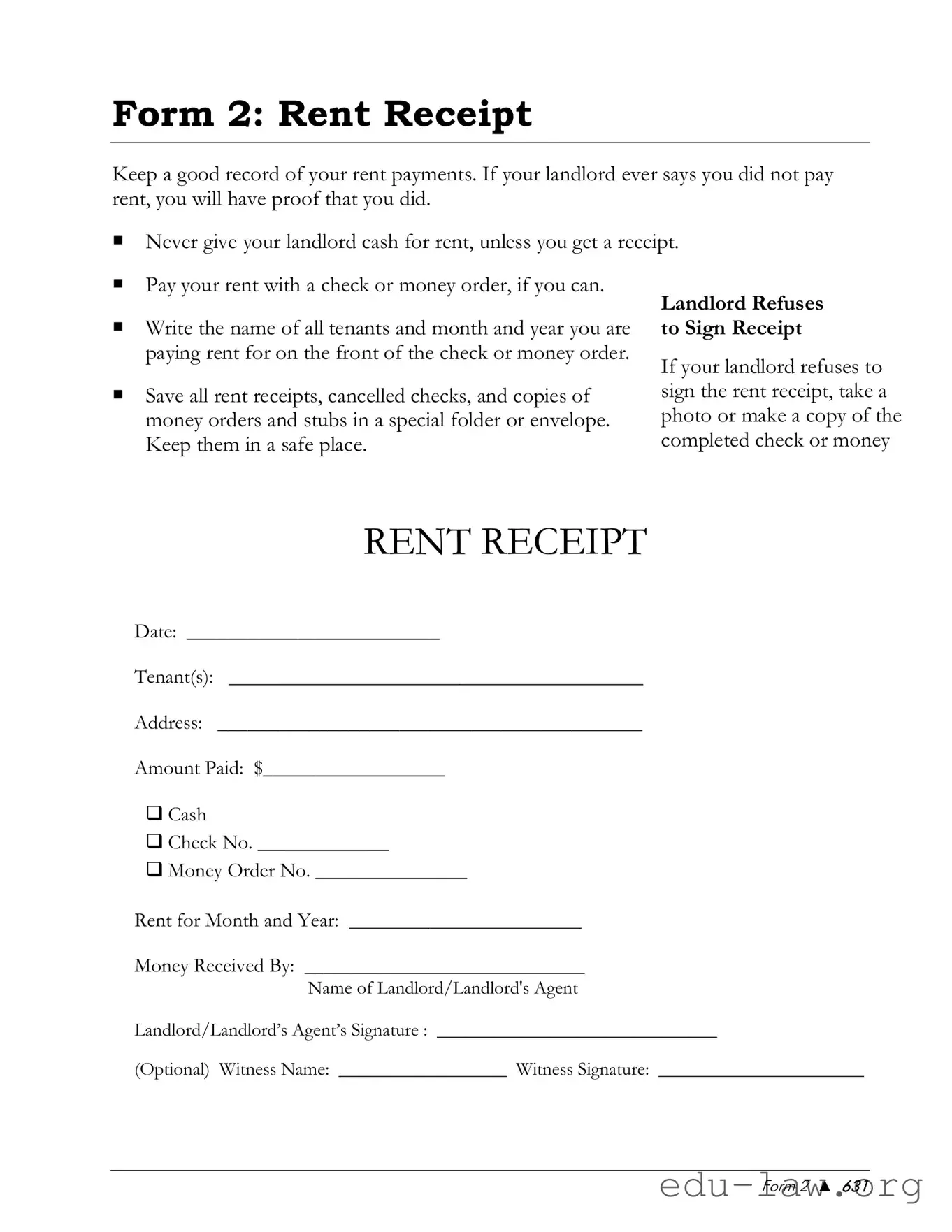
The Rental Receipt form serves as an essential document in the landlord-tenant relationship, providing a clear record of rent payments made by tenants. This form includes several key components that ensure both parties have a mutual understanding of the transaction. At the top, the date of payment is recorded, followed by the names of the tenant or tenants involved. The specific address of the rental property is also noted, which helps to avoid any confusion regarding the location of the lease. One of the most critical elements is the amount paid, where tenants can indicate their payment method—whether it was made in cash, by check, or via money order. Additionally, the form specifies the month and year for which the rent is being paid, establishing a clear timeline for the transaction. The name of the landlord or their agent is included, along with an optional signature, which adds an extra layer of authenticity to the receipt. Lastly, there is space for a witness to sign, further validating the payment. By utilizing this form, both landlords and tenants can maintain accurate records, which can be invaluable in the event of disputes or misunderstandings.
RENT RECEIPT
Date: _________________________
Tenant(s): _________________________________________
Address: __________________________________________
Amount Paid: $__________________
Cash
Check No. _____________
Money Order No. _______________
Rent for Month and Year: _______________________
Money Received By: ______________________________
Name of Landlord/Landlord's Agent Landlord/Landlord’s Agent’s Signature : ______________________________
(Optional) Witness Name: __________________ Witness Signature: ______________________
| Fact Name | Description |
|---|---|
| Date | The rental receipt should include the date when the payment was made, ensuring accurate record-keeping for both tenant and landlord. |
| Tenant Information | It requires the names of the tenant(s), which helps identify who made the payment and is crucial for any future disputes. |
| Property Address | The address of the rental property must be included to specify the location for which the rent is being paid. |
| Payment Amount | The total amount paid in rent should be clearly stated, providing transparency and clarity for both parties. |
| Payment Method | The form allows the tenant to indicate the method of payment, whether cash, check, or money order, which is important for tracking transactions. |
| Month and Year | Rent for the specific month and year should be noted, linking the payment to the correct rental period. |
| Received By | The name of the landlord or the landlord's agent who received the payment must be recorded, ensuring accountability. |
| Signatures | While optional, signatures from the landlord or agent and a witness can provide additional verification of the transaction. |
Filling out the Rental Receipt form is straightforward. Once completed, this form serves as a record of payment between the tenant and landlord. Ensure all necessary information is accurate to avoid any disputes later.
What is a Rental Receipt form?
A Rental Receipt form is a document that serves as proof of payment for rent. It includes important details such as the date of payment, the tenant's name, the property address, and the amount paid. This form helps both tenants and landlords keep accurate records of rental transactions. By providing a receipt, landlords confirm that they have received payment, while tenants have documentation for their records.
What information do I need to fill out on the Rental Receipt form?
To complete the Rental Receipt form, you will need to provide several pieces of information. Start with the date of payment. Next, include the names of the tenant(s) and the address of the rental property. You will also need to specify the amount paid and the method of payment, whether it was cash, check, or money order. Additionally, the name of the landlord or their agent should be included, along with their signature. Optionally, you can also add the name and signature of a witness.
Why is it important to keep a copy of the Rental Receipt?
Keeping a copy of the Rental Receipt is essential for both tenants and landlords. For tenants, it serves as proof that rent has been paid, which can be helpful in case of disputes or misunderstandings. For landlords, it helps maintain accurate financial records and can be useful for tax purposes. Having a copy ensures that both parties have a clear understanding of the rental payments made and received.
Can I modify the Rental Receipt form to fit my needs?
Yes, you can modify the Rental Receipt form to suit your specific needs, as long as all necessary information is included. You might want to add additional fields or notes that are relevant to your rental agreement. However, ensure that the core information remains intact to maintain its validity as a receipt. Always keep in mind the importance of clarity and accuracy when making any modifications.
Failing to include the date of the transaction can lead to confusion about when the payment was made.
Not listing all tenant(s) can cause issues, especially if multiple individuals are responsible for the rent.
Leaving the address section blank may result in disputes over which property the payment applies to.
Incorrectly entering the amount paid can create misunderstandings between the tenant and the landlord.
Failing to check the appropriate payment method (Cash, Check, or Money Order) can lead to confusion about how the payment was made.
Not providing the check or money order number when applicable makes it difficult to track the payment.
Omitting the month and year for the rent payment can create issues regarding which rental period the payment covers.
Neglecting to have the landlord's signature or the signature of the landlord's agent can make the receipt invalid.
When managing rental properties, several forms and documents complement the Rental Receipt form. Each of these documents plays a vital role in ensuring clear communication and proper record-keeping between landlords and tenants. Below is a list of commonly used forms that may accompany the Rental Receipt.
These documents not only help maintain a healthy landlord-tenant relationship but also ensure that both parties understand their rights and responsibilities. Keeping organized records is essential for smooth property management and effective communication.
The Lease Agreement is a foundational document in the rental process. It outlines the terms and conditions of the rental arrangement between the landlord and tenant. Like the Rental Receipt form, it includes essential details such as the names of the parties involved, the property address, and the rental amount. While the Lease Agreement establishes the obligations of both parties, the Rental Receipt serves as proof of payment made under those terms.
The Security Deposit Receipt is another document closely related to the Rental Receipt. This receipt confirms the amount of money a tenant has paid as a security deposit, which is held by the landlord to cover potential damages or unpaid rent. Both documents provide a clear record of financial transactions between the landlord and tenant, ensuring transparency in the rental relationship.
A Move-In Inspection Report is also similar to the Rental Receipt. This document records the condition of the rental property at the time the tenant moves in. It often includes details about any existing damages or issues. While the Rental Receipt confirms payment, the Move-In Inspection Report serves to protect both parties by documenting the property's state before the tenant assumes responsibility.
The Rent Increase Notice is another relevant document. It informs tenants of any changes in rental amounts. Similar to the Rental Receipt, it includes the property address and the current rental amount. Both documents are essential for maintaining clear communication about financial expectations in the rental agreement.
The Eviction Notice shares some similarities with the Rental Receipt, as both documents are critical in the landlord-tenant relationship. The Eviction Notice outlines the reasons for terminating the rental agreement, often due to unpaid rent. It may reference the Rental Receipt as proof of payment history, highlighting the importance of keeping accurate records for both parties.
A Payment Plan Agreement is similar in that it outlines the terms under which a tenant can pay their rent over time, rather than in a lump sum. This document specifies the payment schedule and amounts due. Like the Rental Receipt, it provides a clear record of financial obligations, ensuring both parties understand their commitments.
The Tenant's Application Form is another document that shares some commonalities with the Rental Receipt. This form collects personal information and financial details from prospective tenants. Both documents serve to establish a formal relationship between the landlord and tenant, laying the groundwork for future transactions, including rent payments.
The Lease Renewal Agreement is akin to the Rental Receipt as it signifies a continuation of the rental relationship. This document outlines the terms for extending the lease, including any changes in rent. Both documents are vital for maintaining clarity and agreement between the landlord and tenant regarding their ongoing obligations.
Lastly, the Utility Payment Receipt is similar in that it serves as proof of payment for utilities, which are often part of the rental agreement. This document details the amount paid and the service period. Both the Utility Payment Receipt and the Rental Receipt help tenants keep track of their financial responsibilities related to their living arrangements.
When filling out the Rental Receipt form, there are specific actions that can help ensure accuracy and clarity. Below is a list of dos and don'ts to consider.
Understanding the Rental Receipt form is crucial for both tenants and landlords. However, several misconceptions can lead to confusion. Here are four common misunderstandings:
This is false. Regardless of payment timeliness, a rental receipt serves as an important record of the transaction. It protects both parties by providing proof of payment.
While verbal agreements can be valid, they are harder to enforce. A written receipt provides clear evidence of the payment terms and can be crucial in disputes.
Though the landlord's signature is optional, it is highly recommended. A signed receipt adds an extra layer of authenticity and can help clarify any misunderstandings later.
This is incorrect. Regardless of the payment method—be it cash, check, or money order—tenants should always request a receipt. This ensures that all transactions are documented properly.
By dispelling these misconceptions, both landlords and tenants can navigate their rental agreements with greater confidence and clarity.
When filling out and using the Rental Receipt form, keep the following key takeaways in mind: