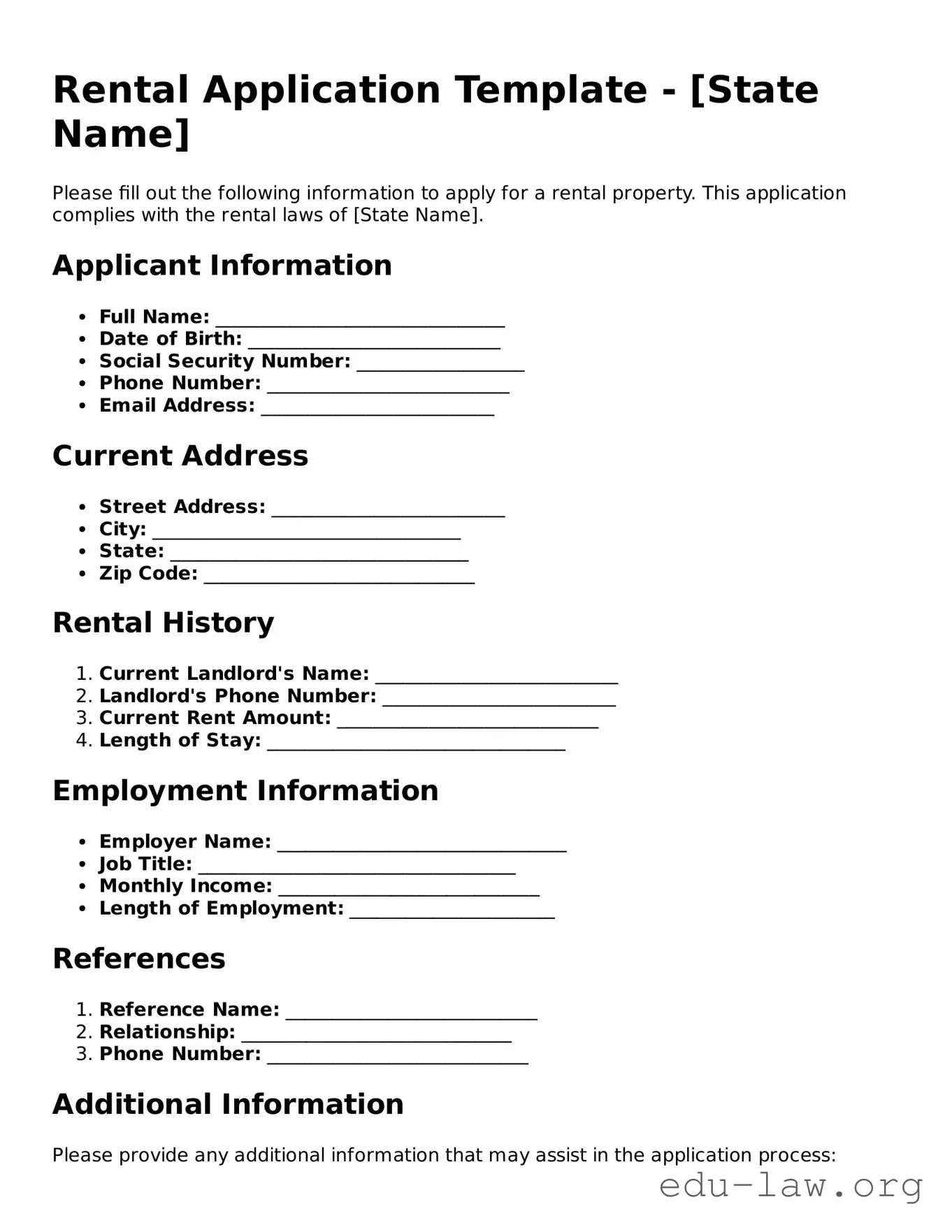
The Rental Application form is a crucial document in the leasing process, serving as a gateway for potential tenants to express their interest in a rental property. This form typically collects essential information about the applicant, including personal details, employment history, and financial background. It often requires applicants to disclose their rental history, providing landlords with insight into their previous living situations. Additionally, many Rental Applications include sections for references, which can help verify the applicant's reliability and character. Information about income and credit history may also be requested, allowing landlords to assess the applicant's ability to meet rent obligations. Completing this form accurately and thoroughly is vital, as it can significantly influence the landlord's decision-making process. Understanding the components of the Rental Application can empower prospective tenants to present themselves in the best light possible.
Rental Application Template - [State Name]
Please fill out the following information to apply for a rental property. This application complies with the rental laws of [State Name].
Applicant Information
Current Address
Rental History
Employment Information
References
Additional Information
Please provide any additional information that may assist in the application process:
___________________________________________________________
___________________________________________________________
Signature
I certify that the information provided in this application is true and accurate to the best of my knowledge.
Applicant Signature: ___________________________
Date: ______________________________________
| Fact Name | Description |
|---|---|
| Purpose | The rental application form is used by landlords to gather essential information about potential tenants. |
| Required Information | Typically, applicants must provide personal details, rental history, and employment information. |
| Application Fee | Many landlords charge a non-refundable application fee to cover background checks and processing costs. |
| State-Specific Forms | Each state may have specific requirements for rental applications, governed by local landlord-tenant laws. |
| Fair Housing Compliance | The form must comply with the Fair Housing Act, prohibiting discrimination based on protected classes. |
Filling out a Rental Application form is an important step in securing a rental property. Completing this form accurately will help landlords assess your suitability as a tenant. Follow these steps to ensure you provide all necessary information.
After completing the form, submit it to the landlord or property manager along with any required fees. Be prepared for a follow-up, as they may contact you for further information or to schedule a viewing.
What is a Rental Application form?
A Rental Application form is a document that potential tenants fill out when they wish to rent a property. It collects essential information about the applicant, including their personal details, rental history, employment information, and references. This helps landlords or property managers assess the suitability of applicants for their rental properties.
Why do I need to fill out a Rental Application form?
Filling out a Rental Application form is a crucial step in the rental process. It allows landlords to evaluate your background and financial stability. By providing this information, you help them determine if you can meet the rental terms and conditions. It also aids in ensuring a safe and secure living environment for all tenants.
What information do I need to provide?
Typically, you will need to provide personal information such as your name, contact details, and Social Security number. Additionally, the form may ask for your employment history, income details, previous rental addresses, and references. Some landlords may also request consent for a background check or credit report.
Is there a fee associated with the Rental Application?
Many landlords charge a non-refundable application fee to cover the costs of processing your application. This fee can vary widely, so it's important to ask upfront. Understanding this fee structure helps you budget accordingly during your search for a rental property.
How long does the application process take?
The length of the application process can vary depending on the landlord or property management company. Generally, it can take anywhere from a few hours to a few days. Factors influencing this timeline include the thoroughness of the background checks and the responsiveness of your references.
What happens if my application is denied?
If your application is denied, the landlord is typically required to provide you with a reason. Common reasons include insufficient income, poor credit history, or negative rental references. If you believe the denial was unjust, you may inquire about the specific criteria used to evaluate your application.
Can I apply for multiple properties at once?
Yes, you can apply for multiple properties simultaneously. However, keep in mind that each application may require a separate fee and different documentation. It's advisable to communicate openly with landlords about your intentions, as this can streamline the process and clarify your interest in their properties.
What should I do if I have a criminal record?
Having a criminal record does not automatically disqualify you from renting a property, but it may raise concerns for some landlords. It's best to be upfront about your history. Providing context and demonstrating rehabilitation can help alleviate any concerns. Many landlords appreciate honesty and may consider your overall rental history and character.
Can I modify the Rental Application form?
Generally, you should not modify the Rental Application form. Landlords often have specific requirements and standardized forms to ensure consistency in the application process. If you feel that certain information needs clarification or additional details should be included, it’s best to discuss this directly with the landlord or property manager.
Not providing complete personal information. Applicants often forget to include essential details such as their full name, current address, and contact information. Ensure all fields are filled out accurately.
Omitting employment history. It's crucial to list your current and previous employers, including job titles and durations. This helps landlords verify your income and stability.
Failing to disclose income sources. Some applicants neglect to mention additional sources of income, such as freelance work or side jobs. Being transparent can strengthen your application.
Leaving out references. Many applications require personal or professional references. Not providing these can raise red flags for landlords.
Providing inaccurate information. Misrepresenting facts, whether intentional or accidental, can lead to application denial. Always double-check the details you provide.
Ignoring the rental history section. Landlords want to know about your past rental experiences. Failing to include previous addresses and landlords can hinder your chances.
Not reading the application thoroughly. Skimming through the application can lead to missed questions or required documents. Take your time to ensure you understand what is needed.
Neglecting to sign and date the application. An unsigned application may be considered incomplete. Always check for a signature line before submitting.
Forgetting to attach necessary documents. Many applications require proof of income, identification, or other documents. Ensure you gather and include all requested paperwork.
Submitting the application late. Timing can be crucial in competitive rental markets. Aim to submit your application as soon as possible to increase your chances of approval.
When applying for a rental property, it's important to have several key documents ready to support your application. These documents provide landlords with the necessary information to make informed decisions about potential tenants. Below is a list of commonly used forms and documents that accompany a Rental Application form.
Having these documents prepared can streamline the rental application process and improve your chances of securing the desired property. Each document serves a specific purpose and provides landlords with a comprehensive view of your qualifications as a tenant.
The Rental Agreement is a document that outlines the terms and conditions between a landlord and a tenant. Like the Rental Application form, it requires personal information from the tenant, such as their name, address, and employment details. Both documents serve to establish a relationship between the parties involved. The Rental Agreement, however, goes further by detailing the rights and responsibilities of both the landlord and tenant, including rent payment terms, maintenance obligations, and lease duration.
The Credit Application is another document that shares similarities with the Rental Application form. It collects financial information to assess a person's creditworthiness. Both forms ask for personal identification and financial history, helping landlords determine if a potential tenant can meet their financial obligations. While the Rental Application focuses on housing, the Credit Application is broader, often used in various financial contexts, including loans and credit cards.
The Employment Application is also comparable to the Rental Application. Both documents require detailed personal information, including employment history and references. They aim to evaluate an individual’s reliability and stability. While the Rental Application assesses a person’s ability to pay rent, the Employment Application looks at a candidate's qualifications and suitability for a job position. Each document plays a crucial role in the decision-making process for landlords and employers alike.
Lastly, the Background Check Authorization form is similar in that it seeks to gather information about a person's history. This document often accompanies the Rental Application and is used to verify the information provided by the applicant. Both forms require consent from the individual to conduct checks on their criminal, credit, or rental history. While the Rental Application focuses on securing housing, the Background Check Authorization ensures that the landlord has a complete understanding of the applicant's background before making a decision.
When filling out a rental application form, attention to detail is crucial. Here are six essential dos and don'ts to keep in mind:
When it comes to rental applications, many people have misunderstandings that can lead to confusion or frustration. Here are five common misconceptions:
Many believe that simply meeting minimum criteria guarantees approval. However, landlords often consider various factors, including rental history, credit score, and income verification. Each application is evaluated individually.
Some think that rental applications are exclusively for new tenants. In reality, current tenants may also need to fill out an application when renewing a lease or if they are changing units within the same property.
Many individuals are hesitant to provide personal details, believing it is unnecessary. However, landlords require this information to conduct background checks and verify the applicant's ability to pay rent.
Some applicants assume that any fees paid during the application process will be refunded if they are not approved. This is often not the case, as application fees typically cover the cost of processing and background checks.
While landlords may choose to explain their decision, they are not legally required to provide a reason for denying an application. This can lead to frustration for applicants who seek clarity on their status.
Filling out a rental application form is a crucial step in securing a rental property. Here are some key takeaways to keep in mind:
By keeping these points in mind, you can enhance your chances of securing the rental property you desire.