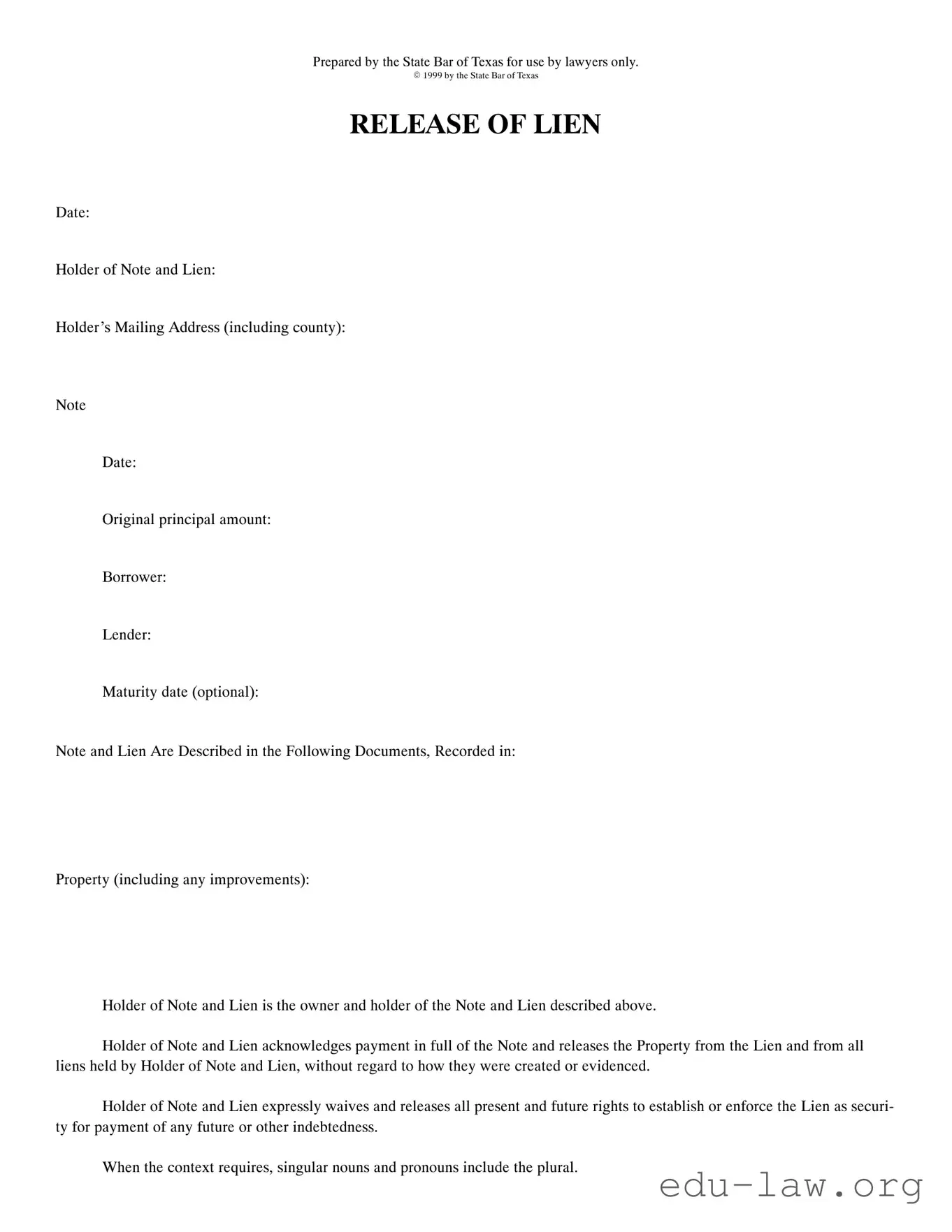
The Release of Lien Texas form is a crucial document that plays a significant role in real estate transactions and debt settlements. It serves as a formal acknowledgment from the holder of a lien that the debt associated with the lien has been fully paid. This form outlines essential details, including the date of the release, the names of the borrower and lender, and the original principal amount of the note. It also specifies the property involved, along with any improvements made to it. By signing this document, the holder of the note and lien confirms their ownership and relinquishes any claim to the property, effectively removing the lien. This release not only clears the title but also waives any future rights to enforce the lien for other debts. Additionally, the form includes sections for notarization, ensuring that the release is legally binding and properly recorded. The clarity and precision of this document are vital for both parties, as it protects the rights of the borrower while providing assurance to the lender that their interests are duly acknowledged and released.
Prepared by the State Bar of Texas for use by lawyers only.
E 1999 by the State Bar of Texas
RELEASE OF LIEN
Date:
Holder of Note and Lien:
Holder’s Mailing Address (including county):
Note
Date:
Original principal amount:
Borrower:
Lender:
Maturity date (optional):
Note and Lien Are Described in the Following Documents, Recorded in:
Property (including any improvements):
Holder of Note and Lien is the owner and holder of the Note and Lien described above.
Holder of Note and Lien acknowledges payment in full of the Note and releases the Property from the Lien and from all liens held by Holder of Note and Lien, without regard to how they were created or evidenced.
Holder of Note and Lien expressly waives and releases all present and future rights to establish or enforce the Lien as securi- ty for payment of any future or other indebtedness.
When the context requires, singular nouns and pronouns include the plural.
|
(Acknowledgment) |
|
STATE OF TEXAS |
|
|
COUNTY OF |
|
|
This instrument was acknowledged before me on |
, |
|
by |
. |
|
|
|
|
|
Notary Public, State of Texas |
|
|
Notary’s name (printed): |
|
|
Notary’s commission expires: |
|
|
(Corporate Acknowledgment) |
|
STATE OF TEXAS |
|
|
COUNTY OF |
|
|
This instrument was acknowledged before me on |
, |
|
by |
, |
|
of |
|
|
a |
|
corporation, on behalf of said corporation. |
|
|
|
|
Notary Public, State of Texas |
|
|
Notary’s name (printed): |
|
|
Notary’s commission expires: |
|
AFTER RECORDING RETURN TO: |
PREPARED IN THE LAW OFFICE OF: |
| Fact Name | Description |
|---|---|
| Purpose | The Release of Lien form is used to formally release a lien on a property once the debt has been satisfied. |
| Governing Law | This form is governed by Texas Property Code, specifically Chapter 53 regarding liens. |
| Prepared By | The form is prepared by the State Bar of Texas and is intended for use by licensed attorneys only. |
| Components | The form includes essential details such as the holder of the note, borrower's information, and property description. |
| Payment Acknowledgment | The holder of the note acknowledges full payment and releases the property from the lien. |
| Waiver of Rights | The holder expressly waives any future rights to enforce the lien for other debts. |
| Notary Requirement | The form must be acknowledged before a notary public in Texas to be legally valid. |
| Record Keeping | After completion, the form must be recorded in the appropriate county office where the property is located. |
| Return Address | Instructions for returning the form after recording are included at the bottom of the document. |
| Effective Date | The release becomes effective upon recording, providing clear title to the property. |
Completing the Release of Lien form in Texas is a straightforward process. This document serves to officially release a lien on a property once the debt has been paid in full. Following these steps will ensure that the form is filled out correctly and is ready for submission.
What is a Release of Lien Texas form?
The Release of Lien Texas form is a legal document used to formally release a lien on a property. When a borrower pays off their debt, the holder of the lien acknowledges this payment and removes the lien from the property. This form ensures that the property is free from any claims associated with the debt, allowing the owner to have clear title to their property.
Who should use the Release of Lien Texas form?
This form is typically used by the holder of a note and lien, such as a lender or financial institution, once the borrower has fulfilled their payment obligations. It is essential for anyone who wants to ensure that a lien is officially released and that the property can be sold or refinanced without any encumbrances.
What information is required to complete the form?
To complete the Release of Lien Texas form, you will need to provide several key pieces of information. This includes the date of the release, the name and mailing address of the lien holder, the original principal amount of the loan, the names of the borrower and lender, and details about the property involved. Additionally, you may need to include the maturity date of the note and reference the documents where the lien was recorded.
What happens after the form is completed and signed?
Once the Release of Lien Texas form is completed and signed by the lien holder, it must be acknowledged by a notary public. After notarization, the document should be filed with the appropriate county office where the original lien was recorded. This step is crucial, as it officially updates public records to reflect the release of the lien.
Can the Release of Lien be revoked once it is filed?
No, once the Release of Lien is filed and recorded, it cannot be revoked. The lien holder waives all rights to enforce the lien for any future debts. It is important to ensure that all obligations have been met before executing this document, as it permanently removes the lien from the property.
Incomplete Information: One common mistake is failing to fill in all required fields. Essential details such as the Holder of Note and Lien, Borrower, and Property information must be provided. Leaving any section blank can lead to delays or rejection of the form.
Incorrect Notary Acknowledgment: People often overlook the notary section. It is crucial to ensure that the form is properly acknowledged by a notary public. Missing signatures or dates can invalidate the document.
Failure to Record: After completing the form, individuals may forget to file it with the appropriate county office. Recording the Release of Lien is necessary to officially remove the lien from public records.
Not Reviewing for Errors: Many individuals neglect to proofread the form before submission. Simple typographical errors or incorrect dates can cause significant issues, including potential legal disputes over the lien.
The Release of Lien Texas form is an important document that signifies the release of a lien on a property. It is often used in conjunction with other forms and documents that support the lien release process. Below are five commonly associated documents.
Understanding these associated documents can streamline the lien release process and ensure that all parties are informed of their rights and obligations. Proper documentation protects both the borrower and the lender in real estate transactions.
The Release of Lien Texas form bears similarities to the Satisfaction of Mortgage document. Both documents serve to confirm that a debt secured by a lien on a property has been fully paid. In the case of a Satisfaction of Mortgage, it specifically relates to mortgages, indicating that the borrower has fulfilled their obligations under the mortgage agreement. Once executed, this document is typically filed with the county recorder’s office to clear the title of the property, just as the Release of Lien does for other types of liens.
Another document akin to the Release of Lien is the Deed of Reconveyance. This document is used in the context of a trust deed, which is a type of security interest in real estate. When a borrower pays off their loan, the lender executes a Deed of Reconveyance, transferring the title back to the borrower. Like the Release of Lien, this document serves to remove any claims the lender had on the property, thereby restoring the borrower’s full ownership rights.
The Affidavit of Release is also comparable to the Release of Lien. This affidavit is a sworn statement that verifies the satisfaction of a debt and the release of any associated liens. It is often used in situations where formal documentation like a Release of Lien may not be available. By providing an affidavit, the lienholder affirms that the debt has been settled, effectively clearing the property title, similar to the effects of a Release of Lien.
Lastly, the Certificate of Satisfaction functions similarly to the Release of Lien. This document is issued by the lender to confirm that a loan has been paid off and that the associated lien on the property has been removed. It serves to protect the borrower by ensuring that their property title is clear of any claims. Like the Release of Lien, the Certificate of Satisfaction is crucial for maintaining an accurate public record of property ownership and encumbrances.
When filling out the Release of Lien Texas form, it is essential to follow certain guidelines to ensure accuracy and compliance. Here is a list of things you should and shouldn't do:
Understanding the Release of Lien form in Texas can be challenging, and there are several misconceptions that often arise. Here are five common misunderstandings:
Understanding these misconceptions can help ensure that property owners and lien holders navigate the process correctly and avoid potential pitfalls.
Understanding the Release of Lien Texas form is essential for anyone involved in real estate transactions. Here are some key takeaways to consider:
Taking the time to understand these points can help ensure that the release of lien process goes smoothly and protects the interests of all parties involved.