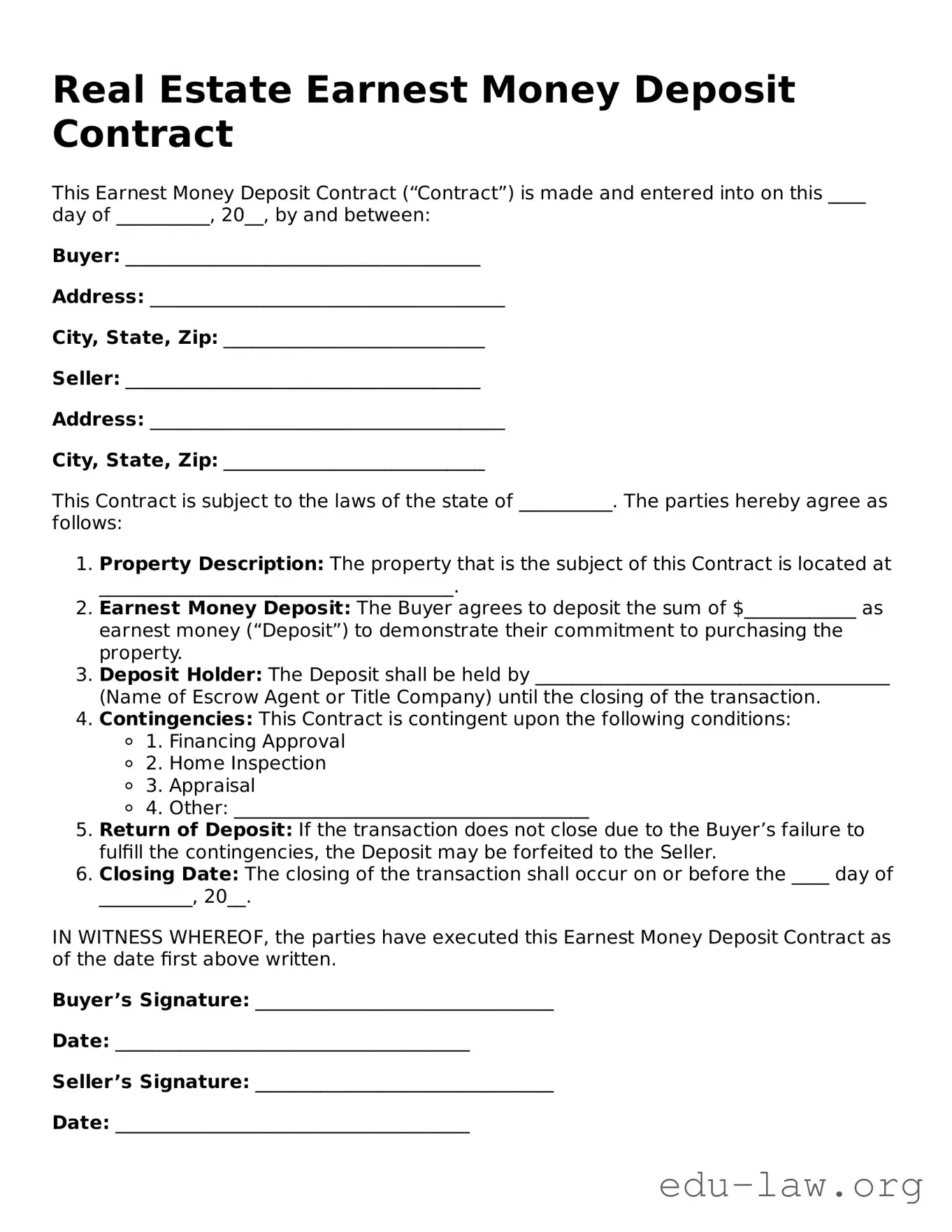
When engaging in a real estate transaction, understanding the various components of the process is crucial for both buyers and sellers. One significant element is the Earnest Money Deposit Contract form, which plays a vital role in demonstrating a buyer's commitment to purchasing a property. This form outlines the amount of money the buyer is willing to put down as earnest money, which serves as a show of good faith to the seller. Additionally, it specifies the conditions under which the earnest money may be forfeited or returned, protecting both parties' interests. The form also includes details about the property, the parties involved, and any contingencies that may affect the sale. By clearly defining these terms, the Earnest Money Deposit Contract helps facilitate smoother negotiations and provides a framework for resolving potential disputes. Understanding this form can empower buyers and sellers alike, ensuring that they are well-informed as they navigate the complexities of real estate transactions.
Real Estate Earnest Money Deposit Contract
This Earnest Money Deposit Contract (“Contract”) is made and entered into on this ____ day of __________, 20__, by and between:
Buyer: ______________________________________
Address: ______________________________________
City, State, Zip: ____________________________
Seller: ______________________________________
Address: ______________________________________
City, State, Zip: ____________________________
This Contract is subject to the laws of the state of __________. The parties hereby agree as follows:
IN WITNESS WHEREOF, the parties have executed this Earnest Money Deposit Contract as of the date first above written.
Buyer’s Signature: ________________________________
Date: ______________________________________
Seller’s Signature: ________________________________
Date: ______________________________________
| Fact Name | Description |
|---|---|
| Definition | An earnest money deposit contract is an agreement between a buyer and seller in real estate transactions, indicating the buyer's intent to purchase the property. |
| Purpose | The primary purpose is to show good faith and secure the property while the transaction is being finalized. |
| Amount | The earnest money amount can vary but typically ranges from 1% to 3% of the purchase price. |
| Return Conditions | The deposit may be returned to the buyer under certain conditions, such as if the sale falls through due to contingencies outlined in the contract. |
| State-Specific Forms | Each state has its own form and regulations regarding earnest money deposits. For example, in California, the governing law is found in the California Civil Code. |
| Escrow Process | The earnest money is often held in escrow until the transaction closes or the contract is terminated. |
Completing the Real Estate Earnest Money Deposit Contract form is an essential step in the home buying process. Once filled out, this form will help secure your offer on a property, indicating your serious intent to purchase. Follow these steps carefully to ensure accuracy and completeness.
After completing the form, you will submit it to the appropriate party, typically your real estate agent or the seller's agent. This step is crucial in moving forward with the transaction.
What is an Earnest Money Deposit?
An Earnest Money Deposit (EMD) is a sum of money that a buyer provides to demonstrate their serious intent to purchase a property. This deposit shows the seller that the buyer is committed and helps secure the property while the transaction is being finalized.
How much should the Earnest Money Deposit be?
The amount of the EMD can vary. Typically, it ranges from 1% to 3% of the purchase price. However, the specific amount can depend on local market conditions, the property's price, and the agreement between the buyer and seller.
What happens to the Earnest Money Deposit if the sale falls through?
If the sale does not go through, the fate of the EMD depends on the terms outlined in the contract. If the buyer backs out for a valid reason specified in the contract, they may receive a full refund. If the buyer withdraws without a valid reason, the seller may keep the deposit as compensation for the time the property was off the market.
When is the Earnest Money Deposit due?
The EMD is typically due shortly after the purchase agreement is signed. This timeline can vary, so it's essential to review the contract for specific deadlines. Timely payment is crucial to maintain the buyer's good standing in the transaction.
Who holds the Earnest Money Deposit?
Generally, a neutral third party, such as a real estate broker or an escrow company, holds the EMD. This ensures that neither party has direct control over the funds until the transaction is completed or terminated.
Can the Earnest Money Deposit be negotiated?
Yes, the amount of the EMD can be negotiated between the buyer and seller. It’s important for both parties to agree on a fair amount that reflects the seriousness of the buyer while considering market conditions. Negotiation can be a key part of the overall offer strategy.
Incomplete Information: Failing to provide all required personal details, such as full names, addresses, and contact information, can lead to delays or complications in the transaction.
Incorrect Deposit Amount: Entering an incorrect earnest money amount can affect the buyer's credibility and the seller's willingness to proceed with the sale.
Missing Signatures: Not signing the document or having all necessary parties sign can render the contract invalid. Ensure that every required individual provides their signature.
Ignoring Deadlines: Overlooking important dates, such as the deadline for submitting the earnest money, can result in the loss of the property or other legal issues.
Not Understanding Contingencies: Failing to specify or understand contingencies, such as financing or inspection clauses, can lead to misunderstandings and potential disputes later.
Omitting Payment Method: Not clearly stating how the earnest money will be paid can create confusion. Specify whether payment will be made via check, wire transfer, or another method.
Neglecting to Review Terms: Skipping a thorough review of the contract terms can lead to unintended obligations or rights. It is crucial to understand all aspects of the agreement before signing.
When engaging in a real estate transaction, several key documents often accompany the Real Estate Earnest Money Deposit Contract form. These documents help clarify the terms of the agreement and protect the interests of all parties involved. Below are some common forms you may encounter.
Understanding these documents can significantly enhance your real estate experience. Each form plays a vital role in ensuring a smooth transaction and protecting the interests of everyone involved.
The Real Estate Purchase Agreement is a foundational document in real estate transactions. It outlines the terms and conditions under which a buyer agrees to purchase a property from a seller. Similar to the Earnest Money Deposit Contract, it specifies the purchase price, closing date, and contingencies. Both documents serve to protect the interests of the parties involved, ensuring that the buyer has a serious intent to purchase and that the seller is committed to the sale. The earnest money deposit is often referenced within this agreement, acting as a demonstration of the buyer's good faith.
The Lease Agreement is another important document in real estate, particularly in rental situations. This contract outlines the terms of renting a property, including the duration of the lease, monthly rent, and responsibilities of both landlord and tenant. Like the Earnest Money Deposit Contract, it establishes a formal understanding between parties, ensuring that both sides are clear about their obligations. While the Earnest Money Deposit focuses on a purchase, the Lease Agreement centers on a rental arrangement, yet both require a level of commitment and good faith from the parties involved.
The Seller’s Disclosure Statement is crucial in real estate transactions, as it provides potential buyers with information about the property's condition. This document requires sellers to disclose any known issues or defects. Similar to the Earnest Money Deposit Contract, it emphasizes transparency and protects the buyer's interests. While the Earnest Money Deposit signifies the buyer's commitment to purchase, the Seller’s Disclosure ensures that the buyer makes an informed decision, reducing the likelihood of disputes later on.
The Title Commitment is another document that plays a vital role in real estate transactions. It outlines the terms under which a title insurance policy will be issued, detailing any liens or encumbrances on the property. Similar to the Earnest Money Deposit Contract, it aims to protect the buyer's investment by ensuring that the property is free from legal issues that could affect ownership. Both documents are essential in the due diligence process, helping buyers secure their interests before finalizing a transaction.
The Closing Statement, also known as the HUD-1 Settlement Statement, is provided at the closing of a real estate transaction. This document itemizes all the costs associated with the sale, including the earnest money deposit. Like the Earnest Money Deposit Contract, it serves to clarify financial obligations and ensure that all parties understand their financial commitments. Both documents contribute to a smooth closing process, providing a clear overview of what has been agreed upon and what is expected from each party.
Finally, the Real Estate Listing Agreement is an essential document that establishes a relationship between a property owner and a real estate agent. It outlines the terms under which the agent will market and sell the property. Similar to the Earnest Money Deposit Contract, it formalizes the agreement and expectations of both parties. While the Earnest Money Deposit Contract focuses on the buyer's commitment to purchase, the Listing Agreement centers on the agent's role in facilitating the sale, ensuring that all parties are aligned in their objectives.
When filling out the Real Estate Earnest Money Deposit Contract form, it is essential to approach the task with care. Here are five important guidelines to follow.
Following these guidelines can help ensure a smoother transaction process and protect your interests in the real estate deal.
Understanding the Real Estate Earnest Money Deposit Contract form is crucial for both buyers and sellers. However, several misconceptions often arise regarding this important document. Below are four common misconceptions:
This is not always true. The terms of the contract dictate the conditions under which the earnest money may be refunded. Buyers can often receive their deposit back if certain contingencies, such as home inspections or financing, are not met.
While both involve money, they serve different purposes. The earnest money deposit demonstrates the buyer's serious intent to purchase the property, while the down payment is a portion of the total purchase price paid at closing.
Earnest money deposits can be held in various accounts, such as an escrow account or a trust account. The specific arrangement should be clearly stated in the contract to ensure transparency and security for both parties.
This is misleading. The buyer must still adhere to the terms outlined in the purchase agreement. Failing to meet these obligations could result in the loss of the earnest money deposit.
By clarifying these misconceptions, both buyers and sellers can navigate the real estate process more effectively and with greater confidence.
Filling out and using the Real Estate Earnest Money Deposit Contract form is an essential step in the home buying process. Here are some key takeaways to keep in mind:
By keeping these points in mind, you can navigate the earnest money deposit process with confidence and clarity.