Traveling to Canada with firearms requires careful attention to regulations, and the RCMP 5589E form, known as the Non-Resident Firearm Declaration, plays a crucial role in this process. This form is designed for individuals who are not residents of Canada but wish to bring firearms into the country for various purposes, such as hunting or competition. It requires detailed personal information, including your date of birth and address, as well as specifics about the firearms you are declaring. You will need to provide the type, make, serial number, and gauge or caliber of each firearm. Additionally, if you are bringing more than three firearms, a continuation sheet is necessary. The form also emphasizes the importance of understanding your rights and responsibilities under the Firearms Act, ensuring that all information is accurate and complete. Upon arrival in Canada, this declaration must be presented to a customs officer, who will confirm the details and issue a confirmation number. This process not only facilitates compliance with Canadian laws but also helps ensure a smooth entry into the country.
Skip to form
Print instructions
Instructions for:
General Information
1.Print clearly and use a ballpoint pen.
2.Do not write in the shaded areas.
3.Read the back of the firearm declaration for more information on your rights and responsibilities under the Firearms Act.
4.If you have any questions about filling out this declaration, please call 1 800
5.Please complete a copy of the
A - Personal Information
Box 2
Print your year, month and day of birth. Example: July 1, 1960 is 1960/07/01.
Box 4 - Address Type
If you are staying in Canada for 60 days or less, provide the address of your residence outside Canada.
If you are staying in Canada for more than 60 days, provide the address of where you will be staying while in Canada.
Box 4a)
If you don't have a street name and number, please indicate the land location of your residence by including the rural road, site, compartment, section, lot or concession.
Boxes 5a), b) and c)
You are required to name one piece of photo identification. It must be an official piece of identification issued by a federal, provincial (state), territorial, regional or city government and it must have a number and bear your photograph.
B - Firearms
Box 7
Print the number of firearms you are declaring in the space provided. If you are declaring more than 3 firearms, please complete and attach a
If you are returning to Canada with the same firearms as those listed on this declaration form, you may use the form again. If you are returning to Canada with different firearms, you may still use the declaration form; however, please obtain and complete a new copy of the
Box 8
Indicate where your firearms will be located in Canada.
Firearm No.
a)Indicate the type of firearm.
If you have a combination gun, you must provide the gauge and calibre. If none of the types mentioned fit, please check Other and specify. An example is a firearm design that uses a spring, compressed air or gas to propel projectiles at a speed over 152.4 m/s, (500 ft./sec.) and at a muzzle energy exceeding 5.7 joules (4.2 foot pounds).
Firearm Definitions
A
An ordinary rifle, shotgun or combination gun that is not described below as being restricted or prohibited.
A restricted firearm is:
A handgun that is not a prohibited firearm.
A
A rifle or shotgun that can fire when its overall length is reduced by folding, telescoping or some other means to less than 660 mm (26 inches).
Any firearm prescribed as restricted (including some long guns).
A prohibited firearm is:
A handgun with a barrel length of 105 mm (4.1 inches) or less.
A handgun designed or adapted to discharge 25 or 32 calibre ammunition.
A rifle or shotgun that has been altered to make it less than 660 mm (26 inches) in overall length.
A rifle or shotgun that has been altered to make the barrel length less than 457 mm (18 inches) where the overall firearm length is 660 mm (26 inches) or more.
An automatic firearm and a converted automatic firearm.
Any firearm prescribed as prohibited.
Note: You must not enter Canada with a prohibited firearm.
RCMP GRC 5589e |
Instruction page 1 of 2 |
Instructions for:
b)Print the make of your firearm.
c)Print the serial number of your firearm.
d)Gauge / calibre - refers to the type of ammunition the firearm uses; it is usually stamped on the barrel of the firearm.
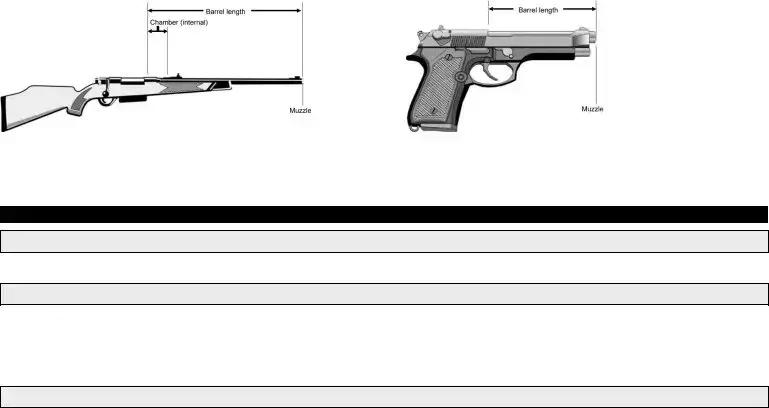
e)For firearms other than revolvers, the barrel length is the distance from the muzzle of the barrel to and including the chamber. See the diagrams below. One way to measure the barrel length of most common long guns is to put your cleaning rod down the barrel with the action closed. Then measure the length of the cleaning rod that fits into the barrel. The barrel length of a revolver does not include the cylinder. Revolver barrel length is measured from the muzzle of the barrel to the breach end immediately in front of the cylinder.
g)- h) If you are declaring a restricted firearm, please print the number of your Authorization to Transport (ATT) and its expiration date. To find out how to apply for an ATT, call the Canadian Firearms Program at 1 800
Note: You cannot enter Canada with a restricted firearm without an ATT
C - Declaration
Read the declaration and sign with your full name.
D - Confirmation
Do not complete
Note: Payment of the firearms confirmation fee may be made by: cash, MasterCard, Visa, American Express, Traveller's Cheques, debit card, and personal cheques. Personal cheques will not be accepted unless drawn on a Canadian banking establishment. Cheques should be made payable to the Receiver General for Canada.
E - Additional Confirmation Numbers
Do not complete
RCMP GRC 5589e |
Instruction page 2 of 2 |
Return instructions
Print form
A - Personal Information
1. a) Last Name
1. b) First Name
1. c) Middle Name |
2. Date of Birth |
3. Gender |
|
|
|
Male |
Female |
|
|
|
|
4.Address type If you are staying in Canada for more than 60 days, provide your address in Canada. If less than 60 days, provide your residence address outside Canada.
4 a) Street / Land Location |
4. b) Apt. / Unit |
4. c) City
4. d) Province / State
4. e) Country
4. f) Postal / Zip Code
5. |
Photo Identification (one piece required) |
|
|
|
|
|
|
|
|
|
|
|
|
|
|
|
|
|
|||
5. a) Type of Identification |
|
5. b) Province / State / Country of Issue |
|
5. c) ID No. |
||||||
|
|
|
|
|
|
|
|
|
||
6. |
Provide the reason for bringing firearms into Canada |
|
|
|
|
|
|
|
||
|
Hunting |
Competition |
In transit |
Protection against wildlife |
Other, |
specify |
||||
|
|
|
|
|
|
|
|
|
|
|
B - Firearms |
|
|
|
|
|
|
|
|
|
|
7. |
Number of firearms imported |
|
|
|
|
Continuation sheets attached |
||||
|
|
|
|
|||||||
|
|
|
|
|
|
|
||||
|
|
|
|
|
|
|
|
|
|
|
8. |
Destination of firearms in Canada |
|
|
|
|
|
|
|
|
|
8. a) Town
8. b) Province / Territory
Firearm No. 1 |
|
a) Type of Firearm |
|
|
|
|
|
|
|
|
||
|
|
Shotgun |
Rifle |
Combination gun |
Handgun |
Other, |
specify |
|
||||
|
|
|
|
|||||||||
|
|
|
|
|
|
|
|
|
|
|
||
b) Make |
|
|
|
c) Serial No. |
|
d) Gauge / Calibre |
|
|
e) Barrel Length |
mm |
||
|
|
|
|
|
|
|
|
|
|
|
|
in |
|
|
|
|
|
|
|
|
|
|
|
|
|
f) Action |
|
|
|
|
|
|
|
|
|
|
|
|
Break Open |
Bolt |
Lever |
Pump |
Other, specify |
|
|
|
|
||||
|
|
|
|
|
|
|||||||
If your firearm is restricted (see instructions), give the following information: |
|
|
|
|
|
|||||||
|
|
|
|
|
|
|
||||||
g) Authorization to Transport No. |
|
|
h) Expiration Date |
|
|
|
||||||
|
|
|
|
|
|
|
|
|
|
|
||
Firearm No. 2 |
|
a) Type of Firearm |
|
|
|
|
|
|
|
|
||
|
|
Shotgun |
Rifle |
Combination gun |
Handgun |
Other, |
specify |
|
||||
|
|
|
|
|||||||||
|
|
|
|
|
|
|
|
|
|
|
||
b) Make |
|
|
|
c) Serial No. |
|
d) Gauge / Calibre |
|
|
e) Barrel Length |
mm |
||
|
|
|
|
|
|
|
|
|
|
|
|
in |
|
|
|
|
|
|
|
|
|
|
|
|
|
f) Action |
|
|
|
|
|
|
|
|
|
|
|
|
Break Open |
Bolt |
Lever |
Pump |
Other, specify |
|
|
|
|
||||
|
|
|
|
|
|
|||||||
If your firearm is restricted (see instructions), give the following information: |
|
|
|
|
|
|||||||
|
|
|
|
|
|
|
||||||
g) Authorization to Transport No. |
|
|
h) Expiration Date |
|
|
|
||||||
|
|
|
|
|
|
|
|
|
|
|
||
Firearm No. 3 |
|
a) Type of Firearm |
|
|
|
|
|
|
|
|
||
|
|
Shotgun |
Rifle |
Combination gun |
Handgun |
Other, |
specify |
|
||||
|
|
|
|
|||||||||
|
|
|
|
|
|
|
|
|
|
|
||
b) Make |
|
|
|
c) Serial No. |
|
d) Gauge / Calibre |
|
|
e) Barrel Length |
mm |
||
|
|
|
|
|
|
|
|
|
|
|
|
in |
|
|
|
|
|
|
|
|
|
|
|
|
|
f) Action |
|
|
|
|
|
|
|
|
|
|
|
|
Break Open |
Bolt |
Lever |
Pump |
Other, specify |
|
|
|
|
||||
|
|
|
|
|
|
|||||||
If your firearm is restricted (see instructions), give the following information: |
|
|
|
|
|
|||||||
|
|
|
|
|
|
|
||||||
g) Authorization to Transport No. |
|
|
h) Expiration Date |
|
|
|
||||||
|
|
|
|
|
|
|
|
|
|
|
|
|
C - Declaration
9.I declare that the information provided on this form and any attachments is true and correct to the best of my knowledge. It is an offence under section 106 of the Firearms Act to knowingly make a false or misleading statement, either orally or in writing, or to knowingly fail to disclose relevant information, for the purpose of obtaining the confirmation of a document by a customs officer.
Applicant's Signature |
Date |
D - Confirmation (To be completed by Canada Border Services Agency or Customs Officer)
10 a) Confirmation No. |
|
10. b) Date of Issue |
|
10. c) Date of Expiration |
|
|
|
|
|
11. Class of Individual |
|
|
|
12. a) Payment - Received Date |
Visitor |
Seasonal |
Temporary |
Settler |
|
|
|
|
|
|
12. a) Payment - Expiration Date
13. Customs Office
14. Customs Officer Signature
E - Additional Confirmation Numbers (To be completed by Canada Border Services Agency or Customs Officer)
Issue Date
Expiration Date
Confirmation No.
Customs Officer
Initials
Badge No.
Customs Office
|
Copy 1 Client - Please retain this copy |
Copy 2 Customs |
Copy 3 CFO |
RCMP GRC 5589e |
Page 1 of 2 |
|
|

Additional Information
1.Information in this declaration is obtained under the authority of the Firearms Act. The information will be used to determine eligibility under the Act and to administer and enforce the firearms legislation. In addition to the provisions outlined in the Firearms Act, individual rights regarding personal information are governed by the appropriate federal, provincial or territorial legislation governing access to information, and / or privacy.
2.The firearm declaration may involve a variety of background checks.
3.If you are returning to Canada with the same firearms as those listed on this declaration form, you may use the form again. If you are returning to Canada with different firearms, you may still use the declaration form; however, please obtain and complete a new copy of the
If you need a continuation sheet (RCMP GRC 5590), call us at 1 800
4.
(Ordinary rifles and shotguns)
Once this declaration has been confirmed by a customs officer, it is valid for a period of up to sixty (60) days. This confirmed declaration is also a temporary firearms licence. If you are remaining in Canada for more than sixty (60) days, you may extend the validity of your confirmation by calling the Canadian Firearms Program at 1 800
5. Restricted Firearms
Once this declaration has been confirmed by a customs officer, it is valid for up to sixty (60) days or until the expiration date of your Authorization to Transport (ATT), whichever comes first. This confirmed declaration is also a temporary firearms licence and registration.If you are remaining in Canada for a longer period than stated on your ATT, you must call the Canadian Firearms Program at 1 800
This declaration must be produced on demand by the bearer of the firearms listed on the declaration and / or those listed on the attached continuation sheet.
You must also produce this document to buy or receive ammunition.
RCMP GRC 5589e |
Page 2 of 2 |
| Fact Name | Description |
|---|---|
| Purpose | The RCMP 5589E form, known as the Non-Resident Firearm Declaration, is used for declaring firearms when entering Canada as a non-resident. |
| Identification Requirement | Applicants must provide one piece of official photo identification issued by a government entity, which includes a number and a photograph. |
| Firearm Classification | Firearms are classified as non-restricted, restricted, or prohibited, each with specific definitions and regulations under Canadian law. |
| Declaration Validity | Once confirmed by a customs officer, the declaration is valid for up to sixty days, serving as a temporary firearms license. |
| Continuation Sheet | If declaring more than three firearms, a Non-Resident Firearm Declaration - Continuation Sheet (RCMP GRC 5590) must be completed and attached. |
| Contact Information | For assistance, individuals can call 1-800-731-4000 in Canada and the USA, or (506) 624-5380 outside of these regions. |
| Legal Authority | This form operates under the authority of the Firearms Act, which governs the importation and regulation of firearms in Canada. |
Filling out the RCMP 5589E form is an important step for anyone looking to bring firearms into Canada. This form collects essential information about the individual and the firearms being declared. It’s crucial to complete it accurately to ensure a smooth entry process. Here’s how to fill it out step by step.
Once you have filled out the form, you will need to present it to the Canada Border Services Agency upon your arrival in Canada. Make sure to have all required documents ready to ensure a smooth process.
What is the RCMP 5589E form used for?
The RCMP 5589E form, known as the Non-Resident Firearm Declaration, is required for individuals who wish to bring firearms into Canada. This form serves as a declaration of the firearms you are carrying and is necessary for compliance with Canadian firearms laws. Upon entry into Canada, you must present this form to the Canada Border Services Agency (CBSA) or a customs officer.
How do I fill out the RCMP 5589E form?
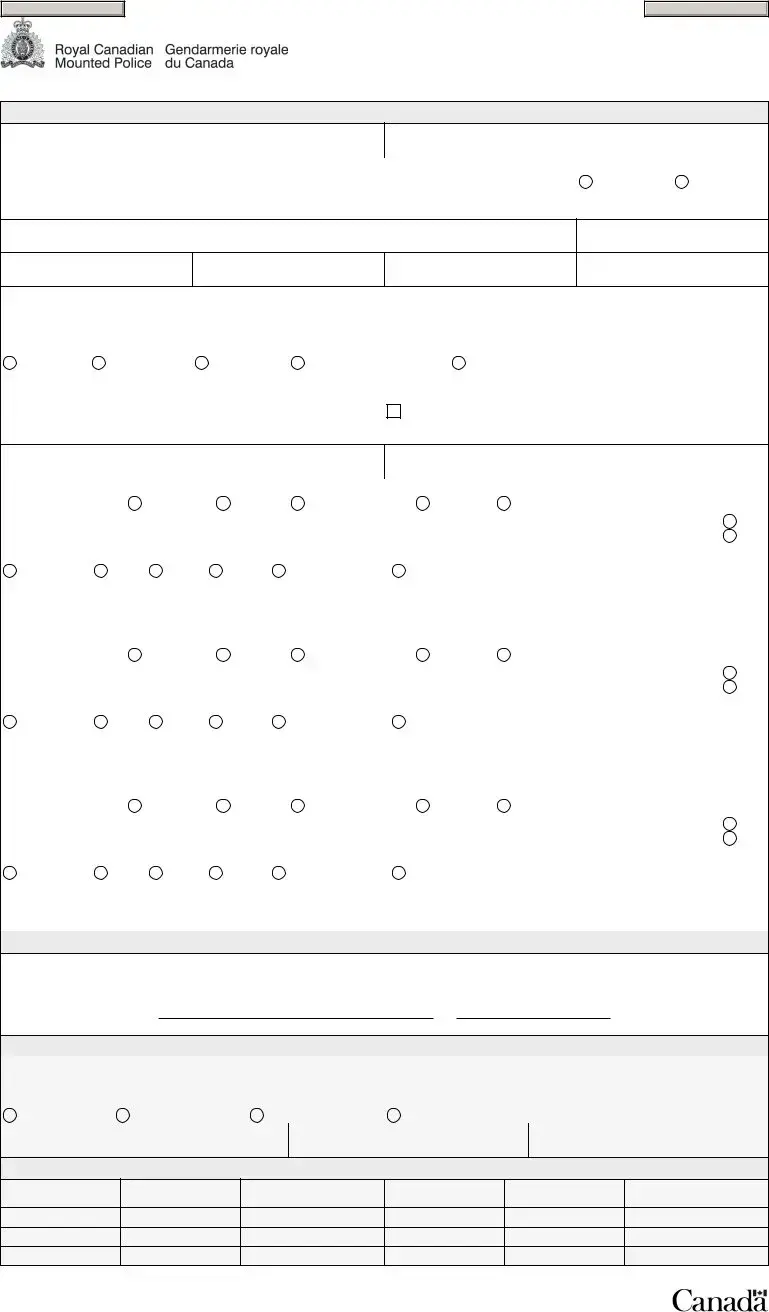
To complete the form, print clearly using a ballpoint pen. Begin by providing your personal information, including your date of birth and address. If you are bringing firearms, list each one in the designated section, including details such as the type, make, serial number, and barrel length. It is essential to ensure that all information is accurate, as providing false information can lead to serious consequences.
What types of firearms can I declare using this form?
You can declare non-restricted firearms, which include ordinary rifles and shotguns, as well as restricted firearms, such as handguns and certain semi-automatic rifles. Prohibited firearms, which include certain handguns and automatic firearms, cannot be brought into Canada under any circumstances. Make sure to familiarize yourself with the definitions of each category to avoid any legal issues.
What happens if I am bringing more than three firearms?
If you are declaring more than three firearms, you must complete and attach a Non-Resident Firearm Declaration - Continuation Sheet (RCMP GRC 5590). You can obtain these continuation sheets by calling the appropriate numbers listed on the form or by visiting a CBSA office. Each firearm must be accurately described on the continuation sheet.
How long is the declaration valid?
Once confirmed by a customs officer, the declaration is valid for up to sixty days. This confirmation acts as a temporary firearms license. If you plan to stay in Canada longer than sixty days, you may need to extend the validity of your declaration by contacting the Chief Firearms Officer of the province where you are staying.
What should I do if I have questions while filling out the form?
If you have any questions while completing the RCMP 5589E form, it is crucial to seek assistance. You can call the provided numbers: 1-800-731-4000 in Canada and the USA, or (506) 624-5380 from outside these regions. Additionally, you can visit the official website for more information and guidance.
Illegible handwriting: Many individuals fail to print clearly when filling out the form. Using a ballpoint pen is essential, as it ensures that the information is legible. Illegible handwriting can lead to misunderstandings or delays at the border.
Incorrect date format: Applicants often do not follow the specified date format for their birth. The form requires the year, month, and day in the format of yyyy/mm/dd. A common mistake is writing the date in a different format, which can cause confusion.
Omitting required identification: Some people neglect to include a piece of photo identification as required. The identification must be an official document issued by a government entity and must contain a photograph and a number. Failing to provide this can result in the form being rejected.
Misunderstanding firearm classifications: Many applicants do not accurately classify their firearms. It is crucial to understand the distinctions between non-restricted, restricted, and prohibited firearms. Misclassifying a firearm can lead to legal issues upon entry into Canada.
Not completing the continuation sheet when necessary: If an individual is declaring more than three firearms, they must attach a Non-Resident Firearm Declaration - Continuation Sheet. Failing to do so can result in incomplete information and potential legal complications.
When bringing firearms into Canada, several forms and documents accompany the RCMP 5589E form, known as the Non-Resident Firearm Declaration. Each document serves a specific purpose to ensure compliance with Canadian firearm regulations. Below is a list of these important documents.
Gathering these documents before your trip can streamline your experience at the border. Always ensure that you understand the requirements and regulations surrounding firearms in Canada. Being prepared can help avoid complications during your travels.
The RCMP 5589E form, known as the Non-Resident Firearm Declaration, shares similarities with the ATF Form 4473, which is used in the United States for firearm purchases. Both documents require individuals to provide personal information, including identification details, and a declaration regarding the firearms in their possession. The ATF Form 4473 is essential for legal firearm transactions, while the RCMP 5589E serves to declare firearms when entering Canada. Each form ensures that the individual is aware of their rights and responsibilities concerning firearm ownership and use.
Another document that resembles the RCMP 5589E is the U.S. Customs and Border Protection (CBP) Form 7501, which is used for importing goods into the United States. Like the RCMP form, the CBP Form 7501 requires detailed information about the items being imported, including their description and value. Both forms are crucial for customs clearance, ensuring that individuals comply with legal requirements while transporting items across borders. They also serve to track and document the movement of goods and firearms, respectively, thereby maintaining regulatory oversight.
The Canadian Firearms Program's Authorization to Transport (ATT) document also parallels the RCMP 5589E in its purpose and content. The ATT is required for transporting restricted firearms in Canada and includes information about the firearm, the owner, and the intended transport route. Similarly, the RCMP 5589E requires the declaration of firearms being brought into Canada, emphasizing the legal obligations of the firearm owner. Both documents aim to ensure that firearms are transported safely and legally, reducing the risk of misuse or illegal activity.
Lastly, the U.S. Bureau of Alcohol, Tobacco, Firearms and Explosives (ATF) Form 5320.20, which is used for applying for a permit to transport firearms interstate, shares common elements with the RCMP 5589E. Both forms require individuals to provide information about the firearm, including its make, model, and serial number, as well as details about the owner. Each document is designed to facilitate the legal transportation of firearms, ensuring that individuals adhere to the respective laws governing firearm ownership and transport in their jurisdictions.
When filling out the RCMP 5589E form, it is important to follow specific guidelines to ensure the process is smooth and compliant. Below is a list of recommended actions and those to avoid.
Misconceptions about the RCMP 5589E form often lead to confusion among non-residents bringing firearms into Canada. Here are four common misconceptions:
This form is used for various reasons, including hunting, competition, transit, and protection against wildlife. It is essential to specify the reason when filling out the form.
This is not true. Certain firearms are classified as prohibited, and bringing them into Canada is illegal. Understanding the classifications of non-restricted, restricted, and prohibited firearms is crucial.
Even if you are in transit, you must declare your firearms using the RCMP 5589E form. Failure to do so can result in serious legal consequences.
It is important to retain a copy of the completed form and any continuation sheets. This documentation serves as proof of declaration and may be required by customs officials during your stay in Canada.
Print clearly and use a ballpoint pen when filling out the RCMP 5589E form. Avoid writing in the shaded areas.
Read the back of the declaration for important information regarding your rights and responsibilities under the Firearms Act.
If you have questions while completing the form, contact the appropriate numbers: 1 800 731-4000 for Canada and the USA, or (506) 624-5380 for other locations.
Provide both the Non-Resident Firearm Declaration and, if necessary, the Continuation Sheet to a customs officer upon entering Canada.
Ensure that your firearm is classified correctly as non-restricted, restricted, or prohibited. You cannot enter Canada with a prohibited firearm.