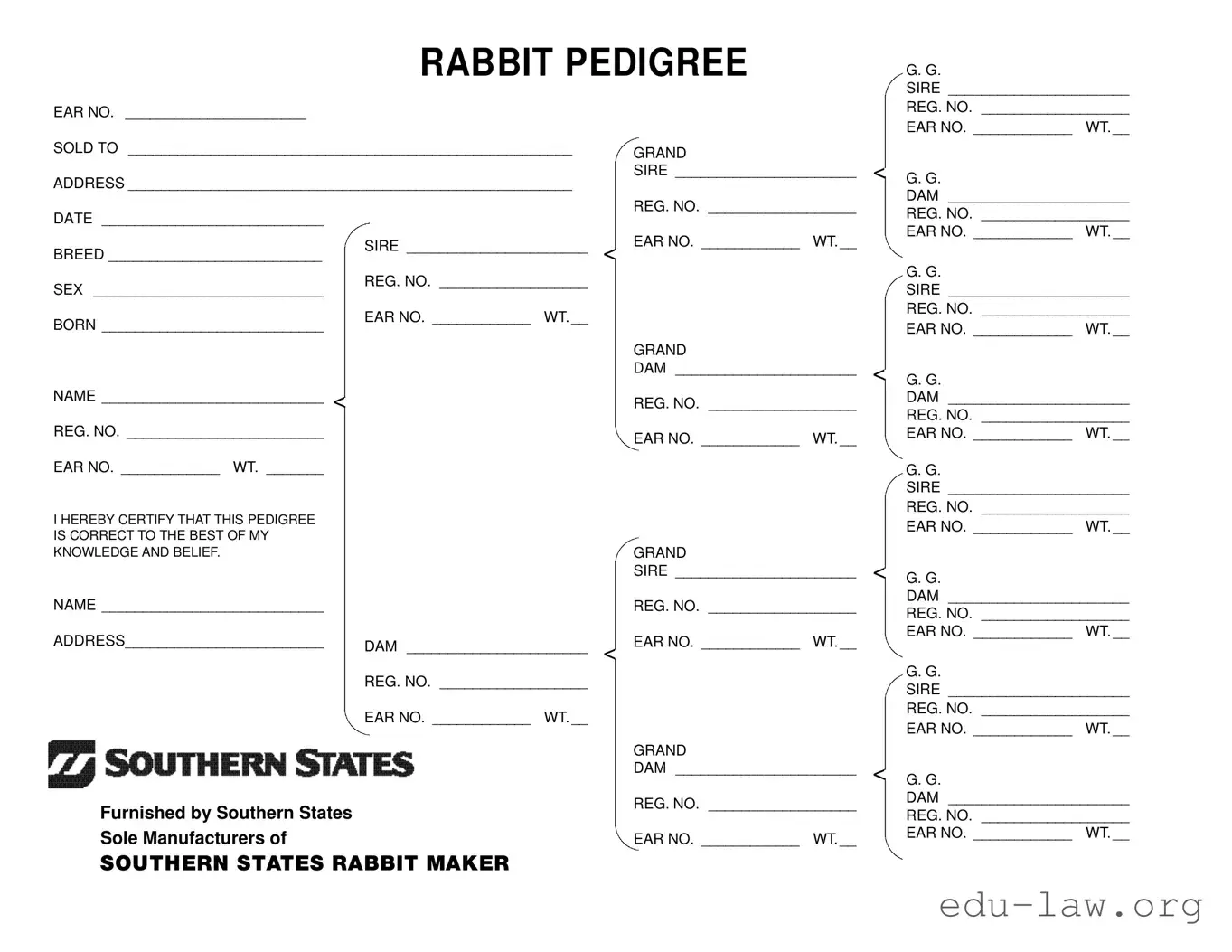
The Rabbit Pedigree form serves as an essential document for breeders and enthusiasts in the rabbit community, providing a comprehensive record of a rabbit's lineage. This form captures vital information about the rabbit's ancestry, including details about its sire and dam, as well as its grand sires and grand dams. Each entry on the form includes registration numbers, ear numbers, and weight, ensuring that every rabbit's pedigree is accurately documented. Additionally, the form requires the seller's information and the buyer's address, making it easier to trace ownership and ensure accountability. By certifying the accuracy of the information, breeders affirm their commitment to responsible breeding practices. Understanding the components of the Rabbit Pedigree form is crucial for anyone involved in rabbit breeding, as it not only helps maintain breed standards but also fosters a sense of community among rabbit fanciers.
RABBIT PEDIGREE
G. G.
SIRE ______________________
EAR NO. ______________________
SOLD TO ______________________________________________________
ADDRESS ______________________________________________________
GRAND
SIRE ______________________ <
REG. NO. __________________
REG. NO. __________________
EAR NO. ____________ WT. __
G. G.
DAM ______________________
DATE ___________________________
BREED __________________________
SEX ____________________________
BORN ___________________________
SIRE ______________________
REG. NO. __________________
EAR NO. ____________ WT. __
<
EAR NO. ____________ WT. __
REG. NO. __________________
EAR NO. ____________ WT. __
G. G.
SIRE ______________________
REG. NO. __________________
EAR NO. ____________ WT. __
NAME ___________________________ <
REG. NO. ________________________
EAR NO. ____________ WT. _______
I HEREBY CERTIFY THAT THIS PEDIGREE IS CORRECT TO THE BEST OF MY KNOWLEDGE AND BELIEF.
GRAND
DAM ______________________ <
REG. NO. __________________
EAR NO. ____________ WT. __
GRAND
SIRE ______________________ <
G. G.
DAM ______________________
REG. NO. __________________
EAR NO. ____________ WT. __
G. G.
SIRE ______________________
REG. NO. __________________
EAR NO. ____________ WT. __
G. G.
NAME ___________________________ |
REG. NO. __________________
DAM ______________________
REG. NO. __________________
ADDRESS________________________ |
DAM ______________________ |
|
|
|
REG. NO. __________________ |
<
EAR NO. ____________ WT. __
EAR NO. ____________ WT. __
G. G.
SIRE ______________________
EAR NO. ____________ |
WT. __ |
|
|
GRAND |
|
|
DAM ______________________ |
< |
|
|
|
Furnished by Southern States |
REG. NO. __________________ |
|
|
|
|
Sole Manufacturers of |
EAR NO. ____________ WT. __ |
|
REG. NO. __________________
EAR NO. ____________ WT. __
G. G.
DAM ______________________
REG. NO. __________________
EAR NO. ____________ WT. __
SOUTHERN STATES RABBIT MAKER
| Fact Name | Details |
|---|---|
| Form Purpose | The Rabbit Pedigree form is used to document the lineage and ownership of rabbits. |
| Required Information | The form requires details such as the names and registration numbers of the sire and dam, as well as ear numbers and weights. |
| Certification | A certification statement is included, affirming the accuracy of the pedigree information provided. |
| Governing Laws | In some states, livestock pedigree documentation is governed by agricultural laws, which vary by jurisdiction. |
| Ownership Transfer | The form includes a section for the seller's and buyer's information, facilitating ownership transfer. |
| Breed Specification | Users must specify the breed of the rabbit, which is essential for registration and identification purposes. |
| Grandparent Information | Details about the grand sire and grand dam are also required, providing a comprehensive pedigree overview. |
| Weight Documentation | Weight information is requested for each rabbit listed, which can be important for breeding and health assessments. |
| Manufacturer Information | The form is furnished by Southern States, the sole manufacturer of the Rabbit Pedigree form. |
| Usage Context | This form is commonly used by breeders and exhibitors to maintain accurate records for show and breeding purposes. |
Completing the Rabbit Pedigree form requires careful attention to detail. Ensure that you have all necessary information on hand, including registration numbers, ear numbers, weights, and other relevant details about the rabbit and its lineage. Follow these steps to fill out the form accurately.
What is a Rabbit Pedigree form used for?
The Rabbit Pedigree form serves as a record that outlines the lineage of a rabbit. It includes details about the rabbit's ancestors, such as the sire and dam, as well as their registration numbers and ear numbers. This information is essential for breeders who want to track the genetics and breeding history of their rabbits. A well-documented pedigree can enhance the value of the rabbit and provide insights into its traits and potential health issues.
What information do I need to fill out on the Rabbit Pedigree form?
When completing the Rabbit Pedigree form, you will need to provide specific details. This includes the names and registration numbers of the rabbit's sire and dam, as well as their ear numbers and weights. Additionally, you will need to include information about the grand sires and grand dams. It's also important to note the breed, sex, and birth date of the rabbit. Accurate information helps maintain the integrity of the pedigree.
How do I certify the information on the Rabbit Pedigree form?
At the end of the Rabbit Pedigree form, there is a certification statement. By signing this statement, you confirm that the information provided is correct to the best of your knowledge. This certification adds credibility to the document and assures others that the pedigree is reliable. Ensure that all details are accurate before signing, as this reflects your responsibility as the breeder.
Can I use the Rabbit Pedigree form for different breeds of rabbits?
Yes, the Rabbit Pedigree form can be used for various breeds of rabbits. However, it is crucial to specify the breed on the form. Each breed may have different standards and characteristics, so identifying the breed helps maintain clarity in breeding practices. Regardless of the breed, the form provides a standardized way to document lineage and breeding information.
Failing to provide complete names for all ancestors. Each section requires the full name of the rabbit's ancestors, including the grand sire and grand dam.
Neglecting to fill in registration numbers. Each rabbit's registration number is crucial for verifying its lineage.
Omitting ear numbers. Each rabbit must have its ear number documented to ensure accurate identification.
Inaccurate weight entries. Providing incorrect weights can lead to discrepancies in the rabbit's classification and breeding potential.
Leaving out the date of birth. This information is essential for understanding the rabbit's age and breeding eligibility.
Incorrectly marking the sex of the rabbit. Mistakes in identifying the sex can lead to improper breeding practices.
Not signing the certification statement. A signature is required to validate the information provided on the form.
Forgetting to include the address of the seller. This information is necessary for record-keeping and potential follow-up.
When dealing with rabbit breeding and registration, several important forms and documents complement the Rabbit Pedigree form. Each of these documents serves a specific purpose and helps ensure that breeding practices are transparent and verifiable. Below is a list of commonly used documents in this context.
Understanding these documents can significantly enhance your experience in rabbit breeding and registration. Each form plays a vital role in ensuring that the breeding process is conducted ethically and responsibly.
The Rabbit Pedigree form shares similarities with a Dog Pedigree Certificate, which is used to document the lineage of a dog. Both documents provide a detailed account of the animal's ancestry, including information about the sire and dam, as well as their respective registration numbers and identifying marks. This pedigree information is crucial for breeders and buyers alike, as it helps establish the animal's lineage, breed standards, and potential health traits inherited from its ancestors.
Another document akin to the Rabbit Pedigree form is the Horse Registration Certificate. This certificate includes details about the horse's lineage, including names and registration numbers of both the sire and dam. Just like the Rabbit Pedigree, it serves to verify the animal's breed and lineage, which can significantly affect its value in the equine market. Breeders often rely on this documentation to make informed decisions about breeding practices and to ensure the quality of future generations.
The Cat Pedigree Certificate is also similar in nature, as it outlines the lineage of a cat in a structured format. This document typically includes the names of the cat's parents, their registration numbers, and other identifying information. Much like the Rabbit Pedigree, it helps breeders maintain breed standards and provides potential buyers with confidence in the lineage and quality of the animal they are considering.
In the world of livestock, the Cattle Pedigree Certificate serves a similar purpose. This document records the ancestry of cattle, detailing the lineage of both the sire and dam. It includes registration numbers and other identifiers, which are essential for maintaining breed integrity and ensuring that buyers are aware of the genetic background of the cattle they are purchasing. Such documentation is vital for breeding programs aimed at improving livestock quality.
The Poultry Breeder's Certificate is another document that mirrors the Rabbit Pedigree form. This certificate provides a record of the lineage of poultry, including chickens, ducks, and other birds. It lists the names and registration details of the parents, ensuring that breeders can trace the genetic background of their birds. This information is important for maintaining breed standards and for buyers who wish to ensure they are acquiring high-quality poultry.
Additionally, the Ferret Pedigree Certificate serves a similar function within the ferret breeding community. This document outlines the ancestry of ferrets, including details about their lineage and registration numbers. Just as with rabbits, having a pedigree is important for breeders who want to ensure the health and quality of their ferrets, as well as for potential owners who seek to understand the background of their pets.
Lastly, the Goat Pedigree Registration is comparable to the Rabbit Pedigree form. This document details the lineage of goats, providing essential information about the sire and dam, including registration numbers and identifying features. It is crucial for breeders who aim to improve their herds and for buyers who want to ensure they are acquiring animals with desirable traits and a strong genetic background.
When filling out the Rabbit Pedigree form, it is important to follow specific guidelines to ensure accuracy and clarity. Below is a list of things you should and shouldn't do:
Here are some common misconceptions about the Rabbit Pedigree form:
When filling out the Rabbit Pedigree form, it is essential to ensure accuracy and completeness. Here are some key takeaways to keep in mind: