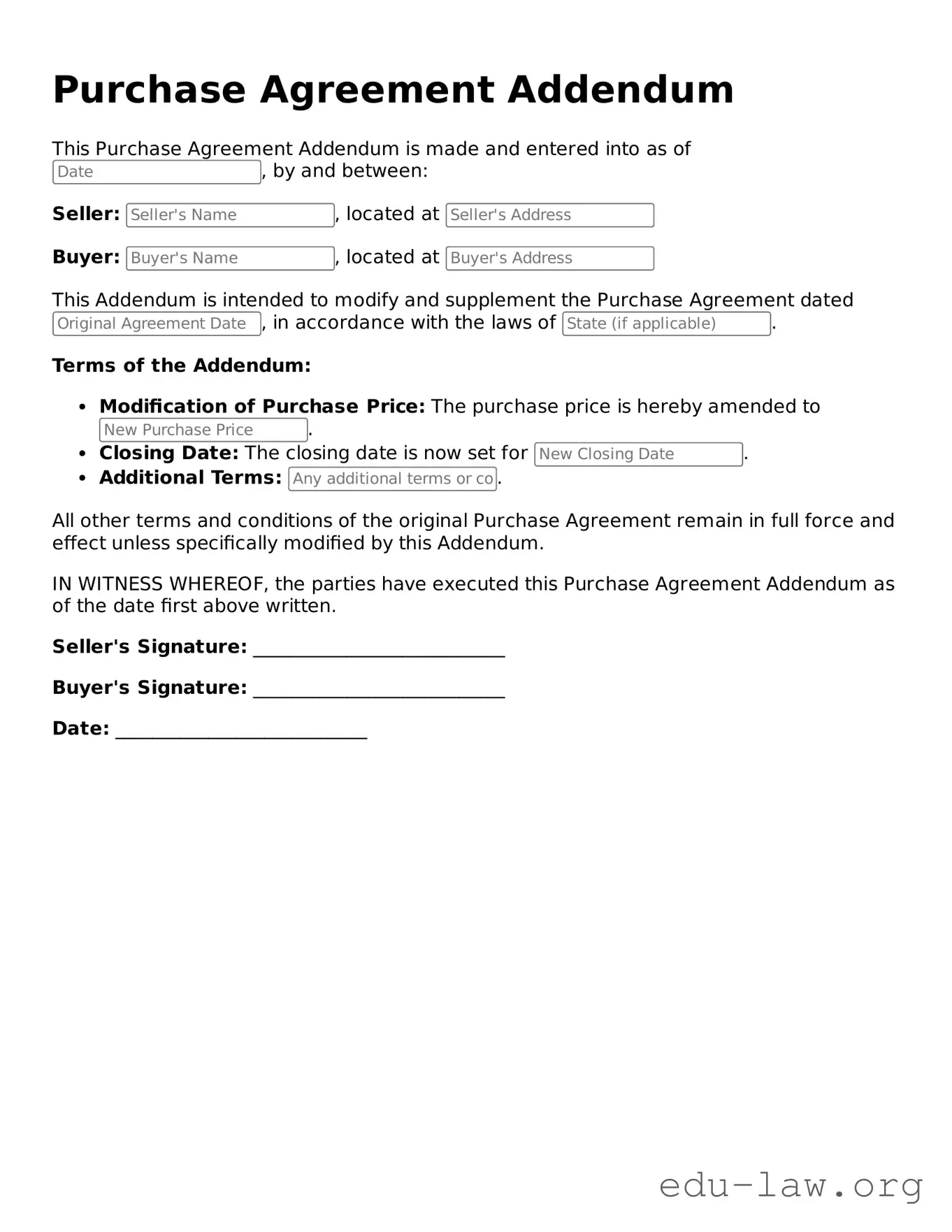
When navigating the complex world of real estate transactions, clarity and precision are paramount. One essential tool that helps achieve this is the Purchase Agreement Addendum form. This document serves as an important supplement to the main purchase agreement, allowing parties involved in a transaction to make specific modifications or add new terms without starting from scratch. Whether it’s adjusting the closing date, altering the purchase price, or specifying contingencies, the addendum provides a structured way to address changes that arise during negotiations. It fosters communication between buyers and sellers, ensuring that all parties are on the same page. By utilizing this form, individuals can better protect their interests while facilitating a smoother transaction process. Understanding how to effectively use the Purchase Agreement Addendum can empower buyers and sellers alike, making it a critical component of any real estate deal.
Purchase Agreement Addendum
This Purchase Agreement Addendum is made and entered into as of , by and between:
Seller: , located at
Buyer: , located at
This Addendum is intended to modify and supplement the Purchase Agreement dated , in accordance with the laws of .
Terms of the Addendum:
All other terms and conditions of the original Purchase Agreement remain in full force and effect unless specifically modified by this Addendum.
IN WITNESS WHEREOF, the parties have executed this Purchase Agreement Addendum as of the date first above written.
Seller's Signature: ___________________________
Buyer's Signature: ___________________________
Date: ___________________________
| Fact Name | Details |
|---|---|
| Definition | A Purchase Agreement Addendum is a document that modifies the terms of an existing purchase agreement. |
| Purpose | This addendum is used to clarify, add, or change specific terms within the original purchase agreement. |
| Common Uses | It often addresses changes in price, closing dates, or contingencies. |
| Governing Law (California) | In California, the addendum is governed by the California Civil Code. |
| Governing Law (New York) | In New York, the addendum is subject to the New York Real Property Law. |
| Signature Requirement | All parties involved in the original purchase agreement must sign the addendum for it to be valid. |
| Effectiveness | The addendum becomes effective once all parties have signed and dated it. |
| Integration Clause | Typically, the addendum includes an integration clause stating that it is part of the original agreement. |
| Record Keeping | It is essential to keep a copy of the signed addendum with the original purchase agreement. |
| Legal Advice | Consulting with a legal professional is recommended before signing any addendum to ensure understanding of its implications. |
Once you have the Purchase Agreement Addendum form ready, you'll want to ensure all necessary information is accurately filled out. Following these steps will help you complete the form correctly, paving the way for a smoother transaction process.
With the form completed, you can now proceed with the next steps in your real estate transaction. Make sure to keep communication open with all parties involved to ensure a smooth process moving forward.
What is a Purchase Agreement Addendum?
A Purchase Agreement Addendum is a document that modifies or adds terms to an existing purchase agreement. It allows both parties to clarify specific details, address changes, or include additional provisions without having to draft an entirely new contract. This helps ensure that all parties are on the same page regarding their agreement.
When should I use a Purchase Agreement Addendum?
You should consider using a Purchase Agreement Addendum when there are changes to the terms of the original purchase agreement. This could include adjustments to the purchase price, changes in closing dates, or the inclusion of contingencies. If both parties agree on these modifications, an addendum is the best way to document those changes formally.
How do I create a Purchase Agreement Addendum?
Creating a Purchase Agreement Addendum is straightforward. Start by referencing the original purchase agreement, including the date and parties involved. Clearly outline the changes or additions you want to make. Be specific and concise to avoid confusion. Once drafted, both parties should review, sign, and date the addendum to make it legally binding.
Is a Purchase Agreement Addendum legally binding?
Yes, a Purchase Agreement Addendum is legally binding as long as both parties sign it. It becomes part of the original purchase agreement, which means the terms outlined in the addendum are enforceable. Always ensure that both parties understand and agree to the changes before signing.
Can I use a Purchase Agreement Addendum for any type of purchase?
While Purchase Agreement Addendums are commonly used in real estate transactions, they can be used for various types of purchases. Whether you are dealing with personal property, services, or business agreements, an addendum can clarify terms and conditions as long as both parties consent to the changes.
What happens if one party does not agree to the changes in the addendum?
If one party does not agree to the changes outlined in the Purchase Agreement Addendum, then the original purchase agreement remains in effect. Both parties must mutually agree to any modifications for the addendum to be valid. Open communication is key, so discussing any concerns can help reach a consensus.
Not reading the entire document: Many individuals rush through the Purchase Agreement Addendum form without thoroughly reading all sections. This can lead to misunderstandings or overlooked details that may affect the agreement.
Failing to include necessary details: Some people forget to fill in important information, such as the property address, buyer and seller names, or specific terms of the agreement. Omitting these details can create confusion later on.
Ignoring deadlines: It’s crucial to pay attention to any deadlines mentioned in the addendum. Missing a deadline can jeopardize the entire transaction or result in additional fees.
Not seeking clarification: If there’s something unclear in the form, many individuals hesitate to ask questions. This can lead to mistakes or assumptions that may not align with the intentions of the parties involved.
The Purchase Agreement Addendum is a crucial document in real estate transactions, serving to modify or clarify the terms of the original purchase agreement. Alongside this addendum, several other forms and documents are commonly utilized to ensure a smooth transaction process. Below is a list of these important documents.
Understanding these documents is essential for anyone involved in a real estate transaction. Each form plays a significant role in protecting the interests of both buyers and sellers, contributing to a successful and transparent process.
The Purchase Agreement Addendum shares similarities with the Sales Contract. Both documents serve as binding agreements that outline the terms and conditions of a sale. While the Sales Contract establishes the initial agreement between buyer and seller, the Addendum modifies or adds to those terms, addressing specific issues that may arise after the initial contract is signed. This ensures that both parties have a clear understanding of their obligations and rights throughout the transaction.
Another document comparable to the Purchase Agreement Addendum is the Lease Agreement. While the Lease Agreement pertains to the rental of property, it similarly outlines terms and conditions that govern the relationship between the landlord and tenant. An addendum to a Lease Agreement may include modifications such as changes in rent, duration, or responsibilities for repairs, just as a Purchase Agreement Addendum clarifies or alters aspects of a sale.
The Option Agreement also bears resemblance to the Purchase Agreement Addendum. This document grants a buyer the right, but not the obligation, to purchase a property within a specified timeframe. An Addendum may be necessary to detail specific conditions under which this option can be exercised, similar to how a Purchase Agreement Addendum specifies additional terms relevant to the sale.
In addition, the Counteroffer is akin to the Purchase Agreement Addendum. When a buyer or seller proposes changes to the original terms of a Purchase Agreement, a Counteroffer is created. This document outlines the new terms, which, if accepted, can lead to a revised agreement. Like the Addendum, it serves to clarify the parties' intentions and expectations.
The Disclosure Statement is another document that parallels the Purchase Agreement Addendum. It provides essential information about the property being sold, such as its condition or any legal issues. If new information arises after the initial agreement, an Addendum may be used to update or clarify disclosures, ensuring that the buyer is fully informed before finalizing the purchase.
Similarly, the Closing Statement relates to the Purchase Agreement Addendum in that it summarizes the financial aspects of the transaction. This document outlines the final costs associated with the sale, including any adjustments or credits. An Addendum may be necessary if there are changes to the financial terms after the Purchase Agreement has been signed, ensuring transparency and accuracy at closing.
The Escrow Agreement also shares characteristics with the Purchase Agreement Addendum. This document outlines the terms under which funds or documents are held by a third party until the transaction is completed. An Addendum may be required to modify the conditions under which the escrow agent operates, similar to how the Purchase Agreement Addendum modifies the terms of the sale.
The Title Commitment is another document that can be compared to the Purchase Agreement Addendum. This commitment outlines the conditions under which a title insurance policy will be issued. If issues arise during the title search, an Addendum may be used to address these concerns, ensuring that both parties are aware of any potential obstacles to the sale.
Lastly, the Bill of Sale is similar to the Purchase Agreement Addendum in that it serves as a document of transfer for personal property. While the Purchase Agreement Addendum modifies terms related to real estate transactions, a Bill of Sale formally transfers ownership of personal items. If changes occur regarding the items being sold, an Addendum may be necessary to reflect these updates, ensuring clarity and mutual agreement between the parties involved.
When filling out a Purchase Agreement Addendum form, attention to detail is crucial. Here are some important dos and don'ts to keep in mind:
Misconceptions about the Purchase Agreement Addendum can lead to confusion and potentially impact real estate transactions. Here are nine common misunderstandings:
The Purchase Agreement Addendum is not a standalone document. It supplements the original Purchase Agreement, adding specific terms or conditions.
The addendum can only address specific aspects outlined in the original agreement. It does not allow for wholesale changes.
While it's ideal for both parties to sign, the addendum can still be enforceable if one party accepts the terms and acts upon them.
Even simple transactions may require an addendum to clarify terms or conditions that were not fully addressed in the original agreement.
An addendum can be modified or revoked if both parties agree to the changes, provided the new terms are documented properly.
While commonly used in real estate, the concept of an addendum can apply to various types of contracts across different industries.
The addendum becomes legally binding only when both parties have agreed to its terms and signed it, just like the original agreement.
Addendums can vary significantly based on the specific needs of the transaction. Each one should be tailored to fit the unique situation.
It is crucial to retain a copy of the signed addendum for reference. This ensures all parties are aware of the agreed-upon changes.
When filling out and using the Purchase Agreement Addendum form, it is important to keep several key points in mind. These takeaways will help ensure clarity and compliance throughout the process.