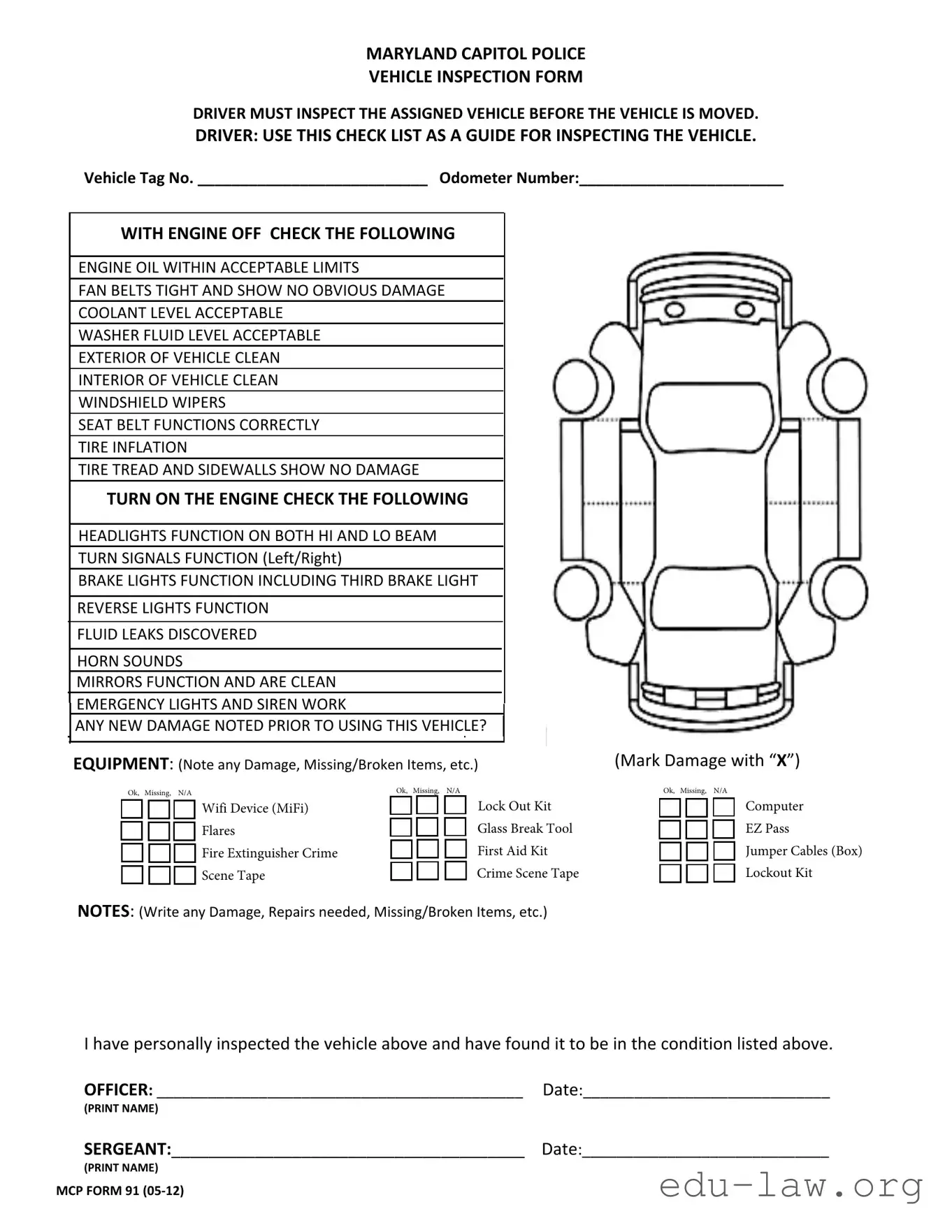
The Police Vehicle Checklist form serves as an essential tool for ensuring the safety and operational readiness of vehicles assigned to law enforcement personnel. This form outlines a systematic approach for drivers to inspect their vehicles before use, emphasizing the importance of thorough checks both with the engine off and while running. Key components of the checklist include the evaluation of engine oil levels, coolant levels, and the condition of fan belts, all of which are crucial for vehicle performance. Additionally, drivers must assess the cleanliness of both the exterior and interior of the vehicle, inspect the functionality of seat belts, and check tire conditions, including inflation and tread integrity. Once the engine is turned on, the form prompts the driver to verify that headlights, turn signals, brake lights, and reverse lights are functioning correctly. Moreover, it includes provisions for noting any fluid leaks, ensuring that mirrors are clean and operational, and confirming the functionality of emergency lights and sirens. The checklist also encompasses equipment assessments, where officers can identify any missing or damaged items such as first aid kits and fire extinguishers. By documenting these inspections, the form not only promotes accountability among officers but also enhances overall safety for both law enforcement personnel and the public they serve.
MARYLAND CAPITOL POLICE
VEHICLE INSPECTION FORM
DRIVER MUST INSPECT THE ASSIGNED VEHICLE BEFORE THE VEHICLE IS MOVED.
DRIVER: USE THIS CHECK LIST AS A GUIDE FOR INSPECTING THE VEHICLE.
Vehicle Tag No. ___________________________ Odometer Number:________________________
WITH ENGINE OFF CHECK THE FOLLOWING
ENGINE OIL WITHIN ACCEPTABLE LIMITS
FAN BELTS TIGHT AND SHOW NO OBVIOUS DAMAGE
COOLANT LEVEL ACCEPTABLE
WASHER FLUID LEVEL ACCEPTABLE
EXTERIOR OF VEHICLE CLEAN
INTERIOR OF VEHICLE CLEAN
WINDSHIELD WIPERS
SEAT BELT FUNCTIONS CORRECTLY
TIRE INFLATION
TIRE TREAD AND SIDEWALLS SHOW NO DAMAGE
TURN ON THE ENGINE CHECK THE FOLLOWING
HEADLIGHTS FUNCTION ON BOTH HI AND LO BEAM
TURN SIGNALS FUNCTION (Left/Right)
BRAKE LIGHTS FUNCTION INCLUDING THIRD BRAKE LIGHT
REVERSE LIGHTS FUNCTION
FLUID LEAKS DISCOVERED
HORN SOUNDS
MIRRORS FUNCTION AND ARE CLEAN
EMERGENCY LIGHTS AND SIREN WORK
ANY NEW DAMAGE NOTED PRIOR TO USING THIS VEHICLE?
EQUIPMENT: (Note any Damage, Missing/Broken Items, etc.)
Ok, Missing, N/A |
Ok, Missing, N/A |
Wifi Device (MiFi) |
Lock Out Kit |
Flares |
Glass Break Tool |
Fire Extinguisher Crime |
First Aid Kit |
Scene Tape |
Crime Scene Tape |
NOTES: (Write any Damage, Repairs needed, Missing/Broken Items, etc.)
(Mark Damage with “X”)
Ok, Missing, N/A
Computer
EZ Pass
Jumper Cables (Box)
Lockout Kit
I have personally inspected the vehicle above and have found it to be in the condition listed above.
OFFICER: ___________________________________________ Date:_____________________________
(PRINT NAME)
SERGEANT:______________________________________ Date:_____________________________
(PRINT NAME)
MCP FORM 91
| Fact Name | Description |
|---|---|
| Inspection Requirement | Drivers must inspect the assigned vehicle before moving it. |
| Checklist Purpose | The checklist serves as a guide for inspecting the vehicle's condition. |
| Equipment Checks | Specific equipment must be checked for damage or missing items, including a fire extinguisher and first aid kit. |
| Legal Compliance | This form adheres to Maryland law regarding vehicle inspections for law enforcement agencies. |
Filling out the Police Vehicle Checklist form is essential for ensuring the vehicle is safe and operational before use. Follow these steps carefully to complete the form accurately.
What is the purpose of the Police Vehicle Checklist form?
The Police Vehicle Checklist form is designed to ensure that all assigned vehicles are thoroughly inspected before being used. This helps maintain safety and functionality by identifying any potential issues that could affect the vehicle's performance on duty.
Who is responsible for completing the checklist?
The driver assigned to the vehicle is responsible for completing the checklist. It is essential that the driver inspects the vehicle before moving it to ensure it is in good working condition.
What should be checked when the engine is off?
When the engine is off, the driver should check several key components, including engine oil levels, fan belts for tightness and damage, coolant levels, washer fluid levels, and the cleanliness of both the exterior and interior of the vehicle. Additionally, the driver should inspect the windshield wipers, seat belt functionality, tire inflation, tread, and sidewalls for any damage.
What checks are required when the engine is running?
With the engine running, the driver must check that headlights function on both high and low beams, turn signals operate correctly, and brake lights, including the third brake light, are working. Reverse lights should also be checked, along with any fluid leaks, horn functionality, mirror clarity and function, and the operation of emergency lights and sirens.
What should be noted regarding equipment?
During the inspection, the driver should note any damage or missing items related to equipment. This includes checking the availability and condition of items such as the WiFi device, lockout kit, flares, glass break tool, fire extinguisher, crime first aid kit, and scene tape. Mark any missing or damaged items clearly on the checklist.
What should be included in the notes section?
The notes section is for documenting any additional observations, such as damage, repairs needed, or missing/broken items that were identified during the inspection. Mark any damage with an “X” for clarity.
How do I confirm that the vehicle has been inspected?
To confirm that the vehicle has been inspected, both the officer and the sergeant must print their names and sign the form with the date. This provides a record of accountability and ensures that all necessary checks were completed.
What happens if I find an issue during the inspection?
If any issues are found during the inspection, they should be documented on the checklist. Depending on the severity of the issue, the vehicle may need to be taken out of service until repairs are made. It is crucial to address any concerns before using the vehicle to ensure safety.
Neglecting to Complete All Required Fields: Many individuals fail to fill out all sections of the form, such as the vehicle tag number and odometer reading. Missing information can lead to delays or complications in processing.
Not Inspecting the Vehicle Thoroughly: Some drivers overlook critical checks, such as engine oil levels or tire conditions. A comprehensive inspection is essential to ensure vehicle safety and functionality.
Forgetting to Note Existing Damage: If there is any pre-existing damage, it should be documented on the form. Failing to do so can lead to disputes about the vehicle's condition later.
Incorrectly Reporting Equipment Status: Some individuals may inaccurately mark equipment as "Ok" when it is actually missing or damaged. This can create serious issues during operational use.
Not Testing All Vehicle Functions: Drivers sometimes skip testing essential functions, such as headlights and turn signals. All systems must be operational before the vehicle is used.
Overlooking Fluid Levels: Drivers might forget to check fluid levels, including coolant and washer fluid. These are crucial for vehicle performance and safety.
Failing to Sign and Date the Form: It is important to sign and date the checklist after inspection. Omitting this step can render the inspection invalid.
Ignoring the Cleanliness of the Vehicle: Some may not consider the cleanliness of the interior and exterior as part of the inspection. A clean vehicle reflects professionalism and readiness.
Not Communicating with Supervisors: If issues are found during the inspection, they should be communicated to a supervisor. Failure to do so may lead to unresolved problems.
Rushing Through the Inspection: Some individuals may hurry through the checklist, which can result in missed checks or overlooked details. Taking the time to conduct a thorough inspection is crucial.
The Police Vehicle Checklist form is an essential tool for ensuring that law enforcement vehicles are safe and ready for use. However, several other documents and forms complement this checklist, each serving a specific purpose in maintaining vehicle safety and accountability. Below is a list of five commonly used forms alongside the Police Vehicle Checklist.
Each of these forms plays a vital role in the overall safety and efficiency of police operations. By utilizing them alongside the Police Vehicle Checklist, law enforcement agencies can ensure their vehicles are not only functional but also safe for officers and the community they serve.
The Vehicle Maintenance Checklist is akin to the Police Vehicle Checklist form, as both serve a similar purpose of ensuring that vehicles are in good working condition before they are utilized. The Vehicle Maintenance Checklist typically includes sections for inspecting essential components such as brakes, tires, lights, and fluid levels. Just like the Police Vehicle Checklist, it emphasizes the importance of performing these checks to maintain safety and operational efficiency. Users of both documents are guided through a systematic inspection process, helping to identify any issues that may require attention before the vehicle is put into service.
Another document that shares similarities is the Pre-Trip Inspection Report, commonly used by commercial drivers. This report outlines a thorough inspection process that drivers must complete before embarking on a journey. Much like the Police Vehicle Checklist, it covers critical areas such as tire condition, fluid levels, and operational lights. Both forms aim to ensure that vehicles are safe for use, reducing the likelihood of accidents caused by mechanical failures. The structured format of the Pre-Trip Inspection Report mirrors the checklist approach, providing a clear framework for drivers to follow.
The Daily Vehicle Inspection Report is also comparable to the Police Vehicle Checklist form. This report is often used by fleet managers and drivers to document the condition of vehicles on a daily basis. It includes checks for items such as brakes, lights, and safety equipment, similar to the Police Vehicle Checklist. Both documents serve as a record of inspections, helping to maintain accountability and ensure that any issues are addressed promptly. The Daily Vehicle Inspection Report emphasizes the importance of routine checks, reinforcing a culture of safety and diligence among users.
Lastly, the Equipment Inspection Checklist is another document that aligns with the Police Vehicle Checklist. This checklist is designed for inspecting various pieces of equipment used by law enforcement or emergency services, such as radios, first aid kits, and other essential tools. Like the Police Vehicle Checklist, it provides a systematic way to verify that all necessary equipment is present and in working order. Both documents highlight the significance of thorough inspections in ensuring that personnel have the tools they need to perform their duties safely and effectively.
When filling out the Police Vehicle Checklist form, it is important to follow certain guidelines to ensure accuracy and completeness. Here are four things to do and not to do:
Misconceptions about the Police Vehicle Checklist form can lead to confusion and improper vehicle inspections. Here are five common misunderstandings:
Understanding these misconceptions can help ensure that vehicle inspections are thorough and compliant with regulations. Always take the time to complete the checklist accurately.
When filling out and using the Police Vehicle Checklist form, consider the following key takeaways: