Participating in a Poker Run can be an exhilarating experience, combining the thrill of riding with the excitement of poker. To ensure a fair and enjoyable event, the PLL Poker Run Rules form lays out essential guidelines that every participant must follow. First and foremost, players will draw cards at designated stops along the route, emphasizing the importance of a structured game. Each card must be picked up one at a time, displayed face up for transparency, and no duplicate cards are allowed; if an identical card is drawn, players must draw again. For those who wish to play multiple hands, it’s crucial to present a separate Poker Run Talley Sheet Ticket and Talley Sheet before each card is drawn. The stakes get higher in the event of a tie, as a High Card draw will determine the winner. It’s important to note that riders must be present to claim any winnings, and all judges’ decisions are final, ensuring a smooth and fair process. The form also includes spaces for personal information and a detailed scoring section, allowing participants to keep track of their hands and understand the poker hand rankings from Royal Flush to High Card. This comprehensive approach helps create an organized and enjoyable atmosphere for all involved.
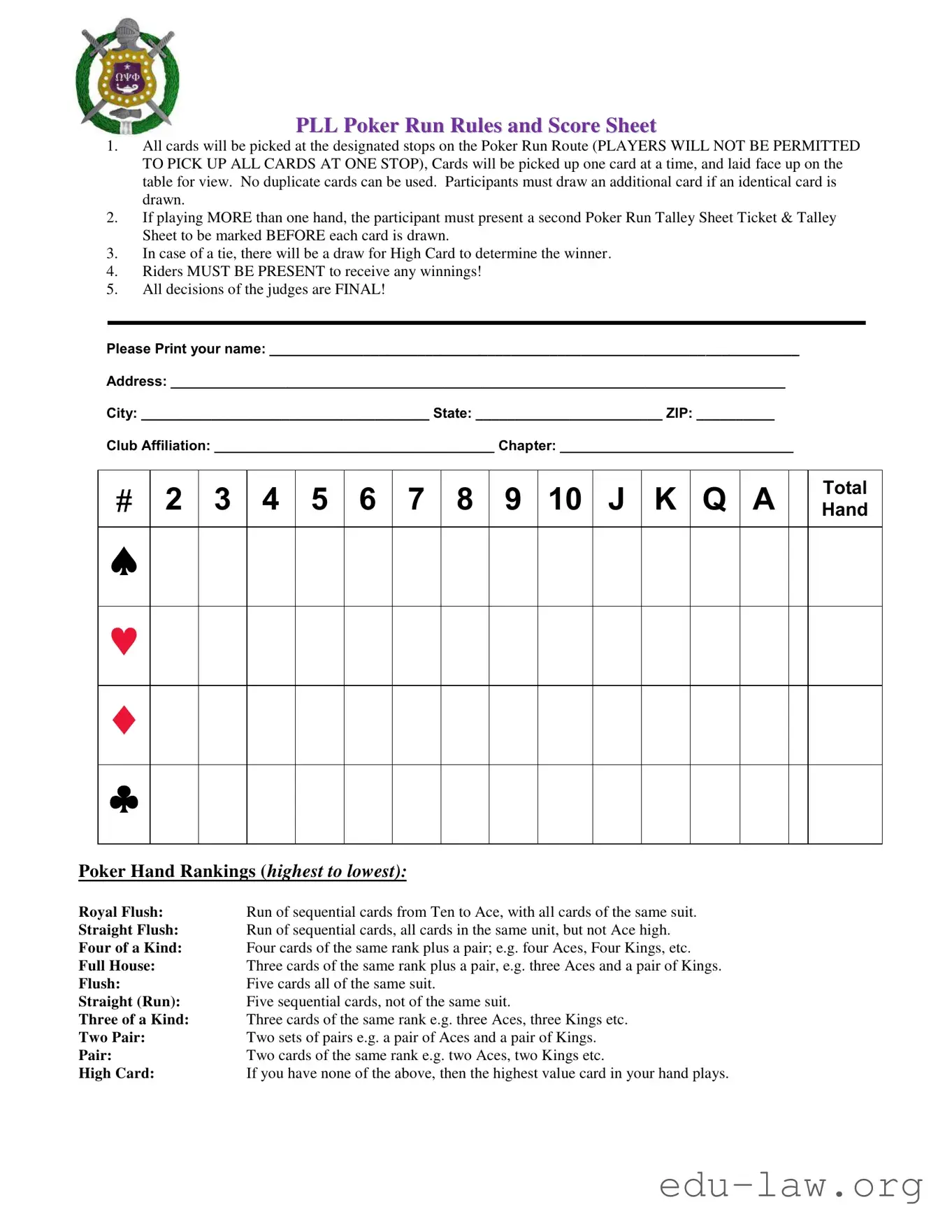
PLL Poker Run Rules and Score Sheet
1.All cards will be picked at the designated stops on the Poker Run Route (PLAYERS WILL NOT BE PERMITTED TO PICK UP ALL CARDS AT ONE STOP), Cards will be picked up one card at a time, and laid face up on the table for view. No duplicate cards can be used. Participants must draw an additional card if an identical card is drawn.
2.If playing MORE than one hand, the participant must present a second Poker Run Talley Sheet Ticket & Talley Sheet to be marked BEFORE each card is drawn.
3.In case of a tie, there will be a draw for High Card to determine the winner.
4.Riders MUST BE PRESENT to receive any winnings!
5.All decisions of the judges are FINAL!
Please Print your name: ____________________________________________________________________
Address: _______________________________________________________________________________
City: _____________________________________ State: ________________________ ZIP: __________
Club Affiliation: ____________________________________ Chapter: ______________________________
2 3 4 5 6 7 8 9 10 J K Q A |
Total |
Hand |
Poker Hand Rankings (highest to lowest):
Royal Flush: |
Run of sequential cards from Ten to Ace, with all cards of the same suit. |
Straight Flush: |
Run of sequential cards, all cards in the same unit, but not Ace high. |
Four of a Kind: |
Four cards of the same rank plus a pair; e.g. four Aces, Four Kings, etc. |
Full House: |
Three cards of the same rank plus a pair, e.g. three Aces and a pair of Kings. |
Flush: |
Five cards all of the same suit. |
Straight (Run): |
Five sequential cards, not of the same suit. |
Three of a Kind: |
Three cards of the same rank e.g. three Aces, three Kings etc. |
Two Pair: |
Two sets of pairs e.g. a pair of Aces and a pair of Kings. |
Pair: |
Two cards of the same rank e.g. two Aces, two Kings etc. |
High Card: |
If you have none of the above, then the highest value card in your hand plays. |
| Fact Name | Description |
|---|---|
| Card Drawing Rules | Participants draw cards at designated stops, one at a time, and cannot pick up all cards at once. |
| Duplicate Cards | If a duplicate card is drawn, participants must draw again to replace it. |
| Multiple Hands | Players must have a separate Poker Run Talley Sheet for each hand they play. |
| Tie-Breaking Procedure | A draw for High Card will determine the winner in case of a tie. |
| Presence Required for Winnings | Riders must be present to claim any winnings from the Poker Run. |
| Judges' Decisions | All decisions made by the judges are final and binding. |
| Hand Rankings | The Poker Hand Rankings range from Royal Flush (highest) to High Card (lowest). |
| Sequential Card Requirement | A Royal Flush consists of sequential cards from Ten to Ace, all in the same suit. |
| Flush Definition | A Flush is defined as five cards of the same suit, regardless of their sequence. |
| State-Specific Laws | Check local regulations for any state-specific laws governing Poker Runs. |
Filling out the PLL Poker Run Rules form is essential for participating in the event. This form captures your personal information and outlines the rules you must follow during the poker run. It is important to complete it accurately to ensure a smooth experience.
After completing these steps, review your entries to ensure accuracy before submitting the form. Following these instructions will help you participate fully in the poker run.
What are the rules for picking cards during the Poker Run?
Participants must pick cards at designated stops along the Poker Run route. It is important to note that players are not allowed to pick up all their cards at one stop. Instead, each participant will draw one card at a time, laying it face up on the table for everyone to see. If a player draws a duplicate card, they must draw an additional card to replace it. This rule ensures fairness and keeps the game exciting.
Can I play more than one hand, and how do I do that?
Yes, participants are welcome to play more than one hand. However, to do so, each player must present a separate Poker Run Talley Sheet Ticket and Talley Sheet before drawing cards for the additional hand. This requirement helps maintain accurate records and ensures that each hand is tracked properly throughout the event.
What happens in the event of a tie?
In the case of a tie, a draw for the High Card will determine the winner. This means that the players involved in the tie will draw additional cards, and the one with the highest card value will win. It adds an element of suspense and fairness to the competition, ensuring that ties are resolved in an exciting manner.
Do I need to be present to claim my winnings?
Absolutely. Riders must be present to receive any winnings from the Poker Run. This rule is in place to ensure that prizes are awarded to those who actively participated in the event. If you win, your presence is required to claim your prize, so make sure to stick around until the winners are announced!
Failing to print your name clearly on the form. This can lead to confusion when identifying participants.
Not including your complete address. Missing information may prevent the organizers from contacting you if needed.
Overlooking the requirement to present a second Poker Run Talley Sheet Ticket if playing more than one hand. This is essential for tracking multiple entries.
Ignoring the rule that all cards must be drawn at designated stops. Drawing cards at one location can lead to disqualification.
Not understanding that duplicate cards cannot be used. Participants must draw again if they pick an identical card.
Forgetting to be present to receive winnings. If you are not there, you cannot claim your prize.
Neglecting to check the judges’ decisions. All decisions made by judges are final, and disputes will not be entertained.
Failing to review the Poker Hand Rankings before playing. Knowing the rankings is crucial for understanding your hand's value.
When organizing a Poker Run event, several forms and documents are essential to ensure everything runs smoothly and fairly. Each document serves a specific purpose, helping participants understand the rules, track their progress, and ensure compliance with event regulations. Here’s a brief overview of some commonly used forms alongside the PLL Poker Run Rules form:
These forms and documents play a crucial role in the overall success of a Poker Run event. By utilizing them effectively, organizers can create a structured and enjoyable experience for all participants.
The PLL Poker Run Rules form shares similarities with a standard set of poker tournament rules. Both documents outline the fundamental structure of the game, including how cards are drawn and the conditions for winning. Just like in a tournament, participants must adhere to specific protocols, such as drawing one card at a time and ensuring no duplicate cards are used. This ensures fairness and maintains the integrity of the game, emphasizing the importance of following established guidelines for a smooth and enjoyable experience for all players involved.
Another document that resembles the PLL Poker Run Rules is a charity event registration form. Both forms require participants to provide personal information such as name, address, and affiliation. This information helps organizers keep track of participants and ensure that everyone is accounted for during the event. Furthermore, just like the Poker Run Rules, a charity registration form often includes specific guidelines about how the event will operate, ensuring that all participants understand the expectations and requirements before they engage in the activities.
The rules of a traditional card game, such as Texas Hold'em, also share common ground with the PLL Poker Run Rules. Both documents establish the hierarchy of hands and clarify how players can win. For instance, the Poker Run Rules provide a detailed ranking of poker hands, similar to how a Texas Hold'em rulebook would explain the winning combinations. This consistency in hand rankings is essential for players to understand their chances of winning and to strategize accordingly, fostering a competitive yet fair environment.
Lastly, a sports tournament rulebook can be compared to the PLL Poker Run Rules. Both documents outline the procedures for participation, scoring, and resolving ties. Just as a sports tournament might require teams to follow specific rules regarding player eligibility and scoring, the Poker Run Rules dictate how participants draw cards and what happens in the event of a tie. This structured approach ensures that all players have a clear understanding of the competition, promoting fairness and enhancing the overall experience for everyone involved.
When filling out the PLL Poker Run Rules form, it is important to follow certain guidelines to ensure a smooth experience. Here’s a list of things you should and shouldn’t do:
By following these simple guidelines, you can enjoy the event and avoid any potential issues. Good luck and have fun!
Misconceptions about the PLL Poker Run Rules can lead to confusion and frustration among participants. Here are ten common misunderstandings, along with clarifications for each.
Understanding these misconceptions can enhance the experience for all participants and ensure a smoother Poker Run event.
Understanding the rules and procedures for the PLL Poker Run is crucial for an enjoyable and fair experience. Here are some key takeaways to keep in mind when filling out and using the Poker Run Rules form:
By keeping these points in mind, participants can enhance their understanding of the game and ensure a smooth Poker Run experience.