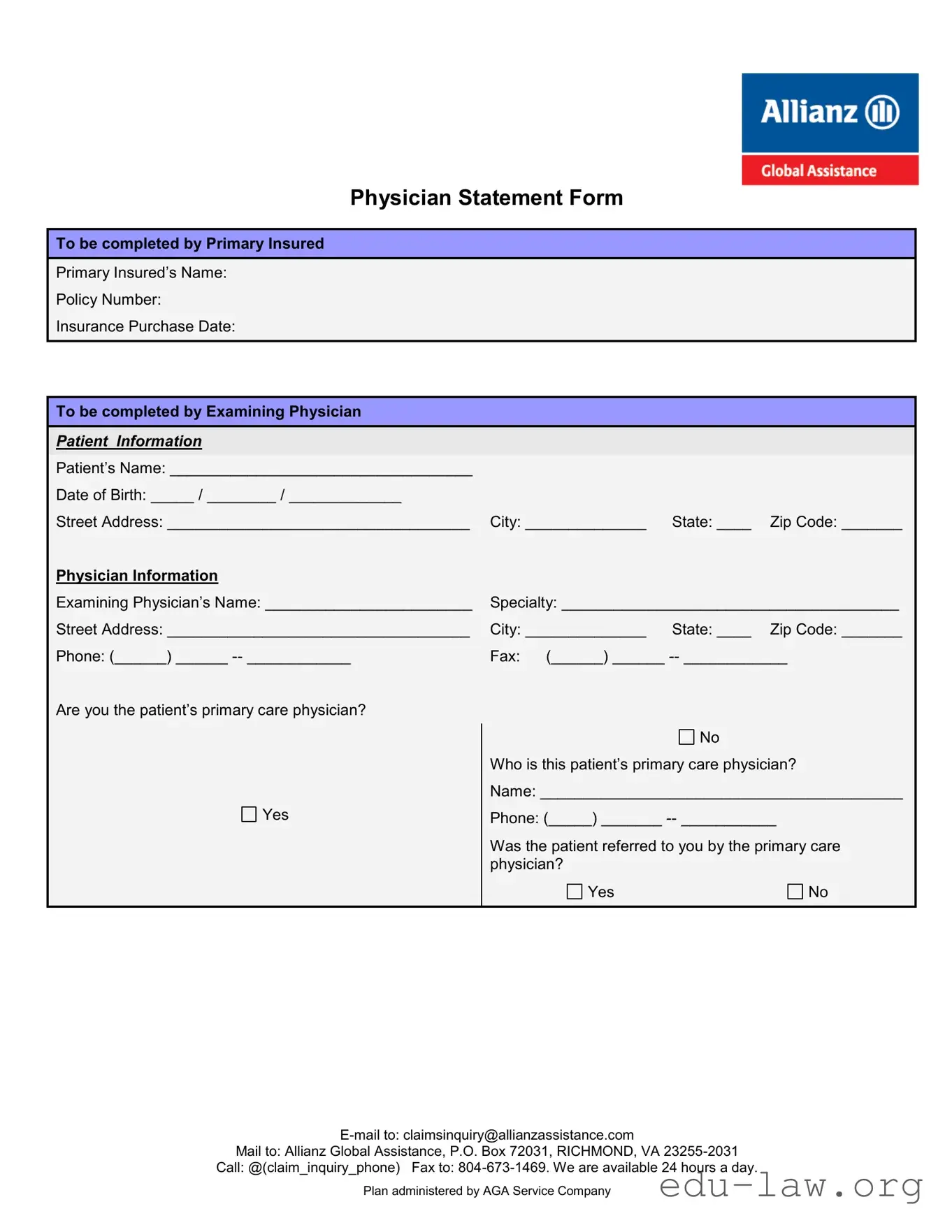
The Physician Statement form plays a crucial role in the insurance claims process, particularly for individuals who may need to cancel or interrupt their travel plans due to medical issues. This form is designed to gather essential information from both the insured individual and the examining physician. It begins with details about the primary insured, including their name, policy number, and the date the insurance was purchased. Following this, the physician provides patient information, which includes the patient's name, date of birth, and address. The examining physician's details are also captured, including their specialty and contact information. A key aspect of the form is the section dedicated to the patient's diagnosis, where the physician must confirm whether an examination was performed and provide the primary diagnosis along with the relevant ICD-9 code. Additionally, the form asks for a history of the patient's office visits leading up to the insurance purchase date, as well as any recommendations made regarding trip cancellation due to the patient's medical condition. The physician is required to certify the accuracy of the information provided, ensuring that all details are true and correct, which helps streamline the claims process for the insured individual.

Physician Statement Form
To be completed by Primary Insured
Primary Insured’s Name:
Policy Number:
Insurance Purchase Date:
To be completed by Examining Physician
|
|
PATIENT INFORMATION |
|
|
|
|
|
|
|
|
|
|
|
|
|
Patient’s Name: ___________________________________ |
|
|
|
|
|
|
Date of Birth: _____ / ________ / _____________ |
|
|
|
|
|
|
|
|
|
|
|
|
|
Street Address: ___________________________________ |
City: ______________ |
State: ____ |
Zip Code: _______ |
|
|
|
|
|
|
|
|
|
|
|
|
|
|
|
|
|
Physician Information |
|
|
|
|
|
|
Examining Physician’s Name: ________________________ |
Specialty: _______________________________________ |
|||
|
|
|
|
|
|
|
|
|
|
|
|
|
|
|
|
Street Address: ___________________________________ |
City: ______________ |
State: ____ |
Zip Code: _______ |
|
|
|
|
|
|
|
|
|
|
|
|
|
||
|
|
Phone: (______) ______ |
Fax: (______) ______ |
|||
|
|
|
|
|
|
|
|
|
|
|
|
|
|
|
|
|
|
|
|
|
|
|
Are you the patient’s primary care physician? |
|
|
|
|
|
|
|
|
|
No |
|
|
|
|
Who is this patient’s primary care physician? |
|||
|
|
|
Name: __________________________________________ |
|||
|
|
Yes |
Phone: (_____) _______ |
|||
|
|
|
|
|
|
|
|
|
|
Was the patient referred to you by the primary care |
|||
|
|
|
physician? |
|
|
|
|
|
|
Yes |
|
|
No |
|
|
|
|
|
|
|
Mail to: Allianz Global Assistance, P.O. Box 72031, RICHMOND, VA
Call: @(claim_inquiry_phone) Fax to:
Plan administered by AGA Service Company

Patient’s Diagnosis: |
|
|
Did you perform an actual examination? |
Yes |
No |
Date of the exam: ____ / _____ / _________
Please indicate the primary diagnosis for which you examined the patient:
__________________________________________________________________________________________________
__________________________________________________________________________________________________
Date symptoms first appeared or accident occurred: ____ / _____ / _________ |
|
|
Is this condition a complication of an underlying condition? |
Yes (specify below) |
No |
__________________________________________________________________________________________________
Please list the dates of the patient’s office visits in the 120 days before the insurance purchase date, noted above. Circle the dates where you treated the patient for the above stated condition.
|
|
____ / _____ / ___________ |
____ / _____ / ___________ |
____ / _____ / ___________ |
____ / _____ / ___________ |
|
|
|
|
____ / _____ / ___________ |
____ / _____ / ___________ |
____ / _____ / ___________ |
____ / _____ / ___________ |
|
|
|
|
|
|
|
|
|
|
|
|
Did you advise the trip be cancelled or interrupted due to the patient’s medical condition? |
|
|
|
||
|
|
Yes Date: ___ / ___ / _________ |
|
No |
|
|
|
|
|
Please explain why you made this recommendation. |
Please explain why you did not make this recommendation. |
|
|
||
|
|
Provide details on the circumstances and medical diagnosis |
Provide details on the circumstances and medical diagnosis |
|
|
||
|
|
of the patient that you consider relevant to the insured’s |
of the patient that you consider relevant to the insured’s |
|
|
||
|
|
decision to cancel or interrupt their trip due to injury or |
decision to cancel or interrupt their trip due to injury or |
|
|
||
|
|
illness. |
|
illness. |
|
|
|
|
|
________________________________________________ |
________________________________________________ |
|
|
||
|
|
________________________________________________ |
________________________________________________ |
|
|
||
|
|
________________________________________________ |
________________________________________________ |
|
|
||
|
|
________________________________________________ |
________________________________________________ |
|
|
||
|
|
|
|
|
|
|
|
|
|
________________________________________________ |
________________________________________________ |
|
|
||
|
|
|
|
|
|
|
|
|
|
|
|
|
|
||
|
|
If the patient is the insured, on what date did he/she become medically unable to travel? |
___ / ___ / ________ |
|
|
||
|
|
|
|
|
|
|
|
By my signature and stamp below, I hereby certify that the above is true and correct
Physician Signature: _________________________________________________ Date ____/____/______
Physician Stamp:
Mail to: Allianz Global Assistance, P.O. Box 72031, RICHMOND, VA
Call: @(claim_inquiry_phone) Fax to:
Plan administered by AGA Service Company
| Fact Name | Description |
|---|---|
| Purpose of the Form | The Physician Statement Form is used to provide necessary medical information about a patient to support an insurance claim. |
| Completion Requirement | This form must be filled out by the examining physician, ensuring that all patient information is accurate and complete. |
| Primary Care Physician | The form requires information about the patient's primary care physician, including whether the examining physician is the primary care physician. |
| Diagnosis Information | Physicians must specify the patient's diagnosis, including the primary diagnosis and any relevant ICD-9 codes. |
| Visit History | Physicians are asked to list office visit dates within 120 days prior to the insurance purchase date, highlighting visits related to the diagnosed condition. |
| Travel Recommendations | The form includes a section for the physician to indicate if they advised the patient to cancel or interrupt travel due to medical conditions. |
| Governing Laws | State-specific forms may be governed by local insurance regulations, which can vary by state. Always check the relevant laws for compliance. |
After completing the Physician Statement form, submit it to the appropriate contact listed at the end of the form. Ensure all sections are filled out accurately to avoid delays in processing.
What is the purpose of the Physician Statement form?
The Physician Statement form is used to provide essential medical information about a patient who is filing a claim related to travel insurance. It helps the insurance company assess the patient's medical condition and determine eligibility for benefits, particularly in cases of trip cancellation or interruption due to health issues.
Who needs to complete the Physician Statement form?
The form must be completed by the examining physician who has treated the patient. The primary insured individual, who is the patient or the policyholder, must also provide their information at the beginning of the form.
What specific patient information is required on the form?
The form requires the patient's name, date of birth, and address. This information ensures that the insurance company can accurately identify the patient and link the medical details to their insurance policy.
What details must the physician provide regarding the patient's condition?
The physician must include the patient's diagnosis, the date of the examination, and whether the condition is a complication of an underlying issue. Additionally, the physician should list any office visits related to the condition within 120 days before the insurance purchase date.
Is it necessary for the physician to have conducted an examination?
Yes, the physician must indicate whether they performed an actual examination of the patient. This is crucial for validating the medical claims and ensuring that the information provided is accurate and reliable.
What should the physician include if they recommended trip cancellation?
If the physician advised the patient to cancel or interrupt their trip, they must provide the date of that recommendation and explain the medical reasons behind it. This explanation helps the insurance company understand the necessity of the recommendation.
What happens if the physician did not recommend cancellation?
If the physician did not recommend cancellation, they must explain their reasoning in detail. This information is equally important as it provides context for the patient's decision-making process regarding their travel plans.
How should the form be submitted?
The completed Physician Statement form can be submitted via email to [email protected] or mailed to Allianz Global Assistance at P.O. Box 72031, Richmond, VA 23255-2031. It can also be faxed to 804-673-1469. Submissions can be made 24 hours a day.
What is the significance of the physician's signature and stamp?
The physician's signature and stamp certify that the information provided in the form is accurate and true. This certification is essential for the integrity of the claim and helps prevent fraud.
Failing to provide the primary insured’s name and policy number at the top of the form. This information is crucial for processing.
Not completing the patient’s information section fully, including the patient's name and date of birth. Missing details can delay the claim.
Leaving out the physician’s information, such as name, specialty, and contact details. This information is necessary for follow-up communications.
Indicating "Yes" or "No" incorrectly regarding whether the physician is the patient’s primary care physician. This can lead to confusion about the patient’s medical history.
Not circling the dates of the patient’s office visits within the specified 120 days. This oversight can hinder the evaluation of the claim.
Failing to provide a clear primary diagnosis and the corresponding ICD-9 code. Accurate diagnosis coding is essential for claim approval.
Neglecting to specify whether the condition is a complication of an underlying condition. This detail can affect the claim’s validity.
Not explaining the recommendation regarding trip cancellation or interruption. Clear explanations are vital for understanding the medical rationale.
Overlooking the date when the patient became medically unable to travel. This date is important for determining coverage eligibility.
Failing to sign and stamp the form. A signature and stamp authenticate the information provided, making it legally binding.
When dealing with insurance claims related to medical conditions, several forms often accompany the Physician Statement form. These documents help provide a complete picture of the patient’s health and treatment history. Below are some commonly used forms that may be required.
Gathering these forms ensures that the claims process runs smoothly and efficiently. Each document plays a vital role in supporting the patient’s case and facilitating timely responses from the insurance provider.
The Physician Statement form shares similarities with the Medical Certificate. Both documents serve as official records of a patient's medical condition and treatment. A Medical Certificate typically includes details about a patient's diagnosis, the dates of treatment, and the physician's recommendations regarding the patient's ability to work or travel. Like the Physician Statement, it requires the physician's signature to validate the information provided, ensuring that it is recognized by insurance companies and other entities that may need proof of medical circumstances.
Another document akin to the Physician Statement is the Attending Physician's Statement (APS). This form is often used in life insurance claims and provides a comprehensive overview of a patient's medical history, diagnosis, and treatment plan. The APS is similar in that it requires the physician to confirm the patient's condition and may also include information about the patient's prognosis. Both forms emphasize the physician's professional assessment and are crucial in determining insurance benefits.
The Disability Certification form is also comparable. This document is used to verify a patient's inability to work due to medical reasons. It typically includes the physician's assessment of the patient's condition, treatment history, and expected recovery time. Just like the Physician Statement, it requires the physician's signature and may be used to support claims for short-term or long-term disability benefits.
In addition, the Medical Release Form is similar in that it authorizes the sharing of a patient's medical information with third parties, such as insurance companies. While it does not provide a diagnosis or treatment details, it complements the Physician Statement by allowing for the exchange of necessary medical data. Both documents are essential in the claims process, ensuring that relevant medical information is accessible to those who need it.
The Health Insurance Claim Form is another document that aligns with the Physician Statement. This form is submitted by healthcare providers to insurance companies for reimbursement of medical services rendered. It requires detailed information about the patient's diagnosis and treatment, similar to what is found in the Physician Statement. Both documents play a critical role in the insurance claims process, as they provide necessary evidence to support the claim.
The Release of Information form is also relevant. This document allows healthcare providers to disclose a patient's medical records to designated individuals or organizations. While it does not provide medical details itself, it is often used in conjunction with the Physician Statement to facilitate the sharing of the patient's medical information with insurers or other parties involved in the claims process.
The Patient History Form is another document that bears resemblance to the Physician Statement. This form collects comprehensive information about a patient's medical history, including previous conditions, treatments, and medications. While the Physician Statement focuses on a specific diagnosis and treatment related to an insurance claim, both documents serve to provide a thorough understanding of the patient's medical background, which is essential for accurate assessment and decision-making.
The Authorization for Release of Medical Records is similar as well. This document grants permission for healthcare providers to share a patient's medical records with other parties, such as insurance companies. Like the Physician Statement, it is crucial for ensuring that the necessary medical information is made available for claims processing. Both documents are vital in maintaining transparency and facilitating communication between patients and insurers.
Lastly, the Insurance Verification Form has similarities with the Physician Statement. This document is used to confirm a patient's insurance coverage and benefits. While it does not provide medical details, it is often necessary for processing claims related to medical conditions outlined in the Physician Statement. Both forms work together to ensure that patients receive the coverage they are entitled to based on their medical circumstances.
When filling out the Physician Statement form, there are important guidelines to follow. Here are five things to do and five things to avoid.
Misconceptions about the Physician Statement form can lead to confusion and delays in processing claims. Here are eight common misunderstandings:
Understanding these misconceptions can help ensure that the Physician Statement form is completed accurately and submitted on time, facilitating a smoother claims process.