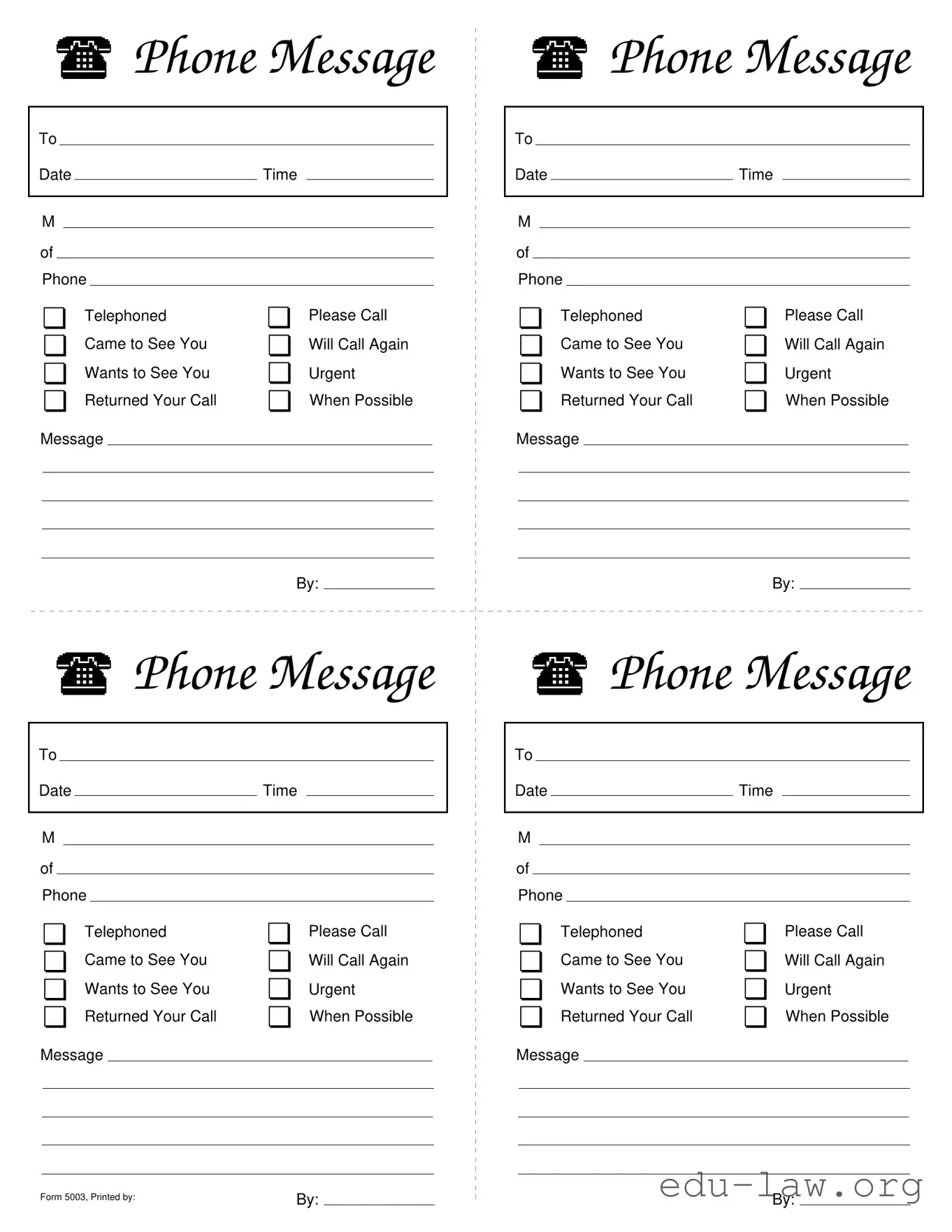
The Phone Message Slips form serves as a crucial communication tool in various professional settings, allowing individuals to document and relay important messages efficiently. This form typically includes essential fields such as the recipient's name, date, time, and the method of communication, which can range from telephone calls to in-person visits. Users can indicate the nature of the message by selecting from options like "Telephoned," "Please Call," or "Urgent," ensuring that the urgency and context of the communication are clearly conveyed. Additionally, there is space provided for the message itself, allowing for detailed information to be recorded. The structured format of the Phone Message Slips form aids in maintaining organization and clarity, which is vital in busy work environments where timely responses are often necessary. Its design accommodates multiple entries, making it a versatile choice for offices that handle numerous communications daily. Ultimately, this form plays a significant role in enhancing workplace communication and ensuring that important messages are not overlooked.
|
|
|
|
|
Phone Message |
||||
|
|
|
|
|
|
|
|
|
|
To |
|
|
|
|
|
||||
Date |
|
|
Time |
|
|
|
|||
|
|
|
|
|
|
|
|
|
|
M |
|
|
|
|
|
||||
of |
|
|
|
|
|
||||
Phone |
|
|
|
|
|
||||
❏ Telephoned |
❏ Please Call |
||||||||
❏ Came to See You |
❏ Will Call Again |
||||||||
❏ Wants to See You |
❏ Urgent |
||||||||
❏ Returned Your Call |
❏ When Possible |
||||||||
Message
|
|
|
|
|
|
By: |
|
|
|
|
|
|
|
|
|
Phone Message |
|
||||
|
|
|
|
|
|
|
|
|
|
|
To |
|
|
|
|
|
|
||||
Date |
|
|
Time |
|
|
|
||||
|
|
|
|
|
|
|
|
|
|
|
M |
|
|
|
|
|
|
||||
of |
|
|
|
|
|
|
||||
Phone |
|
|
|
|
|
|
||||
❏ Telephoned |
❏ Please Call |
|
||||||||
❏ Came to See You |
❏ Will Call Again |
|
||||||||
❏ Wants to See You |
❏ Urgent |
|
||||||||
❏ Returned Your Call |
❏ When Possible |
|
||||||||
Message
|
|
|
|
|
Phone Message |
||||
|
|
|
|
|
|
|
|
|
|
To |
|
|
|
|
|
||||
Date |
|
|
Time |
|
|
|
|||
|
|
|
|
|
|
|
|
|
|
M |
|
|
|
|
|
||||
of |
|
|
|
|
|
|
|||
Phone |
|
|
|
|
|
||||
❏ Telephoned |
❏ Please Call |
||||||||
❏ Came to See You |
❏ Will Call Again |
||||||||
❏ Wants to See You |
❏ Urgent |
||||||||
❏ Returned Your Call |
❏ When Possible |
||||||||
Message
|
|
|
|
|
|
By: |
|
|
|
|
|
|
|
|
|
Phone Message |
|
||||
|
|
|
|
|
|
|
|
|
|
|
To |
|
|
|
|
|
|
||||
Date |
|
|
Time |
|
|
|
||||
|
|
|
|
|
|
|
|
|
|
|
M |
|
|
|
|
|
|
||||
of |
|
|
|
|
|
|
||||
Phone |
|
|
|
|
|
|
||||
❏ Telephoned |
❏ Please Call |
|
||||||||
❏ Came to See You |
❏ Will Call Again |
|
||||||||
❏ Wants to See You |
❏ Urgent |
|
||||||||
❏ Returned Your Call |
❏ When Possible |
|
||||||||
Message
Form 5003, Printed by: |
By: |
|
By: |
|
|
|
| Fact Name | Description |
|---|---|
| Purpose | The Phone Message Slips form is designed to record important telephone messages for individuals or businesses. |
| Format | This form typically includes fields for the recipient's name, date, time, and the nature of the call. |
| Call Options | Users can select from various options, such as "Telephoned," "Please Call," and "Urgent," to indicate the urgency and type of message. |
| Reusability | The form can be printed multiple times, allowing for consistent use in an office setting. |
| Legal Considerations | In some states, retaining phone messages may be subject to privacy laws and regulations, such as the California Consumer Privacy Act. |
| Record Keeping | These slips serve as a record of communication, which can be important for follow-up actions or legal documentation. |
| Accessibility | The form is straightforward and easy to fill out, making it accessible for individuals at all levels of a business. |
| Customization | Organizations may customize the form to include their branding or specific instructions relevant to their operations. |
| Printed Version | The form is often printed as Form 5003, which helps standardize the message-taking process across different departments. |
Filling out the Phone Message Slips form is straightforward and ensures that important information is communicated clearly. Each section of the form captures essential details about the call or visit, helping to keep everyone informed. Follow these steps to complete the form accurately.
Once you have completed these steps, your form will be ready to deliver the necessary information. Ensure that all fields are filled out clearly to avoid any confusion. Keeping a record of messages helps maintain effective communication.
What is the purpose of the Phone Message Slips form?
The Phone Message Slips form is designed to help individuals and businesses keep track of important phone messages. It serves as a reliable way to document who called, what the message was about, and any necessary follow-up actions. This ensures that no important communication slips through the cracks, allowing for better organization and responsiveness.
How do I fill out the Phone Message Slips form?
Filling out the Phone Message Slips form is straightforward. Start by entering the date and time of the call. Then, indicate the method of contact by checking the appropriate box—whether it was a phone call, a visit, or a request for a call back. Next, write down the message clearly. Finally, sign or print your name at the bottom to authenticate the entry. This simple process helps maintain clear records of communications.
Can I use the Phone Message Slips form for urgent messages?
Yes, absolutely! The Phone Message Slips form includes an option to mark messages as "Urgent." This feature allows you to prioritize important communications, ensuring that they receive immediate attention. By using this option, you can easily identify messages that require quick action, helping you manage your time and responsibilities more effectively.
Is there a limit to the number of messages I can document on the form?
The Phone Message Slips form is typically designed for individual messages. However, you can use multiple slips if you have more messages than the form accommodates. Each slip provides a clear record, so you can keep everything organized. It’s a good practice to file these slips in chronological order for easy reference later.
How can I ensure the information on the Phone Message Slips form is accurate?
To ensure accuracy, take your time when filling out the form. Double-check the date, time, and message details before finalizing the entry. If you’re unsure about any part of the message, consider confirming the information with the caller or the person who delivered the message. Clear and accurate documentation will help you avoid confusion and misunderstandings in the future.
Failing to include the date and time of the message. This crucial information helps in tracking the communication effectively.
Not specifying the method of contact clearly. Whether it was a phone call, a visit, or a request for a call back, this should be marked accurately.
Leaving the message section blank. Providing a clear message is essential for the recipient to understand the context of the communication.
Using abbreviations or unclear language. It’s best to use full words and clear phrases to avoid confusion.
Not checking the recipient's name. Ensure that the name is spelled correctly to avoid miscommunication.
Neglecting to sign the message with your name. This personal touch helps the recipient know who to follow up with.
Overlooking the importance of marking the urgency of the message. If something is time-sensitive, make sure to indicate that clearly.
Not keeping a copy of the message slip for your records. Having a record can be helpful for future reference.
When managing communications in a professional setting, several forms and documents complement the Phone Message Slips form. Each of these documents serves a specific purpose, enhancing organization and clarity in communication. Below is a list of commonly used forms that can streamline your workflow.
Utilizing these forms alongside the Phone Message Slips can significantly enhance communication efficiency and accountability within an organization. Each document plays a vital role in keeping everyone informed and organized.
The Phone Message Slips form is similar to a Contact Log. A Contact Log records interactions with clients or colleagues. It captures essential details like the date, time, and nature of the communication. This document helps maintain a clear record of conversations, ensuring that nothing is overlooked. Just like the Phone Message Slips, it allows for quick reference and follow-up actions.
Another comparable document is the Appointment Reminder. This form serves to notify individuals about upcoming meetings or appointments. It includes the date, time, and purpose of the meeting, much like the Phone Message Slips. Both documents emphasize the importance of timely communication and help prevent missed opportunities.
The Visitor Log shares similarities with the Phone Message Slips as well. It tracks individuals who come to an office or facility. The log typically includes the visitor's name, time of arrival, and purpose of the visit. Like the Phone Message Slips, it serves to document important interactions and ensure accountability within a business environment.
A Delivery Receipt is another document that aligns with the Phone Message Slips. This receipt confirms the delivery of a package or message. It often includes the date, time, and recipient's signature, which mirrors the detailed tracking found in the Phone Message Slips. Both documents provide proof of communication and delivery, enhancing organizational efficiency.
The Meeting Notes form is also similar. This document captures the key points and discussions from meetings. It records attendees, date, and topics covered, similar to how the Phone Message Slips document communications. Both forms serve as a reference for future discussions and decisions, ensuring everyone is on the same page.
A Task Assignment Sheet can be compared to the Phone Message Slips as well. This sheet outlines tasks assigned to individuals, including deadlines and specific instructions. Both documents facilitate communication regarding responsibilities and expectations, helping teams stay organized and accountable.
The Incident Report form shares similarities with the Phone Message Slips in that it documents specific events or issues. This report includes details such as date, time, and description of the incident. Like the Phone Message Slips, it provides a clear record that can be referred to later, ensuring that important details are not forgotten.
Another related document is the Feedback Form. This form collects opinions or responses from clients or employees. It typically includes questions regarding specific interactions, similar to how the Phone Message Slips capture the essence of a conversation. Both documents aim to improve communication and service quality by gathering valuable insights.
Lastly, the Service Request Form can be considered similar to the Phone Message Slips. This form is used to request services or support, detailing the nature of the request and the urgency. Like the Phone Message Slips, it helps streamline communication and ensures that requests are documented and addressed in a timely manner.
When filling out the Phone Message Slips form, it's important to keep a few key points in mind. Here’s a simple guide on what to do and what to avoid:
Here are six common misconceptions about the Phone Message Slips form:
Here are some key takeaways for effectively filling out and using the Phone Message Slips form: