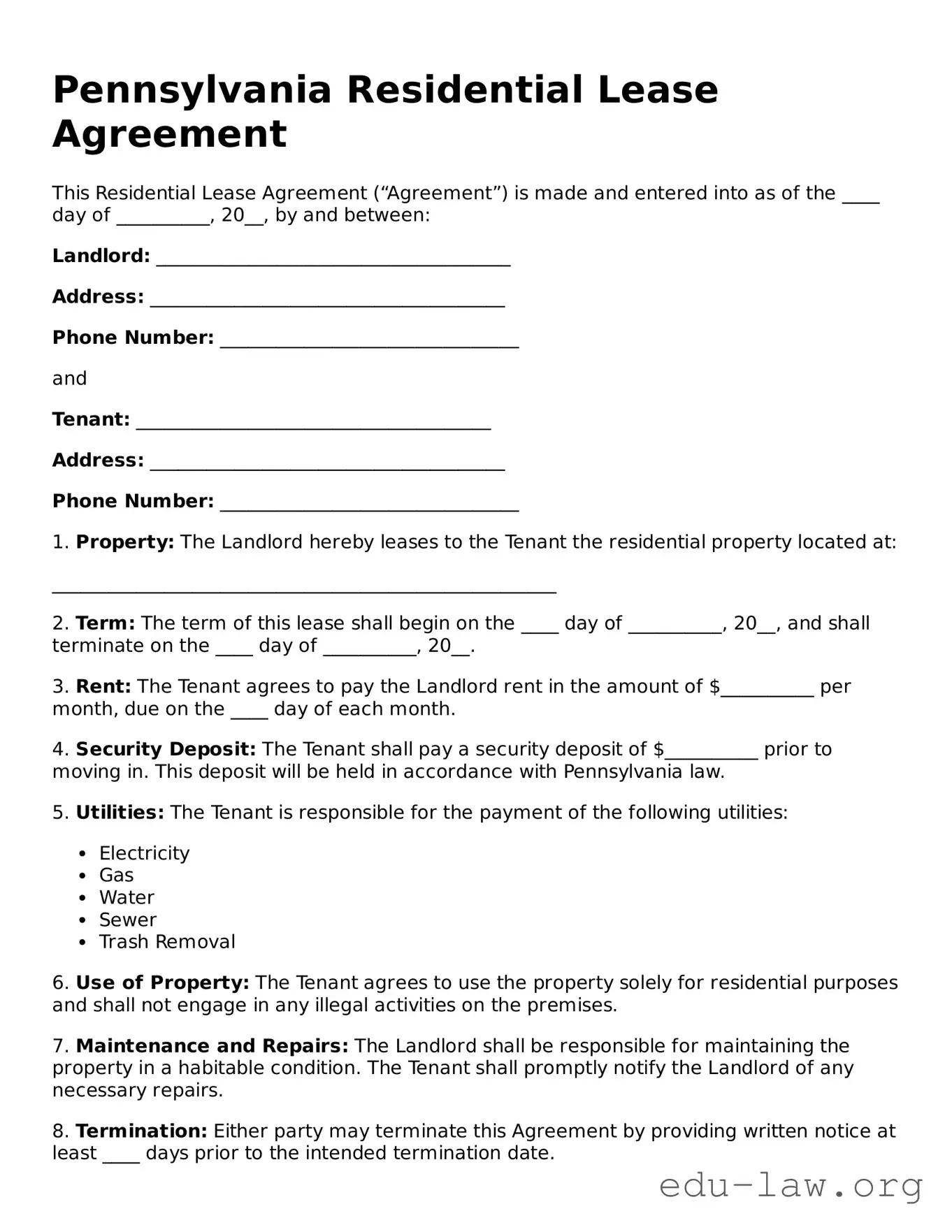
In Pennsylvania, the Residential Lease Agreement form serves as a crucial document that outlines the rights and responsibilities of both landlords and tenants. This agreement typically includes essential details such as the rental amount, payment due dates, and the duration of the lease. It also specifies the security deposit requirements and any applicable fees, ensuring that both parties are aware of their financial obligations. Additionally, the form addresses maintenance responsibilities, rules regarding pets, and the process for terminating the lease, providing clarity on what is expected from each party throughout the rental period. By establishing these parameters, the Residential Lease Agreement helps to foster a clear understanding and a smoother relationship between landlords and tenants, minimizing potential disputes and promoting a harmonious living environment.
Pennsylvania Residential Lease Agreement
This Residential Lease Agreement (“Agreement”) is made and entered into as of the ____ day of __________, 20__, by and between:
Landlord: ______________________________________
Address: ______________________________________
Phone Number: ________________________________
and
Tenant: ______________________________________
Address: ______________________________________
Phone Number: ________________________________
1. Property: The Landlord hereby leases to the Tenant the residential property located at:
______________________________________________________
2. Term: The term of this lease shall begin on the ____ day of __________, 20__, and shall terminate on the ____ day of __________, 20__.
3. Rent: The Tenant agrees to pay the Landlord rent in the amount of $__________ per month, due on the ____ day of each month.
4. Security Deposit: The Tenant shall pay a security deposit of $__________ prior to moving in. This deposit will be held in accordance with Pennsylvania law.
5. Utilities: The Tenant is responsible for the payment of the following utilities:
6. Use of Property: The Tenant agrees to use the property solely for residential purposes and shall not engage in any illegal activities on the premises.
7. Maintenance and Repairs: The Landlord shall be responsible for maintaining the property in a habitable condition. The Tenant shall promptly notify the Landlord of any necessary repairs.
8. Termination: Either party may terminate this Agreement by providing written notice at least ____ days prior to the intended termination date.
9. Governing Law: This Agreement shall be governed by the laws of the Commonwealth of Pennsylvania.
10. Signatures: By signing below, both parties agree to the terms of this Residential Lease Agreement.
_____________________________ Landlord Signature
Date: ________________________
_____________________________ Tenant Signature
Date: ________________________
| Fact Name | Description |
|---|---|
| Purpose | The Pennsylvania Residential Lease Agreement is a legal document that outlines the terms and conditions between a landlord and tenant for renting residential property. |
| Governing Law | This agreement is governed by Pennsylvania state laws, specifically the Pennsylvania Landlord-Tenant Act. |
| Duration | The lease can be for a fixed term, typically one year, or it can be a month-to-month arrangement, depending on the agreement between the parties. |
| Security Deposit | Landlords may require a security deposit, which cannot exceed two months' rent for leases longer than one year, as per Pennsylvania law. |
| Termination Notice | In Pennsylvania, tenants must provide at least 30 days' notice to terminate a month-to-month lease, while landlords must follow specific notice requirements for terminating a lease. |
Filling out the Pennsylvania Residential Lease Agreement form is an important step in establishing a rental relationship. It outlines the terms and conditions for both the landlord and tenant. Follow the steps below to complete the form accurately.
After completing the form, ensure that all parties receive a copy for their records. This will help everyone stay on the same page regarding the rental terms.
What is a Pennsylvania Residential Lease Agreement?
A Pennsylvania Residential Lease Agreement is a legal document that outlines the terms and conditions between a landlord and a tenant for renting a residential property. This agreement specifies the rights and responsibilities of both parties, including the rental amount, duration of the lease, maintenance obligations, and rules regarding the property. It serves to protect the interests of both the landlord and the tenant and provides a clear framework for the rental relationship.
What key elements should be included in the lease agreement?
Essential elements of a Pennsylvania Residential Lease Agreement include the names of the landlord and tenant, the address of the rental property, the lease term (duration), the rental amount and payment schedule, security deposit details, maintenance responsibilities, and rules regarding pets and alterations. Additionally, any specific clauses related to termination, eviction, or dispute resolution should be clearly outlined to avoid misunderstandings.
How can a lease be terminated in Pennsylvania?
In Pennsylvania, a lease can typically be terminated by either party by providing proper notice. For month-to-month leases, either party must give at least 30 days’ notice before the end of the rental period. For fixed-term leases, the lease generally ends automatically at the conclusion of the term. However, if either party wishes to terminate early, they must refer to the lease agreement for specific terms or grounds for termination, which may include non-payment of rent or violation of lease terms.
What happens if a tenant fails to pay rent?
If a tenant fails to pay rent, the landlord has the right to initiate eviction proceedings. The landlord must first provide a written notice of non-payment, giving the tenant a specified period to pay the overdue rent. If the tenant does not comply, the landlord can file for eviction in court. It is crucial for landlords to follow the legal process to avoid complications. Tenants should be aware of their rights and options, including the possibility of negotiating a payment plan or seeking legal assistance.
Can a landlord increase rent during a lease term?
Generally, a landlord cannot increase rent during a fixed-term lease unless the lease agreement specifically allows for such increases. For month-to-month leases, landlords can increase rent, but they must provide proper notice, typically 30 days in Pennsylvania. It is important for tenants to review their lease agreements carefully and understand any provisions related to rent increases to avoid surprises.
Incomplete Tenant Information: Many individuals forget to provide all necessary tenant details, such as full names and contact information. This can lead to confusion later on.
Incorrect Property Address: Entering the wrong address is a common error. Ensure that the property address is accurate to avoid legal complications.
Failure to Specify Lease Term: Some people neglect to clearly define the lease duration. Clearly stating the start and end dates is crucial for both parties.
Ignoring Security Deposit Details: It's essential to outline the amount of the security deposit and the conditions for its return. Omitting this information can lead to disputes.
Not Including Maintenance Responsibilities: Failing to specify who is responsible for maintenance and repairs can create misunderstandings. Clearly outline these responsibilities in the agreement.
Missing Signatures: Both the landlord and tenant must sign the lease. Forgetting to obtain signatures can render the agreement unenforceable.
Neglecting to Review Local Laws: Some individuals fill out the lease without understanding local rental laws. Familiarity with these regulations is important to ensure compliance.
When entering into a residential lease agreement in Pennsylvania, several other forms and documents may be helpful or necessary. These documents can clarify responsibilities and protect the rights of both landlords and tenants. Below is a list of common forms used alongside the Pennsylvania Residential Lease Agreement.
These documents can help ensure a clear understanding between landlords and tenants. Having them in place can facilitate a smoother rental experience for everyone involved.
The Pennsylvania Residential Lease Agreement shares similarities with the Commercial Lease Agreement. Both documents outline the terms and conditions under which a property is rented. They typically include details such as the duration of the lease, rental payments, and the responsibilities of both the landlord and the tenant. While the residential lease focuses on living spaces, the commercial lease pertains to business premises, but both serve to protect the rights of the parties involved and ensure clarity in the rental relationship.
Another document that resembles the Pennsylvania Residential Lease Agreement is the Month-to-Month Rental Agreement. This type of agreement allows tenants to rent a property on a monthly basis without a long-term commitment. Like the residential lease, it specifies rent amounts, payment due dates, and notice periods for termination. The key difference lies in the flexibility offered by the month-to-month arrangement, which can be advantageous for both landlords and tenants seeking short-term solutions.
The Lease Option Agreement is also similar to the Pennsylvania Residential Lease Agreement. This document provides tenants with the option to purchase the property after a specified period. It combines elements of a lease and a purchase agreement, allowing tenants to rent while having the opportunity to buy. Both agreements detail payment terms and responsibilities, but the lease option adds an additional layer of complexity by including purchase terms and conditions.
The Sublease Agreement is another document that parallels the Pennsylvania Residential Lease Agreement. This agreement allows a tenant to rent out their leased space to another individual, known as a subtenant. Like the residential lease, it outlines the terms of occupancy, rent payments, and responsibilities. However, the primary distinction is that the original tenant remains responsible to the landlord for the lease obligations, creating a unique dynamic in the landlord-tenant-subtenant relationship.
The Rental Application is closely related to the Pennsylvania Residential Lease Agreement, as it is often a precursor to entering into a lease. This document collects personal and financial information from prospective tenants to assess their suitability for renting a property. While the residential lease formalizes the rental arrangement, the rental application serves as a screening tool for landlords, ensuring they select tenants who meet their criteria.
The Eviction Notice is another document that shares some characteristics with the Pennsylvania Residential Lease Agreement. While the lease outlines the rights and responsibilities of both parties, the eviction notice serves as a formal communication from the landlord to the tenant regarding lease violations or non-payment of rent. Both documents are crucial in the landlord-tenant relationship, but they operate at different stages of the rental process, with the eviction notice often representing a breakdown in that relationship.
Lastly, the Property Management Agreement bears similarities to the Pennsylvania Residential Lease Agreement. This document outlines the responsibilities of a property manager in relation to the management of a rental property. It typically details the terms of management, including rent collection, maintenance, and tenant relations. While the residential lease focuses on the agreement between landlord and tenant, the property management agreement emphasizes the relationship between the property owner and the management company, often facilitating the execution of the residential lease.
When filling out the Pennsylvania Residential Lease Agreement form, it is important to approach the task with care and attention to detail. Here are some essential dos and don’ts to keep in mind:
Following these guidelines can help ensure that the lease agreement is completed accurately and protects the interests of all parties involved.
When it comes to the Pennsylvania Residential Lease Agreement, several misconceptions can lead to confusion for both landlords and tenants. Understanding the facts can help ensure a smoother rental experience. Here are four common misconceptions:
Understanding these misconceptions can empower both landlords and tenants to navigate their rental agreements more effectively. Clear communication and a solid understanding of the lease terms are essential for a positive rental experience.
Filling out and using the Pennsylvania Residential Lease Agreement form is an important step for both landlords and tenants. Here are some key takeaways to keep in mind:
By keeping these points in mind, you can create a clear and effective lease agreement that protects everyone's interests.