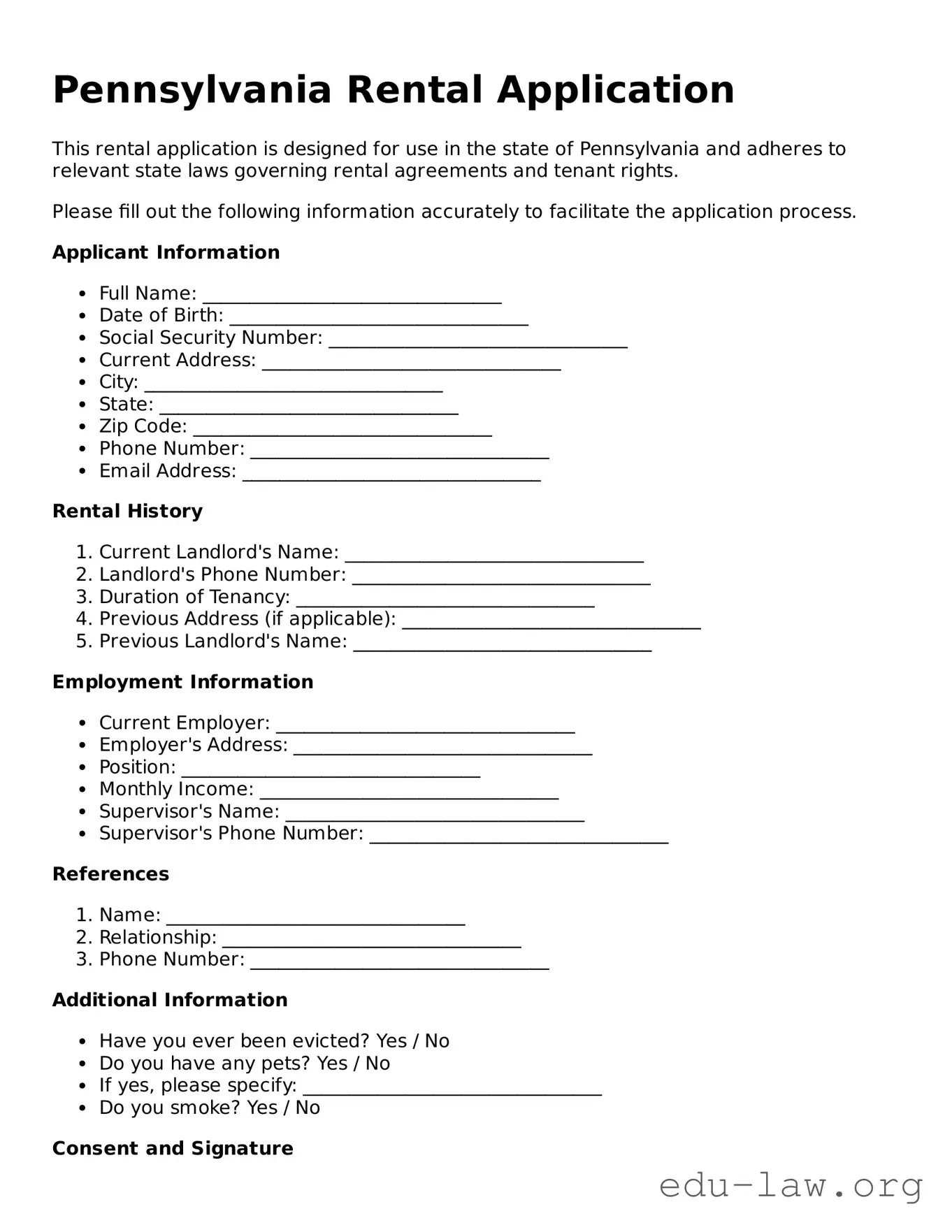
The Pennsylvania Rental Application form serves as a crucial document in the rental process, facilitating the evaluation of potential tenants by landlords and property managers. This form typically includes essential personal information, such as the applicant's name, contact details, and social security number, which helps verify identity and assess creditworthiness. Additionally, it often requires details about employment history, income, and previous rental experiences, allowing landlords to gauge financial stability and reliability. The application may also include sections for references, enabling landlords to obtain insights from previous landlords or personal contacts. Furthermore, prospective tenants may be asked to consent to background checks, which can include credit and criminal history assessments. Understanding the components of this form is vital for both landlords seeking responsible tenants and applicants aiming to present themselves favorably in a competitive housing market.
Pennsylvania Rental Application
This rental application is designed for use in the state of Pennsylvania and adheres to relevant state laws governing rental agreements and tenant rights.
Please fill out the following information accurately to facilitate the application process.
Applicant Information
Rental History
Employment Information
References
Additional Information
Consent and Signature
By signing below, you consent to a background check and verify that all information provided is accurate to the best of your knowledge.
Signature: ________________________________
Date: ________________________________
| Fact Name | Description |
|---|---|
| Purpose | The Pennsylvania Rental Application form is used by landlords to screen potential tenants. It helps gather necessary information for evaluating an applicant's suitability. |
| Required Information | The form typically requires personal details, rental history, employment information, and references. This information aids landlords in making informed decisions. |
| Governing Laws | The use of rental applications in Pennsylvania is governed by the Pennsylvania Landlord-Tenant Act. This law outlines the rights and responsibilities of both landlords and tenants. |
| Application Fee | Landlords may charge an application fee to cover the costs of background checks and processing. However, this fee must be reasonable and disclosed upfront. |
| Fair Housing Compliance | All rental applications must comply with the Fair Housing Act. This means that landlords cannot discriminate based on race, color, religion, sex, national origin, familial status, or disability. |
Completing the Pennsylvania Rental Application form is an important step in securing a rental property. After you submit the application, the landlord or property manager will review it to determine your eligibility as a tenant. This process typically involves a background check, credit check, and verification of your income and rental history.
What is a Pennsylvania Rental Application form?
The Pennsylvania Rental Application form is a document that landlords use to collect information from potential tenants. It helps landlords assess whether a prospective tenant is a good fit for their rental property. The form typically includes personal information, rental history, and financial details.
Why do I need to fill out a rental application?
Filling out a rental application is essential for the landlord to evaluate your suitability as a tenant. It provides them with a clear picture of your rental history, income, and other relevant details. This process helps ensure that both parties have a good understanding before entering into a lease agreement.
What information is typically required on the application?
A rental application usually asks for your full name, contact information, Social Security number, employment details, income, rental history, and references. Some applications may also request information about pets or vehicles.
Is there a fee to submit a rental application?
Many landlords charge a non-refundable application fee to cover the cost of background and credit checks. This fee can vary by property but is often between $25 and $50. Always check with the landlord about any fees before submitting your application.
How long does it take to process a rental application?
The processing time for a rental application can vary. Generally, it takes anywhere from a few hours to a few days. Factors such as the landlord's workload and the thoroughness of background checks can influence this timeline.
What happens if I have bad credit?
If you have bad credit, it doesn’t automatically disqualify you from renting a property. Some landlords may consider additional factors, such as your rental history or income. Providing a co-signer or offering a larger security deposit may also help improve your chances.
Can I apply for multiple rental properties at once?
Yes, you can apply for multiple rental properties simultaneously. However, keep in mind that each application may require a separate fee and you should be honest with each landlord about your applications to avoid any misunderstandings.
What should I do if I am denied a rental application?
If your application is denied, the landlord is required to provide you with a reason. You can ask for clarification and, if you believe the denial was unjust, you may want to dispute the decision or seek assistance from local housing authorities.
Can I withdraw my application after submitting it?
Yes, you can typically withdraw your application. However, it's best to inform the landlord as soon as possible. Be aware that if you have paid an application fee, it may not be refundable.
What should I do if I have questions while filling out the application?
If you have questions while completing the rental application, don't hesitate to reach out to the landlord or property manager. They are there to help and can clarify any sections you find confusing.
Incomplete Information: Many applicants fail to provide all the necessary details. This can include missing sections such as employment history or references. Ensure every part of the application is filled out to avoid delays.
Incorrect Contact Information: Providing wrong phone numbers or email addresses can lead to missed communication. Double-check that your contact details are accurate and up to date.
Failure to Disclose Criminal History: Some applicants choose not to mention past legal issues. It’s essential to be honest about any criminal background, as this can impact approval.
Neglecting to Sign the Application: A common oversight is forgetting to sign the application. Without a signature, the application may be considered invalid, so always remember to sign and date it.
Not Providing Sufficient Proof of Income: Landlords often require proof of income to ensure applicants can afford rent. Failing to attach pay stubs or bank statements can hinder your chances of approval.
When applying for a rental property in Pennsylvania, several forms and documents may accompany the Pennsylvania Rental Application form. These documents help landlords assess potential tenants and ensure a smooth leasing process. Below is a list of commonly used forms that may be required or beneficial during this process.
Having these documents prepared can streamline the application process and enhance communication between landlords and tenants. Understanding each form's purpose can lead to a more efficient rental experience.
The Pennsylvania Rental Application form shares similarities with the standard Lease Agreement. Both documents serve as essential tools in the rental process. While the rental application collects personal and financial information from potential tenants, the lease agreement outlines the terms and conditions of the rental arrangement. Both documents aim to protect the interests of landlords and tenants, ensuring clarity and mutual understanding regarding rental obligations.
Another document that resembles the Pennsylvania Rental Application is the Tenant Screening Report. This report provides landlords with detailed information about a prospective tenant's credit history, rental history, and criminal background. Like the rental application, the tenant screening report helps landlords assess the suitability of applicants. Both documents are critical in making informed decisions about potential renters.
The Rental History Verification form is also similar to the Pennsylvania Rental Application. This document is used by landlords to verify the rental history of applicants. It typically includes contact information for previous landlords and addresses where the applicant has lived. Both the rental application and rental history verification serve to confirm the reliability and responsibility of prospective tenants.
The Employment Verification form shares characteristics with the Pennsylvania Rental Application as well. This document is used to confirm a tenant's employment status and income. Landlords often request this information to ensure that applicants have the financial means to pay rent. Both documents provide vital information that helps landlords evaluate the financial stability of potential tenants.
The Guarantor Agreement is another document that parallels the Pennsylvania Rental Application. In cases where a tenant may not meet financial requirements, a guarantor can sign this agreement to assume financial responsibility. Both documents are essential in the rental process, as they establish security for landlords while allowing tenants with limited financial history to secure housing.
The Security Deposit Receipt is also comparable to the Pennsylvania Rental Application. This document outlines the amount of the security deposit collected from the tenant and the terms under which it will be returned. Both documents play a role in the financial aspects of renting, ensuring that both parties understand their responsibilities and rights regarding deposits.
Finally, the Move-In Checklist bears similarities to the Pennsylvania Rental Application. This checklist is used to document the condition of the rental property before a tenant moves in. Both documents aim to protect the interests of landlords and tenants by providing a clear record of the property's condition, thus preventing disputes over damages when the lease ends.
When filling out the Pennsylvania Rental Application form, it’s important to be thorough and honest. Here are some things you should and shouldn't do:
Understanding the Pennsylvania Rental Application form is essential for both landlords and tenants. However, several misconceptions can lead to confusion. Here are eight common misunderstandings:
Being aware of these misconceptions can help both landlords and tenants navigate the rental process more effectively.
When filling out and using the Pennsylvania Rental Application form, there are several important points to keep in mind. These key takeaways will help you navigate the process smoothly and ensure that you provide all necessary information.
By keeping these takeaways in mind, you can enhance your chances of securing a rental property in Pennsylvania. Approach the application process with confidence, knowing that thorough preparation is key to success.