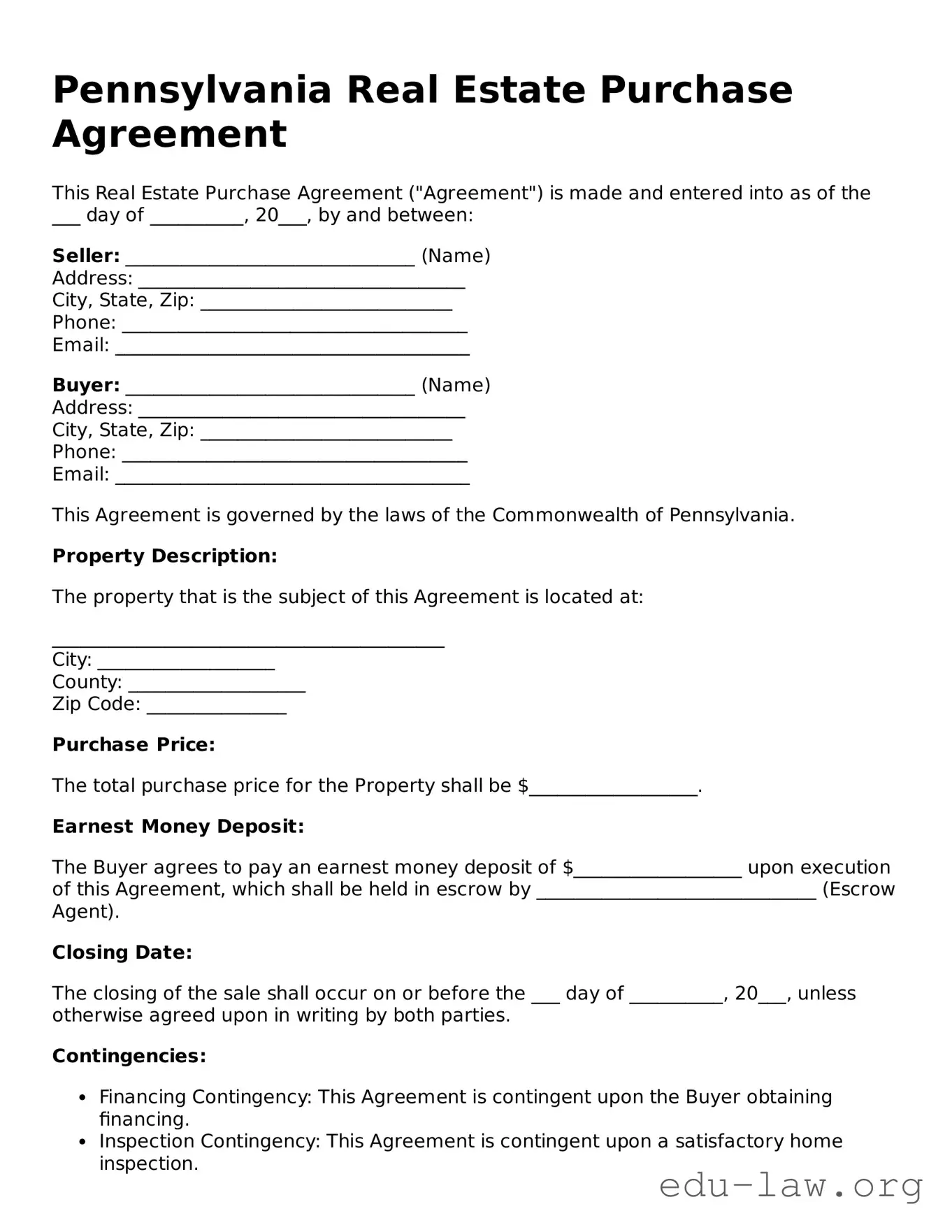
The Pennsylvania Real Estate Purchase Agreement form is a crucial document in the home buying and selling process, serving as a legally binding contract between the buyer and seller. This form outlines essential details such as the purchase price, property description, and closing date, ensuring both parties are on the same page regarding the transaction. It also includes contingencies, which are conditions that must be met for the sale to proceed, such as home inspections and financing approvals. Additionally, the agreement addresses earnest money, which is a deposit made by the buyer to demonstrate their serious intent to purchase the property. The form specifies the rights and responsibilities of both parties, providing clarity on issues like repairs, title transfer, and the handling of any disputes that may arise. By understanding the key components of the Pennsylvania Real Estate Purchase Agreement, buyers and sellers can navigate the complexities of real estate transactions with greater confidence and security.
Pennsylvania Real Estate Purchase Agreement
This Real Estate Purchase Agreement ("Agreement") is made and entered into as of the ___ day of __________, 20___, by and between:
Seller: _______________________________ (Name)
Address: ___________________________________
City, State, Zip: ___________________________
Phone: _____________________________________
Email: ______________________________________
Buyer: _______________________________ (Name)
Address: ___________________________________
City, State, Zip: ___________________________
Phone: _____________________________________
Email: ______________________________________
This Agreement is governed by the laws of the Commonwealth of Pennsylvania.
Property Description:
The property that is the subject of this Agreement is located at:
__________________________________________
City: ___________________
County: ___________________
Zip Code: _______________
Purchase Price:
The total purchase price for the Property shall be $__________________.
Earnest Money Deposit:
The Buyer agrees to pay an earnest money deposit of $__________________ upon execution of this Agreement, which shall be held in escrow by ______________________________ (Escrow Agent).
Closing Date:
The closing of the sale shall occur on or before the ___ day of __________, 20___, unless otherwise agreed upon in writing by both parties.
Contingencies:
Additional Terms:
_____________________________________________________________________________________
_____________________________________________________________________________________
_____________________________________________________________________________________
Signatures:
In witness whereof, the parties hereto have executed this Agreement as of the date first above written.
_____________________________
Seller's Signature
_____________________________
Buyer's Signature
_____________________________
Date
_____________________________
Date
| Fact Name | Description |
|---|---|
| Governing Law | The Pennsylvania Real Estate Purchase Agreement is governed by the laws of the Commonwealth of Pennsylvania. |
| Purpose | This form is used to outline the terms and conditions of a real estate transaction between a buyer and a seller. |
| Parties Involved | The agreement identifies the buyer and seller, ensuring both parties are clearly defined. |
| Property Description | A detailed description of the property being sold is included, which may consist of the address and legal description. |
| Purchase Price | The total purchase price of the property is specified, along with any deposit amounts required. |
| Contingencies | Common contingencies may include financing, inspections, and appraisal conditions that must be met for the sale to proceed. |
| Closing Date | The agreement specifies a closing date, which is the date when the ownership of the property will officially transfer. |
| Disclosure Requirements | Sellers are required to disclose known issues with the property, ensuring buyers are informed before finalizing the purchase. |
| Signatures | Both parties must sign the agreement for it to be legally binding, indicating their acceptance of the terms. |
Once you have the Pennsylvania Real Estate Purchase Agreement form ready, you will need to fill it out carefully. This document is crucial for outlining the terms of the property transaction. It is important to ensure that all information is accurate and complete to avoid any potential issues later on.
What is a Pennsylvania Real Estate Purchase Agreement?
The Pennsylvania Real Estate Purchase Agreement is a legal document that outlines the terms and conditions of a real estate transaction between a buyer and a seller. It serves as a binding contract that details the obligations of both parties, including the purchase price, property description, and any contingencies that may apply. This agreement is crucial for ensuring a clear understanding of the transaction and protecting the interests of both parties involved.
What key elements are included in the agreement?
Several essential elements are included in the Pennsylvania Real Estate Purchase Agreement. These typically encompass the names of the buyer and seller, a detailed description of the property, the agreed-upon purchase price, and the terms of payment. Additionally, the document may outline contingencies, such as inspections or financing requirements, as well as the closing date and any included fixtures or personal property.
Are there any contingencies that can be added to the agreement?
Yes, contingencies can be added to the agreement to protect the interests of the buyer or seller. Common contingencies include financing, home inspections, and the sale of the buyer's current home. These provisions allow a party to back out of the agreement without penalty if certain conditions are not met, providing a safety net during the transaction process.
How does the signing process work?
The signing process typically involves both parties reviewing the agreement thoroughly before signing. It is advisable for each party to consult with a legal professional to ensure understanding of the terms. Once both parties have signed, the agreement becomes legally binding. It is also common for real estate agents to facilitate this process, ensuring that all necessary documentation is completed correctly.
What happens if either party wants to back out of the agreement?
If either party wishes to back out of the agreement, the specific terms of the contract will dictate the process. If contingencies are included and not met, the party may have the right to withdraw without penalty. However, if there are no contingencies or if a party wishes to withdraw for reasons not covered in the agreement, legal consequences may arise. It's crucial to review the agreement carefully and consult with a legal professional if issues arise.
Is it necessary to have a real estate agent when completing this agreement?
While it is not legally required to have a real estate agent when completing a Pennsylvania Real Estate Purchase Agreement, having one can be highly beneficial. Real estate agents are knowledgeable about local market conditions and can provide valuable insights. They can also assist in negotiating terms and ensuring that the agreement complies with all legal requirements, thus simplifying the process for both parties.
Can the agreement be modified after it has been signed?
Yes, the Pennsylvania Real Estate Purchase Agreement can be modified after it has been signed, but both parties must agree to any changes. Modifications should be documented in writing and signed by both parties to ensure clarity and avoid misunderstandings. This ensures that any alterations to the original terms are legally recognized and enforceable.
What should I do if I have questions about the agreement?
If you have questions about the Pennsylvania Real Estate Purchase Agreement, it is advisable to seek guidance from a qualified legal professional or a licensed real estate agent. They can provide clarity on specific terms, address any concerns, and help you navigate the complexities of the agreement. Taking the time to understand the document will empower you to make informed decisions throughout the transaction process.
What are the potential consequences of not using a formal agreement?
Not using a formal Pennsylvania Real Estate Purchase Agreement can lead to significant risks and complications. Without a written contract, misunderstandings regarding the terms of the sale may arise, potentially resulting in disputes or legal issues. Additionally, the absence of a formal agreement may leave both parties vulnerable to financial loss. It is always advisable to use a written agreement to protect your interests and ensure a smooth transaction.
Not providing accurate property details. It’s crucial to include the correct address, legal description, and any relevant property identifiers. Missing or incorrect information can lead to disputes.
Failing to specify the purchase price. This is one of the most important elements of the agreement. Without a clearly defined price, the contract may be considered void.
Ignoring contingencies. Buyers often overlook contingencies related to financing, inspections, or the sale of another property. These protect the buyer’s interests and should be clearly outlined.
Not including earnest money details. The agreement should specify the amount of earnest money and how it will be handled. This shows the seller that the buyer is serious.
Overlooking the closing date. It’s important to agree on a closing date that works for both parties. An unclear timeline can lead to frustration and delays.
Neglecting to address repairs or improvements. Buyers should specify who is responsible for repairs before closing. This can prevent misunderstandings later on.
Leaving out important disclosures. Sellers must disclose known issues with the property. Buyers should ensure these disclosures are included to avoid future surprises.
Not reviewing the agreement thoroughly. It’s essential to read through the entire document before signing. Mistakes or unclear terms can lead to serious issues down the line.
When engaging in a real estate transaction in Pennsylvania, several important documents accompany the Real Estate Purchase Agreement. Each of these forms serves a specific purpose and helps ensure that both buyers and sellers are protected and informed throughout the process. Below is a list of commonly used forms and documents that you may encounter.
Understanding these documents can greatly assist in navigating the complexities of a real estate transaction. Each form plays a vital role in ensuring that all parties are well-informed and that the process runs smoothly.
The Pennsylvania Real Estate Purchase Agreement is similar to the Residential Purchase Agreement commonly used in many states. Both documents outline the terms of the sale, including the purchase price, contingencies, and closing date. They serve as a binding contract between the buyer and seller, ensuring that both parties understand their obligations and rights throughout the transaction process.
Another document that shares similarities is the Commercial Real Estate Purchase Agreement. Like the Pennsylvania version, this document details the terms of sale but focuses on commercial properties. It includes specific clauses related to zoning, environmental assessments, and tenant rights, which are critical for commercial transactions.
The Option to Purchase Agreement also resembles the Pennsylvania Real Estate Purchase Agreement. This document allows a buyer to secure the right to purchase a property at a later date, often for a predetermined price. It provides flexibility for buyers while ensuring sellers have a commitment from interested parties.
The Lease Purchase Agreement is another similar document. This agreement combines elements of leasing and purchasing, allowing tenants to rent a property with the option to buy it later. It includes terms for both the lease and the purchase, ensuring clarity for both the landlord and tenant.
The Buyer’s Agency Agreement is akin to the Pennsylvania Real Estate Purchase Agreement in that it establishes a relationship between the buyer and their real estate agent. This document outlines the agent's responsibilities, compensation, and the duration of the agreement, ensuring that buyers have professional representation throughout the purchasing process.
The Seller’s Disclosure Statement is also comparable. While it serves a different purpose, it is often used in conjunction with the purchase agreement. This document requires sellers to disclose known issues with the property, providing transparency and protecting buyers from unforeseen problems after the sale.
Lastly, the Addendum to Purchase Agreement can be considered similar as well. This document is used to modify or add terms to the original purchase agreement. It allows both parties to address specific concerns or conditions that may arise during negotiations, ensuring that the final agreement accurately reflects their intentions.
When filling out the Pennsylvania Real Estate Purchase Agreement form, it is crucial to approach the task with care and attention to detail. Below are five important dos and don'ts to consider:
By following these guidelines, you can help ensure a smoother process in your real estate transaction.
Understanding the Pennsylvania Real Estate Purchase Agreement form is crucial for anyone involved in buying or selling property in the state. However, several misconceptions can lead to confusion. Here are eight common misunderstandings:
Many people think the Purchase Agreement is a straightforward form. In reality, it’s a comprehensive legal document that outlines the terms of the sale, including price, contingencies, and timelines.
Some believe that a handshake or verbal agreement suffices. However, without a written agreement, you risk misunderstandings and potential legal issues.
While many agents may use similar templates, each agent or brokerage might have their own version of the Purchase Agreement, tailored to specific needs or circumstances.
People often think that a signed Purchase Agreement is set in stone. However, amendments can be made if both parties agree to the changes, and they should be documented in writing.
This is a common myth. The Purchase Agreement is designed to protect both parties by clearly outlining their rights and obligations during the transaction.
Some confuse the Purchase Agreement with a lease. A Purchase Agreement is for buying property, while a lease is for renting it. They serve very different purposes.
While not legally required, having a lawyer review the Purchase Agreement can provide peace of mind and ensure that your interests are protected.
This is misleading. The Pennsylvania Real Estate Purchase Agreement can be used for both residential and commercial properties, making it a versatile tool in real estate transactions.
By dispelling these misconceptions, buyers and sellers can approach the Pennsylvania Real Estate Purchase Agreement with a clearer understanding, leading to smoother transactions.
When filling out and using the Pennsylvania Real Estate Purchase Agreement form, there are several important points to consider. Understanding these key takeaways can help ensure a smoother transaction process.
By following these key points, individuals can navigate the Pennsylvania Real Estate Purchase Agreement more effectively, leading to a more successful transaction.