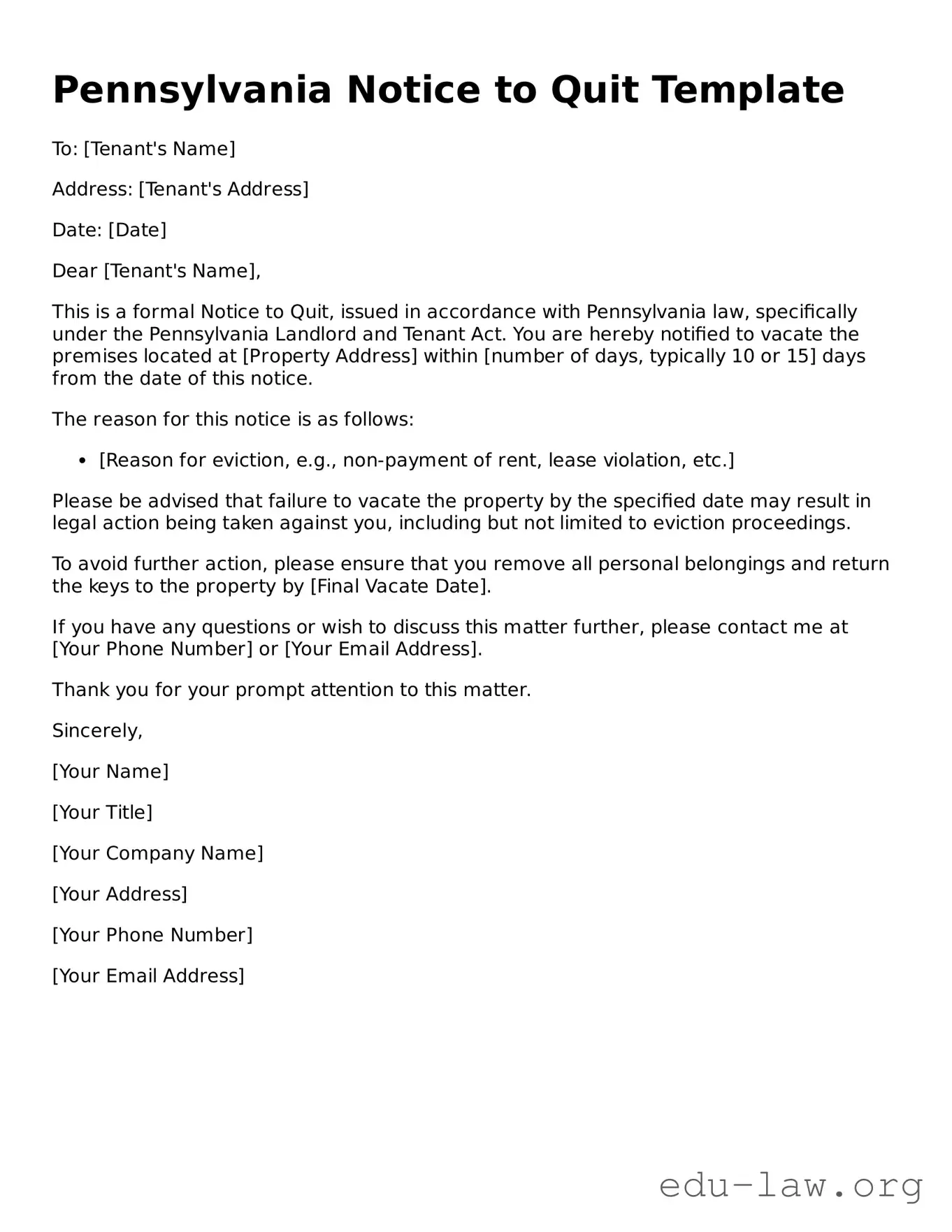
The Pennsylvania Notice to Quit form serves as a critical tool in the landlord-tenant relationship, particularly when it comes to addressing lease violations or the termination of rental agreements. This document provides landlords with a formal means to notify tenants that they must vacate the premises within a specified timeframe. Typically, this notice is issued when a tenant has failed to pay rent or has otherwise breached the terms of the lease. It is important to note that the Notice to Quit must include specific details, such as the reason for the notice, the date by which the tenant must leave, and any relevant lease provisions. Understanding the nuances of this form can help both landlords and tenants navigate the often complex process of eviction while ensuring that their rights and responsibilities are upheld. By adhering to the proper procedures outlined in the Notice to Quit, landlords can mitigate potential disputes, while tenants can better comprehend their options and obligations in response to the notice.
Pennsylvania Notice to Quit Template
To: [Tenant's Name]
Address: [Tenant's Address]
Date: [Date]
Dear [Tenant's Name],
This is a formal Notice to Quit, issued in accordance with Pennsylvania law, specifically under the Pennsylvania Landlord and Tenant Act. You are hereby notified to vacate the premises located at [Property Address] within [number of days, typically 10 or 15] days from the date of this notice.
The reason for this notice is as follows:
Please be advised that failure to vacate the property by the specified date may result in legal action being taken against you, including but not limited to eviction proceedings.
To avoid further action, please ensure that you remove all personal belongings and return the keys to the property by [Final Vacate Date].
If you have any questions or wish to discuss this matter further, please contact me at [Your Phone Number] or [Your Email Address].
Thank you for your prompt attention to this matter.
Sincerely,
[Your Name]
[Your Title]
[Your Company Name]
[Your Address]
[Your Phone Number]
[Your Email Address]
| Fact Name | Description |
|---|---|
| Purpose | The Pennsylvania Notice to Quit form is used by landlords to formally notify tenants to vacate the rental property. |
| Governing Law | This form is governed by the Pennsylvania Landlord-Tenant Act. |
| Delivery Method | The notice can be delivered in person, via certified mail, or posted on the property. |
| Notice Period | Typically, a 10-day notice is required for non-payment of rent; other violations may require different notice periods. |
| Tenant Rights | Tenants have the right to respond to the notice and may contest it in court if they believe it is unjust. |
| Form Requirements | The notice must include specific information, such as the reason for termination and the date by which the tenant must vacate. |
| Legal Consequences | Failure to comply with the notice may lead to eviction proceedings in court. |
Once you have the Pennsylvania Notice to Quit form, it's important to complete it accurately and promptly. This form is a crucial step in the eviction process, so ensure all information is correct to avoid delays.
After filling out the form, it must be delivered to the tenant. This can be done through personal delivery, certified mail, or by posting it on the property. Ensure that you keep a record of how and when the notice was served, as this may be important later in the eviction process.
What is a Pennsylvania Notice to Quit form?
The Pennsylvania Notice to Quit form is a legal document that a landlord uses to inform a tenant that they must vacate the rental property. This notice is typically issued when a tenant has violated the terms of their lease or rental agreement, such as failing to pay rent or causing damage to the property. The form outlines the reasons for the eviction and provides the tenant with a specific timeframe to leave the premises. It is important for landlords to follow the proper legal procedures when issuing this notice to ensure compliance with state laws.
How long does a tenant have to respond to a Notice to Quit in Pennsylvania?
The timeframe for a tenant to respond to a Notice to Quit in Pennsylvania can vary based on the reason for the notice. Generally, if the notice is for non-payment of rent, the tenant may have 10 days to pay the overdue rent or vacate the property. For other lease violations, the notice period may be longer, often ranging from 15 to 30 days. It is crucial for tenants to read the notice carefully and understand the specific timeline provided, as failing to respond appropriately can lead to eviction proceedings.
What should a tenant do if they receive a Notice to Quit?
If a tenant receives a Notice to Quit, they should take it seriously and review the document carefully. First, verify the claims made in the notice. If the notice is for unpaid rent, the tenant should determine whether they can pay the overdue amount within the specified timeframe. If the tenant believes the notice is unjustified, they may want to seek legal advice to understand their rights and options. It is also advisable to communicate with the landlord, as this may lead to a resolution without further legal action.
Can a tenant contest a Notice to Quit?
Incomplete Information: One common mistake is failing to provide all necessary details. This includes not filling out the tenant's name, the address of the rental property, or the landlord's information. Every piece of information is crucial for the form to be valid.
Incorrect Dates: Another frequent error involves the dates. Landlords must specify the date by which the tenant must vacate the property. If this date is incorrect or unclear, it can lead to confusion and potentially invalidate the notice.
Not Following Legal Requirements: Each state has specific rules regarding notices to quit. Failing to adhere to Pennsylvania's regulations, such as the required notice period, can render the notice ineffective. It is essential to understand these legal standards.
Improper Delivery: How the notice is delivered is just as important as what it contains. Many people overlook the requirement to deliver the notice in a manner that complies with state law. Whether it’s by mail or in person, the method must be appropriate to ensure the tenant receives it.
When dealing with tenant issues in Pennsylvania, the Notice to Quit form is just one part of the process. Several other forms and documents may be necessary to ensure that all legal requirements are met. Below is a list of commonly used documents that often accompany the Notice to Quit.
Understanding these documents can help landlords and tenants navigate the rental process more effectively. Each form serves a specific purpose and contributes to the overall legal framework governing landlord-tenant relationships in Pennsylvania.
The Pennsylvania Notice to Quit form is similar to the Eviction Notice used in many states. Both documents serve as formal notifications to tenants regarding their lease violations or the landlord's intention to terminate the tenancy. The Eviction Notice typically outlines the reasons for eviction and the time frame within which the tenant must vacate the premises, mirroring the function of the Notice to Quit in Pennsylvania.
Another comparable document is the Lease Termination Letter. This letter is often used by landlords to inform tenants that their lease will not be renewed. Like the Notice to Quit, it provides a specified timeframe for the tenant to vacate the property. Both documents aim to ensure that tenants are aware of their obligations and the need to leave the rental unit by a certain date.
The Three-Day Notice to Pay Rent or Quit is a common document found in various jurisdictions. This notice is issued when a tenant has failed to pay rent on time. It demands payment within three days or the tenant must vacate the property. The urgency of this notice aligns with the intent of the Pennsylvania Notice to Quit, which also seeks to prompt tenants to address issues promptly.
The 30-Day Notice to Quit is another document that shares similarities with the Pennsylvania Notice to Quit. This notice is typically given to month-to-month tenants, allowing them 30 days to vacate the rental property. Both documents serve to formally communicate the landlord's decision to terminate the tenancy, ensuring that tenants have a clear understanding of their timeline for moving out.
The Cure or Quit Notice is used in some states when a tenant violates specific lease terms. This notice informs the tenant of the violation and gives them a chance to rectify the issue or face eviction. Much like the Pennsylvania Notice to Quit, it emphasizes the importance of compliance with lease terms and outlines the consequences of non-compliance.
The Notice of Non-Renewal is similar in function to the Pennsylvania Notice to Quit. It is issued to inform tenants that their lease will not be renewed at the end of the current term. This document provides tenants with a clear timeframe to make arrangements for moving, paralleling the intent of the Notice to Quit to facilitate an orderly transition.
The Demand for Possession is often used by landlords seeking to regain possession of their property. This document notifies tenants that they must vacate the premises due to lease violations or non-payment of rent. The Demand for Possession shares the same goal as the Pennsylvania Notice to Quit: to prompt tenants to leave the property in a timely manner.
The Notice of Intent to Evict is another document that bears similarity to the Pennsylvania Notice to Quit. This notice informs tenants of the landlord's intention to initiate eviction proceedings if certain conditions are not met. Both documents serve as a warning and provide tenants with an opportunity to address the issues before legal action is taken.
Lastly, the Notice of Default is used primarily in mortgage situations but has parallels in landlord-tenant relationships. This notice informs tenants or homeowners of their failure to meet obligations, such as payment. Like the Pennsylvania Notice to Quit, it serves to alert the recipient of potential consequences if the issue is not resolved promptly.
When filling out the Pennsylvania Notice to Quit form, it’s important to be careful and thorough. Here’s a list of things you should and shouldn’t do:
Misconceptions about the Pennsylvania Notice to Quit form can lead to confusion for both landlords and tenants. Here are ten common misunderstandings:
When dealing with the Pennsylvania Notice to Quit form, understanding its purpose and proper use is essential for both landlords and tenants. Here are some key takeaways:
Understanding these key points can help both landlords and tenants navigate the complexities of rental agreements and eviction processes in Pennsylvania.