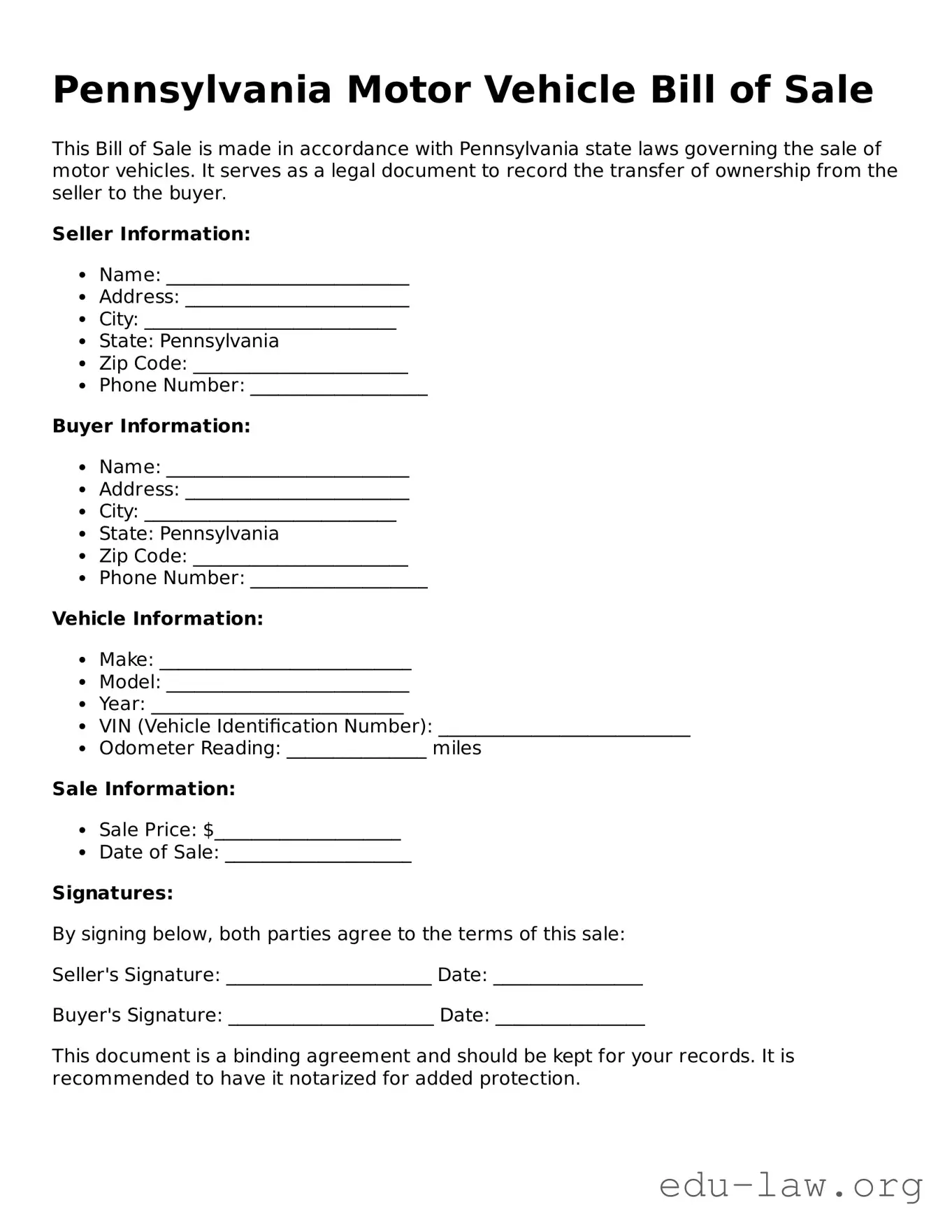
When it comes to buying or selling a vehicle in Pennsylvania, the Motor Vehicle Bill of Sale form plays a crucial role in the transaction process. This document serves as a written record of the sale, outlining essential details such as the vehicle's make, model, year, and Vehicle Identification Number (VIN). It also includes the names and addresses of both the buyer and seller, ensuring that both parties are clearly identified. Additionally, the form specifies the sale price and the date of the transaction, providing a transparent account of the exchange. Notably, this form is not only important for personal records but also serves as a necessary document for the buyer to register the vehicle with the Pennsylvania Department of Transportation. Understanding the significance of the Motor Vehicle Bill of Sale is vital for anyone involved in a vehicle transaction, as it helps protect the rights of both parties and facilitates a smooth transfer of ownership.
Pennsylvania Motor Vehicle Bill of Sale
This Bill of Sale is made in accordance with Pennsylvania state laws governing the sale of motor vehicles. It serves as a legal document to record the transfer of ownership from the seller to the buyer.
Seller Information:
Buyer Information:
Vehicle Information:
Sale Information:
Signatures:
By signing below, both parties agree to the terms of this sale:
Seller's Signature: ______________________ Date: ________________
Buyer's Signature: ______________________ Date: ________________
This document is a binding agreement and should be kept for your records. It is recommended to have it notarized for added protection.
| Fact Name | Description |
|---|---|
| Purpose | The Pennsylvania Motor Vehicle Bill of Sale form is used to document the sale or transfer of ownership of a motor vehicle. |
| Governing Law | This form is governed by the Pennsylvania Vehicle Code, specifically Title 75 of the Pennsylvania Consolidated Statutes. |
| Required Information | The form requires details such as the buyer's and seller's names, addresses, and signatures, along with the vehicle's make, model, year, and VIN. |
| Notarization | While notarization is not mandatory, it is recommended for added legal protection and verification of signatures. |
| Tax Implications | The sale may be subject to sales tax, which is typically calculated based on the purchase price of the vehicle. |
| Record Keeping | Both the buyer and seller should retain a copy of the completed Bill of Sale for their records. |
| Submission | The completed form is not submitted to any government agency but may be required for vehicle registration or title transfer. |
| Availability | The form can be obtained online from the Pennsylvania Department of Transportation or through various legal stationery suppliers. |
Filling out the Pennsylvania Motor Vehicle Bill of Sale form is an important step in transferring ownership of a vehicle. After completing the form, ensure both parties keep a copy for their records. This will help in future reference and any potential disputes.
What is a Pennsylvania Motor Vehicle Bill of Sale?
A Pennsylvania Motor Vehicle Bill of Sale is a legal document that serves as proof of the transfer of ownership of a vehicle from one party to another. It includes essential details such as the vehicle’s make, model, year, Vehicle Identification Number (VIN), and the sale price. This document is particularly important for both buyers and sellers, as it protects their interests and helps establish a clear record of the transaction.
Do I need a Bill of Sale to register my vehicle in Pennsylvania?
Yes, a Bill of Sale is often required when registering a vehicle in Pennsylvania. When you purchase a vehicle, the Bill of Sale acts as evidence of the transaction and is necessary for the registration process. It helps the Pennsylvania Department of Transportation (PennDOT) verify the sale and establish the new owner’s rights to the vehicle. While it may not be mandatory in all cases, having one is highly recommended to avoid any complications during registration.
What information should be included in the Bill of Sale?
When creating a Bill of Sale, ensure it includes the following key information: the names and addresses of both the buyer and the seller, the vehicle's details (make, model, year, VIN), the sale price, and the date of the transaction. It’s also a good idea to include a statement indicating that the vehicle is being sold "as-is," meaning the buyer accepts the vehicle in its current condition without any warranties from the seller. This clarity helps prevent misunderstandings later on.
Is the Bill of Sale required to be notarized in Pennsylvania?
In Pennsylvania, notarization of the Bill of Sale is not a strict requirement. However, having it notarized can add an extra layer of authenticity and protection for both parties involved. If either the buyer or seller is concerned about potential disputes in the future, notarizing the document can provide peace of mind. Always check with local regulations or consult with a professional if you have specific concerns about your transaction.
Incorrect Vehicle Information: Failing to provide the correct make, model, year, and Vehicle Identification Number (VIN) can lead to complications during registration.
Missing Signatures: Both the seller and buyer must sign the form. Omitting one or both signatures renders the document invalid.
Inaccurate Purchase Price: Listing the wrong purchase price can create issues with tax assessments and future transactions.
Omitting Date of Sale: Not including the date of sale can cause confusion regarding the transfer of ownership and responsibilities.
Failure to Provide Odometer Reading: Not recording the odometer reading at the time of sale can lead to disputes about the vehicle's mileage.
Neglecting to Keep a Copy: Sellers should always retain a copy of the completed bill of sale for their records. Not doing so can complicate future claims or disputes.
Not Notarizing When Required: Some transactions may require notarization. Failing to have the document notarized can invalidate the sale in certain situations.
The Pennsylvania Motor Vehicle Bill of Sale form is an essential document for transferring ownership of a vehicle. When completing this process, several other forms and documents may also be required or beneficial. Below is a list of commonly used documents in conjunction with the Bill of Sale.
These documents play a crucial role in ensuring a smooth transaction when buying or selling a vehicle in Pennsylvania. Having them ready can help avoid potential issues during the ownership transfer process.
The Pennsylvania Motor Vehicle Bill of Sale form is similar to the Vehicle Title Transfer form. Both documents serve to legally transfer ownership of a vehicle from one party to another. The Vehicle Title Transfer form typically includes details such as the vehicle identification number (VIN), the names and addresses of both the seller and buyer, and the sale price. This form is often required by the state to update the vehicle's registration records.
Another document that is comparable is the Odometer Disclosure Statement. This form is used to record the mileage of a vehicle at the time of sale. It is often included with the Bill of Sale to ensure transparency regarding the vehicle's condition. Both documents help protect buyers from potential fraud by providing a clear record of the vehicle's history and mileage.
The Affidavit of Vehicle Ownership is also similar. This document is used when a seller cannot provide a title for the vehicle. The affidavit allows the seller to declare ownership and transfer it to the buyer legally. Like the Bill of Sale, it includes essential information about the vehicle and the parties involved, ensuring that the transfer is documented properly.
The Vehicle Registration Application is another related document. When a buyer purchases a vehicle, they must register it with the state. The registration application often requires information found in the Bill of Sale, such as the sale price and the seller's details. This process ensures that the vehicle is legally recognized under the new owner's name.
The Release of Liability form is also noteworthy. This document protects the seller by notifying the state that they are no longer responsible for the vehicle once it has been sold. It is often submitted alongside the Bill of Sale to confirm the transfer of ownership and to release the seller from any future liabilities associated with the vehicle.
The Purchase Agreement is similar in that it outlines the terms of the sale. This document may include details such as payment methods, warranties, and any conditions of the sale. While the Bill of Sale serves primarily as proof of the transaction, the Purchase Agreement can provide more comprehensive information regarding the sale terms.
Lastly, the Application for Duplicate Title is relevant. If a seller loses the vehicle title before the sale, they may need to apply for a duplicate title. This application ensures that the seller can still legally transfer ownership to the buyer. The duplicate title can then be used alongside the Bill of Sale to complete the transaction legally.
When filling out the Pennsylvania Motor Vehicle Bill of Sale form, it is essential to approach the task with care. Below are important dos and don’ts to ensure the process goes smoothly.
By following these guidelines, you can ensure that your Bill of Sale is valid and serves its purpose effectively.
When it comes to the Pennsylvania Motor Vehicle Bill of Sale form, there are several misconceptions that can lead to confusion. Understanding the truth behind these common beliefs can help ensure a smoother transaction when buying or selling a vehicle. Here are six misconceptions:
By clearing up these misconceptions, both buyers and sellers can approach their vehicle transactions with confidence and clarity. Always ensure that all necessary paperwork is completed accurately to protect your interests.
The Pennsylvania Motor Vehicle Bill of Sale form is an essential document for anyone buying or selling a vehicle in the state. Here are key takeaways regarding its use: