In Pennsylvania, the Living Will form serves as an important legal document that outlines an individual's preferences regarding medical treatment in the event they become unable to communicate their wishes. This form primarily addresses situations where a person is facing a terminal illness or is in a state of irreversible unconsciousness. By completing a Living Will, individuals can specify their desires concerning life-sustaining treatments, such as resuscitation efforts, mechanical ventilation, and feeding tubes. It allows them to express their values and beliefs about end-of-life care, ensuring that their choices are respected even when they cannot advocate for themselves. Moreover, the form can provide guidance to family members and healthcare providers, helping to alleviate the emotional burden of decision-making during difficult times. Understanding the nuances of the Living Will form can empower individuals to take control of their healthcare decisions and communicate their wishes clearly, thus fostering peace of mind for both themselves and their loved ones.
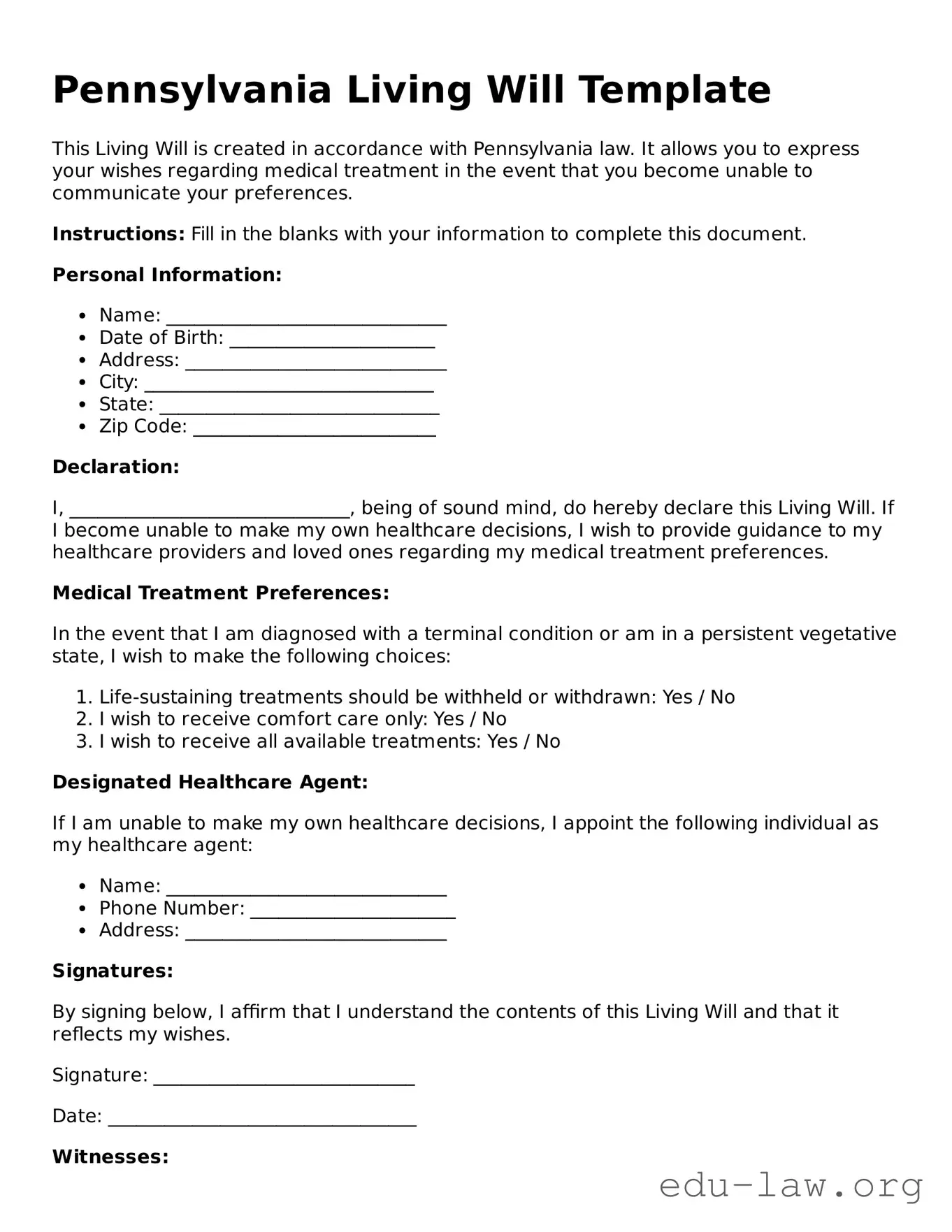
Pennsylvania Living Will Template
This Living Will is created in accordance with Pennsylvania law. It allows you to express your wishes regarding medical treatment in the event that you become unable to communicate your preferences.
Instructions: Fill in the blanks with your information to complete this document.
Personal Information:
Declaration:
I, ______________________________, being of sound mind, do hereby declare this Living Will. If I become unable to make my own healthcare decisions, I wish to provide guidance to my healthcare providers and loved ones regarding my medical treatment preferences.
Medical Treatment Preferences:
In the event that I am diagnosed with a terminal condition or am in a persistent vegetative state, I wish to make the following choices:
Designated Healthcare Agent:
If I am unable to make my own healthcare decisions, I appoint the following individual as my healthcare agent:
Signatures:
By signing below, I affirm that I understand the contents of this Living Will and that it reflects my wishes.
Signature: ____________________________
Date: _________________________________
Witnesses:
This Living Will must be witnessed by two adults who are not related to you and who do not stand to inherit from you.
This document is intended to express my wishes regarding medical treatment and should be honored by all healthcare providers.
| Fact Name | Description |
|---|---|
| Definition | A Pennsylvania Living Will is a legal document that allows individuals to outline their preferences for medical treatment in case they become unable to communicate their wishes. |
| Governing Law | The Pennsylvania Living Will is governed by the Pennsylvania Consolidated Statutes, Title 20, Chapter 54. |
| Requirements | To be valid, the form must be signed by the individual and witnessed by two adults who are not related to the individual or beneficiaries of their estate. |
| Effective Date | The Living Will takes effect when a physician determines that the individual is unable to make their own medical decisions. |
| Revocation | Individuals can revoke their Living Will at any time, as long as they are mentally competent to do so. |
| Additional Documents | It is often recommended to pair a Living Will with a Durable Power of Attorney for Healthcare to ensure comprehensive medical decision-making preferences are documented. |
Filling out the Pennsylvania Living Will form is a straightforward process. Once completed, this document will guide your healthcare providers and loved ones in making decisions about your medical care if you become unable to communicate your wishes.
What is a Pennsylvania Living Will?
A Pennsylvania Living Will is a legal document that allows individuals to outline their preferences regarding medical treatment in the event that they become unable to communicate their wishes. This document specifically addresses end-of-life care and decisions about life-sustaining treatments, providing guidance to healthcare providers and loved ones during critical situations.
Who should create a Living Will in Pennsylvania?
Any adult who wishes to ensure their medical treatment preferences are respected in the event of incapacitation should consider creating a Living Will. This includes individuals with specific health concerns, those undergoing major medical procedures, or anyone wanting to express their wishes regarding end-of-life care.
What should be included in a Living Will?
A Living Will should include clear instructions regarding medical treatments you do or do not want in certain situations. Common topics covered include the use of resuscitation, mechanical ventilation, tube feeding, and pain management. It is essential to be specific about your wishes to avoid confusion later.
How do I create a Living Will in Pennsylvania?
To create a Living Will in Pennsylvania, you can either use a standard form or draft your own document. It must be signed by you and witnessed by two adults who are not related to you or beneficiaries of your estate. Alternatively, you may choose to have the document notarized. It is advisable to keep copies of the signed document in accessible locations and share them with your healthcare provider and family members.
Is a Living Will legally binding in Pennsylvania?
Yes, a Living Will is legally binding in Pennsylvania as long as it meets the state's requirements for execution. Healthcare providers are obligated to follow the directives outlined in the Living Will, provided it is valid and applicable to the situation at hand.
Can I change or revoke my Living Will?
You have the right to change or revoke your Living Will at any time as long as you are competent to do so. To revoke the document, you can destroy it or create a new Living Will that explicitly states your updated wishes. It is important to inform your healthcare provider and family members about any changes to ensure that your current wishes are known.
What is the difference between a Living Will and a Durable Power of Attorney for Healthcare?
A Living Will focuses specifically on your wishes regarding medical treatment in end-of-life situations. In contrast, a Durable Power of Attorney for Healthcare allows you to appoint someone to make medical decisions on your behalf if you are unable to do so. Both documents can work together to ensure your healthcare preferences are honored.
Do I need a lawyer to create a Living Will in Pennsylvania?
While it is not legally required to have a lawyer to create a Living Will in Pennsylvania, consulting with one can provide valuable guidance. An attorney can help ensure that your document complies with state laws and accurately reflects your wishes, minimizing the risk of disputes or misunderstandings in the future.
Where should I keep my Living Will?
It is advisable to keep your Living Will in a safe but accessible location. Consider placing copies in your medical records, giving one to your primary care physician, and sharing copies with family members or trusted friends. Informing your loved ones about the document's existence and its location can help ensure that your wishes are followed when necessary.
Not understanding the purpose of a Living Will: Many individuals fill out the form without fully grasping that it is designed to communicate their healthcare preferences in the event they cannot speak for themselves. This can lead to choices that do not truly reflect their wishes.
Failing to discuss wishes with family: A common mistake is neglecting to have open conversations with family members about healthcare preferences. These discussions can help ensure that loved ones understand and respect the individual's choices.
Inadequate witness signatures: The Pennsylvania Living Will requires signatures from two witnesses. Some people forget this crucial step or choose witnesses who do not meet the legal requirements, which can invalidate the document.
Leaving out specific instructions: Vague language can lead to confusion. It’s essential to clearly articulate preferences regarding life-sustaining treatments, resuscitation efforts, and other medical interventions.
Not updating the document: Life circumstances change. Failing to review and update the Living Will regularly can result in outdated instructions that no longer reflect current wishes.
Ignoring state laws: Each state has its own regulations regarding Living Wills. Some individuals fill out the form without verifying that it complies with Pennsylvania laws, which can lead to legal complications.
Overlooking the importance of a healthcare proxy: While a Living Will outlines treatment preferences, it’s also wise to appoint a healthcare proxy. This person can make decisions on behalf of the individual if they are unable to do so.
Not keeping copies accessible: After completing the Living Will, it’s crucial to store copies in accessible places. If the document cannot be found when needed, it may not serve its intended purpose.
Assuming the form is permanent: Some individuals mistakenly believe that once the Living Will is signed, it cannot be changed. In reality, it can be revoked or modified at any time, as long as the person is competent.
Neglecting to communicate with healthcare providers: Lastly, failing to share the Living Will with doctors and healthcare facilities can lead to misunderstandings during critical moments. It is vital to ensure that medical professionals are aware of the individual’s wishes.
When preparing a Pennsylvania Living Will, there are several other forms and documents that may be beneficial to consider. These documents can help ensure that your healthcare wishes are honored and that your loved ones are informed of your preferences. Here’s a list of some important forms to think about:
Considering these documents alongside your Pennsylvania Living Will can provide clarity and peace of mind for you and your loved ones. It’s important to have a comprehensive plan in place to ensure your healthcare wishes are honored when you cannot express them yourself.
The Pennsylvania Living Will form shares similarities with the Advance Healthcare Directive. Both documents serve to communicate an individual’s healthcare preferences in situations where they cannot express their wishes. An Advance Healthcare Directive often combines a living will with a healthcare power of attorney, allowing individuals to appoint someone to make medical decisions on their behalf. This dual approach provides a comprehensive framework for ensuring that medical care aligns with personal values and desires, particularly in end-of-life scenarios.
Another document akin to the Pennsylvania Living Will is the Durable Power of Attorney for Healthcare. This legal instrument designates a trusted person to make medical decisions for someone who is incapacitated. While the Living Will specifies the types of treatments one does or does not want, the Durable Power of Attorney allows the appointed agent to interpret and apply those wishes in real-time. Together, they create a robust system for managing healthcare decisions, ensuring that an individual’s preferences are honored even when they cannot advocate for themselves.
The Do Not Resuscitate (DNR) order also bears resemblance to the Living Will. A DNR order specifically instructs healthcare providers not to perform CPR in the event of cardiac arrest. While the Living Will encompasses a broader range of medical treatment preferences, the DNR focuses on a critical aspect of end-of-life care. Both documents aim to respect the individual’s wishes regarding life-sustaining measures, providing clarity to medical professionals and family members during difficult moments.
Lastly, the Physician Orders for Life-Sustaining Treatment (POLST) form is similar to the Living Will in that it outlines specific medical interventions an individual desires or wishes to avoid. Unlike a Living Will, which is often more general, the POLST form translates an individual’s preferences into actionable medical orders. It is designed for patients with serious illnesses or advanced age, ensuring that their treatment aligns closely with their goals of care. Both documents are essential tools in the conversation about end-of-life decisions, providing guidance to healthcare providers and loved ones alike.
When filling out the Pennsylvania Living Will form, it’s essential to approach the task with care and consideration. Here are four important do's and don'ts to keep in mind:
By following these guidelines, you can ensure that your Living Will accurately reflects your desires and is legally recognized. Taking these steps can provide peace of mind for you and your loved ones during difficult times.
Living wills are essential documents that allow individuals to express their wishes regarding medical treatment in the event they become unable to communicate those wishes themselves. However, there are several misconceptions surrounding the Pennsylvania Living Will form. Here are six common misunderstandings:
Understanding these misconceptions can empower individuals to make informed decisions about their healthcare preferences and ensure their wishes are respected.
When considering a Pennsylvania Living Will, it’s important to understand its purpose and how to complete it effectively. Here are some key takeaways: