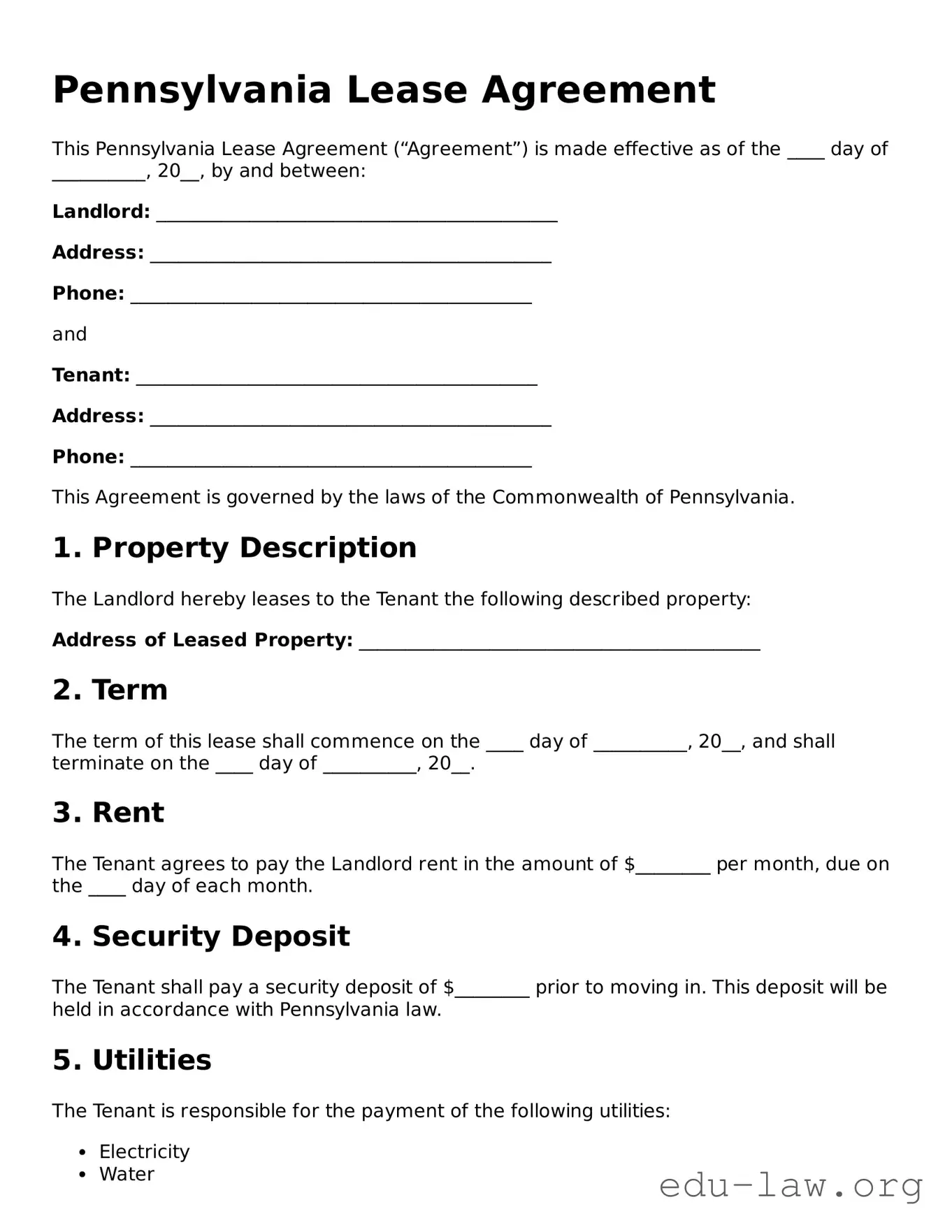
The Pennsylvania Lease Agreement form serves as a crucial document for both landlords and tenants, outlining the terms and conditions governing the rental of residential properties. This legally binding contract typically includes key details such as the names of the parties involved, the rental property address, and the duration of the lease. It specifies the monthly rent amount, payment due dates, and acceptable methods of payment. Additionally, the form addresses security deposits, maintenance responsibilities, and rules regarding pets or alterations to the property. Both parties must understand their rights and obligations, as the agreement also covers termination conditions and procedures for handling disputes. By clearly defining these elements, the Pennsylvania Lease Agreement aims to foster a transparent and fair rental experience for everyone involved.
Pennsylvania Lease Agreement
This Pennsylvania Lease Agreement (“Agreement”) is made effective as of the ____ day of __________, 20__, by and between:
Landlord: ___________________________________________
Address: ___________________________________________
Phone: ___________________________________________
and
Tenant: ___________________________________________
Address: ___________________________________________
Phone: ___________________________________________
This Agreement is governed by the laws of the Commonwealth of Pennsylvania.
1. Property Description
The Landlord hereby leases to the Tenant the following described property:
Address of Leased Property: ___________________________________________
2. Term
The term of this lease shall commence on the ____ day of __________, 20__, and shall terminate on the ____ day of __________, 20__.
3. Rent
The Tenant agrees to pay the Landlord rent in the amount of $________ per month, due on the ____ day of each month.
4. Security Deposit
The Tenant shall pay a security deposit of $________ prior to moving in. This deposit will be held in accordance with Pennsylvania law.
5. Utilities
The Tenant is responsible for the payment of the following utilities:
6. Maintenance and Repairs
The Tenant agrees to maintain the premises in good condition. The Landlord will be responsible for major repairs, except for damages caused by the Tenant’s negligence.
7. Alterations
The Tenant shall not make any alterations to the property without the prior written consent of the Landlord.
8. Governing Law
This Agreement shall be governed by and construed in accordance with the laws of the Commonwealth of Pennsylvania.
9. Signatures
By signing below, both parties agree to the terms of this Lease Agreement.
Landlord Signature: ________________________________ Date: ___________
Tenant Signature: ________________________________ Date: ___________
| Fact Name | Description |
|---|---|
| Governing Law | The Pennsylvania Lease Agreement is governed by the Pennsylvania Uniform Commercial Code and state landlord-tenant laws. |
| Required Components | The lease must include essential details such as the names of the parties, property address, lease term, and rental amount. |
| Security Deposit | In Pennsylvania, landlords may collect a security deposit, typically limited to two months' rent for leases longer than one year. |
| Disclosure Requirements | Landlords must provide tenants with specific disclosures, including lead paint information if the property was built before 1978. |
| Termination Notice | Tenants must receive a written notice of at least 30 days before the termination of a month-to-month lease. |
Filling out the Pennsylvania Lease Agreement form is a straightforward process that requires attention to detail. Completing this form correctly helps ensure a clear understanding between landlords and tenants. Follow these steps to fill it out accurately.
After completing the form, both parties should keep a copy for their records. This ensures that everyone is on the same page regarding the terms of the lease.
What is a Pennsylvania Lease Agreement?
A Pennsylvania Lease Agreement is a legal document that outlines the terms and conditions between a landlord and a tenant for renting a residential property. This agreement specifies important details such as the rental amount, duration of the lease, responsibilities of both parties, and rules regarding the use of the property. It is essential for protecting the rights of both landlords and tenants.
What should be included in a Pennsylvania Lease Agreement?
Several key elements should be included in a Pennsylvania Lease Agreement. These include the names of the landlord and tenant, the address of the rental property, the lease term (fixed or month-to-month), the rental amount and payment due date, security deposit details, and maintenance responsibilities. Additionally, any rules regarding pets, smoking, or alterations to the property should be clearly stated to avoid misunderstandings later.
How long does a lease typically last in Pennsylvania?
In Pennsylvania, lease agreements can vary in duration. Most commonly, leases are either for a fixed term, such as one year, or are month-to-month. A fixed-term lease provides stability for both parties, while a month-to-month lease offers more flexibility. It’s important for both landlords and tenants to understand the implications of each type of lease before signing.
Can a landlord terminate a lease early in Pennsylvania?
Yes, a landlord can terminate a lease early under certain conditions. Common reasons include non-payment of rent, violation of lease terms, or illegal activities on the property. However, landlords must follow the proper legal procedures, which typically involve providing written notice to the tenant. Tenants also have rights and may contest an early termination if they believe it is unjustified.
What happens if a tenant wants to break the lease?
If a tenant wishes to break the lease before its expiration, they may face penalties. Typically, the lease will outline the process for breaking it, which may include giving notice and paying a fee. In some cases, tenants can negotiate with the landlord to end the lease early without penalties, especially if they have a valid reason, such as job relocation or health issues. It’s advisable for tenants to communicate openly with their landlord to find a mutually agreeable solution.
Incorrect Dates: Many individuals fail to accurately fill in the start and end dates of the lease. Ensure these dates are correct to avoid confusion later.
Missing Signatures: Both the landlord and tenant must sign the lease. Omitting a signature can lead to disputes about the agreement's validity.
Inaccurate Property Description: It’s crucial to provide a clear and complete description of the rental property. Leaving out details can create misunderstandings.
Ignoring Terms and Conditions: Some people overlook important terms, such as pet policies or maintenance responsibilities. Read through all conditions carefully before signing.
Not Including Rent Payment Details: Clearly outline the rent amount and payment schedule. Failing to do this can lead to late payments and potential conflicts.
When entering into a rental agreement in Pennsylvania, it’s essential to understand that a lease agreement is often accompanied by various other forms and documents. These documents help clarify the terms of the lease, protect the rights of both parties, and ensure a smooth rental experience. Below is a list of common forms that may be used alongside a Pennsylvania Lease Agreement.
Understanding these forms and documents can significantly enhance the rental process for both landlords and tenants. They serve to protect everyone's interests and promote clear communication, fostering a positive rental relationship. Always ensure that you have the appropriate documents in place before signing a lease agreement to avoid any misunderstandings down the line.
The Pennsylvania Lease Agreement form shares similarities with a Rental Agreement. Both documents outline the terms under which a landlord allows a tenant to occupy a property. Key components, such as rental amount, duration of the lease, and responsibilities for maintenance, are typically included in both agreements. While a lease usually covers a longer term, a rental agreement may be more flexible, allowing for month-to-month arrangements. Nevertheless, both documents serve to protect the rights of both parties involved in the rental process.
Another document that resembles the Pennsylvania Lease Agreement is the Commercial Lease Agreement. This type of lease is specifically designed for business properties rather than residential ones. Similar to the Pennsylvania Lease Agreement, it includes terms about rent, duration, and property use. However, commercial leases often have additional clauses related to business operations, signage, and maintenance responsibilities that are tailored to the needs of businesses rather than individual tenants.
The Sublease Agreement is also comparable to the Pennsylvania Lease Agreement. In a sublease, the original tenant rents out the property to another party, effectively creating a new tenant-landlord relationship under the original lease's terms. Both documents require clarity on rental payments, duration, and property use. However, a sublease agreement must also address the original tenant's obligations to the landlord and any limitations imposed by the primary lease.
The Roommate Agreement is another document that shares some features with the Pennsylvania Lease Agreement. This agreement is often used when multiple tenants share a rental property. While the Pennsylvania Lease Agreement is a formal contract between the landlord and the tenant, a Roommate Agreement focuses on the relationship among the tenants themselves. It typically outlines shared responsibilities, such as rent payment and utility costs, as well as house rules, thereby complementing the lease agreement.
The Lease Option Agreement is similar in that it provides a tenant the option to purchase the property at a later date. This document incorporates elements of both a lease and a purchase agreement. Like the Pennsylvania Lease Agreement, it specifies rental terms, but it also includes conditions under which the tenant can buy the property, often at a predetermined price. This dual nature makes it a unique but related document.
The Month-to-Month Rental Agreement is another document akin to the Pennsylvania Lease Agreement, albeit with more flexibility. This type of agreement allows tenants to rent a property on a monthly basis, with the option to terminate the lease with short notice. Both agreements detail rental amounts and property use, but the month-to-month format provides greater adaptability for both landlords and tenants, accommodating changing circumstances more readily.
Lastly, the Lease Renewal Agreement is similar in that it extends the terms of an existing lease. When a tenant and landlord agree to continue their relationship beyond the original lease term, this document outlines the new terms and conditions. It retains many of the same elements found in the Pennsylvania Lease Agreement, such as rental price and duration, while also providing an opportunity to renegotiate terms based on the current rental market or the tenant's situation.
When filling out the Pennsylvania Lease Agreement form, it is important to follow certain guidelines to ensure that the document is completed correctly. Here are seven things you should and shouldn't do:
Understanding the Pennsylvania Lease Agreement form is crucial for both landlords and tenants. However, several misconceptions often cloud the clarity of this important document. Here are nine common misunderstandings:
While it's advisable to have a written lease for clarity and legal protection, oral agreements can also be enforceable under Pennsylvania law, provided they meet certain conditions.
Tenants can negotiate terms before signing the lease. Any agreed-upon changes should be documented in writing to avoid disputes later.
Landlords must provide reasonable notice, typically 24 hours, before entering a tenant's property, except in emergencies.
Pennsylvania law does regulate security deposits, limiting them to a maximum of two months' rent for leases longer than one year.
Not all lease agreements automatically renew. It's essential to check the specific terms outlined in the lease regarding renewal options.
While many terms can be negotiated, some conditions may be non-negotiable due to local laws or property policies.
Tenants also have the right to terminate a lease under certain conditions, such as a breach of contract or uninhabitable living conditions.
While landlords must maintain the property, tenants may also be responsible for minor repairs and upkeep as outlined in the lease.
Unless specified in the lease, landlords may not increase rent during the lease term. However, they can adjust rent upon renewal.
Addressing these misconceptions can lead to a smoother rental experience for both landlords and tenants in Pennsylvania. Understanding the nuances of the lease agreement fosters better communication and minimizes conflicts.
When filling out and using the Pennsylvania Lease Agreement form, keep these key takeaways in mind: