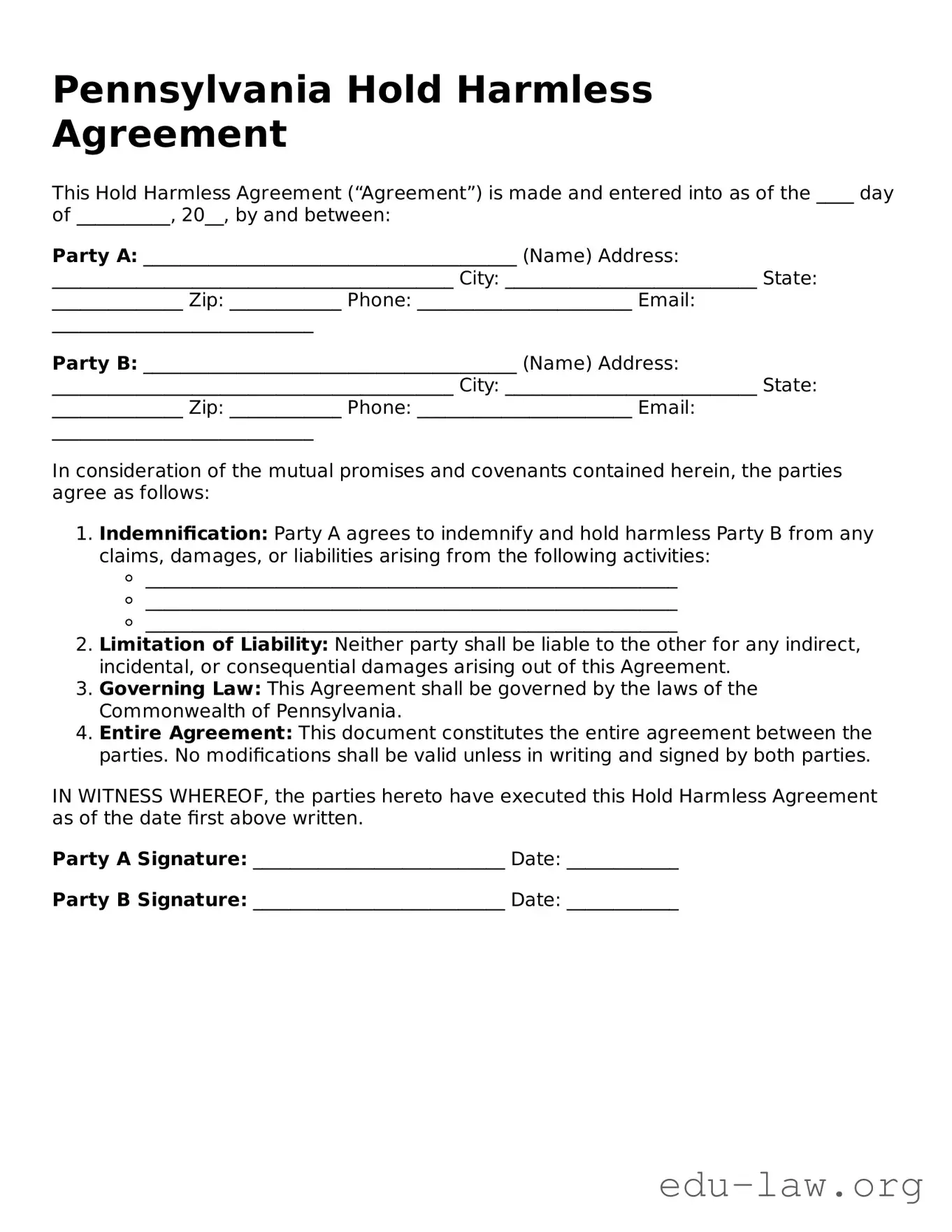
The Pennsylvania Hold Harmless Agreement is a crucial legal document designed to protect one party from liability for certain actions or occurrences. This form is often used in various contexts, such as rental agreements, construction contracts, and event planning, where one party agrees to indemnify another against claims or damages. By signing this agreement, the indemnifying party assumes responsibility for any potential losses, injuries, or damages that may arise during the specified activities. The form typically outlines the scope of the indemnification, detailing the circumstances under which liability is waived. It is essential for all parties involved to understand the implications of the agreement, as it can significantly affect their legal rights and responsibilities. Additionally, the Hold Harmless Agreement may require specific language to comply with Pennsylvania law, ensuring that it is enforceable in a court of law. Proper execution of this document is vital to minimize risk and provide clarity in any contractual relationship.
Pennsylvania Hold Harmless Agreement
This Hold Harmless Agreement (“Agreement”) is made and entered into as of the ____ day of __________, 20__, by and between:
Party A: ________________________________________ (Name) Address: ___________________________________________ City: ___________________________ State: ______________ Zip: ____________ Phone: _______________________ Email: ____________________________
Party B: ________________________________________ (Name) Address: ___________________________________________ City: ___________________________ State: ______________ Zip: ____________ Phone: _______________________ Email: ____________________________
In consideration of the mutual promises and covenants contained herein, the parties agree as follows:
IN WITNESS WHEREOF, the parties hereto have executed this Hold Harmless Agreement as of the date first above written.
Party A Signature: ___________________________ Date: ____________
Party B Signature: ___________________________ Date: ____________
| Fact Name | Details |
|---|---|
| Definition | A Hold Harmless Agreement is a legal document where one party agrees to not hold another party liable for any damages or losses. |
| Purpose | This agreement is commonly used to protect individuals or organizations from legal claims arising from specific activities or events. |
| Governing Law | The agreement is governed by Pennsylvania state law, ensuring compliance with local regulations. |
| Importance | It is essential for risk management, particularly in activities like events, construction, or recreational activities. |
Filling out the Pennsylvania Hold Harmless Agreement form is a straightforward process that requires careful attention to detail. Once completed, this form will serve its intended purpose, allowing you to proceed with your activities while ensuring necessary protections are in place.
After following these steps, ensure that the form is submitted as directed. Keep your copy in a safe place for future reference.
What is a Pennsylvania Hold Harmless Agreement?
A Hold Harmless Agreement is a legal document that protects one party from liability for any injuries or damages that may occur during a specific activity or event. In Pennsylvania, this agreement is often used in situations where one party wants to ensure they are not held responsible for any accidents or incidents that may arise from the actions of another party. It is important for both parties to understand the terms of the agreement before signing.
Who typically uses a Hold Harmless Agreement in Pennsylvania?
This agreement is commonly used by businesses, event organizers, contractors, and property owners. For example, a contractor may ask a client to sign a Hold Harmless Agreement to protect themselves from claims related to accidents that occur on the job site. Similarly, event organizers may require participants to sign this agreement to limit liability during events such as sports tournaments or festivals.
Are there any legal requirements for a Hold Harmless Agreement in Pennsylvania?
While there are no specific legal requirements for a Hold Harmless Agreement in Pennsylvania, it is essential that the document is clear and unambiguous. The agreement should outline the responsibilities of each party and specify the activities covered. It is advisable to have the agreement reviewed by a legal professional to ensure it is enforceable and meets the needs of both parties.
Can a Hold Harmless Agreement be challenged in court?
Yes, a Hold Harmless Agreement can be challenged in court under certain circumstances. If a court finds that the agreement is overly broad, unclear, or unconscionable, it may not be enforceable. Additionally, if a party was negligent or acted in bad faith, the agreement may not protect them from liability. It is crucial to draft the agreement carefully to minimize the risk of challenges.
Incomplete Information: One common mistake is failing to provide all required details. Ensure that names, addresses, and dates are filled out completely. Missing information can lead to delays or even rejection of the agreement.
Incorrect Signatures: Signatures must be from the correct parties involved. Sometimes, individuals sign on behalf of others without proper authorization. This can invalidate the agreement.
Misunderstanding Terms: People often overlook the terms outlined in the agreement. It's crucial to read and understand what you are agreeing to. Misinterpretations can lead to unexpected liabilities.
Not Seeking Legal Advice: Some individuals fill out the form without consulting a legal expert. This can result in overlooking important legal implications. It's wise to seek guidance to ensure the agreement protects your interests.
A Pennsylvania Hold Harmless Agreement is often used in various situations to protect one party from liability. When preparing this document, you may also need to consider several other forms and documents that complement it. Below is a list of common forms that are frequently used alongside the Hold Harmless Agreement.
When preparing a Hold Harmless Agreement, it is essential to consider these related documents. Each one plays a vital role in ensuring that all parties are protected and aware of their responsibilities. Taking the time to gather the necessary forms can help avoid misunderstandings and potential legal issues in the future.
The Pennsylvania Hold Harmless Agreement is similar to a Waiver of Liability. Both documents serve to protect one party from legal claims or liabilities arising from the actions of another party. In a Waiver of Liability, an individual agrees not to hold another party responsible for injuries or damages that may occur during an activity. This is particularly common in sports or recreational activities, where participants acknowledge the risks involved and agree to assume those risks, thereby limiting the liability of the organizers.
Another document akin to the Hold Harmless Agreement is the Indemnity Agreement. This agreement outlines the responsibilities of one party to compensate another for any losses or damages that may arise from specific actions or events. While both documents seek to limit liability, an Indemnity Agreement often involves a broader scope, including financial compensation for legal fees and other costs incurred as a result of claims made against the indemnified party.
The Release of Liability is also similar in nature. This document is used to release one party from any future claims related to injuries or damages that may occur. Individuals sign a Release of Liability to acknowledge the risks involved in an activity, thereby relinquishing their right to sue for damages. Like the Hold Harmless Agreement, it emphasizes personal responsibility and consent to the inherent risks of an activity.
A Participant Agreement is another related document. This agreement is often used in organized events or activities, where participants acknowledge the risks and agree to abide by certain rules. By signing a Participant Agreement, individuals accept the conditions set forth by the organizers, which may include a Hold Harmless clause to protect the organizers from claims resulting from participant actions.
The Consent Form is also comparable. This document is typically used in medical or research settings, where individuals grant permission for procedures or studies. A Consent Form often includes a Hold Harmless provision to protect the institution or practitioner from legal claims related to the consented activities. It emphasizes informed consent and the understanding of potential risks.
The Service Agreement shares similarities as well. While primarily focused on the terms of service between two parties, it may include a Hold Harmless clause to protect the service provider from liabilities arising from the client's use of the services. This ensures that both parties understand their responsibilities and the potential risks involved in the service being provided.
The Rental Agreement is another document that can include a Hold Harmless provision. When renting property or equipment, landlords or providers may require tenants or renters to agree to hold them harmless from any claims arising from the use of the property. This protects the property owner from liabilities associated with accidents or damages that occur during the rental period.
The Employment Agreement can also be related, particularly when it includes clauses that limit the employer's liability for employee actions. In some cases, employees may be required to sign an agreement that includes a Hold Harmless provision, protecting the employer from claims resulting from the employee's conduct while performing their job duties.
Lastly, the Construction Contract often contains a Hold Harmless clause. In construction projects, contractors and subcontractors may agree to hold each other harmless for any injuries or damages that occur on the job site. This ensures that each party understands their liability and responsibilities, promoting a safer work environment and minimizing disputes over potential claims.
When filling out the Pennsylvania Hold Harmless Agreement form, it is important to approach the task with care. Here are some key points to keep in mind:
Following these guidelines will help ensure that the agreement is filled out properly and serves its intended purpose.
Understanding the Pennsylvania Hold Harmless Agreement form is crucial for individuals and organizations engaging in various activities. However, several misconceptions can lead to confusion and potential legal issues. Here are five common misconceptions:
Many believe that signing a Hold Harmless Agreement means they cannot be held responsible for any actions. In reality, while it may limit liability in certain situations, it does not provide blanket immunity against all claims, especially in cases of gross negligence or willful misconduct.
Individuals often think that only businesses need Hold Harmless Agreements. However, these agreements can be beneficial for anyone participating in activities that involve potential risk, including personal events or community gatherings.
This misconception leads many to believe that any Hold Harmless Agreement will suffice for their needs. In truth, the language and terms can vary significantly, making it essential to tailor the agreement to the specific situation and risks involved.
Some individuals assume that by signing a Hold Harmless Agreement, they waive their right to pursue legal action entirely. While these agreements can limit claims, they do not eliminate the right to seek compensation for damages under certain circumstances.
Many people think Hold Harmless Agreements apply solely to physical injuries. However, they can also cover other types of liability, including property damage and financial losses, depending on how the agreement is drafted.
Being aware of these misconceptions can help individuals and organizations make informed decisions when dealing with Hold Harmless Agreements in Pennsylvania.
When dealing with the Pennsylvania Hold Harmless Agreement form, understanding its purpose and proper usage is crucial. Here are some key takeaways to consider:
Understanding these points will help ensure that the Hold Harmless Agreement is filled out correctly and used effectively, providing necessary protection for all parties involved.