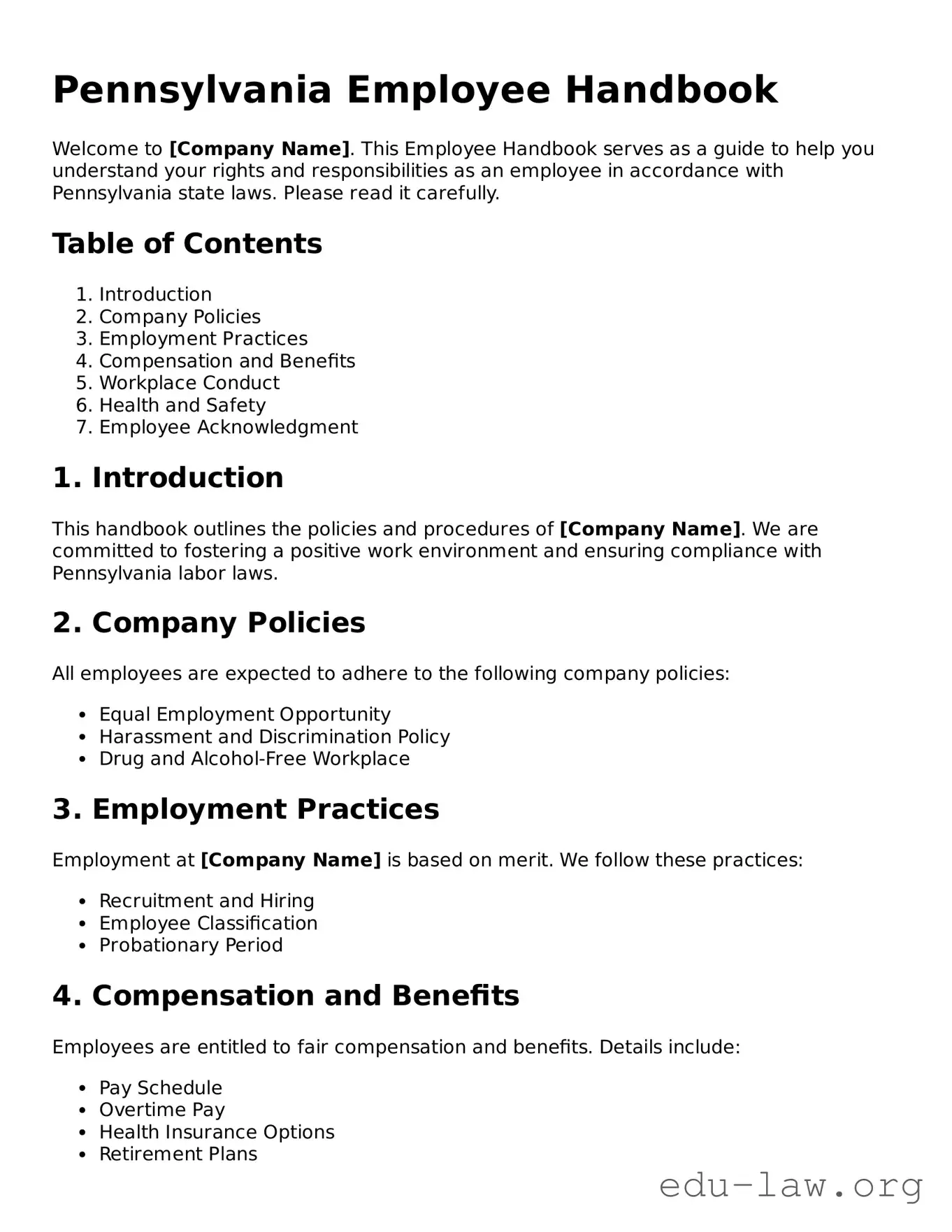
The Pennsylvania Employee Handbook form serves as a vital resource for both employers and employees, outlining essential workplace policies and procedures. This document typically includes sections on company expectations, employee rights, and benefits, ensuring that all parties understand their responsibilities and entitlements. Key aspects often covered in the handbook include workplace conduct, attendance policies, anti-discrimination measures, and health and safety guidelines. Additionally, the form may address disciplinary procedures and the process for reporting grievances, fostering a transparent and respectful work environment. By providing clear and concise information, the Pennsylvania Employee Handbook form helps to establish a foundation for effective communication within the workplace, ultimately contributing to a positive organizational culture.
Pennsylvania Employee Handbook
Welcome to [Company Name]. This Employee Handbook serves as a guide to help you understand your rights and responsibilities as an employee in accordance with Pennsylvania state laws. Please read it carefully.
Table of Contents
1. Introduction
This handbook outlines the policies and procedures of [Company Name]. We are committed to fostering a positive work environment and ensuring compliance with Pennsylvania labor laws.
2. Company Policies
All employees are expected to adhere to the following company policies:
3. Employment Practices
Employment at [Company Name] is based on merit. We follow these practices:
4. Compensation and Benefits
Employees are entitled to fair compensation and benefits. Details include:
5. Workplace Conduct
Maintaining a respectful workplace is essential. Employees should:
6. Health and Safety
Employee safety is our priority. We encourage everyone to:
7. Employee Acknowledgment
All employees must sign an acknowledgment form confirming that they have received and understood this handbook. Please fill in the following:
Name: [Employee Name]
Signature: [Employee Signature]
Date: [Date]
Thank you for being a valued member of [Company Name]. Together, we can create a positive and productive workplace.
| Fact Name | Description |
|---|---|
| Purpose | The Pennsylvania Employee Handbook serves as a guide for employees, outlining company policies, procedures, and expectations. |
| Governing Laws | The handbook is governed by both federal laws and Pennsylvania state laws, including the Pennsylvania Labor Relations Act and the Pennsylvania Wage Payment and Collection Law. |
| Mandatory Inclusion | Certain policies, such as anti-discrimination and harassment policies, must be included to comply with state and federal regulations. |
| Employee Acknowledgment | Employees are typically required to sign an acknowledgment form, confirming they have received and understood the handbook. |
Completing the Pennsylvania Employee Handbook form is a straightforward process that ensures you have all necessary information documented. Following these steps will help you fill out the form accurately and efficiently.
What is the Pennsylvania Employee Handbook form?
The Pennsylvania Employee Handbook form is a document designed to outline the policies, procedures, and expectations of an employer in Pennsylvania. It serves as a guide for employees, detailing their rights and responsibilities, workplace rules, and the company's mission and values. Having a clear handbook helps ensure that everyone is on the same page regarding workplace conduct and standards.
Why is it important to have an Employee Handbook?
An Employee Handbook is crucial for several reasons. It helps protect both the employer and employees by clearly stating the policies and procedures that govern the workplace. This document can also serve as a reference point for addressing disputes or misunderstandings. Furthermore, it can assist in compliance with state and federal laws, reducing the risk of legal issues down the line.
Who should receive a copy of the Employee Handbook?
All employees should receive a copy of the Employee Handbook, whether they are full-time, part-time, or temporary workers. It is also a good practice to provide a copy to new hires during their onboarding process. Ensuring that everyone has access to the handbook promotes transparency and helps foster a positive workplace culture.
How often should the Employee Handbook be updated?
What should be included in the Employee Handbook?
The Employee Handbook should include essential information such as company policies on attendance, dress code, harassment, discrimination, and disciplinary procedures. It should also cover benefits, leave policies, and safety protocols. Additionally, including a section on employee rights and the company's commitment to a diverse and inclusive workplace can enhance the handbook's effectiveness.
What if an employee has questions about the Employee Handbook?
If an employee has questions about the Employee Handbook, they should be encouraged to reach out to their supervisor or the human resources department. Open communication is vital. Addressing questions or concerns promptly can help clarify policies and foster a better understanding of workplace expectations.
Inaccurate Personal Information: Many individuals fail to provide correct details, such as their full name, address, or social security number. This can lead to confusion and delays in processing.
Missing Signatures: Some people forget to sign the form. Without a signature, the document is not valid and may not be recognized by the employer.
Overlooking Policy Acknowledgment: It is common for employees to skip the section where they acknowledge understanding of the handbook policies. This can create misunderstandings about workplace expectations.
Not Updating Information: Employees often neglect to update their information after changes, such as a new address or name change. This can lead to issues with communication and record-keeping.
When developing a comprehensive employee handbook in Pennsylvania, it is essential to consider additional forms and documents that can support the policies and procedures outlined in the handbook. These documents help ensure clarity, compliance, and effective communication within the workplace.
Incorporating these documents alongside the Pennsylvania Employee Handbook can create a well-rounded approach to managing employee relations and ensuring compliance with state and federal laws. By having these forms readily available, employers can foster a transparent and supportive work environment.
The Pennsylvania Employee Handbook form is similar to the Employee Manual, which serves as a comprehensive guide for employees regarding company policies and procedures. Like the Employee Handbook, it outlines expectations for behavior, attendance, and performance. Both documents aim to foster a clear understanding of the workplace environment and help employees navigate their roles within the organization.
Another document that resembles the Pennsylvania Employee Handbook is the Workplace Safety Manual. This manual specifically focuses on safety protocols and procedures that employees must follow to maintain a safe working environment. It complements the Employee Handbook by providing detailed information on safety regulations, emergency procedures, and reporting accidents, ensuring that employees are well-informed about their safety responsibilities.
The Code of Conduct is also similar to the Pennsylvania Employee Handbook. This document outlines the ethical standards and behaviors expected from employees. While the Employee Handbook covers a broader range of topics, the Code of Conduct zeroes in on acceptable and unacceptable behaviors, helping to maintain a professional workplace atmosphere.
The Orientation Manual shares similarities with the Employee Handbook as it is often provided to new hires. It introduces employees to the company culture, policies, and procedures. Both documents serve to onboard employees effectively, ensuring they understand their roles and the expectations placed upon them from the outset of their employment.
The Benefits Guide is another document that aligns closely with the Pennsylvania Employee Handbook. This guide details the benefits available to employees, such as health insurance, retirement plans, and paid time off. While the Employee Handbook provides an overview of workplace policies, the Benefits Guide focuses specifically on the advantages and entitlements employees receive, complementing the overall information provided in the handbook.
The Performance Evaluation Policy is akin to the Pennsylvania Employee Handbook in that it outlines the process for assessing employee performance. This document details how evaluations are conducted, the criteria used, and the frequency of reviews. Both documents aim to ensure that employees understand how their performance will be measured and the importance of meeting established standards.
The Attendance Policy is similar to the Pennsylvania Employee Handbook, as it specifies the expectations regarding employee attendance and punctuality. This policy outlines procedures for requesting time off, reporting absences, and the consequences of excessive tardiness or absenteeism. Together, these documents help employees understand the importance of attendance in maintaining workplace productivity.
The Employee Grievance Procedure is closely related to the Pennsylvania Employee Handbook. This document provides a structured process for employees to voice concerns or complaints about workplace issues. It outlines the steps employees should take to report grievances and ensures that there is a clear method for resolving conflicts, thereby promoting a healthy work environment.
The Leave of Absence Policy is another document that parallels the Pennsylvania Employee Handbook. It details the types of leave available to employees, such as medical leave, family leave, and personal leave. This policy, along with the Employee Handbook, ensures that employees are aware of their rights and responsibilities regarding time away from work.
Finally, the Non-Discrimination and Harassment Policy shares common ground with the Pennsylvania Employee Handbook. This policy outlines the company’s commitment to providing a workplace free from discrimination and harassment. It details the procedures for reporting incidents and the consequences for violations, reinforcing the principles of respect and equality that are often highlighted in the Employee Handbook.
When filling out the Pennsylvania Employee Handbook form, it's essential to follow certain guidelines to ensure accuracy and compliance. Here’s a list of what you should and shouldn't do:
Understanding the Pennsylvania Employee Handbook form is essential for both employers and employees. However, several misconceptions can lead to confusion. Here are ten common misconceptions:
This is not true. While having an employee handbook is beneficial, Pennsylvania law does not mandate that all employers must create one.
Handbooks are generally considered guidelines rather than contracts. They outline policies but do not create enforceable agreements unless explicitly stated.
Policies and laws change. Regularly updating the handbook is crucial to ensure compliance with current regulations and practices.
Every business has unique needs. Handbooks should reflect the specific policies and culture of the organization.
While workplace rules are important, handbooks can also include benefits, safety procedures, and employee rights.
It is advisable for employers to have employees sign an acknowledgment form to confirm they received and understood the handbook.
Part-time employees can also benefit from having access to the handbook, as it provides clarity on company policies applicable to all workers.
While templates can be a starting point, customizing the handbook to fit the specific needs of the business is important for effectiveness.
While a well-crafted handbook can mitigate risks, it cannot eliminate them entirely. Legal advice is often necessary to address specific concerns.
Employees have the right to ask questions or seek clarification about policies, regardless of their acknowledgment of the handbook.
Clarifying these misconceptions can help ensure that both employers and employees understand the purpose and importance of the Pennsylvania Employee Handbook form.
Filling out and utilizing the Pennsylvania Employee Handbook form is crucial for both employers and employees. Here are some key takeaways to keep in mind:
By following these key points, you can create an effective employee handbook that benefits everyone in the workplace.