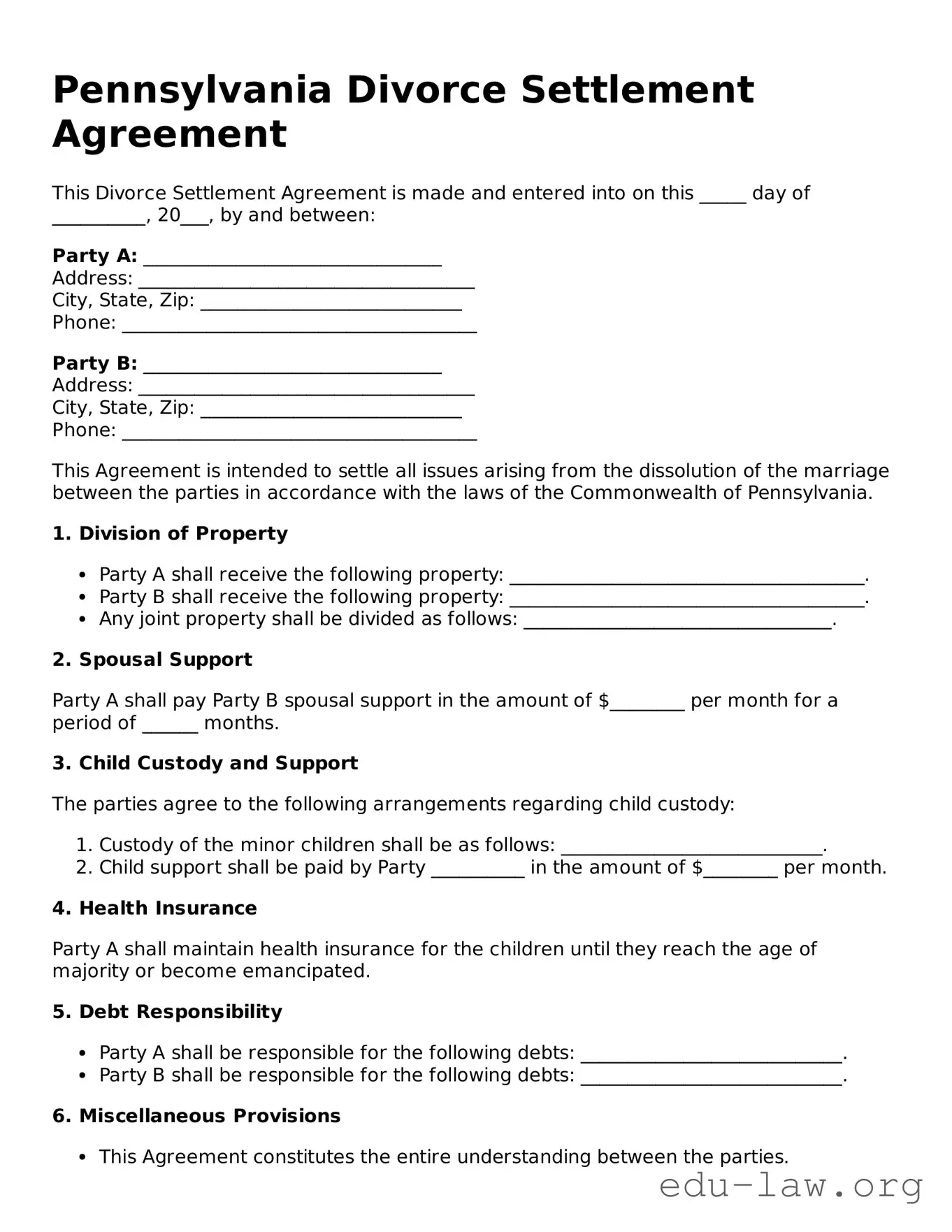
The Pennsylvania Divorce Settlement Agreement form is a crucial document for couples seeking to finalize their divorce amicably. This form outlines the terms and conditions agreed upon by both parties regarding various aspects of their separation. Key elements typically addressed include the division of marital property, allocation of debts, child custody arrangements, and support obligations. By clearly detailing these agreements, the form helps to prevent future disputes and provides a framework for both individuals to follow post-divorce. It is important for both parties to understand their rights and responsibilities as outlined in the agreement, ensuring that the settlement is fair and equitable. Completing this form accurately is essential, as it serves as a legally binding contract once signed by both spouses and approved by the court.
Pennsylvania Divorce Settlement Agreement
This Divorce Settlement Agreement is made and entered into on this _____ day of __________, 20___, by and between:
Party A: ________________________________
Address: ____________________________________
City, State, Zip: ____________________________
Phone: ______________________________________
Party B: ________________________________
Address: ____________________________________
City, State, Zip: ____________________________
Phone: ______________________________________
This Agreement is intended to settle all issues arising from the dissolution of the marriage between the parties in accordance with the laws of the Commonwealth of Pennsylvania.
1. Division of Property
2. Spousal Support
Party A shall pay Party B spousal support in the amount of $________ per month for a period of ______ months.
3. Child Custody and Support
The parties agree to the following arrangements regarding child custody:
4. Health Insurance
Party A shall maintain health insurance for the children until they reach the age of majority or become emancipated.
5. Debt Responsibility
6. Miscellaneous Provisions
IN WITNESS WHEREOF, the parties have executed this Divorce Settlement Agreement as of the date first above written.
______________________________
Party A Signature
______________________________
Party B Signature
______________________________
Date
| Fact Name | Details |
|---|---|
| Governing Law | The Pennsylvania Divorce Settlement Agreement is governed by the Pennsylvania Divorce Code. |
| Purpose | This form outlines the terms of the divorce settlement between spouses, including asset division, alimony, and child custody arrangements. |
| Filing Requirements | Both parties must sign the agreement, and it should be filed with the court as part of the divorce proceedings. |
| Modification | The agreement can be modified later if both parties consent and the changes are documented properly. |
| Enforceability | Once approved by the court, the terms of the settlement become legally binding for both parties. |
After you have gathered all necessary information and documents related to your divorce, you can proceed to fill out the Pennsylvania Divorce Settlement Agreement form. This form is essential for outlining the terms of your divorce, including asset division, custody arrangements, and support obligations.
What is a Pennsylvania Divorce Settlement Agreement?
A Pennsylvania Divorce Settlement Agreement is a legal document that outlines the terms and conditions agreed upon by both spouses during a divorce. This agreement typically covers important aspects such as division of property, child custody, child support, and spousal support. It serves to formalize the decisions made by both parties and can help prevent future disputes.
Is a Divorce Settlement Agreement required in Pennsylvania?
While it is not legally required to have a Divorce Settlement Agreement in Pennsylvania, it is highly recommended. Having a well-drafted agreement can provide clarity and protect the rights of both parties. It can also expedite the divorce process by minimizing the need for court intervention.
How is property divided in a Divorce Settlement Agreement?
In Pennsylvania, property division during a divorce follows the principle of equitable distribution. This means that marital property is divided fairly, but not necessarily equally. Both spouses must disclose their assets and debts, and the agreement should detail how these will be divided. Factors such as the length of the marriage, contributions of each spouse, and the needs of any children involved are considered in this process.
What happens to child custody and support in the agreement?
Child custody arrangements and support obligations are crucial components of the Divorce Settlement Agreement. Parents must agree on a custody schedule that serves the best interests of the child. The agreement should specify physical and legal custody arrangements, visitation rights, and child support amounts. Pennsylvania courts generally favor arrangements that allow both parents to remain actively involved in their child's life.
Can the Divorce Settlement Agreement be modified later?
Yes, a Divorce Settlement Agreement can be modified if circumstances change significantly. For instance, if there is a change in income, job status, or living situation, either party can request a modification. However, any changes must be agreed upon by both parties and may require court approval, especially for child support and custody arrangements.
Do I need a lawyer to create a Divorce Settlement Agreement?
While it is not mandatory to have a lawyer to create a Divorce Settlement Agreement, it is highly advisable. An attorney can help ensure that your rights are protected and that the agreement complies with Pennsylvania law. They can also assist in negotiating terms that are fair and reasonable for both parties.
What if my spouse and I cannot agree on the terms?
If spouses cannot reach an agreement on the terms of the divorce, they may need to pursue mediation or, in some cases, litigation. Mediation involves a neutral third party who helps facilitate discussions and negotiations. If mediation fails, the case may proceed to court, where a judge will make the final decisions regarding property division, custody, and support.
How do I file the Divorce Settlement Agreement with the court?
To file the Divorce Settlement Agreement with the court, both parties must sign the document. After signing, you will need to submit it along with other required divorce paperwork to the appropriate county court. It’s important to follow local court rules and procedures to ensure that your agreement is properly filed and enforceable.
What if my spouse refuses to sign the Divorce Settlement Agreement?
If your spouse refuses to sign the Divorce Settlement Agreement, you may need to explore mediation or court intervention. It is essential to communicate openly about the terms of the agreement and try to address any concerns your spouse may have. If an agreement cannot be reached, the matter may need to be resolved in court, where a judge will make binding decisions.
Failing to provide complete information. It is essential to fill in all required fields accurately. Incomplete information can delay the process.
Not understanding the terms. Ensure that both parties fully comprehend the legal terms and implications of the agreement. Misunderstandings can lead to disputes later.
Overlooking asset division. Clearly list all marital assets and debts. Neglecting to include certain items can result in complications during property division.
Ignoring child support and custody details. Addressing child support payments and custody arrangements is crucial. Omitting these details can lead to future conflicts.
Not considering tax implications. Some agreements may have tax consequences. Consulting a tax professional can provide clarity on potential liabilities.
Failing to review the agreement thoroughly. Both parties should read the entire document carefully before signing. This helps to ensure that all terms are agreeable.
Assuming verbal agreements are sufficient. All agreements should be documented in writing. Relying on verbal promises can lead to misunderstandings.
Neglecting to seek legal advice. Consulting with an attorney can provide valuable insights. Legal guidance helps protect individual rights and interests.
Not updating the agreement after changes in circumstances. Life events such as job loss or relocation may necessitate modifications. Keeping the agreement current is important for its effectiveness.
When navigating the process of divorce in Pennsylvania, several forms and documents may be needed in addition to the Divorce Settlement Agreement. Each of these documents plays a crucial role in ensuring that the divorce proceedings are handled smoothly and that both parties' rights and responsibilities are clearly defined. Here’s a list of commonly used forms that you may encounter.
Understanding these documents can significantly ease the stress of the divorce process. Each form serves a specific purpose, and being well-informed about them can help ensure that the divorce is handled efficiently and fairly. Always consider consulting with a professional if you have questions or need assistance with these forms.
The Pennsylvania Divorce Settlement Agreement form is similar to a Marital Settlement Agreement. Both documents outline the terms of the divorce, including the division of assets and debts, child custody arrangements, and spousal support. A Marital Settlement Agreement is typically used in uncontested divorces, where both parties agree on the terms. This document serves as a comprehensive record of the agreements made by both spouses, which can be submitted to the court for approval.
Another document similar to the Pennsylvania Divorce Settlement Agreement is the Separation Agreement. This document is often created when couples decide to live apart but are not yet ready to divorce. The Separation Agreement details the same types of issues as a Divorce Settlement Agreement, such as property division and child support. It serves as a temporary arrangement that can later be incorporated into the final divorce settlement.
The Child Custody Agreement is another relevant document. While the Divorce Settlement Agreement may include provisions for child custody, a Child Custody Agreement specifically focuses on the arrangements for the care and upbringing of children. It addresses visitation rights, decision-making authority, and other important aspects of parenting after separation. This agreement is crucial for ensuring that both parents are on the same page regarding their children's welfare.
A Parenting Plan is closely related to the Child Custody Agreement. It provides a detailed outline of how parents will manage their responsibilities toward their children post-divorce. This plan includes schedules for visitation, holidays, and vacations, as well as guidelines for communication between parents. The Parenting Plan aims to create a stable environment for children and is often included as part of the Divorce Settlement Agreement.
The Property Settlement Agreement is another document that shares similarities with the Divorce Settlement Agreement. This document focuses specifically on the division of marital property and debts. It outlines how assets such as real estate, bank accounts, and personal property will be divided between the spouses. This agreement is essential for ensuring that both parties understand their rights and responsibilities regarding property after the divorce.
Additionally, a Spousal Support Agreement is relevant in the context of divorce settlements. This document details any financial support one spouse will provide to the other following the divorce. It can outline the amount, duration, and conditions of support. Like the Divorce Settlement Agreement, it aims to ensure that both parties have clarity about their financial obligations and rights.
Finally, a Quitclaim Deed can be similar in certain situations, particularly when real estate is involved. While not a settlement agreement in itself, a Quitclaim Deed is often executed as part of the divorce process to transfer ownership of property from one spouse to another. This document ensures that the property division agreed upon in the Divorce Settlement Agreement is legally recognized and executed, providing clarity and security for both parties.
Filling out the Pennsylvania Divorce Settlement Agreement form can be a crucial step in your divorce process. Here are some important dos and don’ts to keep in mind:
Understanding the Pennsylvania Divorce Settlement Agreement form can be challenging. Here are seven common misconceptions about this important document:
Being aware of these misconceptions can help you navigate the divorce process more effectively. A well-prepared Divorce Settlement Agreement can lead to a smoother transition for everyone involved.
When filling out and using the Pennsylvania Divorce Settlement Agreement form, there are several important points to consider. Here are some key takeaways:
Following these guidelines can help facilitate a smoother divorce process and ensure that both parties understand their rights and responsibilities.