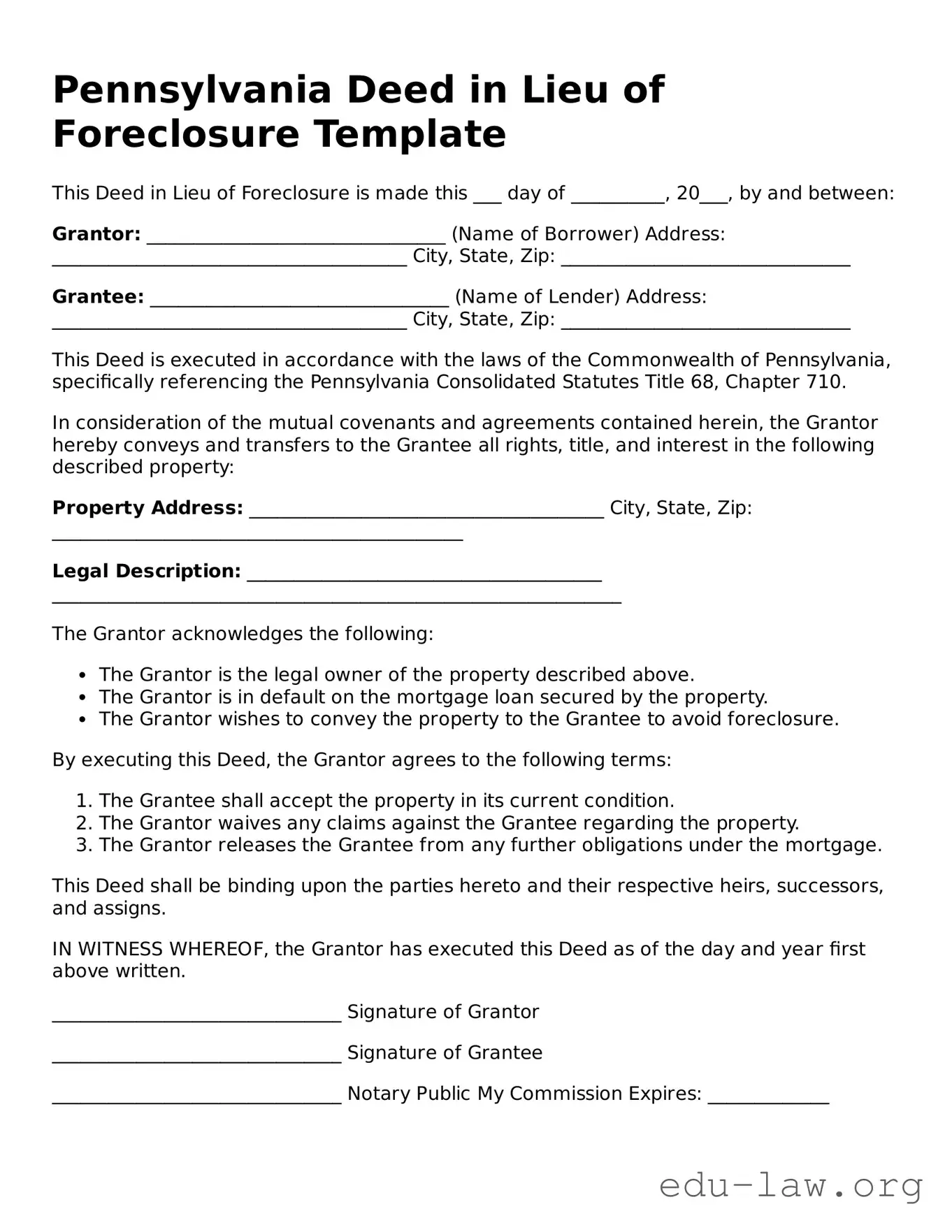
The Pennsylvania Deed in Lieu of Foreclosure form serves as a critical tool for homeowners facing financial hardship and potential foreclosure. This legal document allows property owners to voluntarily transfer their property to the lender in exchange for the cancellation of their mortgage debt. By opting for a deed in lieu, homeowners can avoid the lengthy and often costly foreclosure process. The form outlines the terms of the transfer, including any conditions that must be met by both parties. It also specifies the rights and obligations of the lender and the homeowner, ensuring clarity in the transaction. This option can provide a fresh start for those struggling with mortgage payments while allowing lenders to recover their losses more efficiently. Understanding the implications and requirements of the deed in lieu process is essential for anyone considering this route in Pennsylvania.
Pennsylvania Deed in Lieu of Foreclosure Template
This Deed in Lieu of Foreclosure is made this ___ day of __________, 20___, by and between:
Grantor: ________________________________ (Name of Borrower) Address: ______________________________________ City, State, Zip: _______________________________
Grantee: ________________________________ (Name of Lender) Address: ______________________________________ City, State, Zip: _______________________________
This Deed is executed in accordance with the laws of the Commonwealth of Pennsylvania, specifically referencing the Pennsylvania Consolidated Statutes Title 68, Chapter 710.
In consideration of the mutual covenants and agreements contained herein, the Grantor hereby conveys and transfers to the Grantee all rights, title, and interest in the following described property:
Property Address: ______________________________________ City, State, Zip: ____________________________________________
Legal Description: ______________________________________ _____________________________________________________________
The Grantor acknowledges the following:
By executing this Deed, the Grantor agrees to the following terms:
This Deed shall be binding upon the parties hereto and their respective heirs, successors, and assigns.
IN WITNESS WHEREOF, the Grantor has executed this Deed as of the day and year first above written.
_______________________________ Signature of Grantor
_______________________________ Signature of Grantee
_______________________________ Notary Public My Commission Expires: _____________
| Fact Name | Description |
|---|---|
| Definition | A deed in lieu of foreclosure is a legal document where a borrower voluntarily transfers property ownership to the lender to avoid foreclosure. |
| Governing Law | The Pennsylvania Deed in Lieu of Foreclosure is governed by Pennsylvania state law, specifically under Title 68 of the Pennsylvania Consolidated Statutes. |
| Eligibility | Borrowers must be in default on their mortgage to be eligible for this option. |
| Benefits | This process can help borrowers avoid the lengthy and costly foreclosure process. |
| Impact on Credit | A deed in lieu of foreclosure may have a less severe impact on credit scores compared to a foreclosure. |
| Negotiation | Borrowers can negotiate terms with lenders, including possible debt forgiveness. |
| Documentation | Proper documentation is required to complete the deed in lieu of foreclosure process. |
| Tax Implications | Borrowers should consider potential tax consequences, as forgiven debt may be taxable income. |
| Timeframe | The process can be quicker than foreclosure, often taking weeks instead of months. |
| Legal Advice | It is advisable for borrowers to seek legal advice before proceeding with a deed in lieu of foreclosure. |
Once you have the Pennsylvania Deed in Lieu of Foreclosure form ready, you'll need to fill it out carefully. After completing the form, it will need to be signed and submitted as per the requirements set by your lender. Ensure all information is accurate to avoid delays in the process.
What is a Deed in Lieu of Foreclosure?
A Deed in Lieu of Foreclosure is an agreement between a borrower and a lender where the borrower voluntarily transfers ownership of the property to the lender to avoid foreclosure. This process allows the borrower to settle their mortgage obligations without going through the lengthy foreclosure process.
How does the Deed in Lieu of Foreclosure process work in Pennsylvania?
In Pennsylvania, the borrower must first contact the lender to express interest in a Deed in Lieu of Foreclosure. If the lender agrees, both parties will sign the deed, transferring ownership of the property. The lender may then forgive the remaining mortgage debt, although this is not guaranteed. It is important for the borrower to understand the terms and conditions of the agreement before proceeding.
What are the benefits of choosing a Deed in Lieu of Foreclosure?
There are several benefits to opting for a Deed in Lieu of Foreclosure. First, it can be a quicker and less stressful alternative to foreclosure. Second, it may help the borrower avoid the negative impact on their credit score that comes with foreclosure. Lastly, it can provide a clean break from the mortgage debt, allowing the borrower to move forward financially.
Are there any drawbacks to a Deed in Lieu of Foreclosure?
Yes, there are potential drawbacks. The lender may not forgive all of the outstanding debt, which could leave the borrower with a tax liability. Additionally, not all lenders offer this option, and the borrower may need to meet certain qualifications. It is crucial to discuss these factors with the lender and possibly seek legal advice before proceeding.
Will a Deed in Lieu of Foreclosure affect my credit score?
While a Deed in Lieu of Foreclosure is generally less damaging to a credit score than a foreclosure, it can still have a negative impact. Lenders may report the deed transfer to credit bureaus, which can affect the borrower's creditworthiness. However, the impact is often less severe than that of a foreclosure.
Can I still pursue a loan modification before opting for a Deed in Lieu of Foreclosure?
Yes, borrowers should consider all options before deciding on a Deed in Lieu of Foreclosure. Loan modifications, which can lower monthly payments or change loan terms, may provide a more favorable solution. It is advisable to explore these alternatives and work with the lender to find the best possible outcome.
What happens to the property after the Deed in Lieu of Foreclosure is executed?
Once the Deed in Lieu of Foreclosure is executed, the lender takes possession of the property. The lender may choose to sell the property, rent it out, or keep it in their portfolio. The borrower will typically vacate the property, and the lender will begin the process of managing or disposing of the asset.
Do I need legal assistance to complete a Deed in Lieu of Foreclosure?
While it is not legally required to have an attorney, seeking legal assistance is highly recommended. An attorney can help ensure that the borrower understands their rights, the terms of the agreement, and any potential consequences. Having legal guidance can help navigate the complexities of the process and protect the borrower's interests.
Not Reviewing the Form Thoroughly: Many individuals rush through the form, failing to read each section carefully. This can lead to incomplete or inaccurate information being submitted.
Incorrect Property Description: Providing an inaccurate or incomplete description of the property can cause significant issues. It is crucial to ensure that the property address and legal description match public records.
Forgetting to Sign: A common oversight is neglecting to sign the document. Without a signature, the deed is not valid, and the process cannot move forward.
Not Including All Necessary Parties: If there are multiple owners, all must sign the deed. Failing to include all necessary parties can invalidate the deed and complicate the foreclosure process.
Missing Notarization: Many do not realize that the deed must be notarized to be legally binding. Skipping this step can result in legal challenges down the line.
Ignoring State-Specific Requirements: Each state has its own rules regarding deeds in lieu of foreclosure. Not adhering to Pennsylvania’s specific requirements can lead to delays or rejection of the deed.
When a property owner in Pennsylvania opts for a deed in lieu of foreclosure, several additional documents may be necessary to facilitate the process. Each document serves a specific purpose and helps clarify the agreement between the property owner and the lender. Below is a list of commonly used forms and documents in conjunction with the Pennsylvania Deed in Lieu of Foreclosure.
Understanding these documents can aid property owners in navigating the deed in lieu of foreclosure process more effectively. Each form plays a crucial role in ensuring that both parties are protected and that the transaction proceeds smoothly.
A mortgage modification agreement is similar to a Deed in Lieu of Foreclosure in that it aims to help homeowners avoid foreclosure. In this document, the lender and borrower agree to change the terms of the original mortgage. This can involve lowering the interest rate, extending the loan term, or even reducing the principal amount owed. The goal is to make the mortgage more affordable for the homeowner, allowing them to stay in their home while still meeting their financial obligations.
A short sale agreement also shares similarities with a Deed in Lieu of Foreclosure. In a short sale, the homeowner sells the property for less than the amount owed on the mortgage, with the lender's approval. The lender agrees to accept this reduced amount as full payment of the debt. Like a Deed in Lieu, a short sale helps the homeowner avoid foreclosure and its negative consequences. Both options can be beneficial for lenders as well, as they may recover more of the loan balance than they would through a foreclosure process.
A forbearance agreement is another document that resembles a Deed in Lieu of Foreclosure. In this arrangement, the lender temporarily reduces or suspends mortgage payments due to the borrower’s financial hardship. The borrower can then catch up on missed payments over time. This option provides relief to homeowners facing temporary difficulties while avoiding the more drastic step of foreclosure. It offers a way to maintain homeownership while working through financial challenges.
Lastly, a bankruptcy filing can be compared to a Deed in Lieu of Foreclosure, though it is a more complex legal process. When a homeowner files for bankruptcy, they can potentially stop foreclosure proceedings and reorganize their debts. This legal protection allows them to keep their home while addressing their financial situation. While a Deed in Lieu of Foreclosure transfers ownership to the lender, bankruptcy can provide a path to retain ownership, depending on the circumstances. Both options are aimed at managing debt and protecting the homeowner’s interests.
When filling out the Pennsylvania Deed in Lieu of Foreclosure form, there are important dos and don'ts to keep in mind. Follow these guidelines to ensure a smoother process.
By following these tips, you can help ensure that the Deed in Lieu of Foreclosure form is completed correctly and efficiently.
Understanding the Pennsylvania Deed in Lieu of Foreclosure can be challenging. Many people have misconceptions about this process. Here are seven common misunderstandings:
Being informed about these misconceptions can help you make better decisions regarding your financial future. Always consider seeking advice from a qualified professional to navigate these complex situations.
When considering the Pennsylvania Deed in Lieu of Foreclosure form, it is essential to understand several key aspects. Here are five important takeaways:
These points highlight the importance of careful consideration and consultation with a qualified professional when navigating the deed in lieu of foreclosure process in Pennsylvania.