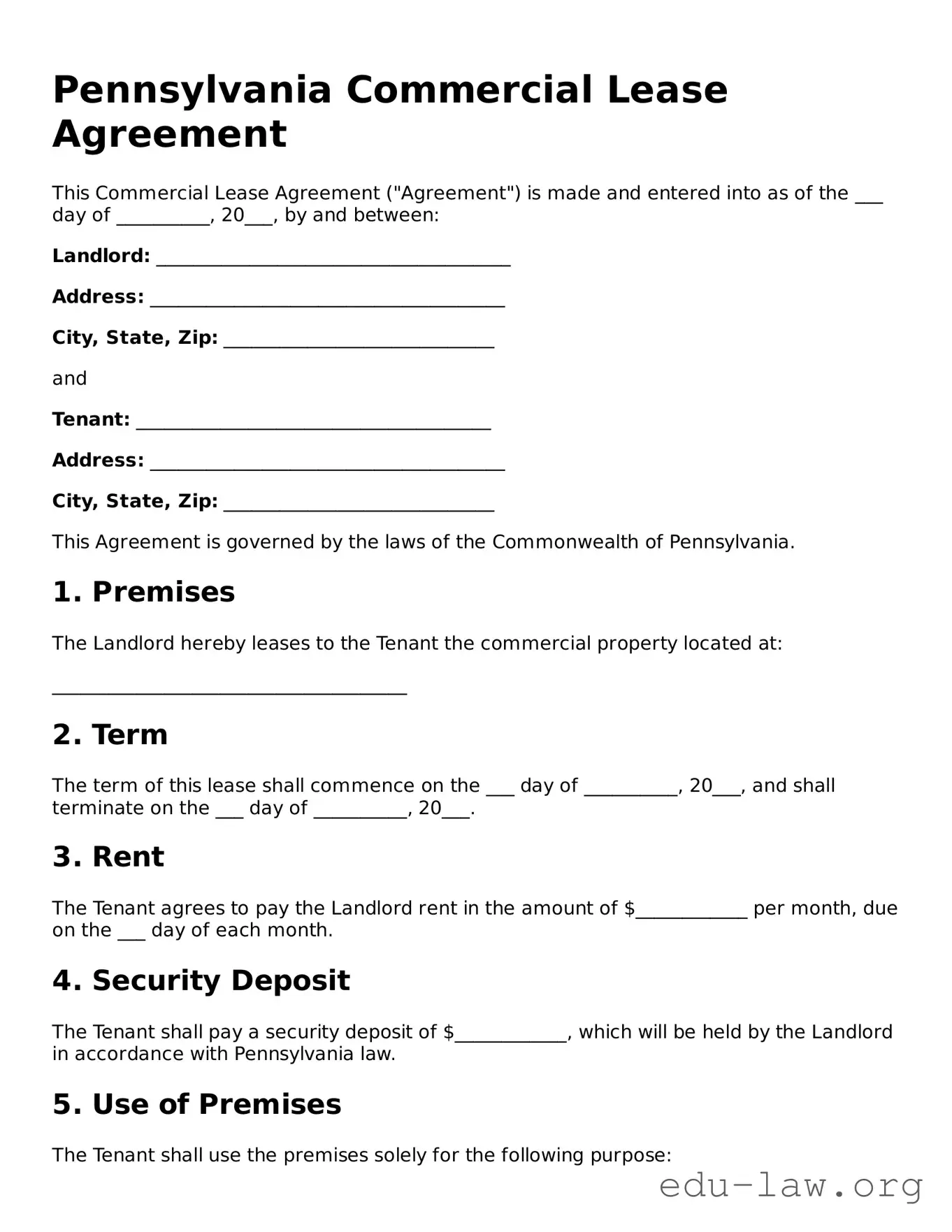
When entering into a commercial lease in Pennsylvania, understanding the intricacies of the Pennsylvania Commercial Lease Agreement form is essential for both landlords and tenants. This document serves as a foundational contract that outlines the terms and conditions governing the rental of commercial property. Key aspects include the lease duration, rent amount, and payment schedule, which set the financial expectations for both parties. Additionally, the agreement delineates the responsibilities for property maintenance, utilities, and repairs, ensuring clarity on who is accountable for what. Important clauses regarding security deposits, renewal options, and termination rights provide further guidance on the lease's lifecycle. By carefully reviewing and negotiating these elements, both landlords and tenants can foster a mutually beneficial relationship that minimizes misunderstandings and protects their respective interests throughout the lease term.
Pennsylvania Commercial Lease Agreement
This Commercial Lease Agreement ("Agreement") is made and entered into as of the ___ day of __________, 20___, by and between:
Landlord: ______________________________________
Address: ______________________________________
City, State, Zip: _____________________________
and
Tenant: ______________________________________
Address: ______________________________________
City, State, Zip: _____________________________
This Agreement is governed by the laws of the Commonwealth of Pennsylvania.
1. Premises
The Landlord hereby leases to the Tenant the commercial property located at:
______________________________________
2. Term
The term of this lease shall commence on the ___ day of __________, 20___, and shall terminate on the ___ day of __________, 20___.
3. Rent
The Tenant agrees to pay the Landlord rent in the amount of $____________ per month, due on the ___ day of each month.
4. Security Deposit
The Tenant shall pay a security deposit of $____________, which will be held by the Landlord in accordance with Pennsylvania law.
5. Use of Premises
The Tenant shall use the premises solely for the following purpose:
__________________________________________________
6. Maintenance and Repairs
The Tenant shall be responsible for the maintenance and repair of the premises, except for:
7. Utilities
The Tenant shall be responsible for the payment of all utilities, including but not limited to:
8. Alterations
The Tenant shall not make any alterations to the premises without prior written consent from the Landlord.
9. Termination
Either party may terminate this Agreement by providing ___ days written notice to the other party.
10. Governing Law
This Agreement shall be governed by and construed in accordance with the laws of the Commonwealth of Pennsylvania.
11. Signatures
IN WITNESS WHEREOF, the parties hereto have executed this Commercial Lease Agreement as of the date first above written.
Landlord Signature: ___________________________
Date: ______________________________________
Tenant Signature: ____________________________
Date: ______________________________________
| Fact Name | Description |
|---|---|
| Governing Law | The Pennsylvania Commercial Lease Agreement is governed by the laws of the Commonwealth of Pennsylvania. |
| Parties Involved | The agreement typically involves a lessor (landlord) and a lessee (tenant), both of whom must be clearly identified. |
| Lease Term | The lease term can vary significantly, often ranging from one year to several years, depending on the needs of both parties. |
| Rent Payment Details | Specifics about the rent amount, payment frequency, and acceptable payment methods must be clearly outlined in the agreement. |
| Security Deposit | The lease may require a security deposit, which is typically held to cover potential damages or unpaid rent. |
| Maintenance Responsibilities | The agreement should define maintenance responsibilities for both the landlord and tenant, ensuring clarity on who is responsible for repairs. |
Filling out the Pennsylvania Commercial Lease Agreement form is an important step in establishing a rental relationship between a landlord and a tenant. This process requires careful attention to detail to ensure that all necessary information is accurately provided. Below are the steps to guide you through completing the form.
After completing the form, both the landlord and tenant should keep a copy for their records. It is advisable to review the agreement carefully to ensure mutual understanding of all terms before moving forward.
What is a Pennsylvania Commercial Lease Agreement?
A Pennsylvania Commercial Lease Agreement is a legally binding contract between a landlord and a tenant for the rental of commercial property. This document outlines the terms and conditions of the lease, including the duration, rental payments, maintenance responsibilities, and other essential provisions. It is crucial for both parties to understand their rights and obligations as outlined in the agreement.
What are the key components of a Commercial Lease Agreement?
Several important components are typically included in a Commercial Lease Agreement. These include the names of the landlord and tenant, a description of the leased property, the lease term, rental amount, payment schedule, security deposit requirements, maintenance obligations, and provisions for termination or renewal. Each component plays a vital role in defining the relationship between the parties involved.
How long is a typical lease term for commercial properties in Pennsylvania?
The lease term for commercial properties in Pennsylvania can vary significantly, often ranging from one year to multiple years. The specific duration is usually negotiated between the landlord and tenant. Longer lease terms may provide stability for both parties, while shorter terms can offer flexibility. It is essential to choose a term that aligns with the business goals of the tenant and the investment strategy of the landlord.
Can a tenant make modifications to the leased property?
Generally, tenants may want to make modifications or improvements to the leased property to suit their business needs. However, any alterations typically require the landlord's consent, as outlined in the lease agreement. It is crucial for tenants to review the terms related to modifications to avoid potential disputes. Some agreements may stipulate that any changes must be restored to the original condition upon lease termination.
What happens if a tenant fails to pay rent on time?
If a tenant fails to pay rent on time, the lease agreement will usually specify the consequences. This may include late fees, the possibility of eviction, or legal action to recover unpaid rent. It is essential for tenants to communicate with their landlord if they anticipate difficulties in making timely payments. Open communication can sometimes lead to mutually agreeable solutions, such as payment plans or temporary deferments.
Are there any laws that protect tenants in Pennsylvania?
Yes, tenants in Pennsylvania are protected by various state laws that govern commercial leases. These laws ensure that tenants have certain rights, including the right to a habitable space, protection against retaliation for exercising their rights, and the right to privacy. Familiarity with these laws can empower tenants to advocate for themselves and ensure their rights are upheld throughout the lease term.
How can a tenant terminate a Commercial Lease Agreement?
Termination of a Commercial Lease Agreement typically requires adherence to the terms outlined in the lease. This may involve providing written notice to the landlord within a specified timeframe. Some agreements may include a clause allowing for early termination under certain conditions, such as financial hardship or breach of contract by the landlord. It is essential for tenants to carefully review their lease agreement to understand the termination process and any potential penalties involved.
Failing to Read the Entire Agreement: Many individuals skim through the lease, missing crucial terms and conditions. Understanding every section is essential to avoid future disputes.
Incorrectly Filling Out Tenant Information: Providing inaccurate or incomplete tenant details can lead to legal complications. Ensure that names and contact information are correct.
Not Specifying the Lease Term: Some people forget to clearly define the start and end dates of the lease. This omission can create confusion regarding the duration of the rental agreement.
Overlooking Rent Payment Details: It's common to neglect to specify the amount of rent, payment due dates, and acceptable payment methods. Clear terms help prevent misunderstandings later on.
Ignoring Maintenance Responsibilities: Failing to outline who is responsible for maintenance and repairs can lead to disputes. Clearly stating these responsibilities protects both parties.
Not Including Signatures: Some individuals forget to sign the lease or fail to obtain the necessary signatures from all parties involved. Without signatures, the agreement may not be legally binding.
When entering into a commercial lease agreement in Pennsylvania, several additional forms and documents may be necessary to ensure clarity and legal compliance. These documents help both landlords and tenants understand their rights and responsibilities. Below are some commonly used forms that accompany the Pennsylvania Commercial Lease Agreement.
Using these documents alongside the Pennsylvania Commercial Lease Agreement can create a more secure and transparent leasing process. They help clarify expectations and protect the interests of both parties involved.
The Pennsylvania Commercial Lease Agreement is similar to a Residential Lease Agreement in that both documents establish a legal relationship between a landlord and a tenant. While the former pertains to commercial spaces, such as offices or retail stores, the latter focuses on residential properties. Both agreements outline the terms of occupancy, including rent amount, duration of the lease, and responsibilities for maintenance. Understanding the nuances between these two types of leases is crucial for both landlords and tenants to ensure compliance with specific regulations and obligations.
Another document that shares similarities is the Retail Lease Agreement. This specific type of commercial lease is tailored for businesses operating in retail spaces. Like the Pennsylvania Commercial Lease Agreement, it addresses key elements such as lease duration, rent, and permitted use of the property. However, it often includes additional clauses related to common area maintenance and percentage rent, which are unique to retail environments. Recognizing these distinctions can help businesses negotiate better terms suited to their operational needs.
The Office Lease Agreement also resembles the Pennsylvania Commercial Lease Agreement, as it governs the leasing of office spaces. Both documents detail the rights and responsibilities of landlords and tenants, including rent payments and maintenance obligations. However, an Office Lease Agreement may include specific provisions about shared facilities, such as conference rooms or break areas, which are not typically found in other commercial leases. Understanding these details is essential for businesses seeking appropriate office environments.
A Warehouse Lease Agreement is another document that aligns closely with the Pennsylvania Commercial Lease Agreement. This type of lease focuses on properties used for storage and distribution. Similar to the commercial lease, it outlines terms such as rental rates and lease duration. However, it may also include specific provisions regarding loading docks, access hours, and security measures, which are critical for businesses relying on logistics and inventory management. Knowing these factors can greatly impact operational efficiency.
The Industrial Lease Agreement shares many characteristics with the Pennsylvania Commercial Lease Agreement, particularly in its focus on properties used for manufacturing or heavy industry. Both agreements set forth essential terms like rent and duration. However, an Industrial Lease Agreement often includes clauses related to zoning compliance and environmental regulations, which are vital for industrial operations. Familiarity with these additional considerations can help businesses navigate potential legal challenges.
The Ground Lease Agreement is another document that resembles the Pennsylvania Commercial Lease Agreement, particularly in its long-term nature. A Ground Lease typically involves leasing land for a specific period, allowing tenants to build structures on the property. While both agreements detail rental terms and responsibilities, a Ground Lease may also outline ownership rights for any improvements made by the tenant. Understanding these complexities is important for long-term investment strategies.
A Sublease Agreement is similar in structure to the Pennsylvania Commercial Lease Agreement but involves a tenant leasing a portion of their rented space to another party. This document includes terms regarding rent payments and responsibilities for the subtenant, mirroring the original lease's structure. It's crucial for tenants to ensure that their primary lease allows for subleasing and to clearly outline the terms to avoid potential disputes.
The Lease Assignment Agreement also shares similarities with the Pennsylvania Commercial Lease Agreement. This document allows a tenant to transfer their lease obligations to another party. While both agreements contain terms regarding the lease duration and rent, the Lease Assignment Agreement must also address the rights of the original tenant and the responsibilities of the new tenant. Understanding the implications of lease assignments can help businesses manage their lease obligations effectively.
The Letter of Intent (LOI) is another document that can be compared to the Pennsylvania Commercial Lease Agreement. While an LOI is typically a preliminary document outlining the basic terms of a lease before the formal agreement is drafted, it serves as a crucial step in the leasing process. Both documents aim to establish a mutual understanding between landlord and tenant, but the LOI is less binding and often subject to further negotiation. Recognizing the importance of this initial step can facilitate smoother lease negotiations.
Finally, the Commercial Real Estate Purchase Agreement is similar in that it involves the transfer of property rights, albeit in a different context. While the Pennsylvania Commercial Lease Agreement outlines terms for renting a property, the Purchase Agreement details the sale of that property. Both documents require careful attention to terms and conditions, as they establish the rights and obligations of the parties involved. Understanding the differences and similarities between leasing and purchasing can help businesses make informed decisions about their real estate needs.
When filling out the Pennsylvania Commercial Lease Agreement form, it is essential to follow certain guidelines to ensure accuracy and compliance. Here are five things you should and shouldn't do:
By adhering to these guidelines, you can help ensure that the lease agreement is completed correctly and is legally binding.
Understanding the Pennsylvania Commercial Lease Agreement form is essential for both landlords and tenants. However, several misconceptions can lead to confusion. Here are six common misconceptions:
Many people believe that all commercial leases follow a standard format. In reality, each lease can vary significantly based on the specific terms negotiated between the parties involved.
Some individuals think that a verbal agreement is enough to secure a lease. However, a written lease is crucial for clarity and legal protection.
Many assume that only the rental price is up for negotiation. In fact, terms such as maintenance responsibilities, lease duration, and renewal options can also be discussed.
Some tenants believe that once a lease is signed, it cannot be changed. However, lease agreements can often be amended if both parties agree.
There is a misconception that security deposits are not required. In Pennsylvania, landlords typically require a security deposit to cover potential damages or unpaid rent.
Some individuals think they can navigate the lease agreement without legal guidance. However, consulting a legal professional can help prevent misunderstandings and protect rights.
When filling out and using the Pennsylvania Commercial Lease Agreement form, it is essential to consider several important factors. Below are key takeaways to guide you through the process:
By paying attention to these aspects, you can help ensure a smooth leasing experience for all parties involved.