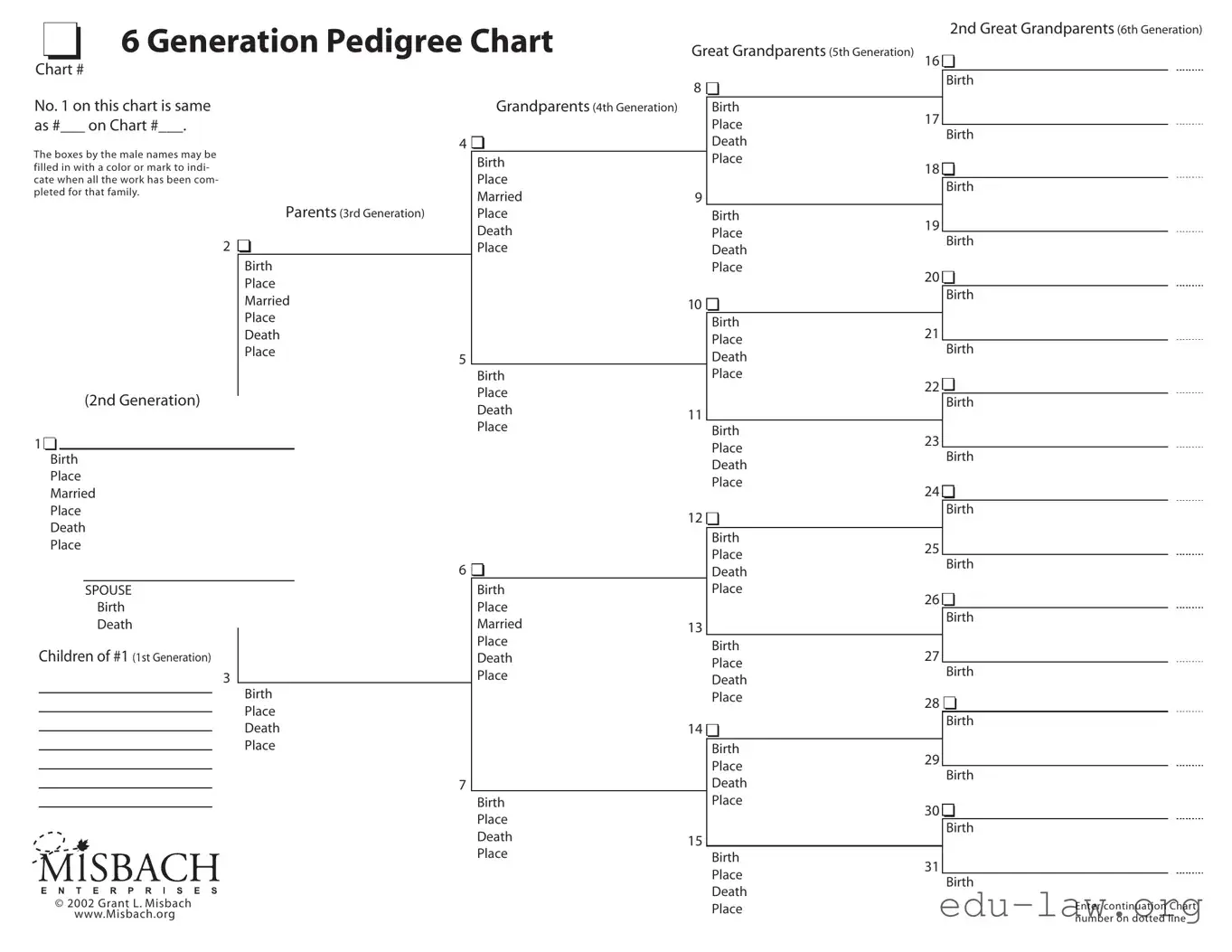
Understanding family relationships and lineage can be a complex but rewarding endeavor. The Pedigree Chart form serves as a vital tool for individuals looking to trace their ancestry and document familial connections. This form typically features a graphical representation of family members across generations, allowing users to visualize their heritage in a clear and organized manner. It often includes spaces to record names, birth dates, marriage dates, and even death dates, enabling a comprehensive overview of one’s family tree. Additionally, the chart can illustrate various branches of the family, showing direct descendants and ancestors, which helps in identifying patterns and connections that may not be immediately apparent. By utilizing the Pedigree Chart form, individuals can create a lasting record of their family history, fostering a deeper understanding of their roots and the stories that have shaped their lineage.
|
|
|
|
|
6 Generation Pedigree Chart |
Great Grandparents (5th Generation) |
|
|
2nd Great Grandparents (6th Generation) |
||||||||||
|
|
|
|
|
|||||||||||||||
|
|
|
|
|
16 □ |
||||||||||||||
Chart # |
|||||||||||||||||||
|
|
|
|
|
|
|
|
|
|
|
|
Birth |
|
||||||
|
|
□ |
|
|
|
|
|
|
|
|
8 |
□ |
|
|
|||||
No. 1 on this chart is same |
|
|
Grandparents (4th Generation) |
|
|
|
|
||||||||||||
|
|
|
Birth |
17 |
|
|
|
||||||||||||
as #___ on Chart #___. |
|
|
|
|
Place |
|
|
|
|||||||||||
|
|
|
|
|
|
Birth |
|||||||||||||
|
|
|
|
|
|
|
|
|
|
4 |
|
□ |
|
Death |
|
|
|||
The boxes by the male names may be |
|
|
|
|
|
|
|||||||||||||
|
|
Place |
|
|
|
|
|||||||||||||
|
|
Birth |
|
18 |
|
|
|
||||||||||||
filled in with a color or mark to indi- |
|
|
|
|
|
□ |
|
||||||||||||
|
|
Place |
|
|
|
|
|||||||||||||
cate when all the work has been com- |
|
|
|
|
|
|
|||||||||||||
|
|
|
|
|
|||||||||||||||
pleted for that family. |
|
|
Married |
9 |
|
|
|
Birth |
|||||||||||
|
|
|
|
|
|
|
|||||||||||||
|
|
|
|
|
|
|
|
Parents (3rd Generation) |
|
|
|
|
|
|
|
||||
|
|
|
|
|
|
|
|
|
|
Place |
|
Birth |
19 |
|
|
|
|||
|
|
|
|
|
|
|
|
|
|
|
|
Death |
|
Place |
|
|
|
||
|
|
|
|
|
|
2 |
|
□ |
|
|
|
|
|
Birth |
|||||
|
|
|
|
|
|
|
|
|
Place |
|
Death |
|
|
||||||
|
|
|
|
|
|
|
|
|
|
|
|
|
|
||||||
|
|
|
|
|
|
|
|
|
|
|
|
|
|
||||||
|
|
|
|
|
|
|
|
Birth |
|
|
|
|
Place |
20 |
|
□ |
|
||
|
|
|
|
|
|
|
|
Place |
|
|
|
|
|
|
|
||||
|
|
|
|
|
|
|
|
Married |
|
|
|
10 |
□ |
|
|
Birth |
|||
|
|
|
|
|
|
|
|
|
|
|
|
|
|
|
|||||
|
|
|
|
|
|
|
|
Place |
|
|
|
|
|
|
|
||||
|
|
|
|
|
|
|
|
|
|
|
|
Birth |
|
|
|
|
|||
|
|
|
|
|
|
|
|
Death |
|
|
|
|
21 |
|
|
|
|||
|
|
|
|
|
|
|
|
|
|
|
|
Place |
|
|
|
||||
|
|
|
|
|
|
|
|
Place |
|
|
|
|
|
|
Birth |
||||
|
|
|
|
|
|
|
|
5 |
|
|
|
Death |
|
|
|||||
|
|
|
|
|
|
|
|
|
|
|
|
|
|
|
|
|
|||
|
|
|
|
|
|
|
|
|
|
|
|
Birth |
|
Place |
22 |
|
□ |
|
|
|
|
|
|
|
|
|
|
|
|
|
|
Place |
|
|
|
|
|||
|
|
|
|
|
(2nd Generation) |
|
|
|
|
|
Birth |
||||||||
|
|
|
|
|
|
|
Death |
11 |
|
|
|
||||||||
|
|
|
|
|
|
|
|
|
|
|
|
|
|
|
|
|
|||
1 |
|
|
|
|
|
|
|
|
|
|
Place |
|
Birth |
23 |
|
|
|
||
|
|
|
|
|
|
|
|
|
|
|
|
|
|
|
|||||
|
|
|
|
|
|
|
|
|
|
|
|
Place |
|
|
|
||||
□Birth |
|
|
|
|
|
|
|
|
|
|
Birth |
||||||||
|
|
|
|
|
|
|
|
|
|
|
Death |
|
|
||||||
|
|
Place |
|
|
|
|
|
|
|
|
|
|
|
|
|
||||
|
|
|
|
|
|
|
|
|
|
|
Place |
24 |
|
|
|
||||
|
|
Married |
|
|
|
|
|
□ |
|
||||||||||
|
|
|
|
|
|
|
|
|
|||||||||||
|
|
Place |
|
|
|
|
|
|
|
|
12 |
□ |
|
|
Birth |
||||
|
|
Death |
|
|
|
|
|
|
|
||||||||||
|
|
|
|
|
|
|
|
|
|
||||||||||
|
|
Place |
|
|
|
|
|
|
|
|
|
Birth |
25 |
|
|
|
|||
|
|
|
|
|
|
|
|
|
|
|
Place |
|
|
|
|||||
|
|
|
|
|
|
|
|
|
|
6 |
|
□ |
|
|
|
Birth |
|||
|
|
|
|
|
|
|
|
|
|
|
|
Death |
|
|
|||||
|
|
|
|
|
|
|
|
|
|
|
|
|
|
|
|
||||
|
|
|
|
|
|
|
|
|
|
|
|
|
|
|
|
|
|||
|
|
|
|
|
SPOUSE |
|
|
Birth |
|
Place |
26 |
|
□ |
|
|||||
|
|
|
|
|
Birth |
|
|
Place |
|
|
|
|
|||||||
|
|
|
|
|
|
|
|
|
|
||||||||||
|
|
|
|
|
Death |
|
|
|
|
|
Married |
13 |
|
|
|
Birth |
|||
|
|
|
|
|
|
|
|
|
|
|
|
|
|
||||||
Children of #1 (1st Generation) |
|
|
|
|
|
Place |
|
Birth |
27 |
|
|
|
|||||||
|
|
|
|
|
Death |
|
|
|
|
||||||||||
|
|
|
|
|
Place |
|
|
|
|||||||||||
|
|
|
|
|
|
|
Birth |
||||||||||||
|
|
|
|
|
3 |
|
|
|
|
|
Place |
|
|
|
|||||
|
|
|
|
|
|
|
|
|
|
|
Death |
|
|
||||||
|
|
|
|
|
|
|
|
|
|
|
|
|
|
|
|||||
|
|
|
|
|
|
Birth |
|
|
|
|
|
|
|
||||||
|
|
|
|
|
|
|
|
|
|
|
|
Place |
28 |
|
□ |
|
|||
|
|
|
|
|
|
|
|
|
|
|
|||||||||
|
|
|
|
|
|
|
|
Place |
|
|
|
|
|
|
|
||||
|
|
|
|
|
|
|
|
|
|
|
|
|
|
Birth |
|||||
|
|
|
|
|
|
|
|
Death |
|
|
|
14 |
□ |
|
|
||||
|
|
|
|
|
|
|
|
|
|
|
|
|
|
|
|||||
|
|
|
|
|
|
|
|
Place |
|
|
|
|
Birth |
29 |
|
|
|
||
|
|
|
|
|
|
|
|
|
|
|
|
||||||||
|
|
|
|
|
|
|
|
|
|
|
|
|
|
Place |
|
|
|
||
|
|
|
|
|
|
|
|
|
|
|
|
|
|
|
|
Birth |
|||
|
|
|
|
|
|
|
|
|
|
|
|
|
|
|
|||||
|
|
|
|
|
|
|
|
|
|
7 |
|
|
|
Death |
|
|
|||
|
|
|
|
|
|
|
|
|
|
|
|
|
|
|
|
|
|||
|
|
|
|
|
|
|
|
|
|
|
|
|
|
|
|
||||
|
|
|
|
|
|
|
|
|
|
|
|
Birth |
|
Place |
30 |
|
□ |
|
|
|
|
|
|
|
|
|
|
|
|
|
|
Place |
|
|
|
|
|||
|
|
|
|
|
|
|
|
|
|
|
|
|
|
|
Birth |
||||
|
|
|
|
|
|
|
|
|
|
|
|
Death |
15 |
|
|
|
|||
|
|
|
|
|
|
|
|
|
|
|
|
|
|
|
|
|
|||
|
|
|
|
|
|
|
|
|
|
|
|
Place |
|
Birth |
31 |
|
|
|
|
|
|
|
|
|
|
|
|
|
|
|
|
|
|
|
|
|
|||
|
|
|
|
|
|
|
|
|
|
|
|
|
|
Place |
|
|
|
||
|
|
|
|
|
|
|
|
|
|
|
|
|
|
|
|
Birth |
|||
|
ENTERPRISES |
|
|
|
|
Death |
|
|
|||||||||||
|
|
|
|
|
|
|
|
|
|||||||||||
|
|
© 2002 Grant L. Misbach |
|
|
|
|
Place |
|
|
Enter continuation Chart |
|||||||||
|
|
|
www.Misbach.org |
|
|
|
|
|
|
||||||||||
|
|
|
|
|
|
|
|
|
|
number on dotted line |
|||||||||
|
|
|
|
|
|
|
|
|
|
|
|
|
|
|
|
|
|||
| Fact Name | Description |
|---|---|
| Definition | A Pedigree Chart form visually represents a person's ancestry, illustrating familial relationships across generations. |
| Purpose | This chart is commonly used in genetic counseling, inheritance planning, and family history research. |
| Structure | The chart typically includes symbols to denote different family members, such as circles for females and squares for males. |
| Generational Levels | Each generation is represented by a horizontal row, with the oldest generation at the top and the youngest at the bottom. |
| State-Specific Forms | Some states may require specific pedigree chart formats for legal or medical purposes, governed by local laws. |
| Governing Laws | For instance, California Family Code Section 7610 may impact the use of pedigree charts in legal proceedings. |
| Documentation | Accurate documentation of family relationships is crucial for the integrity of the chart and for any legal implications. |
| Confidentiality | Maintaining the confidentiality of sensitive information on the chart is essential, especially in medical contexts. |
| Updates | As family dynamics change, the pedigree chart should be updated regularly to reflect new relationships or changes. |
| Resources | Numerous online tools and software are available to assist in creating and maintaining pedigree charts. |
Completing the Pedigree Chart form is an important step in documenting family relationships. This process helps you gather and organize essential information about your family tree. Follow the steps carefully to ensure accuracy.
Once you have filled out the form, you can use it to visualize your family connections more clearly. This chart can serve as a valuable resource for various purposes, including genealogy research or medical history documentation.
What is a Pedigree Chart?
A Pedigree Chart is a visual representation of an individual's family history. It displays relationships between family members across generations, helping to trace lineage and understand hereditary traits. This chart is commonly used in genealogy research, as well as in medical settings to track genetic disorders.
Why would I need a Pedigree Chart?
Many people find a Pedigree Chart useful for various reasons. If you are interested in genealogy, it can help you document your ancestry and connect with distant relatives. In medical contexts, it assists healthcare providers in assessing genetic risks and understanding family health history.
How do I start filling out a Pedigree Chart?
Begin with yourself at the bottom of the chart. From there, add your parents above you, followed by your grandparents, and so on. Include siblings, spouses, and children as you build the chart. It’s important to gather accurate information, so consider reaching out to family members for details.
What information should I include in a Pedigree Chart?
Include names, birth dates, marriage dates, and death dates for each family member. You may also want to note any significant health issues or genetic conditions that run in your family. This information will provide a clearer picture of your family’s medical history.
Can I use a Pedigree Chart for medical purposes?
Yes, a Pedigree Chart is often used in medical settings to assess genetic risks. It allows healthcare professionals to visualize hereditary conditions and understand how traits may be passed down. This can be particularly important for conditions that have a familial link.
Is there a specific format I should follow for the Pedigree Chart?
While there are standard formats, you can adapt the chart to fit your needs. Typically, squares represent males and circles represent females. Lines connect individuals to show relationships, such as marriages and offspring. Make sure your chart is clear and easy to read.
How can I share my Pedigree Chart with others?
You can share your Pedigree Chart in several ways. Consider printing it out for family gatherings or sending a digital copy via email. Online genealogy platforms also allow you to upload and share your chart with others who may be researching the same lineage.
What if I don’t know all the details about my ancestors?
It’s okay if you don’t have all the information. Start with what you know and fill in gaps as you gather more details. Talk to family members, search public records, or use online genealogy resources to help uncover additional information.
Are there any tools or software that can help me create a Pedigree Chart?
Yes, there are many tools and software available that can assist you in creating a Pedigree Chart. Some popular options include genealogy websites, mobile apps, and dedicated software programs. These tools often provide templates and additional features to help you organize your family history.
How often should I update my Pedigree Chart?
It’s a good idea to update your Pedigree Chart regularly, especially after significant family events like births, marriages, or deaths. Keeping your chart current ensures that it remains a valuable resource for you and your family in the future.
Failing to include all relevant family members. It is essential to document every individual who is part of the lineage, including siblings, parents, and grandparents.
Inaccurate spelling of names. Misspellings can lead to confusion and make it difficult to trace family connections.
Not providing complete dates of birth and death. Dates are crucial for establishing timelines and understanding genetic inheritance.
Neglecting to indicate relationships clearly. Each individual should be accurately connected to their respective family members to avoid misinterpretation.
Using inconsistent formats for dates. Maintaining a uniform format, such as MM/DD/YYYY, helps in clarity and organization.
Omitting medical history information. Including health conditions and genetic disorders can provide valuable insights for future generations.
Not verifying information with family members. Collaborating with relatives can ensure accuracy and fill in gaps in knowledge.
Overlooking the importance of legibility. Handwritten entries should be clear, and typed forms should be free of errors to ensure readability.
The Pedigree Chart form is a valuable tool for understanding family lineage and genetic history. To complement this form, several other documents can provide additional insights and details. Below is a list of commonly used forms and documents that often accompany the Pedigree Chart.
Using these documents alongside the Pedigree Chart can help create a more comprehensive picture of family history and relationships. It is crucial to gather and organize this information carefully for clarity and accuracy.
The Family Tree is a document that visually represents the relationships among family members across generations. Like the Pedigree Chart, it includes names, birth dates, and sometimes marriage dates. Both documents serve to illustrate lineage and heritage, making it easier for individuals to understand their ancestry. The Family Tree often expands beyond immediate relatives, including a broader network of ancestors, while the Pedigree Chart typically focuses on direct lineage, emphasizing blood relationships.
The Genetic Health History form is another document similar to the Pedigree Chart. This form collects information about family members' health conditions and genetic disorders. It is crucial for identifying hereditary health risks. Both documents require detailed information about relatives, including their health status and any relevant medical history. The Genetic Health History form, however, focuses specifically on health-related data, whereas the Pedigree Chart emphasizes familial connections.
Ancestry Reports share similarities with the Pedigree Chart in that they provide insights into an individual’s lineage. These reports often include data about ethnic backgrounds and geographic origins. Both documents aim to trace family roots, but Ancestry Reports typically use DNA analysis to offer a more comprehensive view of ancestry. The Pedigree Chart, on the other hand, relies on documented relationships and historical records to construct family trees.
The Adoption Records are also comparable to the Pedigree Chart. These records document the legal process of adoption and often include information about the biological and adoptive families. Both documents aim to clarify family relationships, but Adoption Records focus on the legal aspects of family ties. The Pedigree Chart is more concerned with biological lineage, while Adoption Records provide essential information for understanding the complexities of adopted individuals' backgrounds.
When filling out the Pedigree Chart form, it's important to follow certain guidelines to ensure accuracy and clarity. Here are seven things to keep in mind:
Pedigree charts are valuable tools in genetics and family history research, yet many misconceptions surround their use and purpose. Below are nine common misunderstandings about pedigree charts, along with clarifications to help demystify this important resource.
While pedigree charts are often used to trace hereditary conditions, they can also illustrate family relationships and lineage, regardless of health issues.
Anyone can create a pedigree chart. With some basic information about family relationships, individuals can easily draft their own charts.
Although they are commonly used in medicine, pedigree charts also serve genealogical purposes, helping families understand their ancestry and heritage.
Typically, a pedigree chart focuses on direct ancestors and their descendants, rather than including every relative. It highlights key relationships instead.
Pedigree charts can vary in design and complexity. Some may be simple, while others include detailed information about each individual.
While software can assist in creating detailed charts, traditional methods using pen and paper are perfectly acceptable and effective.
Pedigree charts can be beneficial across all cultures. They help individuals understand their familial connections, regardless of cultural background.
Pedigree charts are dynamic documents. As new information about family members emerges, updates can and should be made to reflect the latest data.
With a little guidance, most people can learn to read and interpret pedigree charts. The symbols and structure are designed to be straightforward.
By addressing these misconceptions, individuals can better appreciate the utility of pedigree charts in both medical and genealogical contexts.
Filling out a Pedigree Chart form can be an important step in understanding family health history and genetic traits. Here are some key takeaways to keep in mind:
Using the Pedigree Chart effectively can help you and your family understand health risks and patterns. Take your time and ensure accuracy for the best results.