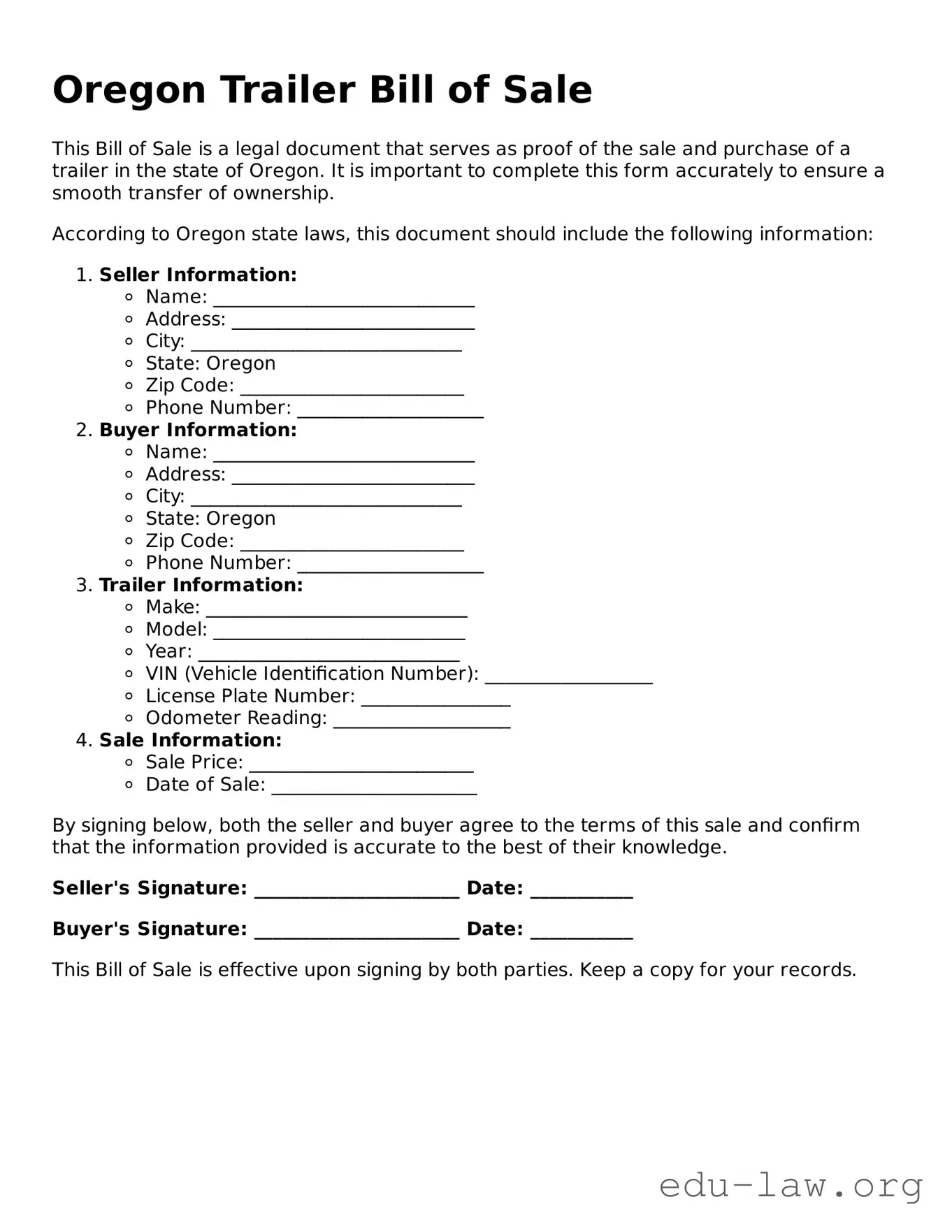
When it comes to buying or selling a trailer in Oregon, having the right documentation is essential to ensure a smooth transaction. The Oregon Trailer Bill of Sale form serves as a crucial legal document that outlines the details of the sale between the buyer and the seller. This form typically includes important information such as the names and addresses of both parties, a description of the trailer, including its make, model, year, and Vehicle Identification Number (VIN), as well as the purchase price. Additionally, it often contains a declaration of any liens or encumbrances on the trailer, ensuring that the buyer is fully informed about the trailer's title status. By completing this form, both parties can protect their interests and facilitate the transfer of ownership, making it a vital step in the buying and selling process. Understanding the nuances of this form can help you navigate the complexities of trailer ownership in Oregon with confidence.
Oregon Trailer Bill of Sale
This Bill of Sale is a legal document that serves as proof of the sale and purchase of a trailer in the state of Oregon. It is important to complete this form accurately to ensure a smooth transfer of ownership.
According to Oregon state laws, this document should include the following information:
By signing below, both the seller and buyer agree to the terms of this sale and confirm that the information provided is accurate to the best of their knowledge.
Seller's Signature: ______________________ Date: ___________
Buyer's Signature: ______________________ Date: ___________
This Bill of Sale is effective upon signing by both parties. Keep a copy for your records.
| Fact Name | Description |
|---|---|
| Purpose | The Oregon Trailer Bill of Sale form is used to document the sale and transfer of ownership of a trailer in Oregon. |
| Governing Laws | The form is governed by the Oregon Revised Statutes, specifically ORS 803.090 regarding the transfer of ownership. |
| Required Information | Essential details include the seller's and buyer's names, addresses, trailer description, and sale price. |
| Signature Requirement | Both the seller and buyer must sign the form to validate the transaction and ensure legal compliance. |
| Record Keeping | It is advisable for both parties to keep a copy of the completed bill of sale for their records and potential future reference. |
After you have obtained the Oregon Trailer Bill of Sale form, you will need to fill it out accurately to ensure a smooth transfer of ownership. Follow these steps carefully to complete the form.
Once you have completed the form, ensure that both parties retain a copy for their records. This will serve as proof of the transaction and facilitate any future needs related to the trailer.
What is the Oregon Trailer Bill of Sale form?
The Oregon Trailer Bill of Sale form is a legal document that records the sale and transfer of ownership of a trailer in the state of Oregon. This form serves as proof of the transaction between the buyer and the seller, detailing important information about the trailer and the parties involved. It is crucial for ensuring that the new owner can register the trailer and obtain the necessary titles or permits.
Why do I need a Bill of Sale for my trailer?
A Bill of Sale is essential for several reasons. First, it provides a clear record of the transaction, protecting both the buyer and the seller. Second, it helps establish ownership, which is particularly important when registering the trailer with the Department of Motor Vehicles (DMV). Lastly, it can serve as evidence in case of disputes regarding the sale or ownership in the future.
What information is required on the Oregon Trailer Bill of Sale?
The form typically requires key details such as the names and addresses of both the buyer and seller, the trailer's make, model, year, and Vehicle Identification Number (VIN). Additionally, the sale price and the date of the transaction should be included. Both parties must sign the document to validate the sale.
Can I create my own Bill of Sale for a trailer?
Yes, you can create your own Bill of Sale, but it must include all the necessary information to be valid. It is often recommended to use a template or official form to ensure that you don’t miss any important details. The Oregon Trailer Bill of Sale form is designed to meet the state's requirements, making it a reliable choice.
Is the Bill of Sale required for all trailer sales in Oregon?
While a Bill of Sale is not legally required for every trailer sale in Oregon, it is highly advisable to have one. It protects both parties and simplifies the registration process. In cases where the trailer is being registered for the first time or when there is a change in ownership, having a Bill of Sale is essential.
How do I complete the Oregon Trailer Bill of Sale form?
To complete the form, fill in the required information accurately. Start with the buyer's and seller's details, followed by the trailer's specifications. Clearly state the sale price and the date of the transaction. Once all fields are filled, both parties should sign and date the form to finalize the sale. Keep copies for your records.
Where do I submit the Bill of Sale after completing it?
After completing the Bill of Sale, the buyer should keep it for their records. If the buyer intends to register the trailer, they will need to present the Bill of Sale to the DMV along with any other required documents. The seller should also retain a copy for their records as proof of the sale.
What should I do if I lose the Bill of Sale?
If you lose the Bill of Sale, it’s important to act quickly. You can request a copy from the seller if they still have their records. If that’s not possible, you may need to create a new Bill of Sale, including as much detail as possible about the original transaction. This will help in proving ownership when registering the trailer or resolving any disputes.
Not including all required information. The form asks for specific details such as the seller's and buyer's names, addresses, and signatures. Omitting any of this information can lead to delays or issues in the transfer process.
Failing to accurately describe the trailer. It's important to provide a clear and complete description of the trailer, including the make, model, year, and Vehicle Identification Number (VIN). Inaccuracies can create confusion or disputes later on.
Not signing the form. Both the seller and the buyer must sign the Bill of Sale for it to be valid. A missing signature can render the document ineffective, leading to potential legal complications.
Neglecting to keep a copy. After filling out the form, it's crucial for both parties to retain a copy of the Bill of Sale. This document serves as proof of the transaction and can be important for future reference.
When purchasing or selling a trailer in Oregon, several documents may accompany the Trailer Bill of Sale to ensure a smooth transaction. Each of these documents serves a specific purpose and helps protect both the buyer and the seller.
These documents work together to facilitate the legal transfer of ownership and ensure compliance with state regulations. Having them prepared in advance can help streamline the process and provide peace of mind for both parties involved in the transaction.
The Oregon Vehicle Bill of Sale is a document that serves a similar purpose to the Trailer Bill of Sale. Both forms are used to transfer ownership of a vehicle from one party to another. They include essential details such as the buyer's and seller's names, addresses, and signatures. Furthermore, both documents typically require information about the vehicle, including its make, model, year, and vehicle identification number (VIN). This ensures that the transaction is clearly documented and can be referenced in the future if needed.
The Oregon Boat Bill of Sale also resembles the Trailer Bill of Sale. Like the trailer transaction, a boat bill of sale provides proof of the transfer of ownership for a watercraft. It contains similar information, such as the buyer's and seller's details, a description of the boat, and any relevant registration numbers. Both documents serve to protect the rights of both parties and can be used for registration purposes with the state.
The Oregon RV Bill of Sale is another document that parallels the Trailer Bill of Sale. When purchasing or selling a recreational vehicle, this form provides a legal record of the transaction. It includes similar information about the buyer and seller, as well as details about the RV, including its year, make, model, and VIN. Both documents aim to facilitate a smooth transfer of ownership while protecting the interests of both parties involved.
The Oregon Snowmobile Bill of Sale is comparable to the Trailer Bill of Sale in that it documents the sale of a snowmobile. This form captures essential information about the buyer and seller, and it details the snowmobile's specifications. Like the other bills of sale, it serves as a legal record that can be referenced in future transactions or registrations, ensuring clarity and transparency in the ownership transfer process.
Finally, the Oregon ATV Bill of Sale is similar to the Trailer Bill of Sale in that it is used for the sale of all-terrain vehicles. This document includes the necessary information about both parties and a description of the ATV, including its make, model, and VIN. Both documents fulfill the same purpose of providing a clear, legal record of ownership transfer, which is important for both the buyer and seller.
When filling out the Oregon Trailer Bill of Sale form, it's essential to ensure that all information is accurate and complete. Here are some important dos and don'ts to keep in mind:
By following these guidelines, you can help ensure a smooth and legally sound transaction.
The Oregon Trailer Bill of Sale form is a crucial document for anyone buying or selling a trailer in the state. However, several misconceptions exist regarding its purpose and requirements. Below are five common misunderstandings:
Some people believe that a bill of sale is only needed for expensive trailers. In reality, regardless of the trailer's value, having a bill of sale protects both the buyer and seller by providing a record of the transaction.
Many assume that only the seller’s signature is required. However, both the buyer and seller should sign the bill of sale to validate the transaction and confirm mutual agreement.
Some individuals confuse the bill of sale with the title transfer process. While both documents are important, the bill of sale serves as proof of purchase, whereas the title transfer officially changes ownership.
Though a handwritten bill of sale is permissible, it is advisable to use a standardized form. This ensures that all necessary information is included and reduces the likelihood of errors or omissions.
Some believe that a bill of sale is unnecessary if the trailer is a gift. However, having a bill of sale can still be beneficial for record-keeping and may be required for registration purposes.
Understanding these misconceptions can help ensure a smoother transaction when buying or selling a trailer in Oregon. Always consider consulting with a professional if there are any uncertainties regarding the process.
When filling out and using the Oregon Trailer Bill of Sale form, it is important to keep several key points in mind. Below are essential takeaways to ensure a smooth process.