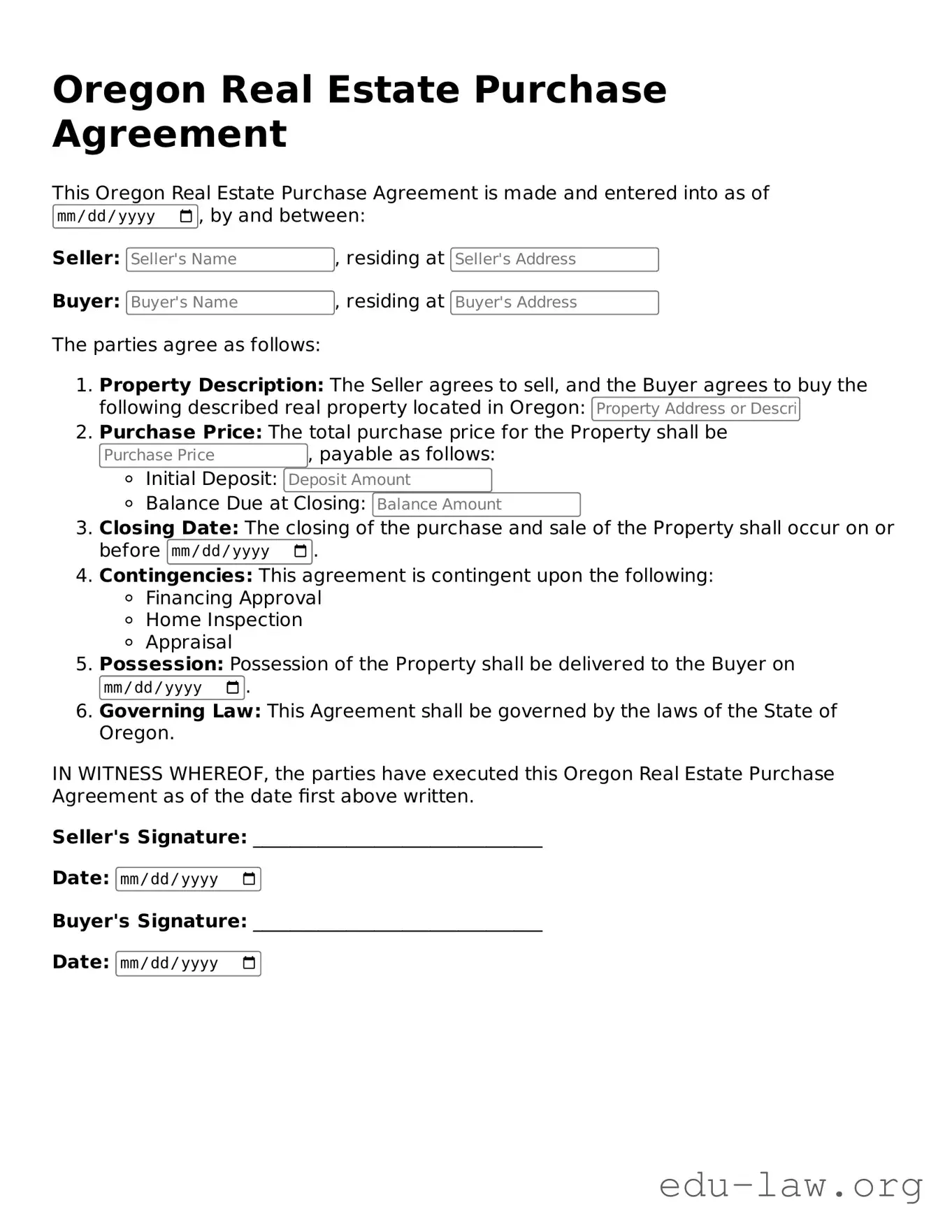
The Oregon Real Estate Purchase Agreement form is a crucial document that facilitates the buying and selling of residential properties in the state. This form outlines the essential terms and conditions agreed upon by both the buyer and the seller, ensuring clarity and protection for all parties involved. Key aspects of the agreement include the purchase price, financing details, and the closing date, which all play a significant role in the transaction process. Additionally, the form addresses contingencies, such as inspections and appraisals, which allow buyers to safeguard their investment. It also encompasses provisions regarding earnest money deposits, disclosures, and the responsibilities of each party. By detailing these elements, the Oregon Real Estate Purchase Agreement serves as a comprehensive guide, helping to prevent misunderstandings and disputes throughout the real estate transaction. Understanding this form is vital for anyone looking to navigate the complexities of the real estate market in Oregon.
Oregon Real Estate Purchase Agreement
This Oregon Real Estate Purchase Agreement is made and entered into as of , by and between:
Seller: , residing at
Buyer: , residing at
The parties agree as follows:
IN WITNESS WHEREOF, the parties have executed this Oregon Real Estate Purchase Agreement as of the date first above written.
Seller's Signature: _______________________________
Date:
Buyer's Signature: _______________________________
Date:
| Fact Name | Description |
|---|---|
| Governing Law | The Oregon Real Estate Purchase Agreement is governed by the laws of the State of Oregon. |
| Purpose | This form is used to outline the terms and conditions for the sale of real property in Oregon. |
| Parties Involved | The agreement typically involves a buyer and a seller, who must both sign the document. |
| Contingencies | Buyers may include contingencies such as financing, inspections, or appraisal in the agreement. |
| Disclosure Requirements | Oregon law requires sellers to provide specific disclosures about the property, which must be included in the agreement. |
Once you have the Oregon Real Estate Purchase Agreement form in hand, you'll be ready to fill it out. This document will guide you through the process of detailing the terms of the property sale. Follow these steps carefully to ensure all necessary information is provided accurately.
After completing the form, review it carefully to ensure all information is correct. Once both parties have signed, the agreement is ready to be executed, moving you closer to finalizing the property sale.
What is the Oregon Real Estate Purchase Agreement form?
The Oregon Real Estate Purchase Agreement form is a legal document used in real estate transactions within the state of Oregon. It outlines the terms and conditions under which a buyer agrees to purchase a property from a seller. This form includes essential details such as the purchase price, financing arrangements, and contingencies that must be met for the sale to proceed.
Who should use the Oregon Real Estate Purchase Agreement?
This form is primarily used by buyers and sellers involved in real estate transactions in Oregon. Real estate agents often assist in preparing and submitting the agreement. However, individuals can also use it independently, provided they understand the terms and implications of the agreement.
What key elements are included in the agreement?
The agreement typically includes the property description, purchase price, earnest money deposit, closing date, and any contingencies such as inspections or financing. It may also cover disclosures required by law, which can vary based on the property's location and condition.
Can the Oregon Real Estate Purchase Agreement be modified?
Yes, the agreement can be modified as long as both parties agree to the changes. Any modifications should be documented in writing and signed by both the buyer and seller to ensure clarity and enforceability. This process helps prevent misunderstandings later on.
What happens if the buyer or seller backs out of the agreement?
If either party decides to back out after signing the agreement, they may face consequences. Depending on the terms outlined in the agreement, the other party might be entitled to the earnest money deposit or other remedies. However, if the withdrawal is due to a contingency that was not met, such as failing a home inspection, there may be no penalties.
Is the Oregon Real Estate Purchase Agreement legally binding?
Yes, once signed by both the buyer and seller, the Oregon Real Estate Purchase Agreement becomes a legally binding contract. This means that both parties are obligated to adhere to the terms outlined in the agreement. It is crucial for both parties to understand their rights and responsibilities before signing.
Where can I obtain a copy of the Oregon Real Estate Purchase Agreement?
The Oregon Real Estate Purchase Agreement can typically be obtained through real estate agents, online legal document services, or local real estate associations. It’s essential to ensure that the version you use is up-to-date and complies with Oregon laws, as regulations can change.
Inaccurate Property Description: One common mistake is failing to provide a complete and accurate description of the property being purchased. This includes not only the address but also the legal description, which can be found in public records. Without this crucial information, the agreement may lack clarity and could lead to disputes later on.
Neglecting to Specify Contingencies: Many buyers overlook the importance of outlining contingencies in the agreement. Contingencies are conditions that must be met for the sale to proceed, such as obtaining financing or completing a satisfactory home inspection. Omitting these can result in misunderstandings and potential financial loss.
Incorrectly Filling Out Dates: Dates play a vital role in the Real Estate Purchase Agreement. Buyers often make the mistake of not specifying important dates, such as the closing date or the deadline for contingencies. Failing to clearly indicate these dates can lead to confusion and delays in the transaction.
Missing Signatures: Lastly, a frequent oversight is neglecting to obtain all necessary signatures. Both the buyer and seller must sign the agreement for it to be legally binding. If any required signatures are missing, the agreement may not hold up in court, leaving parties vulnerable to legal complications.
When engaging in a real estate transaction in Oregon, several forms and documents complement the Real Estate Purchase Agreement. These documents help clarify the terms of the sale, protect the interests of the parties involved, and ensure compliance with state regulations. Below is a list of commonly used forms that you may encounter in the process.
Understanding these documents is crucial for anyone involved in a real estate transaction. Each form plays a specific role in ensuring that both buyers and sellers are informed and protected throughout the process. Familiarity with these documents can help facilitate a smoother transaction and contribute to a successful real estate experience.
The Oregon Real Estate Purchase Agreement is similar to the Residential Purchase Agreement used in many states. Both documents outline the terms of a real estate transaction between a buyer and a seller. They typically include details such as the purchase price, closing date, and contingencies. Like the Oregon form, the Residential Purchase Agreement serves to protect the interests of both parties and provides a clear framework for the transaction.
Another document that shares similarities is the Commercial Purchase Agreement. While focused on commercial properties, it also details the terms of sale, including price and conditions. Both agreements require signatures from both parties and often include contingencies related to financing or inspections. The main difference lies in the type of property being purchased, but the structure and purpose remain consistent.
The Lease Purchase Agreement is another related document. This agreement allows a tenant to lease a property with the option to buy it later. Like the Oregon Real Estate Purchase Agreement, it includes terms regarding the purchase price and timelines. Both agreements aim to clarify the expectations and responsibilities of the involved parties, ensuring a smoother transaction process.
The Option to Purchase Agreement is similar in that it grants a buyer the right to purchase a property at a later date. This document outlines the terms of the option, including the purchase price and duration. While it differs in purpose from a purchase agreement, both documents are designed to protect the interests of the buyer and seller and provide a clear understanding of the transaction.
The Seller Financing Agreement also bears resemblance to the Oregon Real Estate Purchase Agreement. This document outlines the terms under which the seller will finance the buyer's purchase. Both agreements cover essential details such as payment terms, interest rates, and responsibilities. They ensure that both parties are aware of their obligations, promoting transparency in the transaction.
Lastly, the Addendum to Purchase Agreement is similar in that it modifies or adds terms to an existing purchase agreement. This document can address specific concerns or contingencies that arise during the negotiation process. Like the Oregon Real Estate Purchase Agreement, it aims to clarify the terms of the transaction and ensure that both parties are in agreement about the changes made.
When filling out the Oregon Real Estate Purchase Agreement form, it is important to approach the task with care. Here are six essential things to consider:
Taking these steps can help ensure that your agreement is properly completed and legally binding.
When it comes to the Oregon Real Estate Purchase Agreement form, several misconceptions can lead to confusion for buyers and sellers. Understanding these myths is crucial for a smooth transaction. Here are seven common misconceptions:
While the Oregon Real Estate Purchase Agreement is a commonly used template, it often needs adjustments to fit specific situations. Each transaction is unique, and personalizing the agreement can help address particular needs.
Anyone can fill out the Oregon Real Estate Purchase Agreement. Buyers and sellers can complete it themselves, but having professional guidance can help ensure accuracy and compliance with laws.
Filling out the agreement does not guarantee a sale. Many factors, like financing and inspections, can affect whether the transaction is completed.
Changes can be made to the agreement even after it has been signed, but both parties must agree to any modifications. It's important to document any changes properly.
The agreement includes many details beyond the sale price, such as contingencies, closing dates, and responsibilities for repairs. These elements are crucial for a successful transaction.
A purchase agreement is different from a lease. A purchase agreement is for buying property, while a lease is for renting it. Understanding this difference is key for both buyers and renters.
The agreement becomes legally binding only when all parties have signed it. Until then, negotiations can continue, and terms can be adjusted.
Being aware of these misconceptions can help you navigate the real estate process in Oregon more effectively. Always consider seeking professional advice when dealing with legal documents.
When engaging in real estate transactions in Oregon, understanding the Real Estate Purchase Agreement (REPA) is essential. Here are five key takeaways to keep in mind: