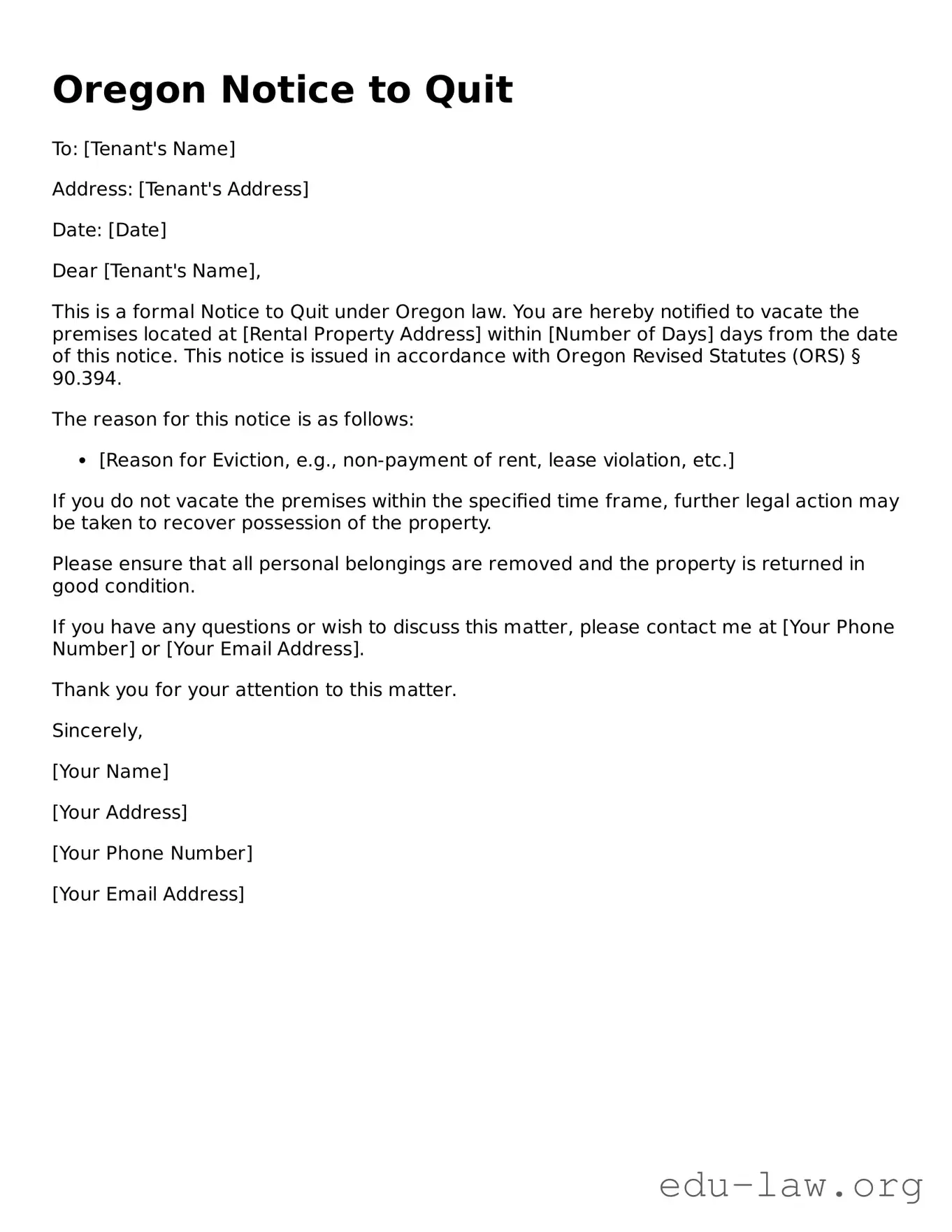
The Oregon Notice to Quit form serves as a critical tool for landlords and property owners when addressing tenancy issues. This form is typically used to formally notify a tenant that they must vacate the rental property, often due to specific reasons such as non-payment of rent, lease violations, or the expiration of a rental agreement. Understanding the nuances of this document is essential for both landlords and tenants, as it outlines the necessary steps and timelines involved in the eviction process. The form specifies the grounds for termination, ensuring that the tenant is informed of the reasons behind the notice. Additionally, it includes important details such as the date by which the tenant must vacate and any required actions that must be taken before the eviction can proceed. Familiarity with the Oregon Notice to Quit is vital for ensuring compliance with state laws and protecting the rights of both parties involved in the rental agreement.
Oregon Notice to Quit
To: [Tenant's Name]
Address: [Tenant's Address]
Date: [Date]
Dear [Tenant's Name],
This is a formal Notice to Quit under Oregon law. You are hereby notified to vacate the premises located at [Rental Property Address] within [Number of Days] days from the date of this notice. This notice is issued in accordance with Oregon Revised Statutes (ORS) § 90.394.
The reason for this notice is as follows:
If you do not vacate the premises within the specified time frame, further legal action may be taken to recover possession of the property.
Please ensure that all personal belongings are removed and the property is returned in good condition.
If you have any questions or wish to discuss this matter, please contact me at [Your Phone Number] or [Your Email Address].
Thank you for your attention to this matter.
Sincerely,
[Your Name]
[Your Address]
[Your Phone Number]
[Your Email Address]
| Fact Name | Description |
|---|---|
| Purpose | The Oregon Notice to Quit form is used by landlords to formally notify tenants to vacate the rental property. |
| Governing Law | This form is governed by Oregon Revised Statutes, specifically ORS 90.392. |
| Delivery Method | The notice can be delivered in person, via certified mail, or posted on the property if the tenant is absent. |
| Timeframe | Tenants typically have a set period, often 72 hours, to respond or vacate the premises after receiving the notice. |
After obtaining the Oregon Notice to Quit form, you will need to complete it accurately to ensure it serves its intended purpose. This form is crucial for notifying tenants of the need to vacate a rental property, and any errors may lead to complications in the eviction process. Follow these steps to fill it out properly.
Once you have filled out the form, you will need to deliver it to the tenant. This can be done in person, via certified mail, or by posting it on the property, depending on the situation. Ensure that you keep a record of how and when the notice was delivered.
What is the Oregon Notice to Quit form?
The Oregon Notice to Quit form is a legal document used by landlords to notify tenants that they must vacate the rental property. This form is typically used when a tenant has violated the terms of their lease or rental agreement, or when the landlord wishes to terminate a month-to-month tenancy. The notice provides the tenant with a specific timeframe to leave the property.
When is a Notice to Quit required in Oregon?
A Notice to Quit is required when a landlord intends to terminate a tenancy for reasons such as non-payment of rent, lease violations, or when the landlord wants to end a month-to-month rental agreement. The specific reason for the termination will dictate the type of notice and the required notice period.
How much notice must a landlord give before filing for eviction?
The notice period varies depending on the reason for eviction. For non-payment of rent, a landlord must provide a 72-hour notice. For lease violations, a 30-day notice is typically required. If terminating a month-to-month tenancy, a 30-day notice is also necessary. Always check the latest regulations, as laws can change.
Can a tenant contest a Notice to Quit?
Yes, a tenant has the right to contest a Notice to Quit. If a tenant believes the notice is unjust or that they have rectified the issue (such as paying overdue rent), they can respond to the landlord. If the matter escalates, it may lead to a court hearing where both parties can present their case.
What happens if a tenant does not leave by the deadline?
If a tenant does not vacate the property by the deadline stated in the Notice to Quit, the landlord may proceed with filing for eviction in court. This legal process can lead to a judgment that allows the landlord to remove the tenant from the property, typically with the assistance of law enforcement.
Is there a specific format for the Notice to Quit in Oregon?
Yes, the Notice to Quit must include specific information such as the tenant's name, the address of the rental property, the reason for termination, and the deadline for vacating. It is advisable to follow a standard format to ensure compliance with Oregon laws.
Can a tenant receive a Notice to Quit for reasons other than non-payment of rent?
Absolutely. A Notice to Quit can be issued for various reasons, including lease violations, illegal activities on the property, or simply the landlord's decision to terminate a month-to-month rental agreement. Each reason has its own notice requirements.
What should a tenant do upon receiving a Notice to Quit?
Upon receiving a Notice to Quit, a tenant should carefully read the document to understand the reason for the notice and the timeline for vacating. It is important to address any issues mentioned in the notice, communicate with the landlord if possible, and seek legal advice if necessary. Taking prompt action can help protect a tenant's rights.
Not including the correct date: Failing to write the date on which the notice is being issued can lead to confusion about the timeline for the tenant to respond.
Incorrect tenant information: Providing inaccurate names or addresses for the tenant can result in the notice being deemed invalid. Always double-check this information.
Missing reason for the notice: If the form does not clearly state the reason for the notice to quit, the tenant may not understand the basis for the action, leading to disputes.
Failure to sign the notice: Not signing the form can render it ineffective. A signature indicates that the landlord is formally taking action.
Not providing proper delivery method: It’s essential to follow the legal requirements for delivering the notice. Simply handing it to the tenant or mailing it without following the correct procedure can cause issues.
Overlooking local laws: Each jurisdiction may have specific rules regarding notices to quit. Ignoring these can lead to complications and delays in the eviction process.
The Oregon Notice to Quit form is a critical document used in landlord-tenant relationships, particularly when a landlord seeks to terminate a tenancy. However, it is often accompanied by several other forms and documents that help clarify the legal process and ensure compliance with state laws. Below is a list of these documents, each serving a specific purpose in the context of rental agreements and evictions.
Understanding these accompanying documents is essential for both landlords and tenants. Each plays a role in ensuring that the rights and responsibilities of both parties are upheld throughout the rental process and any potential disputes that may arise.
The Oregon Notice to Quit form is similar to the Eviction Notice, which is used in many states to inform a tenant that they must vacate the rental property. Like the Notice to Quit, the Eviction Notice outlines the reasons for the eviction and provides a specific timeframe for the tenant to leave. Both documents serve as a formal communication from the landlord to the tenant, ensuring that the tenant is aware of their obligation to vacate and the potential legal consequences of failing to do so.
Another document that shares similarities with the Oregon Notice to Quit is the Lease Termination Letter. This letter is typically used when a landlord or tenant wishes to terminate a lease agreement at the end of its term. Like the Notice to Quit, it communicates the intention to end the rental relationship, but it often includes additional details regarding the final move-out date and any conditions related to the return of the security deposit. Both documents aim to clarify the expectations for both parties as they transition out of the rental agreement.
The Three-Day Notice to Pay Rent or Quit is also comparable to the Oregon Notice to Quit. This notice is specifically issued when a tenant has failed to pay rent on time. It provides the tenant with a short period—typically three days—to either pay the overdue rent or vacate the property. Similar to the Notice to Quit, it serves as a formal warning that legal action may follow if the tenant does not comply, emphasizing the importance of timely rent payments in maintaining the rental agreement.
The 30-Day Notice to Terminate Tenancy is another document that resembles the Oregon Notice to Quit. This notice is used by landlords to inform tenants that they must vacate the property within 30 days, often without cause. While the Notice to Quit may be issued for specific violations, the 30-Day Notice is more general. Both documents are essential for ensuring that tenants are given appropriate notice before any legal actions are taken to reclaim the property.
Similarly, the Notice of Non-Renewal is akin to the Oregon Notice to Quit. This document is issued when a landlord chooses not to renew a tenant’s lease at its expiration. It informs the tenant of the landlord's decision and provides them with a timeline to vacate the premises. Both notices aim to protect the rights of landlords while ensuring tenants have sufficient time to find alternative housing.
The Notice to Comply or Quit is another document that parallels the Oregon Notice to Quit. This notice is issued when a tenant has violated a term of the lease agreement, such as having unauthorized pets or causing property damage. The Notice to Comply or Quit gives the tenant a chance to rectify the violation or face eviction. Both documents highlight the importance of adhering to lease terms and provide a clear path for resolution.
The Notice of Lease Violation also shares similarities with the Oregon Notice to Quit. This document is used to inform a tenant that they have breached specific lease provisions, such as noise complaints or illegal activities. It outlines the nature of the violation and may provide a timeframe for the tenant to address the issue. Both notices serve to communicate serious concerns to tenants while allowing them an opportunity to correct their behavior.
Finally, the Conditional Quit Notice is comparable to the Oregon Notice to Quit. This notice is issued when a tenant has committed a serious violation, such as illegal activity, and provides a specific timeframe to vacate. Unlike the standard Notice to Quit, which may address various issues, the Conditional Quit Notice is more focused on immediate threats to the property or other tenants. Both documents aim to protect the landlord’s interests while ensuring that tenants are made aware of the severity of their actions.
When it comes to filling out the Oregon Notice to Quit form, following certain guidelines can help ensure that the process goes smoothly. Here’s a list of things you should and shouldn’t do:
By following these guidelines, you can help facilitate a clear and effective communication process with your tenant. Remember, clarity and compliance are key to avoiding misunderstandings and potential legal issues.
When dealing with the Oregon Notice to Quit form, several misconceptions can arise. Understanding these can help tenants and landlords navigate the process more effectively. Here are eight common misconceptions:
Understanding these misconceptions can empower both tenants and landlords to approach the situation with clarity and confidence.
Understanding the Oregon Notice to Quit form is crucial for both landlords and tenants. Here are some key takeaways to keep in mind:
By being informed about the Notice to Quit, both landlords and tenants can navigate the eviction process more effectively and understand their rights and responsibilities.