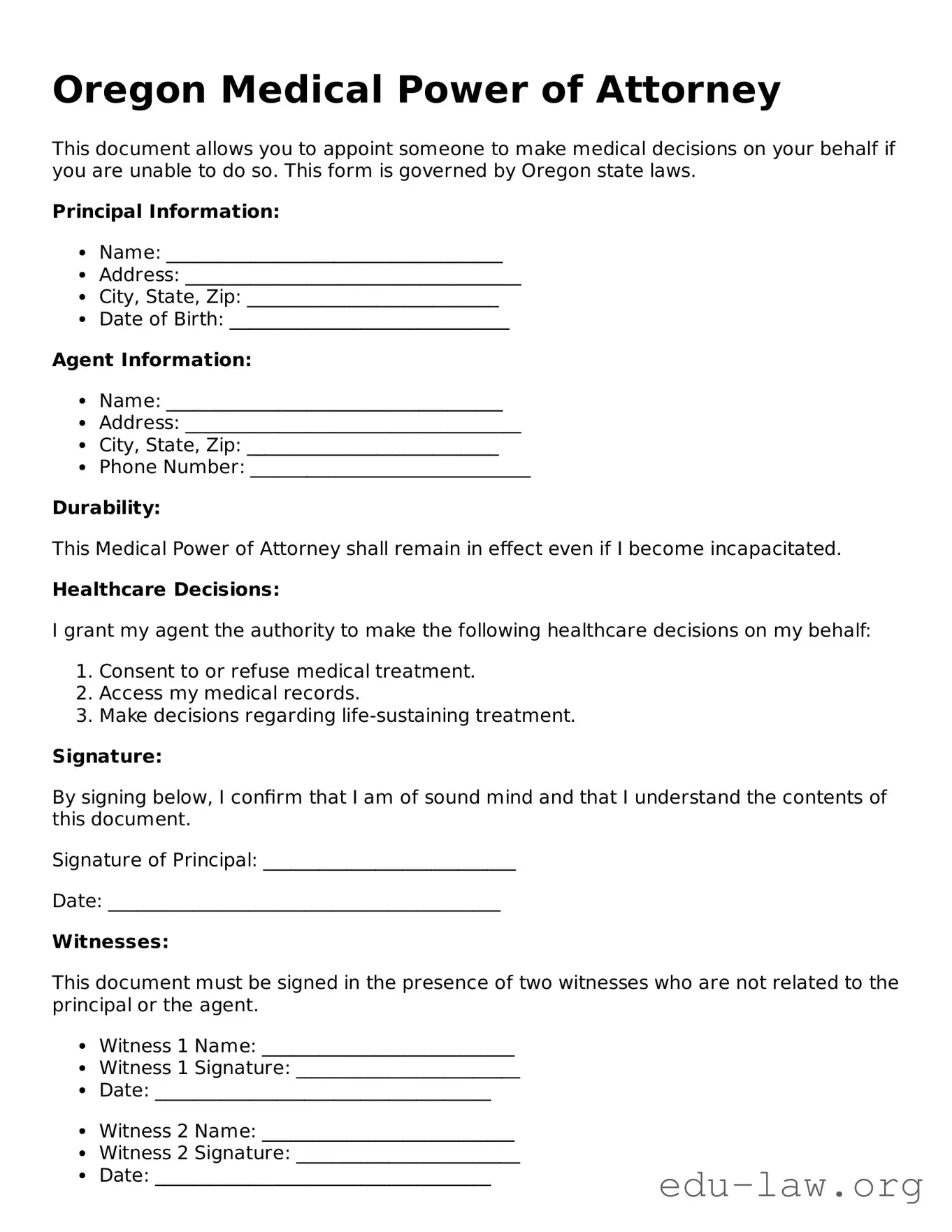
When it comes to making healthcare decisions, having a clear plan in place is essential, and the Oregon Medical Power of Attorney form serves as a vital tool in this process. This legal document allows individuals to designate a trusted person, often referred to as an agent, to make medical decisions on their behalf if they become unable to do so themselves. It covers a wide range of healthcare choices, from routine medical treatments to end-of-life care, ensuring that your preferences are honored even when you cannot communicate them. The form also provides guidance on how to appoint an agent, the scope of their authority, and the importance of discussing your wishes with them ahead of time. By taking the time to complete this form, you empower someone you trust to advocate for your healthcare needs, aligning medical decisions with your values and desires. Understanding the nuances of this document can make a significant difference in ensuring that your healthcare wishes are respected and fulfilled.
Oregon Medical Power of Attorney
This document allows you to appoint someone to make medical decisions on your behalf if you are unable to do so. This form is governed by Oregon state laws.
Principal Information:
Agent Information:
Durability:
This Medical Power of Attorney shall remain in effect even if I become incapacitated.
Healthcare Decisions:
I grant my agent the authority to make the following healthcare decisions on my behalf:
Signature:
By signing below, I confirm that I am of sound mind and that I understand the contents of this document.
Signature of Principal: ___________________________
Date: __________________________________________
Witnesses:
This document must be signed in the presence of two witnesses who are not related to the principal or the agent.
Notarization:
This document may be notarized to ensure its validity.
Notary Public: ________________________________
Date: ______________________________________
| Fact Name | Details |
|---|---|
| Definition | The Oregon Medical Power of Attorney form allows an individual to designate another person to make healthcare decisions on their behalf if they become unable to do so. |
| Governing Law | The form is governed by the Oregon Revised Statutes, specifically ORS 127.505 to 127.660. |
| Eligibility | Any adult resident of Oregon can create a Medical Power of Attorney. |
| Agent Selection | The individual (principal) can choose anyone as their agent, as long as the agent is at least 18 years old and capable of making healthcare decisions. |
| Durability | The Medical Power of Attorney remains effective even if the principal becomes incapacitated. |
| Revocation | The principal can revoke the Medical Power of Attorney at any time, as long as they are competent to do so. |
| Witness Requirements | The form must be signed by the principal and witnessed by two individuals who are not related to the principal or the agent. |
| Notarization | Notarization of the form is not required in Oregon, but it can add an extra layer of validity. |
| Healthcare Decisions | The agent has the authority to make a wide range of healthcare decisions, including those related to medical treatment, surgery, and end-of-life care. |
| Access to Medical Records | The agent is granted access to the principal's medical records to make informed decisions regarding their healthcare. |
Filling out the Oregon Medical Power of Attorney form is a straightforward process that allows you to designate someone to make medical decisions on your behalf if you are unable to do so. Before you begin, gather the necessary information about yourself and the person you wish to appoint as your medical agent. This preparation will ensure that the process goes smoothly.
After completing these steps, your Oregon Medical Power of Attorney form will be ready for use. It is essential to review the document periodically and update it as necessary, especially if your circumstances or preferences change.
What is a Medical Power of Attorney in Oregon?
A Medical Power of Attorney is a legal document that allows you to designate someone you trust to make healthcare decisions on your behalf if you become unable to do so. This trusted person, often referred to as your agent or proxy, will have the authority to make decisions regarding your medical treatment, including consent to or refusal of procedures, medications, and other healthcare services, based on your wishes and best interests.
Who can be appointed as my agent in the Medical Power of Attorney?
In Oregon, you can appoint any competent adult as your agent. This person can be a family member, friend, or even a healthcare professional. However, it is essential to choose someone who understands your values and preferences regarding medical treatment. Your agent should be someone you trust to act in your best interest and to communicate your wishes clearly to healthcare providers.
How do I create a Medical Power of Attorney in Oregon?
Creating a Medical Power of Attorney involves several straightforward steps. First, you will need to obtain the appropriate form, which can often be found online or through healthcare providers. After filling out the form, you must sign it in the presence of a witness or a notary public, as required by Oregon law. It’s important to ensure that your chosen agent understands their responsibilities and is willing to accept this role. Finally, share copies of the completed document with your agent and your healthcare providers to ensure they are aware of your wishes.
Can I revoke or change my Medical Power of Attorney?
Yes, you have the right to revoke or change your Medical Power of Attorney at any time, as long as you are still competent to make decisions. To revoke the document, you can simply create a new Medical Power of Attorney, which will automatically invalidate the previous one. Alternatively, you can provide a written notice of revocation to your agent and any healthcare providers who have a copy of the original document. It’s a good practice to inform your agent and healthcare providers about any changes to ensure that your current wishes are respected.
What happens if I do not have a Medical Power of Attorney?
If you do not have a Medical Power of Attorney and become unable to make healthcare decisions, Oregon law provides a hierarchy of individuals who can make decisions on your behalf. This typically includes your spouse, adult children, parents, or siblings. However, relying on this hierarchy can lead to disputes or decisions that may not align with your personal wishes. Therefore, it is highly advisable to create a Medical Power of Attorney to ensure your preferences are honored and to provide clarity to your loved ones during a challenging time.
Is there a cost associated with creating a Medical Power of Attorney?
The cost of creating a Medical Power of Attorney can vary. Many online resources provide free templates, while some legal services may charge a fee for assistance in drafting the document. Additionally, if you choose to have the document notarized, there may be a small fee associated with that service. It’s important to consider the value of having a properly executed Medical Power of Attorney, as it can save time, stress, and potential conflict in the future.
Not Choosing a Reliable Agent: Selecting someone who may not act in your best interest can lead to serious consequences. It’s essential to choose an agent who understands your values and wishes.
Failing to Discuss Your Wishes: Simply filling out the form is not enough. Have a conversation with your agent about your medical preferences and end-of-life care to ensure they are prepared to make decisions on your behalf.
Not Being Specific Enough: Vague instructions can lead to confusion. Clearly outline your preferences regarding treatments, life support, and other medical decisions.
Ignoring State Requirements: Each state has specific rules regarding Medical Power of Attorney forms. Ensure you are following Oregon’s requirements, such as notarization or witness signatures, to make the document valid.
Not Updating the Document: Life circumstances change. Regularly review and update your Medical Power of Attorney to reflect any changes in your health, relationships, or preferences.
Overlooking Alternate Agents: Designating a backup agent is often wise. If your primary agent is unavailable or unable to act, having an alternate ensures your wishes are still honored.
Neglecting to Inform Others: Share your Medical Power of Attorney with your family and healthcare providers. This ensures everyone is aware of your decisions and can support your agent when necessary.
When preparing a Medical Power of Attorney in Oregon, you may also consider several other important documents. Each of these documents serves a specific purpose and can help ensure that your healthcare preferences are honored. Below is a list of commonly used forms that can complement your Medical Power of Attorney.
These documents work together to create a comprehensive plan for your healthcare. It is essential to consider each one carefully and discuss your wishes with your loved ones and healthcare providers. This proactive approach can provide peace of mind for you and your family.
The Oregon Medical Power of Attorney form is similar to a General Power of Attorney. Both documents allow an individual to designate someone else to make decisions on their behalf. However, the General Power of Attorney covers a broader range of decisions, including financial and legal matters, while the Medical Power of Attorney specifically focuses on healthcare decisions. This distinction is crucial for individuals who want to ensure that their health-related choices are made by someone they trust, without extending that authority to other areas of their life.
Another document that shares similarities is the Advance Directive. Like the Medical Power of Attorney, an Advance Directive allows individuals to express their healthcare preferences in advance. This document often includes specific instructions about medical treatments and end-of-life care. While the Medical Power of Attorney appoints someone to make decisions, the Advance Directive provides guidance to that person, ensuring that the individual's wishes are respected even if they cannot communicate them at the time.
The Living Will is also comparable to the Medical Power of Attorney. A Living Will outlines an individual’s wishes regarding medical treatment in situations where they may be unable to express their preferences, such as terminal illness or incapacitation. While the Medical Power of Attorney appoints a representative to make decisions, the Living Will serves as a written statement of the individual's desires, allowing healthcare providers and loved ones to understand their choices clearly.
The Healthcare Proxy is another document that functions similarly to the Medical Power of Attorney. This form allows a person to appoint someone to make medical decisions on their behalf. The primary difference lies in the terminology and specific legal requirements, which can vary by state. In essence, both documents aim to ensure that healthcare decisions align with the individual's values and preferences, even when they are unable to voice them.
The Do Not Resuscitate (DNR) Order is also relevant. While it does not appoint a decision-maker, it provides specific instructions regarding resuscitation efforts in medical emergencies. This document can complement a Medical Power of Attorney by clearly stating the individual’s wishes regarding life-saving measures. Together, they create a comprehensive approach to healthcare decision-making, ensuring that the individual's preferences are honored in critical situations.
Another important document is the Declaration for Mental Health Treatment. This form allows individuals to specify their preferences for mental health treatment in the event that they are unable to make decisions due to mental incapacity. Like the Medical Power of Attorney, it focuses on healthcare decisions but is specifically tailored to mental health issues. This ensures that the individual’s wishes regarding their mental health care are respected, even when they cannot advocate for themselves.
Finally, the Consent to Treatment form is similar in that it allows individuals to authorize medical treatment. While the Medical Power of Attorney appoints someone to make decisions, the Consent to Treatment form is typically used for specific procedures or treatments. It ensures that healthcare providers have the necessary permission to proceed with care, aligning with the individual’s wishes as expressed through their appointed representative.
When filling out the Oregon Medical Power of Attorney form, it's important to follow certain guidelines to ensure that your document is valid and meets your needs. Here’s a helpful list of things to do and avoid:
Understanding the Oregon Medical Power of Attorney form is crucial for anyone looking to make informed decisions about their healthcare. However, several misconceptions often cloud the understanding of this important document. Here’s a list of eight common misconceptions and clarifications to help clear the air.
This is not true. The Oregon Medical Power of Attorney can be used for a variety of healthcare decisions, not just those related to end-of-life care. It allows your designated agent to make decisions about treatments and procedures when you are unable to do so.
Many people believe that only those with terminal illnesses need a Medical Power of Attorney. In reality, anyone can create this document at any time, regardless of their current health status.
While both documents relate to healthcare decisions, they serve different purposes. A living will outlines your wishes regarding specific medical treatments, while a Medical Power of Attorney designates someone to make decisions on your behalf.
This is incorrect. You have the right to revoke or update your Medical Power of Attorney at any time, as long as you are mentally competent. It’s advisable to review it periodically to ensure it reflects your current wishes.
While your agent has significant authority, they must act in accordance with your wishes and best interests. They cannot make decisions that contradict your stated preferences.
Although legal advice can be helpful, it is not necessary to have a lawyer complete the Oregon Medical Power of Attorney form. The form is designed to be user-friendly and can be filled out without legal assistance.
While the Oregon Medical Power of Attorney is specific to Oregon law, many states recognize documents created in other jurisdictions. However, it’s wise to check the specific laws of the state where you may be receiving care.
This can be misleading. The authority granted to your agent becomes effective only when you are unable to make decisions for yourself, as determined by a healthcare professional.
By addressing these misconceptions, individuals can better prepare themselves and their loved ones for making informed healthcare decisions. Understanding the Oregon Medical Power of Attorney is an essential step in ensuring that your healthcare preferences are honored.
Filling out and using the Oregon Medical Power of Attorney form is an important step in ensuring your healthcare wishes are respected. Here are some key takeaways to consider: